

Best Fragrance Lists, Blog, Designer Dupe Reviews
How to Find the Perfect Chanel Coco Mademoiselle Dupe in 2026 (And Smell Expensive for Less)
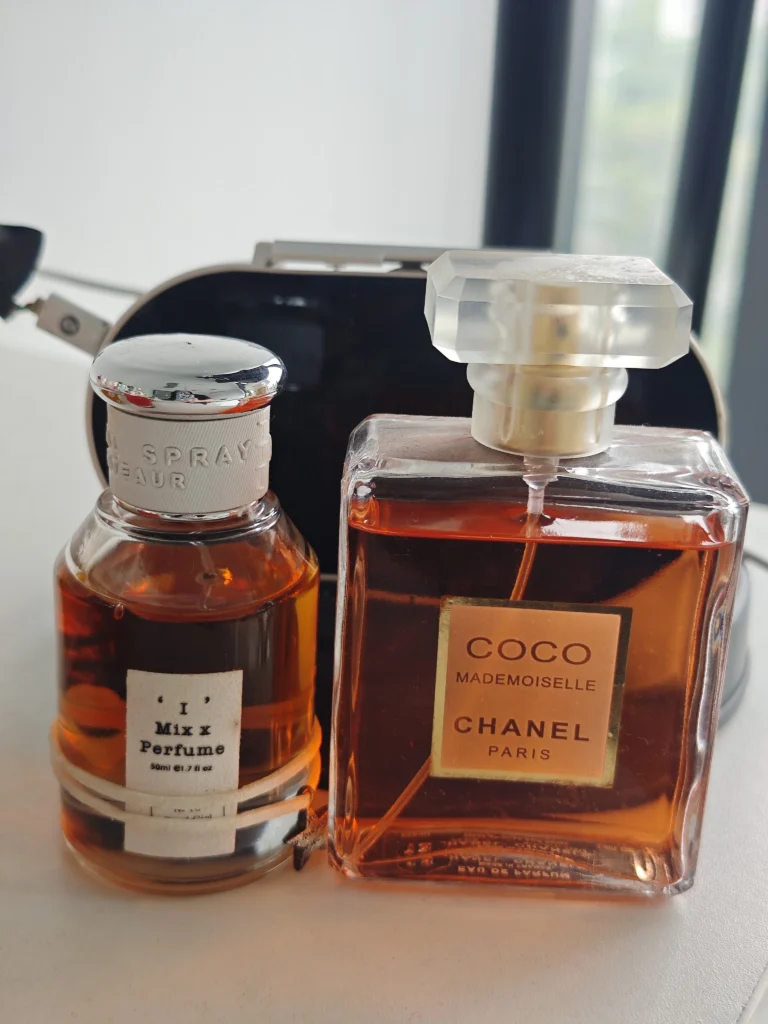
Apr
Introduction: The Ongoing Allure of an Iconic Scent Profile in America
To understand the massive search volume for chanel coco mademoiselle dupes, we must first understand the cultural and olfactory impact of the original DNA. Launched at the dawn of the 21st century by master perfumer Jacques Polge, this specific fragrance profile completely revolutionized the perfume industry. Before its creation, the “chypre” fragrance family (a category historically defined by a stark, mossy contrast between bergamot and oakmoss, dating back to Coty’s Chypre in 1917) was often viewed as mature, austere, and somewhat unapproachable for younger demographics.
This new profile changed everything. It took the classic chypre skeleton and injected it with a massive, luminous dose of sweet citrus, whilst swapping out the heavy, restricted oakmoss for a deeply refined, clean patchouli. The result was a scent that felt simultaneously authoritative, vibrantly youthful, undeniably elegant, and fiercely independent. It became the signature scent of millions of women across the United States.
However, the macroeconomic realities of 2026 have shifted consumer behavior. The price of traditional luxury goods, particularly designer cosmetics, has far outpaced average income growth. A standard 3.4 oz (100ml) bottle of high-end designer Eau de Parfum now frequently commands prices approaching or exceeding $160 to $200 in US department stores. For a consumable product intended for daily, liberal application, this presents a significant financial barrier. Consequently, the pursuit of affordable alternatives to coco mademoiselle has evolved from a niche interest into a mainstream consumer movement. Consumers are no longer willing to pay a massive markup solely for brand heritage and a heavy glass bottle.
But the journey to find the best dupe for chanel coco mademoiselle is famously frustrating. The market is awash with synthetic, screechy, and short-lived imitations that smell like harsh chemicals. To truly find a perfume smells exactly like coco mademoiselle—or more accurately, a fragrance that captures its complex soul and performance—you need to understand the underlying chemistry of the scent. You need to look beneath the marketing and examine the ingredients.
Deconstructing a Masterpiece: The Olfactory Chemistry Explained
Before we evaluate any alternatives, we must establish a scientific baseline. What exactly are these brands trying to replicate? Fragrances are designed according to an olfactory pyramid, relying on the different molecular weights, volatility, and evaporation rates of various aromatic compounds. For a deeper dive into how fragrance notes are globally categorized and reviewed by communities, resources like the fragrance encyclopedia Fragrantica or the community forums at Basenotes are invaluable.
The Top Notes: The Challenge of Luminous Citrus
The first 10 to 15 minutes of this specific scent profile are defined by an explosion of bright, effervescent citrus. The key botanical players here are Sicilian Orange, Calabrian Bergamot, and Mandarin. Bergamot (Citrus aurantium bergamia) is particularly crucial to the formula; it is not simply “sour” like a standard lemon. High-quality bergamot possesses a complex, slightly floral, and subtly peppery nuance that gives the opening its sophisticated edge.
Where Budget Dupes Fail: This is the very first hurdle where cheap alternatives stumble. Because natural, cold-pressed citrus oils are expensive and highly volatile (meaning they evaporate quickly), low-budget manufacturers often substitute them with harsh, inexpensive synthetic aldehydes (like certain grades of Limonene or Citral) to mimic the citrus effect. This substitution is what causes many cheap perfumes to open with a blast that smells distinctly like household glass cleaner or pure rubbing alcohol. A high-quality alternative must invest in premium citrus essential oils to achieve that smooth, sparkling, “expensive” introduction.
The Heart Notes: The Dewy, Abstract Floral Core
As the citrus molecules begin to evaporate, the heavier molecules of the heart notes take center stage. This phase is dominated by Grasse Jasmine, Turkish Rose, Mimosa, and Ylang-Ylang. Crucially, the rose utilized in this DNA is not the powdery, heavy, potpourri-style “vintage” rose popular in the 1980s; it is a dewy, modern, and highly abstract interpretation. The jasmine adds an indolic richness (a slightly animalic, deep floral depth), while the mimosa provides a subtle, honeyed warmth.
The Formulation Challenge: Replicating natural jasmine and rose absolutes is notoriously expensive. Furthermore, strict regulations by the International Fragrance Association (IFRA) limit the use of certain natural floral allergens to protect consumers. Therefore, perfumers must use a highly skilled blend of safe synthetics (like Hedione for jasmine-like radiance) and natural isolates. Cheap dupes often use flat, one-dimensional floral synthetics that smell plasticky, cloying, or overly sweet, lacking the 3D, velvety texture of a masterfully blended heart.
The Base Notes: The Patchouli Paradigm
If the citrus is the introduction and the florals are the narrative, the base notes are the enduring legacy. The absolute soul of this fragrance profile is an incredibly specific treatment of Patchouli (Pogostemon cablin), supported by White Musk, Bourbon Vanilla, Haitian Vetiver, and Tonka Bean.
The “Clean Patchouli” Secret: Natural, unrefined patchouli essential oil is earthy, damp, and sometimes smells akin to wet soil, dark chocolate, or camphor (reminiscent of the 1960s counterculture). To make it suitable for a modern luxury chypre, perfumers use a process called fractional distillation. This process isolates the clean, woody, and slightly sweet facets of the patchouli molecule while actively removing the “dirty,” muddy aspects. Finding a perfume with patchouli and bergamot that nails this exact balance is incredibly rare. If an alternative smells harsh, metallic, or muddy after three hours on the skin, it is almost certainly because the manufacturer used unrefined patchouli or cheap woody-amber synthetics to save on costs.
The Science of Scent Replication: How Dupes Are Actually Formulated
To truly appreciate the difference between a $15 drugstore body spray and a meticulously crafted $40 Eau de Parfum alternative, we need to take a brief excursion into the chemistry lab. How do independent brands actually figure out the formula of a heavily protected designer scent?
1. Gas Chromatography-Mass Spectrometry (GC-MS)
This technology is the undisputed workhorse of modern perfumery and reverse-engineering. A small sample of the target designer fragrance is injected into a GC-MS machine. The machine vaporizes the liquid and pushes it through a long, coiled, microscopic capillary column. Different chemical molecules travel through this tube at different speeds based on their size, weight, and polarity. As they exit the column, a Mass Spectrometer identifies them, creating a detailed graph (a chromatogram).
This graph provides a “chemical fingerprint” of the fragrance, showing peaks that represent materials like Linalool, Hedione, Iso E Super, Coumarin, and natural citrus terpenes. However, the machine has a significant limitation: it provides data, not a recipe. It can tell a chemist that a specific rose compound is present, but it cannot easily distinguish between a cheap, readily available synthetic rose base and a rare, expensive natural Turkish Rose Absolute. This is where the human element is indispensable. A trained Master Perfumer must interpret the GC-MS data and rebuild the scent using their experienced nose and access to high-quality raw materials. For further reading on the technical aspects of perfumery, journals like Perfumer & Flavorist offer deep industry insights.
2. The Crucial Step of Maceration (Why Cheap Perfumes Smell Like Alcohol)
If you have ever purchased a highly discounted fragrance and recoiled at the initial blast of harsh rubbing alcohol, you have experienced the results of skipped maceration. Maceration is to perfume what barrel-aging is to fine whiskey or wine.
When fragrance concentrate (the raw oils) is mixed with perfumer’s alcohol, the chemical bonds do not form instantaneously. Through a process related to esterification, the mixture needs to rest in a dark, temperature-controlled environment for several weeks or even months. During this maturation period, the harsh alcohol scent mellows significantly, and the various top, heart, and base notes seamlessly blend into a rounded, cohesive, smooth liquid. Traditional luxury brands, and dedicated, quality-focused alternative houses, enforce strict maceration protocols. Conversely, fast-fashion brands and ultra-budget clones often mix and bottle their products on the exact same day to rush them to retail shelves, resulting in a jagged, poorly blended, and alcoholic olfactory experience.
Demystifying the Economics: What Are You Actually Paying For in the USA?
The most common question industry analysts receive is: “If the original designer bottle costs $160, how can a high-quality alternative cost $40? Aren’t they inherently using vastly inferior ingredients?”
The answer, from a supply chain perspective, is no. The dramatic price difference lies almost entirely in the traditional retail markup structure. In the luxury beauty industry, the actual liquid inside the bottle (the “juice”) is remarkably often the least expensive component of the overall retail product.
Table 1: The Anatomy of a $160 Designer Perfume Price Tag vs. Direct-to-Consumer
| Cost Component | Traditional Luxury Brand Strategy (Est. Impact) | Factory-Direct / Alternative Brand Strategy (Est. Impact) |
|---|---|---|
| The “Juice” (Raw Fragrance Oils & Alcohol) | Historically accounts for roughly $4 – $8. The business model relies on massive volume and high profit margins. | Roughly $8 – $15. By saving heavily elsewhere, independent brands can actually afford to invest more capital into higher oil concentrations (EDP/Extrait). |
| Packaging (Bespoke Glass, Molds, & Boxes) | $10 – $20. Custom-designed glass molds, heavy metallic caps, magnetic closures, and elaborate cellophane-wrapped boxes. | $3 – $6. Use of standardized, minimalist, yet elegant uniform bottles to keep manufacturing overhead low. |
| Marketing & Celebrity Endorsements | $30 – $50+. Multi-million dollar global TV commercials, full-page magazine spreads, and contracts with Hollywood actors. | $2 – $8. Relies primarily on organic word-of-mouth, search engine optimization, community reviews, and targeted digital ads. |
| Retail Markup (US Department Stores) | $60 – $80. Major brick-and-mortar stores (e.g., Macy’s, Sephora, Nordstrom) typically take 40% to 50% of the final retail price to cover their real estate and staff. | $0. Sold directly to the consumer via the brand’s own e-commerce website, completely bypassing the retail middleman. |
| Brand Licensing, Heritage & Profit | The remaining balance. A significant premium is paid simply for the right to display a legendary, century-old logo on your vanity. | The remaining balance. Represents a fair, sustainable profit margin without the inflated “luxury tax.” |
When you understand the direct-to-consumer (DTC) model, the math fundamentally changes. By bypassing the department store slotting fees and the exorbitant celebrity marketing campaigns, specialized brands can offer an Eau de Parfum with a 15% to 20%+ oil concentration at a fraction of the cost. You are paying for the chemistry, not the commercial.
Evaluating the 2026 US Market: A Fair Comparison of Top Alternatives
To provide a genuinely useful guide for the American consumer, we must analyze the current landscape objectively. Here is a breakdown of the most prominent alternatives available today, evaluated based on community consensus, formulation accuracy, longevity, and overall value proposition. No single perfume is perfect for everyone; the “best” choice depends entirely on your specific priorities.
1. Armaf – Club de Nuit Woman (The Powerhouse Performer)
Produced by Sterling Parfums in the UAE, the Armaf brand has built a legendary reputation within the online fragrance community for creating incredibly potent, high-performing alternatives to popular designer scents.
- The Pros: Unbelievable longevity and massive sillage (projection). Based on user reviews on platforms like Fragrantica, this is widely considered the longest-lasting dupe on the market. If your primary goal is a fragrance that will fill a room and last 10+ hours on skin (and days on clothing), this is the undisputed champion. It captures the heavy patchouli and rose combination very aggressively. It is also exceptionally affordable, often found for under $35.
- The Cons: The opening phase is notoriously difficult. For the first 20 to 30 minutes, the citrus notes are sharp, highly synthetic, and almost abrasive to the nose. It lacks the smooth, blended, elegant introduction of the original until it dries down significantly. Furthermore, the heavy, jewel-encrusted bottle design is polarizing and may not appeal to minimalists.
- The Verdict: Best for the consumer who prioritizes raw performance, longevity, and budget above all else, and who is willing to patiently wait 30 minutes for the scent to settle into its beautiful dry-down.
2. Dossier – Woody Oakmoss (The Accessible Minimalist)
Dossier is a highly visible, US-based brand that has successfully popularized the concept of transparent, direct-to-consumer fragrance alternatives paired with clean, minimalist packaging and a strong return policy.
- The Pros: Excellent accessibility and a risk-free purchasing experience. The opening of Woody Oakmoss is significantly smoother and more approachable than Armaf. It is an excellent, well-blended, everyday interpretation of the scent profile. It is widely considered very “office-safe” and unlikely to offend coworkers.
- The Cons: Longevity and projection are frequently cited by users as moderate at best. Many consumers report that it performs more like an Eau de Toilette, fading to a faint skin scent within 4 to 5 hours. It also lacks the deep, resonant, heavy fractionated patchouli base that gives the original its commanding, “expensive” presence. It is a slightly safer, softer interpretation.
- The Verdict: Best for someone looking for a gentle, everyday, mass-appealing version of the scent for office environments, who prefers minimalist bottles, and who does not mind reapplying the fragrance halfway through the day.
3. Zara – Applejuice / Madame (The Fast-Fashion Option)
The global fast-fashion giant Zara, often working in collaboration with reputable perfumers, frequently releases incredibly affordable scents that are heavily “inspired by” current market trends.
- The Pros: Unbeatable physical accessibility—you can walk into nearly any Zara retail store in the USA and test it before buying. It is extremely inexpensive. The initial spray is usually a very competent, crowd-pleasing mimic of the target designer scent’s top notes.
- The Cons: Generally poor longevity and highly linear development. Fast-fashion fragrances are structurally designed to sell based on the top notes experienced in the store aisle. Once you leave, the scent often collapses into a generic, flat musky base within 2 to 3 hours. Additionally, Zara rotates and discontinues their fragrance lines so frequently that finding your favorite scent again a year later can be impossible.
- The Verdict: Best for teenagers, consumers on a strict budget, or those looking for a quick, temporary body mist equivalent of the scent profile for running errands.
4. Oakcha – Madame Rose (The Extrait Heavyweight)
Oakcha is another popular North American alternative brand that differentiates itself by formulating its fragrances exclusively at Extrait de Parfum concentration, the highest concentration of fragrance oils.
- The Pros: Due to the Extrait concentration, the longevity is superb, easily rivaling Armaf but generally with a smoother, less synthetic opening. It clings to the skin tenaciously. The packaging is sleek and modern.
- The Cons: Because the oil concentration is so high, it can leave a slightly oily residue on the skin upon initial application. Extrait concentrations also sit closer to the skin; while they last a long time, they don’t always project across a room (sillage) as well as an alcohol-heavy EDP. It is also priced slightly higher than brands like Dossier or Zara.
- The Verdict: Best for consumers who want an incredibly dense, long-lasting, close-wearing scent and don’t mind a slightly higher price point for an Extrait formulation.
5. iMIXX – No. 14 (The Factory-Direct EDP Balance)
(Transparency Note: As stated in the author bio, I consult with the formulation team at iMIXX. The following is an objective breakdown of its structural intent). iMIXX operates on a slightly different model, focusing heavily on factory-direct supply chain efficiency, laboratory-grade formulations, and extended maceration periods.
- The Pros: iMIXX No. 14 was engineered to hit the formulation “Goldilocks zone.” It is formulated at a robust Eau de Parfum (EDP) concentration, intended to provide solid 6-8 hour longevity (depending on skin chemistry) without the harsh, screechy opening associated with ultra-budget clones. It utilizes a refined, clean patchouli isolate to ensure the dry-down remains sophisticated rather than muddy. Furthermore, it carries a strict cruelty-free guarantee, appealing to ethically conscious consumers.
- The Cons: iMIXX is primarily a digital-first, direct-to-consumer brand. This means consumers cannot test the fragrance in physical US retail stores prior to purchase, relying instead on detailed descriptions and the brand’s reputation. It also does not have the massive, instant brand recognition of a Zara or Dossier.
- The Verdict: Best for the educated consumer who prioritizes a balanced olfactory profile (smooth opening + good longevity), cares deeply about cruelty-free manufacturing ethics, and is comfortable purchasing from an independent, direct-from-factory brand online.
Ethics in Perfumery: The Demand for Cruelty-Free Options
A massive, undeniable shift in the US cosmetics industry is the increasing demand for ethical manufacturing and supply chain transparency. A significant portion of traditional luxury conglomerates continue to sell their products in international markets where animal testing is legally mandated for imported cosmetics. Therefore, many iconic, legacy designer fragrances cannot legally or honestly claim to be entirely cruelty-free.
For a growing segment of the modern consumer base, this lack of ethical transparency is a dealbreaker. The search for cruelty-free chanel dupes is no longer just an economic choice; it is a moral imperative. Independent alternative brands have the agility to mandate that their entire supply chain—from the sourcing of synthetic musks to the final bottling process—avoids animal testing completely. Organizations such as Leaping Bunny provide rigorous certifications and resources for consumers looking to navigate the complex world of cruelty-free beauty. Choosing a transparent alternative brand allows consumers to enjoy a sophisticated scent profile while maintaining a clear conscience.
Pro Application Tips: How to Maximize the Longevity of Any Perfume
Even if you purchase the most expensive Extrait or the highest-performing alternative on the market, poor application techniques and individual skin chemistry can severely degrade its performance. As fragrance professionals, here are our scientifically grounded recommendations on how to make perfume smell like chanel (or any fragrance) all day long.
- Skin Chemistry and pH Levels: Fragrance is fundamentally chemistry. The pH level of your skin, your diet, and even your current hormone levels can drastically alter how a perfume smells and performs. A fragrance that lasts 10 hours on your friend might disappear in 3 hours on you. This is why testing is crucial.
- The Hydration Rule (The Ultimate Fixative): Fragrance molecules require a physical lipid substrate to bind to. Dry skin absorbs fragrance oils rapidly, utterly destroying projection. In the USA, especially during harsh winters or in arid climates like the Southwest, dry skin is the number one enemy of perfume longevity. Always apply an unscented body lotion, or even a thin layer of an occlusive like Vaseline/Aquaphor, to your pulse points before spraying. The fragrance oils will lock onto this lipid barrier, significantly extending their lifespan.
- Strategic Pulse Points: Do not just haphazardly spray your wrists. Apply fragrance to the warmest parts of your body: the sides of the neck, the inner elbows, the cleavage, and crucially, behind the knees. Body heat activates the fragrance molecules, pushing them into the air to create a scent trail (known as ‘sillage’).
- The Hair Mist Hack: Human hair is incredibly porous and retains scent much longer than skin. Spray your perfume onto your hairbrush and run it through your hair. Every time you turn your head, you will release a gentle waft of the patchouli and floral base notes. (Note: Do not spray alcohol-based perfumes directly onto your hair frequently, as it can be drying; always use the brush method).
- Do Not Cause “Friction Burn”: The most common bad habit in perfumery is spraying the wrists and violently rubbing them together. This friction generates localized heat that literally crushes the delicate top notes (the highly volatile citrus and bergamot molecules), forcing the perfume to skip straight to the dry-down and reducing its overall complexity and lifespan. Simply spray and let the liquid air dry naturally.
- Understanding Olfactory Fatigue: If you wear the exact same fragrance every single day, your brain will eventually filter out the scent as “background noise,” making you mistakenly believe the perfume has faded when it is actually still projecting strongly to everyone around you. This physiological phenomenon is called olfactory fatigue (or “nose blindness”). To combat this, rotate your fragrances throughout the week.
People Also Ask: Frequently Asked Questions (FAQ)
What is the absolute best dupe for Chanel Coco Mademoiselle?
The “best” option is entirely subjective and depends on your specific needs. Based on community consensus, if you want massive, room-filling longevity on a budget, Armaf Club de Nuit Woman is highly recommended. If you prefer a softer, everyday scent with a great return policy, Dossier Woody Oakmoss is popular. If you are seeking a balanced Eau de Parfum with a smooth opening, clean patchouli, and a cruelty-free ethos, factory-direct options like iMIXX No. 14 are excellent contenders.
Does Zara have a dupe for Chanel Coco Mademoiselle?
Yes, Zara frequently releases fragrances that share a similar olfactory DNA. Zara’s “Madame” or variations within their “Applejuice” line often mimic the bright citrus and floral structure of the designer original. While they are very affordable and accessible, consumers widely report that Zara fragrances lack the longevity and deep, complex base notes of more dedicated perfumery brands, usually fading within a few hours.
What are the main notes in Chanel Coco Mademoiselle?
The fragrance is classified as a modern chypre or amber-floral. The vibrant top notes are Orange, Bergamot, and Mandarin. The heart is a lush, abstract bouquet of Turkish Rose, Grasse Jasmine, Mimosa, and Ylang-Ylang. The iconic, long-lasting base is composed of fractionated Patchouli, White Musk, Vetiver, Vanilla, and Tonka Bean.
Is Armaf Club de Nuit Woman a good alternative?
Yes, it is highly regarded globally for its exceptional performance. It is extremely potent and long-lasting. However, potential buyers should be aware that many users find the first 20-30 minutes of the fragrance to be overly harsh and synthetic. It requires patience to reach the beautiful, accurate dry-down phase.
Are expensive perfume dupes actually worth buying?
Yes, provided you purchase from a transparent brand that focuses on ingredient quality. When you buy a high-quality alternative from a brand that invests in proper Eau de Parfum concentrations, high-grade isolates, and adequate maceration, you can obtain an olfactory experience that performs comparably to the designer original. You are essentially bypassing the 80% retail and marketing markup, making it a highly economical way to build a diverse fragrance wardrobe.
How can I tell if a perfume has gone bad or expired?
While perfumes do not expire in the same way food does, their chemical bonds can break down. A perfume has typically “turned” or degraded if the liquid becomes noticeably darker or cloudy, and the opening top notes smell distinctly like vinegar, sour celery, or pure alcohol. Proper storage—away from heat, humidity (like bathrooms), and direct sunlight—is essential to prevent this degradation and preserve the scent.
Conclusion: Empowering Your Olfactory Choices in 2026
The landscape of the US fragrance market has fundamentally evolved. The era of blindly paying exorbitant luxury premiums out of necessity is ending, replaced by an era of consumer education, supply chain transparency, and ethical demands. Finding the perfect signature scent is a deeply personal journey, but it should no longer require a significant financial compromise.
By understanding the mechanics of fragrance construction—the delicate interplay of Calabrian bergamot, abstract rose, and clean fractionated patchouli—and recognizing the vital importance of industrial processes like maceration and concentration levels, you can navigate the market with the confidence of an industry insider. Whether you opt for the raw, unbridled power of Armaf, the gentle accessibility of Dossier, the intense concentration of Oakcha, or the balanced, factory-direct precision of iMIXX No. 14, the key is knowing exactly what you are paying for.
We encourage you to explore these varied options, trust your own nose and skin chemistry, and demand more from the brands you choose to support. You deserve a fragrance that is long-lasting, meticulously crafted, ethically produced, and fairly priced. To explore one approach to scientifically formulated, cruelty-free alternatives designed with industry-leading practices, you can visit the iMIXX Official Website. Redefine your standard of luxury, and smell beautifully expensive every single day, without the traditional markup.
Editorial Disclaimer & Transparency Statement: The author of this article has professional consulting experience within the fragrance formulation and supply chain industry, including work with the iMIXX brand. This guide is intended for educational and comparative purposes to help consumers navigate the complex alternative fragrance market. iMIXX is an independent entity and is strictly not affiliated with, endorsed by, sponsored by, or connected to Chanel S.A., Sterling Parfums (Armaf), Dossier, Zara, Oakcha, or any other brands mentioned herein. All trademarks and registered trademarks are the exclusive property of their respective owners. Product evaluations are based on structural chemical analysis, broad community consensus (via platforms like Fragrantica and Basenotes), and general market feedback. Individual olfactory experiences may vary significantly based on personal skin chemistry, pH, and climate. Always perform a patch test before applying new cosmetics. For official safety guidelines, please refer to the IFRA.
