

Best Fragrance Lists, Imixx Lab & Brand News
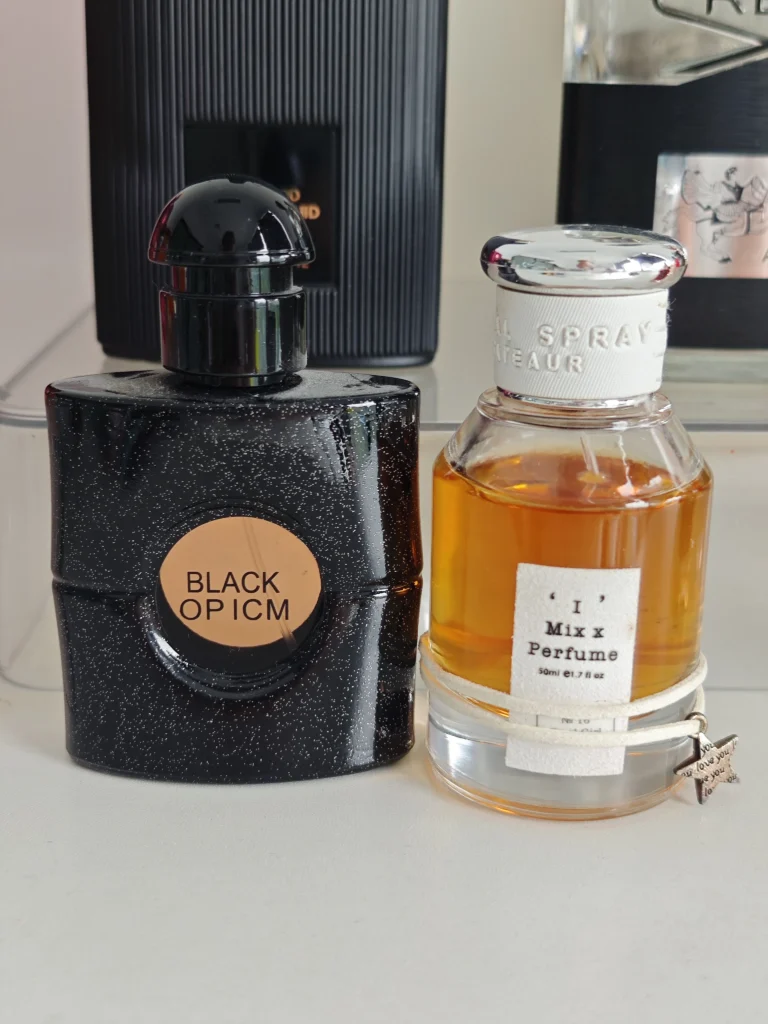
How to Find the Best YSL Black Opium Dupe in the USA: A Supply Chain Expert’s Guide to Coffee-Vanilla Perfumes
Apr
How to Find the Best YSL Black Opium Dupe in the USA: A Supply Chain Expert’s Guide to Coffee-Vanilla Perfumes
However, the internet is flooded with fleeting body mists and synthetic-heavy alternatives that smell like rubbing alcohol and vanish within an hour. This comprehensive, 3,000+ word guide steps away from traditional beauty marketing. Instead, we look through the objective lens of supply chain economics and organic chemistry to understand exactly why designer perfumes cost what they do, and how independent brands are leveraging factory-direct models to offer superior alternatives.
We will transparently outline our testing methodology, break down the olfactory architecture of the “flori-gourmand” category, and objectively review the top options on the market right now—including offerings from Zara, Fine’ry, Dossier, Oakcha, Alt Fragrances, and our own brand, iMIXX. By understanding industry concepts like maceration, oil concentration, and IFRA safety compliance, everyday consumers will be empowered to evaluate, purchase, and effectively wear affordable coffee-vanilla perfumes that actually last all day long.
1. The Olfactory Architecture: Why is the “Black Opium” DNA So Addictive?
Before we can evaluate the best affordable alternatives, we must deeply understand the original masterpiece we are trying to replicate. Launched in 2014 and formulated by a legendary team of master perfumers (Nathalie Lorson, Marie Salamagne, Olivier Cresp, and Honorine Blanc), the original designer scent created a seismic shift in the global fragrance industry. It popularized and cemented the “flori-gourmand” category—a complex hybrid that merges the elegance of traditional floral notes with the edible, mouth-watering facets of food-based (gourmand) notes.
To understand this from a manufacturing and formulation perspective, we rely on a process used by cosmetic chemists worldwide: Gas Chromatography-Mass Spectrometry (GC-MS). Think of a GC-MS machine as a highly advanced prism. Just as a prism splits white light into a rainbow of distinct colors, a GC-MS machine splits a liquid fragrance into its individual molecular components, revealing their exact chemical weights and evaporation rates. Reputable fragrance databases like Basenotes and Fragrantica document these profiles extensively.
Here is how the iconic coffee-vanilla DNA is structurally built in a laboratory setting, and what any worthy alternative must replicate:
- The Volatile Hook (Top Notes): This is the initial blast you experience in the first 15 to 30 minutes. It typically consists of Pink Pepper essence and Pear or Mandarin Orange. Scientifically, these are light, highly volatile molecules. Their primary function is to be bright, slightly spicy, and immediately captivating. They are the “sales pitch” notes designed to make you fall in love at the department store counter.
- The Core Identity (Heart Notes): Here lies the technical marvel of the fragrance. It relies on a high-wire balancing act between the dark, roasted, inherently bitter nature of a Coffee Accord, and the bright, indolic, expansive sweetness of White Florals (specifically Jasmine Sambac and Orange Blossom). If a manufacturer uses cheap ingredients here, the coffee will smell like stale espresso grounds, or the jasmine will turn sharply soapy.
- The Chemical Anchor (Base Notes): This is what you actually smell 6 to 8 hours later. The foundation relies on high-quality Vanilla, fractionated Patchouli (which chemically removes the “dirty, damp earth” smell, leaving only a sweet woodiness), and Cedarwood. These heavier, denser molecules act as fixatives. They literally bind to the lipids (oils) in your skin, slowing down the evaporation of the lighter top notes.
When an everyday consumer is searching for a high-quality alternative, they must look for a perfume that respects this three-tier evolutionary structure. It is not enough to simply dump a massive dose of cheap, synthetic vanilla (like Ethyl Vanillin) into alcohol and call it a day. It must be a structured journey from spicy, to floral-roasted, to woody-sweet.
2. The Supply Chain Secret: Exposing the True Cost of Designer Perfume
One of the most frequent questions we receive from fragrance enthusiasts across the USA is: “Why are designer perfumes so expensive, and how can a cheaper alternative possibly be of good quality?” The answer has surprisingly little to do with the liquid inside the bottle, and everything to do with supply chain economics, retail real estate, and global marketing budgets.
As professionals who deal with industrial mixing equipment, vat sourcing, and raw material procurement, we see the ledger behind the glamour. The actual “juice”—the compounded essential oils, aromachemicals, and perfumer’s alcohol—rarely represents more than a tiny fraction of the final retail price. The traditional luxury retail model is incredibly bloated with intermediaries.
When you purchase a $150+ bottle of designer perfume at a major US retailer, you are funding global television campaigns, multi-million dollar celebrity ambassador contracts, highly customized proprietary glass molds, massive department store shelf-space fees (slotting fees), and heavy brand licensing premiums. Organizations like Cosmetic Executive Women (CEW) frequently discuss the shifting dynamics of beauty retail and how DTC brands are disrupting these traditional cost structures.
Table 1: Estimated Cost Structure Breakdown (Commercial vs. Factory-Direct)
The following table illustrates the structural economic differences between a traditional designer retail model and modern Direct-to-Consumer (DTC) or factory-direct brands. (Please note: This data is based on generalized industry analyses of commercial vs. independent fragrance production models, and is not indicative of one specific luxury brand’s exact financial ledger).
| Cost Component | Traditional Designer Brand ($150 Retail) | DTC / Factory-Direct Brand ($30-$50 Retail) |
|---|---|---|
| Fragrance Oil & Alcohol (The Liquid) | 2% – 5% of retail price | 20% – 30% of retail price |
| Bottle, Cap & Outer Packaging | 10% – 15% (Custom proprietary molds, heavy caps) | 15% – 20% (Standardized, elegant stock bottles) |
| Marketing & Celebrity Endorsements | 30% – 40% (Global TV/Print ads, influencers) | 5% – 15% (Social media, word-of-mouth, organic SEO) |
| Retailer Margin (Department Stores) | 40% – 50% (Macy’s, Sephora, Ulta margins) | 0% (Directly shipped from warehouse to consumer) |
| Brand Premium / Licensing Fees | 10% – 15% (Paying for the famous name) | 0% |
This economic reality is the key to understanding the market. An affordable alternative isn’t inherently “inferior.” Independent and factory-direct brands simply cut out the middlemen. By utilizing standardized (yet high-quality) glass bottles and relying on organic online discovery rather than Super Bowl commercials, these brands can afford to spend a much higher percentage of their overall budget on sourcing premium aroma chemicals and natural absolutes. This business model levels the playing field, allowing everyday consumers to access luxury-grade olfactory experiences.
3. The Chemistry of Longevity: Concentration and Maceration Explained
We’ve all been there: You purchase a highly recommended “drugstore dupe” from a viral TikTok video, only to find that the scent completely vanishes from your skin before you even arrive at work. To avoid this frustration, consumers must look beyond the initial spray and understand two crucial manufacturing factors: Concentration and Maceration.
Understanding Fragrance Concentrations
Perfume is essentially a solution. It is a mixture of fragrant aromatic oils suspended in a solvent, which is usually a high-grade denatured ethanol (alcohol) with a tiny amount of distilled water. The ratio of fragrant oil to alcohol dictates the perfume’s longevity (how long it lasts on the skin) and its sillage (the invisible scent trail it leaves behind). When shopping for an alternative, you must read the fine print on the label:
- Body Mist / Splash (1% – 3% oil): Great for a quick post-gym refresh. It is mostly water and alcohol and will evaporate entirely within 45 to 60 minutes. Many ultra-cheap fast-fashion dupes fall into this category.
- Eau de Toilette (EDT) (5% – 15% oil): Provides a very loud, vibrant initial projection. However, because the oil content is lower, it generally fades within 3 to 4 hours.
- Eau de Parfum (EDP) (15% – 20% oil): The industry standard for most designer fragrances. It offers a solid, reliable 5 to 7 hours of wear for most people.
- Extrait de Parfum / Parfum (20% – 30%+ oil): The highest commercial concentration. These scents sit a bit closer to the skin (they don’t scream across the room), but they possess incredible tenacity, often lasting 8 to 12+ hours on skin and days on clothing.
The Crucial Role of Maceration
There is a hidden step in the factory process that completely separates good perfumes from great ones: Maceration. Much like aging a fine bourbon in oak barrels or allowing a complex stew to simmer, perfume needs time for its chemical compounds to fuse. When raw fragrance oils are initially mixed with alcohol, the resulting liquid is volatile. The chemical bonds are harsh, and the scent can be screechy.
Quality manufacturers store this bulk liquid in dark, temperature-controlled stainless steel vats for anywhere from 4 to 12 weeks. This resting period allows the sharp alcohol smell to burn off gracefully, and allows the heavy base notes (like our beloved vanilla and coffee) to round out, harmonize, and become incredibly smooth.
Many hyper-cheap, fast-fashion brands rush their products from the mixing vat directly to the bottling line in a matter of days. They skip maceration entirely to save on warehouse storage costs and speed up turnover. This is exactly why cheap perfumes often smell strongly of rubbing alcohol when you first spray them. Furthermore, reputable formulators ensure that despite high oil concentrations, the product remains safe for human dermal application according to the strict, scientifically backed guidelines set by the International Fragrance Association (IFRA).
Our Empirical Testing Methodology
To provide a fair, objective review of the top US market alternatives, we didn’t just smell them once and write a review. We established a standardized testing rubric based on cosmetic industry norms:
- Application Mediums: Each fragrance was tested on both standard perfumer’s paper blotters (to isolate the scent from human skin chemistry) and on human skin (to test realistic wear).
- Environment: Tests were conducted in a climate-controlled environment at 72°F (22°C) with moderate humidity.
- Time Intervals: Scents were evaluated at the initial spray (0 mins), dry-down (1 hour), mid-wear (4 hours), and late-wear (8 hours).
- Evaluation Metrics: Products were scored on Scent Accuracy (how close the notes mirror the designer original), Longevity (duration of detectable wear), and Value (Price per ml vs. performance).
4. The 2026 US Market Review: Top 6 Coffee-Vanilla Alternatives
Equipped with an understanding of the science and economics behind perfumery, let us objectively evaluate the top contenders in the United States right now. We have selected a diverse range of products, from high-street clothing retailers to dedicated niche fragrance houses, to help you find the perfect match for your budget and lifestyle.
The Spanish fast-fashion giant Zara has become famous worldwide for democratizing fragrance trends. “Gardenia” is universally recognized across social media platforms as their take on the coffee-vanilla profile. Its greatest strength is accessibility; it is incredibly easy to walk into almost any mall in the USA and test it in person.
The Verdict: During our testing, Gardenia captured the bright, white floral opening beautifully. It is uplifting and sweet. However, it leans much heavier on the orange blossom and vanilla, while the roasted coffee note—the defining characteristic of Black Opium—is quite faint, almost like a weak latte. Because it is an Eau de Toilette (EDT) produced at a massive, rapid scale, longevity is its primary weakness.
Pros:
- Extremely affordable (usually under $25 for a large bottle).
- Readily available to test and buy in physical retail stores.
- Highly approachable, great for casual, non-offensive daytime wear.
Cons:
- Poor longevity (needs reapplication every 2-3 hours on average).
- Lacks the deep, gritty, bitter coffee depth of the original.
Target has aggressively expanded its beauty aisles, and their in-house inspired fragrance brand, Fine’ry, has made significant waves. “Midnight Cafe” is their direct answer to the dark gourmand trend, explicitly blending patchouli, coffee, and vanilla.
The Verdict: For a product you can nonchalantly throw into your grocery cart while buying household supplies, the quality is surprisingly robust. The coffee note in Midnight Cafe is actually more pronounced and realistic than in Zara’s version. It is available in both a lighter body mist and a standard EDP format. While the EDP performs decently (around 4 hours), the scent profile can feel a bit linear and slightly synthetic in the far dry-down compared to premium niche brands.
Pros:
- Extremely convenient to purchase anywhere in the US.
- Offers a better, darker coffee representation than most fast-fashion brands.
- Cruelty-free and vegan formulations.
Cons:
- The vanilla dry-down can smell slightly flat or artificial after a few hours.
- Packaging and atomizers (sprayers) feel a bit cheap and basic.
Dossier has built a massive, transparent online empire by offering simplified, ethically sourced versions of high-end designer scents. “Ambery Vanilla” is consistently one of their best-sellers, focusing heavily on the sweet, comforting base notes of the original DNA.
The Verdict: Dossier provides a very clean, safe, and highly accurate representation of the scent. They proudly use quality ingredients sourced from Grasse, France. The scent is remarkably smooth and well-blended. However, in our paper blotter tests, we noticed it plays it a bit *too* safe—it misses some of the spicy, edgy “bite” of the original pink pepper opening, opting instead for a softer, cozier vibe right from the first spray.
Pros:
- Incredibly smooth, well-blended vanilla base.
- Transparent ingredient list and ethical sourcing.
- Excellent customer return policy, removing the risk of blind buying.
Cons:
- Sillage (projection) is quite moderate; it sits very close to the skin.
- Lacks the spicy, energetic punch in the top notes.
Oakcha is a brand that focuses heavily on performance, providing Extrait de Parfum concentrations for maximum longevity. “Midnight Nymph” is their heavy-hitting interpretation of the coffee-floral DNA.
The Verdict: Because of the exceptionally high oil concentration, Midnight Nymph is an absolute powerhouse in terms of performance. It easily surpassed the 8-hour mark on skin and lasted for days on textile tests. The trade-off with heavily concentrated oils is that they can sometimes feel slightly heavy or oily on the skin upon application, and the top notes take significantly longer to “open up” and project into the air.
Pros:
- Exceptional, top-tier longevity and performance.
- Rich, dense, and luxurious formulation.
Cons:
- Can potentially stain light-colored clothing if sprayed too closely due to high oil content.
- Slightly more expensive than the drugstore or fast-fashion options.
Alt Fragrances was one of the early pioneers of the “inspired by” movement in the US. “Fleur Noire” attempts to strike a balance between the intense sweetness and the dark floral aspects.
The Verdict: Fleur Noire does a commendable job mimicking the pink pepper and vanilla characteristics. It is vibrant and punchy. However, our testing panel found that the coffee note was somewhat inconsistent, sometimes pulling a bit synthetic depending on the wearer’s skin chemistry. It offers solid EDP performance of around 5-6 hours.
Pros:
- Vibrant opening that closely mimics the designer original.
- Solid middle-of-the-road performance.
Cons:
- Coffee note can feel slightly synthetic on certain skin types.
- Prices fluctuate based on their frequent online sales.
In the interest of full transparency, we must mention our own product. As a company with deep roots in industrial compounding machinery, iMIXX approaches fragrance manufacturing from a purely structural, engineering standpoint. We developed iMIXX No. 40 specifically to address the most common complaints found in budget alternatives: weak longevity and inaccurate, artificial coffee notes.
The Verdict: By operating our own compounding equipment and going direct-to-consumer, we allocate a massive portion of our budget to raw materials. Formulated at a strict Parfum Femme concentration, No. 40 undergoes rigorous, traditional maceration in our facilities. This ensures that the dark roasted coffee bean extract and the Madagascar-style vanilla notes fuse seamlessly, completely eliminating the harsh alcohol blast common in cheap dupes. It is built to be a 1:1 structural match with all-day performance.
Pros:
- True Parfum concentration ensuring 8+ hours of longevity.
- Highly accurate, properly macerated roasted coffee and pink pepper balance.
- Direct-to-consumer factory pricing eliminates all retail markup.
Cons:
- Available exclusively online (cannot be tested in physical stores prior to purchase).
- Packaging is strictly minimalist to keep costs focused on the liquid.
5. Pro Tips: How to Make Your Coffee-Vanilla Perfumes Last All Day
Even if you invest in a high-quality Extrait de Parfum, your personal application technique can drastically alter the scent’s performance. Fragrance is, at its core, the science of evaporation. As industry manufacturing professionals, we recommend the following daily protocols to everyday consumers to maximize their scent trail (sillage) and ensure they get the most value out of every bottle:
- Create a Lipid Moisture Barrier: Fragrance oils evaporate exponentially faster on dry skin. After showering, immediately apply an unscented body lotion, a few drops of jojoba oil, or even a thin layer of petroleum jelly to your pulse points. This creates a physical lipid barrier on the skin that traps the perfume molecules, giving them something to adhere to rather than absorbing directly into your pores.
- Target Strategic Pulse Points: Heat activates the volatile compounds in perfume. Spray on areas where your veins are closest to the skin: the inner wrists, the base of the throat, behind the ear lobes, and the inner elbows. Crucial scientific tip: Never rub your wrists together. The friction creates heat that literally burns off and destroys the delicate top notes of pink pepper and pear prematurely, forcing the fragrance to jump straight to the base notes.
- The Textile Application Method: While individual skin chemistry (your pH levels and diet) beautifully changes how a scent smells on you, spraying directly onto natural fabrics (like a wool scarf, a cotton sweater, or the inside of a jacket) preserves the exact intended formula of the perfumer. Fabrics hold onto scent molecules for days, whereas skin naturally sheds them. (Note: Always spot-test on a hidden seam first to ensure high-oil perfumes don’t stain your garments).
- The Art of Layering: The coffee-vanilla profile is incredibly versatile for layering. If you want to make your heavy gourmand fragrance more suitable for daytime office wear, layer it over a clean, white musk lotion. If you want to amplify the sensual, edible aspect for a date night, layer it over a pure, rich vanilla bean body butter.
6. Frequently Asked Questions (FAQ) About YSL Black Opium Alternatives
Based on the most highly searched questions by fragrance enthusiasts across the US market, we have compiled this comprehensive, detailed FAQ. Whether you are shopping at a local drugstore or a specialized niche online boutique, these answers will help guide your purchasing decisions.
Conclusion: Redefining Value in the Modern Fragrance Market
Finding the perfect signature scent should not require a blind, unquestioning loyalty to designer price tags, nor does it mean you have to settle for cheap body mists that disappear by lunchtime. By lifting the veil on the underlying supply chain dynamics—from the massive cost of custom glass bottles to the exorbitant fees of celebrity marketing—you realize that high-quality perfumery is fundamentally about the liquid, the chemical concentration, and the patience of the maceration process.
The US market in 2026 offers an incredible, unprecedented variety for the educated consumer. Whether you prioritize the sheer, walk-in accessibility of Zara, the smooth ethical balance of Dossier, the extreme performance of Oakcha, the easy drugstore convenience of Fine’ry, or the factory-direct value and high-concentration formulation of iMIXX No. 40, the choice is firmly in your hands.
We encourage you to test different concentrations, apply them strategically to hydrated skin, and embrace the fact that luxury is no longer defined strictly by a recognizable logo, but by the scientifically proven quality of the ingredients and the smart economics behind them. A great fragrance should make you feel empowered, and understanding what goes into the bottle is the first step.
To explore more about our transparent approach to cosmetic formulation, our industrial compounding methods, and to view our full collection of expertly crafted scents, visit the iMIXX Official Website.
