

Best Fragrance Lists, Blog
How to Find the Best Maison Margiela Replica Fragrance Dupe in the USA: A Supply Chain Expert’s Guide
Jul
Transparency & Editorial Disclosure: This guide is authored by a supply chain expert associated with iMIXX, a brand that utilizes industrial formulation technology to create consumer fragrances. However, the primary goal of this article is to provide an objective, educational overview of the US fragrance market. We have rigorously analyzed various brands—including Zara, Dossier, Lattafa, and iMIXX—to help you make the most informed decision for your budget and preferences. All pricing and market estimates are based on general industry averages as of 2026.
The Allure of “Replica” and the Challenge of Traditional Luxury
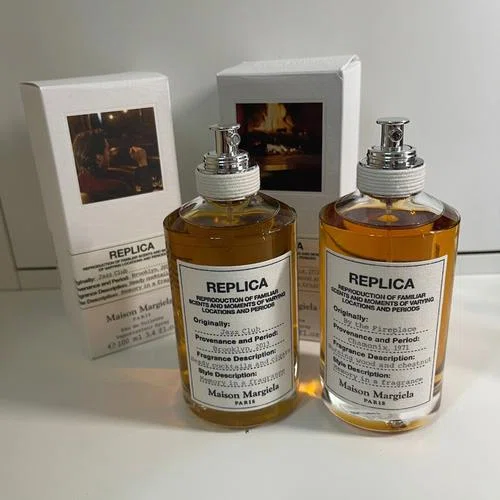
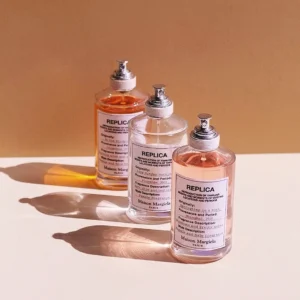
If you are exploring this topic, you already understand the magic of Maison Margiela’s “Replica” line. Launched with the brilliant concept of capturing specific, universal memories—a smoky fireplace in Chamonix, a boozy jazz club in Brooklyn, a salty beach walk in Calvi—these scents are emotional experiences bottled in minimalist apothecary glass.
However, as a supply chain professional who has spent years analyzing industrial formulation costs and raw material sourcing, I constantly observe two major hurdles for the everyday consumer:
- The Retail Price Tag: At upwards of $160 for a 100ml bottle, purchasing a designer fragrance represents a significant financial investment for most Americans.
- The Longevity Issue: Because the original Replica line is primarily formulated as Eau de Toilette (EDT), consumers frequently express frustration when their expensive “memory” fades into a faint skin scent within 4 to 5 hours.
This frustration has sparked a massive surge in searches for the best affordable alternatives and long-lasting EDT dupes. But to find a genuinely good alternative, you first need to understand what you are actually paying for when you buy a designer perfume at a major US retailer like Sephora or Nordstrom.
The Economics of Scent: Demystifying the $160 Perfume
Let’s look at the supply chain of luxury fragrance. When you purchase a fragrance from a high-end department store, the cost of the actual scented liquid inside the bottle (the “juice”) is often surprisingly low compared to the retail price. While exact margins are closely guarded secrets of luxury conglomerates, industry analysts and formulation chemists generally agree on a standard structural breakdown for designer fragrances.
Here is a general industry estimation of where your money goes when buying traditional luxury fragrance:
| Cost Component | Estimated Percentage of Retail Price | The Reality of the Supply Chain |
|---|---|---|
| Marketing & Advertising | 30% – 40% | Funding for global ad campaigns, celebrity brand ambassadors, and magazine spreads. |
| Retail Markup & Distribution | 30% – 40% | Department stores and boutiques take a massive cut to cover floor space and sales staff. |
| Packaging (Bottle, Cap, Box) | 10% – 15% | Custom glass molds, weighted metal caps, and elaborate unboxing experiences cost real money. |
| The Actual Fragrance (Oil & Alcohol) | 5% – 10% | The raw materials (synthetic molecules and natural absolutes) and perfumer’s alcohol. |
Once you realize that a fraction of your $160 purchase goes toward the actual scent, the idea of a “Maison Margiela dupe perfume” becomes less about buying a “cheap knockoff” and more about making an intelligent, value-based consumer choice. Independent fragrance houses bypass the retail middlemen and marketing bloat. The best among them redirect that saved capital back into sourcing higher-quality ingredients and increasing the concentration of fragrance oil.
The Science of Scent: How Do Labs Replicate a Memory?
You might be wondering, “How can a more affordable brand possibly recreate the complex, nostalgic smell of a jazz club or a burning fireplace?” The answer lies in modern chemistry—specifically, a technology used widely in both industrial labs and perfumery called Gas Chromatography-Mass Spectrometry (GC-MS).
Think of a GC-MS machine as a highly advanced recipe scanner. When a laboratory places a sample of a luxury fragrance into this machine, it vaporizes the liquid and separates it into its individual molecular components. The machine then provides a detailed data readout showing exactly what aroma chemicals are present and in what relative quantities.
For example, a GC-MS reading of a smoky, woody fragrance profile will reveal percentages of:
- Iso E Super: A synthetic molecule that gives a velvety, cedar-like aura.
- Ambroxan: A clean, highly diffusive compound often used as a long-lasting base.
- Ethyl Maltol: A sweet molecule that smells distinctly like spun sugar or toasted marshmallows.
- Guaiac Wood & Cade Oil: Botanical materials that provide that distinct, realistic campfire smoke.
However, simply having the GC-MS “recipe” isn’t enough. It’s like having a recipe for a Michelin-star cake; if you use cheap supermarket butter instead of premium cultured butter, the cake won’t taste the same. The true skill of a formulation expert lies in sourcing. Two brands can use the same GC-MS data, but the resulting scents will be worlds apart depending on the quality of the raw materials sourced from global suppliers in places like Grasse, France, or Madagascar.
EDT vs. EDP vs. Extrait: Solving the Longevity Problem
One of the most common search queries in the fragrance community is “how to make my Replica perfume last longer.” The scientific truth is that you cannot fundamentally change the evaporation rate of an Eau de Toilette once it is bottled. Fragrance longevity is primarily dictated by its concentration level and the molecular weight of its ingredients.
Here is a practical breakdown of fragrance concentrations:
- Eau de Cologne (EDC): 2% – 5% perfume oil. Very volatile, lasting 1-2 hours. Great for a quick post-shower refresh.
- Eau de Toilette (EDT): 5% – 15% perfume oil. Lasts roughly 3-5 hours. (This is where the majority of the original Maison Margiela Replica line sits, prioritizing a light, airy projection).
- Eau de Parfum (EDP): 15% – 20% perfume oil. The industry standard for robust wear, lasting 6-8 hours on average.
- Extrait de Parfum (Pure Perfume): 20% – 40% perfume oil. Highly concentrated, binding deeply to the skin’s natural oils, often lasting 10-12+ hours.
When searching for a high-quality alternative, your goal should be to upgrade the concentration. Because independent alternative brands do not have the massive overhead of luxury conglomerates, they can afford to use 20% to 30% fragrance oil instead of 10%. This means you can find a scent that matches the profile of an EDT but performs with the power of an EDP or Extrait, lasting from your morning commute well into your evening plans.
The Crucial Step Most Brands Skip: Maceration
Have you ever bought an affordable perfume, eagerly sprayed it, and recoiled because the first five minutes smelled like pure rubbing alcohol? That is not necessarily a sign of bad ingredients; it is a symptom of a rushed, industrialized supply chain that skipped a vital step: Maceration.
In the fragrance industry, maceration is the aging process. Think of it like letting a complex stew simmer on the stove, or allowing a fine wine to age in a barrel. When raw fragrance oils are mixed with perfumer’s alcohol (ethanol) and distilled water, the molecular bonds need time to stabilize and harmonize in a controlled, cool, and dark environment.
Many fast-fashion brands and rapid-turnaround clone houses operate on razor-thin margins. To save on warehousing costs, they mix their liquids, bottle them immediately, and ship them to retail shelves within days. The result is a harsh, unrefined opening spray.
A true sign of a quality manufacturer is a dedicated maceration period. Premium alternative houses will enforce a strict 4 to 6-week maceration protocol before a bottle is ever sold. This allows the harsh alcohol edge to evaporate and smooth out, meaning the delicate top notes—like bergamot or pink pepper—can shine beautifully upon the very first spray. If you ever purchase a fragrance that smells too “sharp,” try macerating it yourself: spray it 5 to 10 times to introduce oxygen into the bottle, then store it in a cool, dark drawer for a month. You will be astounded by the transformation.
The Great Market Showdown: Evaluating Your Options
To help you navigate this crowded space, let’s objectively evaluate the most prominent players in the US alternative fragrance market. No single brand is perfect for every consumer; your optimal choice depends on your budget, your desire for 1:1 accuracy, and how much you value longevity.
1. Zara (The Budget-Friendly Fast Fashion Choice)
Zara has partnered with renowned perfumers to create some incredible budget options. Their seasonal releases often mimic popular designer DNAs.
- The Good: Incredibly affordable (usually under $30), highly accessible in local malls, and great for casual, non-committal wear.
- The Drawbacks: They generally utilize lower oil concentrations (mostly EDTs), resulting in poor longevity. They often capture the “general vibe” of a scent but lack the deep complexity of the base notes.
- Best For: Teenagers, beginners, or those who like to change their scent three times a day.
2. Dossier (The Mainstream Middle-Ground)
Dossier has done an excellent job normalizing alternative fragrances in the USA, offering clean packaging and transparent inspiration naming.
- The Good: Highly transparent marketing, consistent Eau de Parfum (EDP) concentrations (usually around 15-18%), vegan, and cruelty-free. Excellent return policy.
- The Drawbacks: While highly accurate to the opening notes, some fragrance enthusiasts on forums like Reddit note that the base notes can occasionally feel slightly linear or flat compared to the original designer formulas.
- Best For: The everyday consumer looking for a reliable, safe, and reasonably priced EDP for the office.
3. Lattafa & Middle Eastern Houses (The “Beast Mode” Twist)
Brands like Lattafa (specifically their Ameer Al Oudh Intense Oud) are legendary in online communities for taking Western scent profiles and amplifying them.
- The Good: Phenomenal longevity and massive sillage (projection). Extremely affordable price-to-volume ratio.
- The Drawbacks: These are rarely 1:1 exact matches. They often incorporate heavier, traditional Middle Eastern notes like dense Oud or intense amber, which can change a light “memory” vibe into something much darker and heavier.
- Best For: Consumers who prioritize extreme performance and don’t mind a unique, heavier twist on the original DNA.
4. iMIXX (The Industrial Formulation Specialist)
Coming from a background in industrial equipment and formulation logistics, iMIXX bridges the gap between laboratory precision and consumer fragrance, focusing heavily on raw material sourcing and Extrait concentrations.
- The Good: Formulated at Extrait de Parfum levels (often 25%+ oil) aiming for 10+ hour longevity. Employs a strict factory maceration process to ensure a smooth opening, utilizing high-fidelity sourcing to match complex notes like Rum Absolute.
- The Drawbacks: Exclusively available online direct-to-consumer; you cannot test them in a physical retail store before buying, which requires relying on reviews or sample sets.
- Best For: Scent purists who want a highly accurate match to the original but demand the all-day performance of an Extrait.
Deep Dive: Matching Your Vibe to the Perfect Profile
Let’s analyze the chemical architecture of the most searched Maison Margiela profiles and discuss how to find the right alternative for your personal fragrance wardrobe.
Profile 1: “By the Fireplace” – The Smoky Gourmand
The Vibe: Chamonix, 1971. Snow falling outside, a crackling fire inside, roasting sweet chestnuts.
The Chemistry: This profile relies on a very precarious balance. If a formulation uses too much Cade oil or Birch Tar, it smells like a savory barbecue. If it uses too much Ethyl Maltol, it smells like cheap cotton candy. The magic lies in using Guaiac Wood and Cashmeran to bridge the smoke and the sweetness seamlessly.
The Recommendations:
• For a cheap, quick fix: Zara’s Bohemian Oud or similar seasonal woody releases.
• For a solid, everyday EDP: Dossier’s Woody Chestnut provides a highly accurate opening.
• For intense, long-lasting Extrait performance: Explore the Maison Margiela dupe perfume options at iMIXX, which emphasizes a deeper Bourbon Vanilla dry-down that lingers on sweaters for days.
Profile 2: “Jazz Club” – The Boozy Leather
The Vibe: Brooklyn, 2013. Deep leather armchairs, rum cocktails, and the lingering scent of sweet cigar tobacco.
The Chemistry: Recreating realistic liquor notes in perfumery is notoriously difficult. A high-quality Jazz club clone requires a Rum extract that doesn’t evaporate immediately, anchored by Styrax (a resin that smells distinctly leathery and woody) and sweet tobacco leaf absolute.
The Recommendations:
• For a slightly sweeter take: Alt Fragrances’ Jazz.
• For a balanced daily driver: Dossier’s Woody Tobacco.
• For a deeper, highly macerated tobacco note: iMIXX’s formulated alternatives, which ensure the rum note is smooth rather than astringent.
Profile 3: “Beach Walk” & “Lazy Sunday Morning” – The Clean Aesthetics
The Vibe: Sun-kissed salty skin and freshly washed, crisp linen sheets.
The Chemistry: Replicating “clean” scents requires premium aldehydes (for that effervescent “fresh laundry” snap), Ylang-Ylang, and immaculate white musks. If low-grade synthetic musks are used, the fragrance can quickly degrade into smelling metallic or like industrial glass cleaner.
The Recommendations:
Dossier offers a fantastic Beach walk affordable alternative called Floral Coconut, which captures the ylang-ylang and coconut milk beautifully without feeling like cheap sunscreen. When shopping for these clean profiles, always prioritize brands that are fully transparent about using high-grade, IFRA-compliant musks to ensure that soft, skin-like aura.
Pro-Tips: How to Test, Wear, and Layer Your Fragrances
Once you’ve found your perfect affordable alternatives, how do you maximize their potential? Here are a few practical tips to get the most out of your scent wardrobe:
- Skin Chemistry Matters: Fragrance oils interact dynamically with the pH and lipid (fat) content of your skin. If you have dry skin, the alcohol evaporates the oils much faster. Pro-tip: Always apply an unscented body lotion or a thin layer of Vaseline to your pulse points before spraying to lock in the scent.
- The Art of Layering: One of the greatest benefits of buying affordable alternatives is the financial freedom to experiment. Try spraying a smoky scent (like a By the fireplace perfume match) on your chest, and a clean, floral scent on your wrists. The interplay of smoke and clean florals throughout the day creates a bespoke signature scent.
- Proper Storage is Critical: Do not keep your perfumes in the bathroom! The constant fluctuations in heat and humidity from your shower will break down the delicate top notes (like citrus and neroli) incredibly fast. Store your bottles in a cool, dark place, such as a bedroom drawer or closet, to preserve the chemical integrity.
Frequently Asked Questions (FAQ)
Conclusion: Empowering Your Olfactory Journey
Building a sophisticated fragrance wardrobe that evokes beautiful memories does not require draining your bank account. As we’ve explored through the lens of supply chain mechanics and chemical formulation, the high prices of traditional luxury brands are largely a reflection of immense marketing budgets, retail space markups, and elaborate packaging—not necessarily superior liquid.
By understanding the science of GC-MS replication, the critical difference between EDT and Extrait concentrations, and the undeniable importance of maceration, you are now equipped to navigate the fragrance market like an industry insider. Whether you choose the accessibility of Zara, the mainstream reliability of Dossier, the bold power of Lattafa, or the meticulously formulated, Extrait-level performance of iMIXX, the choice is finally in your hands.
Don’t just wear a designer brand name; wear the scent that makes you feel incredible. We encourage you to explore the science of better fragrance, test out sample sets from these alternative brands, and discover your next signature scent without the luxury markup.
Have you experimented with any alternative fragrance brands yet, and if so, did you find that their longevity outperformed the original designer versions?
