

Blog, Designer Dupe Reviews, Fragrance Science & Education
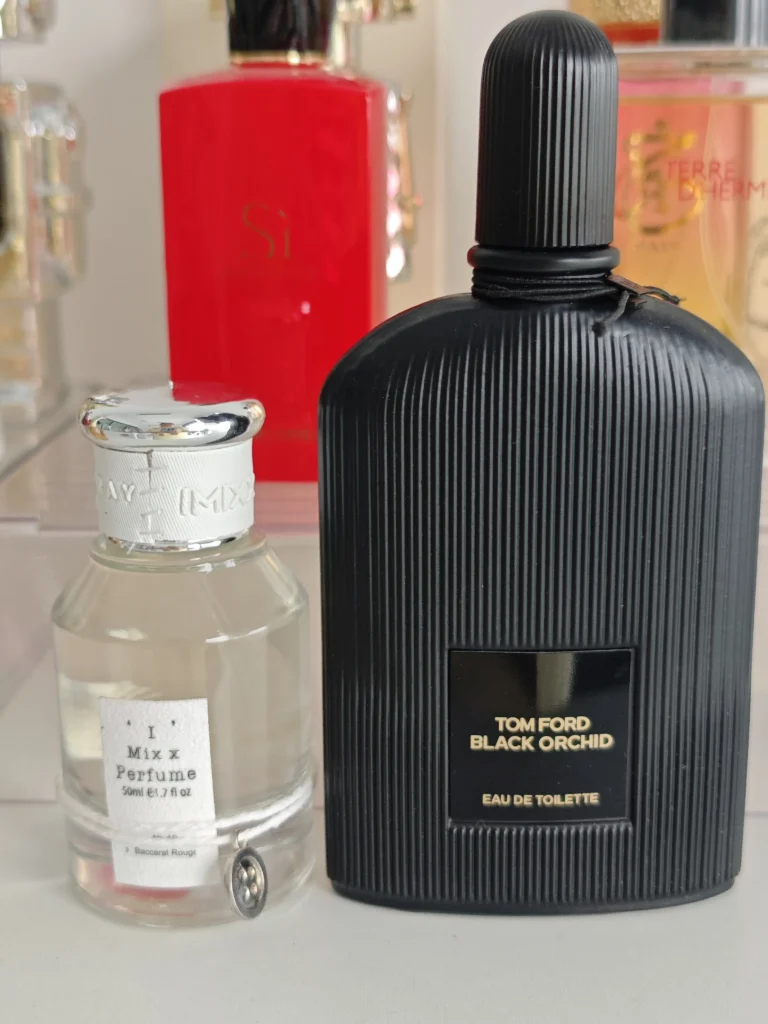
How to Find the Best Tom Ford Black Orchid Dupe in the USA: A Master Perfumer’s Supply Chain & Ingredient Guide
Apr
Transparency & Editorial Disclosure:We believe in total transparency. This guide is published by the editorial and product team at IMIXX Fragrances. While we manufacture our own fragrance alternative (IMIXX No. 32), this article is designed to be an objective, educational resource for US consumers. To ensure fairness, our performance claims are based on an internal blind-testing panel comparing multiple market alternatives under the same conditions. We have also sourced general supply chain data from industry analyses to explain retail markups. Our goal is not just to sell you a bottle, but to empower you with the knowledge of how the perfume industry works, so you can choose the best option for your budget and preferences—even if it isn’t ours.
The Allure of the Dark Floral: Why We Are Obsessed with Black Orchid
When you walk into a high-end US department store—be it Nordstrom, Saks Fifth Avenue, or a boutique in SoHo—the fragrance counters are typically dominated by familiar, safe scents. You will find the fresh, aquatic citruses meant for the summer heat, the sugary gourmands designed to be universally crowd-pleasing, and the classic powdery florals.
But every so often, a fragrance comes along that completely disrupts the market. It doesn’t want to be “safe.” It wants to be mysterious, polarizing, and unforgettable.
Launched in 2006, Tom Ford’s Black Orchid was exactly that. It wasn’t just a perfume; it was a cultural moment in the luxury beauty space. It introduced a completely new olfactory category to mainstream American consumers: the ultra-luxurious, dark, earthy oriental chypre. Though it was initially marketed toward women, its incredible depth, woodiness, and spicy undertones led men across the country to adopt it as a signature scent. It blurred gender lines long before it was an industry trend, redefining what a “sexy, evening fragrance” could smell like.
However, there is an unavoidable obstacle for the average consumer: the price tag. Today, a standard 100ml bottle of this designer masterpiece can easily cost between $200 and $250 in the USA. For fragrance lovers looking for an everyday signature scent, that sticker shock is a massive barrier. This economic reality has led to a massive surge in searches for the best Tom Ford Black Orchid dupe.
But as anyone who has blindly ordered a cheap clone off the internet knows, replicating this particular scent is notoriously difficult. To understand why some alternatives smell like a luxurious dream and others smell like a harsh chemical spill, we have to look under the hood at the ingredients and the science of perfumery.
Decoding the DNA: What Are You Actually Smelling?
A high-quality perfume is structured like a pyramid, featuring top, heart, and base notes that reveal themselves over time. The reason this specific dark floral profile is so hard to clone is due to the unusual, almost contradictory ingredients used in its composition. Let’s break down this complex scent pyramid in plain English, so you know exactly what to look for when evaluating an alternative.
1. The Controversial Opening: Earthy Truffle and Black Currant
The very first thing you smell when you spray the original is the most polarizing part of the fragrance: the black truffle note. If you are familiar with culinary truffles, you know they possess a damp, earthy, mushroom-like aroma. In modern perfumery, this note is almost always created using specific, high-quality aroma-chemicals (such as 1-octen-3-ol) because natural truffle extract is highly unstable and astronomically expensive.
When a manufacturer tries to cut corners on their raw materials, the opening is where the fragrance fails first. Cheap alternatives often overdose low-grade synthetic earthy notes, resulting in an opening that smells medicinal, harsh, or even like damp cardboard. A high-quality alternative will carefully balance this earthy truffle with the tart, fruity brightness of black currant and effervescent bergamot. It should smell mysterious and grounded, not purely chemical.
2. The Hypnotic Heart: Ylang-Ylang and Dark Spices
As the earthy opening begins to settle on your skin, the “heart” of the fragrance emerges. The star ingredient here is Ylang-Ylang, a star-shaped flower native to countries bordering the Indian Ocean. Ylang-Ylang has a rich, custardy, slightly banana-like, and highly intoxicating floral scent. In this profile, it is blended with a “fantasy note” of a black orchid (since true orchids rarely yield extractable essential oils) and a heavy dose of warm spices.
In low-tier dupes, this phase often turns overly powdery or “soapy,” resembling a cheap bathroom air freshener. A well-crafted alternative will maintain the rich, exotic, and slightly spicy nature of the florals without letting them become cloying. Fragrance chemists rely on strict guidelines from organizations like the International Fragrance Association (IFRA) to ensure these floral compounds are safe for the skin while maintaining their potency.
3. The Deep, Lasting Base: Mexican Chocolate and Patchouli
The base notes are the foundation of the perfume; they are what linger on your skin and clothing hours after you apply it. This specific DNA relies on a massive dose of dark, earthy Patchouli. Sourced primarily from Indonesia, patchouli gives the fragrance its woody, grounding anchor.
But the true magic lies in how the patchouli is blended with a bitter, dusty Mexican chocolate accord, vanilla, and incense. This is not a sweet, milky chocolate bar; it is dark cocoa powder dusted over ancient woods. When searching for a long-lasting clone, the base is everything. If the alternative fades into a flat, generic vanilla within two hours, it lacks the proper base note structure and the necessary oil concentration.
The Supply Chain Reality: Why Does Designer Perfume Cost So Much?
If you are exploring affordable alternatives in the US, you might naturally wonder: “If I buy a $40 perfume instead of a $250 perfume, am I buying a toxic, inferior product, or am I just avoiding a brand markup?”
To answer this, we need to talk about the supply chain. As consumers, we are conditioned by marketing to believe that a high price tag directly equals rare, magical ingredients. While luxury brands absolutely use beautiful, high-grade materials, the actual liquid inside the bottle (known in the industry as the “juice”) is only a small fraction of the retail price.
According to general industry analyses (frequently discussed in fashion business publications like The Business of Fashion), the traditional retail model is heavily inflated by middlemen and marketing. Let’s look at a realistic, estimated breakdown of how a typical $250 luxury perfume is priced compared to a Direct-to-Consumer (D2C) brand.
Table 1: Estimated Economics of Luxury Fragrance vs. D2C Brands
| Cost Component | Traditional Luxury Brand ($250 Retail) | Direct-to-Consumer Brand ($40 – $50 Retail) | What This Means for the US Consumer |
|---|---|---|---|
| The Liquid (Fragrance Oils & Alcohol) | Estimated $5 – $12 | Estimated $6 – $15 | Surprisingly, both often source from similar global fragrance houses (like Givaudan or Firmenich). Quality D2C alternatives often invest a larger percentage of their total budget directly into higher oil concentrations. |
| Packaging (Custom Bottles, Caps, Boxes) | $15 – $30 | $3 – $6 | Designer brands use heavy, custom-tooled glass, magnetic caps, and elaborate unboxing experiences. D2C brands use standardized, minimalist glass to keep costs down. |
| Marketing & Celebrity Endorsements | $50 – $80 | Minimal | When you buy designer, a significant portion of your money subsidizes multimillion-dollar ad campaigns, celebrity faces, and magazine spreads. |
| Retail Markup (The Middleman) | $100 – $130+ | $0 | Major US department stores and beauty retailers demand huge margins (often 50% to 60%) to stock products on their shelves. D2C brands sell directly from their warehouse to your doorstep, cutting out this massive fee. |
This transparency is crucial. When you buy a well-reviewed, high-quality alternative, you aren’t necessarily buying “cheap chemicals.” You are choosing to pay for the scent itself, rather than the marketing, the heavy bottle, and the department store’s profit margin. This economic shift is the driving force behind the modern fragrance alternative movement.
The Science of Longevity: Concentration and Maceration Explained
The most common complaint you will read on community forums like Basenotes or Reddit regarding cheap clones is that they simply do not last. To understand why this happens, you need to understand two key manufacturing terms: Concentration and Maceration.
1. Understanding Concentration Levels
Fragrance is a mixture of raw scented oils and a carrier (usually specially denatured perfumer’s alcohol). The ratio of oil to alcohol determines its strength, projection, and longevity.
- Eau de Toilette (EDT): Usually contains 8% to 15% fragrance oil. These are lighter, great for summer heat, but tend to fade relatively quickly (2 to 4 hours).
- Eau de Parfum (EDP): Usually contains 15% to 20% oil. This is the standard for most designer fragrances, offering good projection and longevity (5 to 8 hours).
- Extrait de Parfum (Pure Perfume): Contains 20% to 30%+ oil. This is the highest concentration available. Because it has less alcohol to evaporate, it sits closer to the skin but lasts significantly longer, often pushing past the 10-hour mark.
If you buy an ultra-cheap $15 body mist or EDT attempting to mimic a heavy dark floral, it will vanish almost immediately. For a scent profile this dense and woody, you need an EDP or Extrait concentration for it to perform properly.
2. The Secret Step: Maceration (Aging the Perfume)
Have you ever bought an affordable perfume, sprayed it on day one, and thought it smelled purely like rubbing alcohol? But then, a month later, you tried it again and it smelled amazing? You experienced the results of maceration.
Much like fine wine needs time in a barrel, perfume needs time for the oils, water, and alcohol to bind together and smooth out chemically. Mass-produced, ultra-cheap fast-fashion clones are often bottled and shipped the exact same week they are mixed. Reputable fragrance houses allow their batches to rest (macerate) in temperature-controlled environments for several weeks before bottling.
Pro Tip: If you ever receive a fresh bottle of a fragrance alternative in the mail, spray it 3 or 4 times to introduce oxygen into the tube, then put the bottle in a dark, cool drawer for two weeks. The difference in smoothness and depth will astound you.
How We Tested: Our Methodology
To provide a fair comparison of the US market, our team at IMIXX procured retail bottles of the leading alternatives. We conducted a week-long testing phase using a panel of four individuals (two men, two women) to account for differences in skin chemistry (pH levels and skin moisture). Each fragrance was tested on traditional paper blotters and directly on the skin. We evaluated them based on three criteria:
- Opening Accuracy: How well does it capture the notoriously difficult earthy/truffle opening without smelling harsh?
- Dry-Down Fidelity: Does the base retain the dark chocolate and patchouli, or does it collapse into generic vanilla?
- Longevity: How many hours is the scent noticeable without pressing your nose directly to the skin?
Evaluating the US Market: Top 5 Alternatives to Tom Ford Black Orchid
Now that we understand the chemistry and the economics, let’s look at the current market. Because this scent profile is so legendary, almost every alternative house has attempted to recreate it. Here is an objective review of some of the most popular options available to US consumers today.
1. Dossier – “Spicy Orchid”
Dossier has become a massive, highly visible player in the US dupe market, known for their magnetic caps and availability in major retailers like Walmart.
- The Vibe: The crowd-pleaser. Dossier’s approach to duping often involves making a scent slightly more mass-appealing.
- The Pros: It is incredibly accessible and very fairly priced. Dossier does a fantastic job of smoothing out the harsh edges of the original. If you find the designer version a bit *too* strong, earthy, or aggressive, Spicy Orchid actively dials back the divisive truffle note. This makes it sweeter, softer, and arguably much more wearable for the daytime or the office.
- The Cons: Because it is softer and sweeter, it lacks the aggressive, “beast mode” projection of the original. In our tests, the deep, dark chocolate and patchouli dry-down was noticeably lighter, meaning testers generally needed to reapply it after 4 to 5 hours.
2. ALT. Fragrances – “Truffle”
ALT is a prominent online-first brand based in the US, known for rapid trend adoption and strong social media marketing.
- The Vibe: The punchy opening.
- The Pros: ALT captures the opening notes quite well. The initial blast of earthy truffle and bright citrus is very comparable to the original, providing that immediate recognizable “hit” of the dark floral DNA. It projects very loudly in the first hour.
- The Cons: Our panel noted that the scent feels a bit linear over time. Instead of evolving gracefully through the complex floral heart and into the woody base, the fragrance stays relatively similar to its opening before fading away. It lasted about 5 to 6 hours on skin. It is a solid choice, but perhaps lacks the three-dimensional depth of more concentrated formulas.
3. Oakcha – “Sinful”
Oakcha is a sister brand to Oil Perfumery, focusing heavily on Extrait de Parfum concentrations to maximize longevity.
- The Vibe: The heavy hitter.
- The Pros: Because Oakcha uses a high oil concentration, “Sinful” performs very well in terms of longevity. It sticks to the skin and clothing tenaciously. The dark chocolate and patchouli base notes are very pronounced here, making it a great option for evening wear.
- The Cons: The high oil concentration means it can feel a bit dense or “oily” upon application. Additionally, the opening was rated by some testers as slightly sharp and synthetic, taking about 15-20 minutes to settle down and truly resemble the original profile.
4. Zara (Various Seasonal Releases)
Zara frequently releases fast-fashion fragrances that heavily “borrow” inspiration from designer hits. Over the years, several of their dark florals (often in black or dark purple bottles) have been compared to Black Orchid.
- The Vibe: The ultra-budget quick fix.
- The Pros: The price point is unbeatable, often under $25, and you can buy it while shopping for clothes. They are great for teenagers or those just dipping their toes into heavier fragrances without committing to a big purchase online.
- The Cons: Zara fragrances are widely known for poor longevity. They are usually Eau de Toilettes with high water and alcohol content. In our experience, the scent vanishes in under two to three hours. Furthermore, Zara constantly discontinues and renames their lines, making it incredibly frustrating to replace your bottle once you run out.
5. IMIXX – “No. 32”
As mentioned in our disclosure, this is our own formulation. We approached this project with a specific goal: prioritizing the base note longevity and a smooth, macerated opening.
- The Vibe: The balanced Extrait.
- The Pros: The biggest differentiator for IMIXX No. 32 is that we formulate it closer to an Extrait de Parfum. By utilizing a higher oil concentration, the formulation targets the difficult balance of the bitter Mexican chocolate and earthy patchouli, ensuring the scent doesn’t flatten out. We also pre-macerate our batches to eliminate the harsh alcoholic opening. In our panel tests, it routinely pushed past the 8-hour mark on skin.
- The Cons: We are exclusively a direct-to-consumer online brand, meaning you cannot walk into a mall to test it before buying. Additionally, because the oil concentration is high, the liquid is physically denser; it requires a few minutes to warm up and settle on the skin before the true, complex scent profile fully blooms.
Table 2: Summary Comparison of Top Market Alternatives
| Brand & Product | Best For… | Observed Longevity (Skin Test) | Scent Profile Focus |
|---|---|---|---|
| Dossier “Spicy Orchid” | Daytime wear, beginners to dark florals. | Moderate (4 – 5 hours) | Sweeter, softer, reduced earthy truffle. |
| ALT. “Truffle” | Capturing the immediate opening vibe. | Moderate (5 – 6 hours) | Strong opening blast, slightly linear dry-down. |
| Oakcha “Sinful” | Maximum projection and dense oils. | Long (7 – 9 hours) | Heavy base notes, sharp initial opening. |
| Zara (Various) | Extreme budget, short-term wear. | Weak (1 – 3 hours) | Fleeting top notes, high alcohol ratio. |
| IMIXX “No. 32” | Evening wear, long-lasting base notes. | Long (8 – 10+ hours) | Smooth macerated opening, deep patchouli/chocolate Extrait base. |
Consumer Guide: How to Wear, Store, and Layer Heavy Dark Florals
Owning a beautiful, dark fragrance is only half the battle; knowing how to wear it is an art form. Dark oriental chypres are incredibly potent. If you over-spray them, you risk overwhelming yourself and everyone in your vicinity (a phenomenon known in the fragrance community as “choking people out”).
Here are some insider tips on how to wear bold scents like these to maximize compliments and minimize headaches:
1. Target the Right Pulse Points
Heat activates perfume oils. Instead of spraying your clothes (which can sometimes stain due to dark fragrance oils), apply the fragrance to your skin’s pulse points: your wrists, the inside of your elbows, and the base of your neck. The natural heat of your body will help the complex base notes radiate slowly throughout the day.
2. The “Walk-Through” Method for the Office
If you love this scent but work in a conservative US office environment where heavy perfumes are frowned upon, try the walk-through method. Spray one mist into the air in front of you and walk through the cloud. It leaves a subtle, sheer aura on your hair and clothing that is intriguing but not intrusive.
3. Hydration is the Key to Longevity
Perfume evaporates much faster on dry skin. If you want your fragrance to last all night, apply an unscented body lotion, a deeply hydrating body oil, or a little bit of Vaseline to your pulse points before spraying. The fragrance oils will cling to the lipid barrier of the lotion, significantly boosting longevity.
4. The Art of Layering
If you find the truffle and dark chocolate a bit too heavy, masculine, or serious for a daytime event, you can easily alter the scent by layering it!
- To Sweeten It: Layer it over a pure vanilla body spray or lotion. The vanilla will pull forward the chocolate notes and soften the patchouli.
- To Brighten It: Apply a crisp citrus Eau de Toilette (like a bergamot or neroli scent) on top. The brightness of the citrus cuts through the dark woods beautifully.
5. Proper Storage
Never store your perfumes in the bathroom. The constant fluctuation of heat and humidity from your shower will degrade the fragile top notes (like the black currant and bergamot) and cause the perfume to spoil faster. Store your bottles in a cool, dark place, like a bedroom drawer or a closet, away from direct sunlight.
Frequently Asked Questions (FAQ)
1. What actually smells similar to Tom Ford Black Orchid?
Fragrances that belong to the “Dark Oriental Floral” or “Chypre” families often smell similar. Look for scent profiles that combine earthy notes (truffle, heavy vetiver) with rich florals (ylang-ylang, black gardenia) and sweet/woody bases (patchouli, vanilla, dark Mexican chocolate). Brands like Dossier, ALT, Oakcha, and IMIXX provide popular interpretations based on these notes.
2. Is this scent profile considered masculine or feminine?
It is widely considered unisex. While originally released in the women’s fragrance category, the heavy use of woods, incense, and earthy truffle makes it incredibly popular among men. Today, the modern fragrance community largely ignores gender labels, and this profile stands as a prime example of a powerful, gender-neutral signature scent.
3. Can I wear a dark floral dupe in the summer heat?
While you should wear whatever makes you feel confident, dark, heavy fragrances are generally better suited for the Fall and Winter months, or for evening wear. High heat and humidity can cause heavy notes like patchouli and chocolate to become cloying and overwhelming. If you do wear it in the summer, stick to a single spray.
4. Why does my cheap dupe smell strongly of alcohol at first?
This is a sign of a lack of maceration. Mass-produced affordable fragrances are often bottled immediately after the oil and alcohol are mixed. The formula hasn’t had time to “marry.” Let the bottle sit in a dark drawer for a few weeks (macerate), and the harsh alcohol smell should significantly reduce.
5. Are affordable fragrance alternatives safe for my skin?
Reputable alternative brands in the US formulate their products adhering to strict safety guidelines, such as those set by IFRA (The International Fragrance Association). They use safe carrier alcohols and regulated aroma-chemicals. However, as with any cosmetic product, if you have sensitive skin, it is recommended to do a patch test or spray the fragrance on your clothing instead.
6. What is the difference between an EDP and an Extrait?
The difference is the ratio of fragrance oil to alcohol. An Eau de Parfum (EDP) typically contains 15-20% oil, offering a good balance of projection and longevity. An Extrait de Parfum contains 20-30%+ oil, meaning it lasts much longer on the skin, though it may not project as loudly across a room because there is less alcohol to carry it into the air.
7. Does Zara have a dupe for Black Orchid?
Zara frequently releases limited-edition fragrances that smell similar to popular designers. Over the years, scents like Zara Black Peony or specific dark seasonal releases have shared similarities. However, Zara constantly discontinues lines, making them hard to rely on as a permanent signature scent, and their longevity is typically much weaker than dedicated dupe houses.
Final Thoughts: Smart Fragrance Shopping in 2024 and Beyond
The days of blindly accepting massive retail markups for luxury fragrances are coming to an end. As US consumers become more educated about the science of scent, the role of carrier alcohols, the importance of maceration, and the economic realities of global supply chains, the stigma around “dupes” or “inspired-by” fragrances is rapidly fading.
Finding the perfect alternative comes down to what you value most. If you want a softer, more office-friendly version and prefer the convenience of buying at a big-box retailer, Dossier is a fantastic choice. If you want an aggressive, punchy opening, ALT has you covered. And if your primary focus is deep, Extrait-level longevity with a smooth, macerated dry-down, our team at IMIXX has crafted No. 32 specifically for that purpose.
Finding your signature scent should be a joyful, affordable journey of exploration, not a financial burden. By understanding the ingredients and the business models behind the bottles, you can confidently build a luxurious fragrance wardrobe that smells like a million dollars—without actually spending it.
Explore the Science of Affordable Luxury
Curious about experiencing a high-concentration, carefully macerated alternative to the world’s most famous dark floral?
Discover the direct-to-consumer difference with our in-house formulation.
Or explore our full educational blog and fragrance collection at IMIXX.net.
