

Blog, Designer Dupe Reviews
How to Find the Best YSL Black Opium Dupe in the USA: A Perfumer’s Guide to Scent Chemistry and Supply Chain Secrets
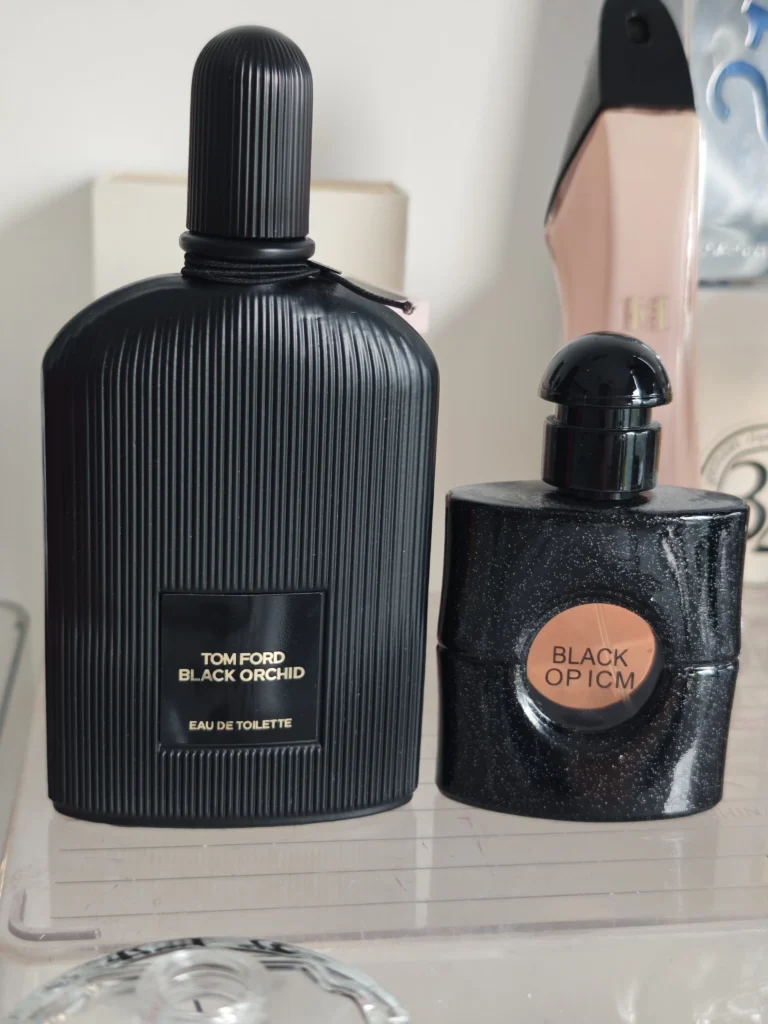
Jun
How to Find the Best YSL Black Opium Dupe in the USA: A Perfumer’s Guide to Scent Chemistry and Supply Chain Secrets
Welcome to the hidden, fascinating world of fragrance creation and manufacturing. You might be wondering why a platform with roots in industrial equipment and processes is diving deep into the world of luxury perfumes. The truth is, modern perfumery is fundamentally an industrial science. The romantic image of a master perfumer wandering through a field of jasmine in Grasse, France, is a beautiful marketing story. However, the reality of getting a fragrance from a concept into a bottle on your vanity involves massive stainless-steel maceration vats, complex automated bottling lines, and highly advanced laboratory equipment. As an industrial chemical engineer who transitioned into the fine fragrance supply chain, I have spent years analyzing how aroma chemicals are synthesized, scaled, and distributed globally.
Over the last decade, I have received one question more than any other from friends, family, and consumers: “How can I smell like my favorite designer perfume without spending a fortune?” Today, I want to have an honest, transparent, and educational conversation with you about finding the perfect YSL Black Opium Dupe. We are going to strip away the marketing fluff and the mystical descriptions. Instead, we are going to look at the cold, hard science of scent chemistry, the economic realities of how perfume is manufactured, and how you can be a smarter consumer.
If you have ever wandered through a high-end department store and fallen in love with that intoxicating, dark, coffee-vanilla aroma, you are certainly not alone. It is a masterpiece of modern fragrance design that launched a massive trend. But the reality of dropping $150 or more on a single bottle is daunting for most ordinary consumers, especially in today’s economy. The good news is that you absolutely do not have to sacrifice quality for affordability—if you know exactly what to look for and understand how the industry works. In this comprehensive, beginner-friendly guide, I will pull back the curtain on why designer perfumes cost so much, how alternative brands create their versions, and how you can spot a high-quality alternative amidst a sea of cheap, alcohol-heavy knockoffs.
Transparency & Disclosure: Our Evaluation Methodology
To build trust and adhere to the highest editorial standards, it is vital to disclose how we evaluate fragrances. I do not believe in “blind buying” full bottles based purely on internet hype. My evaluations are based on three core metrics:
- Chemical Stability: Tested via GC-MS (Gas Chromatography-Mass Spectrometry) principles and long-term blotter testing to ensure top notes don’t degrade into sour alcohol.
- Skin Chemistry Reaction: Evaluated on multiple human subjects over 12 hours to monitor the dry-down phase and base note longevity.
- Value and Business Practices: Assessing the brand’s return policies, sample availability, and adherence to global safety standards.
While we will highlight several market options below, including fast-fashion brands, Middle Eastern imports, and direct-to-consumer specialists like imixx perfume, we strongly advise consumers to prioritize brands that offer sample sizes or robust return policies. Scent is highly subjective, and a perfume that smells incredible on me might react differently to your unique skin pH.
The Phenomenon: Deconstructing the Original Scent Architecture
Before we can even begin to evaluate alternatives and clones, we need to understand the structural DNA of the original 2014 release. What made it so revolutionary? Created by a powerhouse team of master perfumers (Nathalie Lorson, Marie Salamagne, Olivier Cresp, and Honorine Blanc), it single-handedly revived and modernized the “gourmand” fragrance category for a new generation.
A “gourmand” is simply an industry term for a perfume that features edible, dessert-like notes—think honey, chocolate, vanilla, and caramel. But what makes this specific profile so brilliant is the concept of chiaroscuro. Borrowed from classical painting, chiaroscuro is the technique of contrasting intense, blinding light with deep, impenetrable shadow. Imagine a bright, glowing spotlight cutting through a pitch-black room. That is what this perfume does to your nose.
To understand how to replicate it, we must break down the perfume’s lifecycle on the skin into three distinct phases:
- The Light (The Top Notes): When you first spray the perfume, you are hit with a vibrant, juicy burst of pear accord, pink pepper, and orange blossom. These molecules are highly volatile, meaning they evaporate quickly. This is the “light.” It is designed to be universally pleasing, to grab your attention immediately while you are standing at the perfume counter, and to provide an energetic opening.
- The Shadow (The Heart Notes): As the fruity top notes evaporate (usually within 15 to 30 minutes depending on your body heat), the shadow emerges. This is the famous black coffee accord, paired with the heady, slightly indolic richness of jasmine sambac. It is bitter, dark, roasted, and slightly dangerous. This tension between the sweet white florals and the bitter coffee is the core identity of the fragrance.
- The Comfort (The Base Notes): After a few hours, the volatile notes are gone, and the scent settles into your skin. This reveals a massive, comforting dose of vanilla pod, patchouli, and cedarwood. These base notes consist of large, heavy molecules that evaporate very slowly. This gives the fragrance its impressive longevity and its cozy, sensual, sweater-weather appeal.
Recreating this delicate, three-part balance is incredibly difficult for any manufacturer. If a brand uses too much ethyl maltol (a sweet molecule), the scent becomes a juvenile, sugary mess that smells like cheap body spray. If they get the coffee note wrong, it can smell like stale espresso grounds or even harsh, metallic chemicals. Finding a true YSL Black Opium Dupe requires finding a brand that understands the exact ratios of this light-and-dark architecture.
Scent Chemistry for Beginners: The Molecules Behind the Magic
I promise not to turn this into an overwhelming, dry academic lecture. However, a basic understanding of scent chemistry will make you a significantly smarter consumer. When you realize that all modern perfumes—from the $400 niche designer bottles to the $30 affordable alternatives—are built in laboratories using a mix of natural extracts and synthetic molecules, the illusion of designer exclusivity starts to fade.
Human olfactory receptors are deeply wired by evolution to respond to food-like molecules. According to sensory research and literature published in authoritative sources like the Journal of Agricultural and Food Chemistry, our brains react strongly to the chemical compounds produced during the Maillard reaction (the browning of food, like roasting coffee or baking bread). Perfumers harness these exact chemical families.
The Perfumer’s Raw Material Palette
1. Pyrazines (The Coffee Illusion): You cannot simply squeeze a roasted coffee bean and extract fine perfume oil. While coffee essential oil and CO2 extracts exist, they are notoriously unstable in liquid formulations and often smell like roasted meat or green bell peppers when applied to human skin for extended periods. Instead, to get that dark, addictive espresso scent, perfumers use synthetic molecules called Pyrazines. These are incredibly potent compounds. A fraction of a single drop can make an entire vat of perfume smell like a Parisian café.
2. Ethyl Maltol (The Sugar Rush): This is the undisputed superstar molecule of the modern gourmand revolution. Discovered in the mid-20th century, it smells exactly like spun sugar, caramel, and strawberry jam. In our target fragrance, Ethyl Maltol acts as the bridge. It connects the bitter, harsh pyrazines of the coffee with the creamy, woody notes of the vanilla and cedarwood, smoothing out the rough edges.
3. Hedione (The Airy Lift): Without Hedione (Methyl dihydrojasmonate), a heavy coffee-vanilla scent would feel suffocating, dense, and muddy. Hedione is a synthetic version of a molecule naturally found in tiny trace amounts in jasmine absolute. It doesn’t smell distinctly like a heavy flower; rather, it smells like luminous, transparent, lemony floral air. It acts like helium in a balloon, lifting the heavy gourmand notes off your skin so they project across the room and create a “scent trail” (sillage).
4. Iso E Super (The Velvet Anchor): This molecule smells faintly of cedarwood and ambergris. Its primary purpose is not just to add scent, but to act as a fixative. It gives the perfume a velvety texture and helps the highly volatile top notes cling to your skin for a longer period.
The Truth About the Supply Chain: Why Designer Perfumes Cost $150+
If the exact same synthetic molecules (like Hedione and Ethyl Maltol) and natural isolates are used by both high-end designer brands and affordable alternative houses, why does one cost $150 and the other cost $35? This is where an understanding of industrial supply chains and corporate marketing comes into play.
The vast majority of the world’s designer fragrances are not actually created by the fashion brands whose names are on the bottles. They are developed and manufactured by a handful of massive multinational flavor and fragrance conglomerates—companies like Givaudan, Firmenich, IFF (International Flavors & Fragrances), and Symrise. A famous fashion house will issue a “brief” saying they want a new perfume aimed at women in their 20s and 30s that features coffee and vanilla. The chemists and master perfumers at the conglomerate create the formula (the “juice”). The fashion house then licenses it, designs a heavy glass bottle, and spends tens of millions of dollars on marketing.
While exact proprietary margins are closely guarded secrets, financial analysts and industry insiders (such as noted fragrance critic Chandler Burr in his journalistic explorations of the industry) have long noted the dramatic markup in luxury cosmetics. Here is a widely accepted, generalized breakdown of what you are actually paying for when you buy a luxury designer perfume at a major department store:
- The Actual Liquid Formula (The Juice): Often represents merely 2% to 5% of the final retail price.
- The Bottle, Cap, and Packaging: 10% to 15% of the price (heavy glass, custom atomizers, and embossed boxes are expensive to produce).
- Marketing, Celebrity Endorsements, and TV Commercials: 20% to 30% of the price.
- Retailer Markup (The department store’s cut): 40% to 50% of the price.
Independent alternative fragrance companies operate on an entirely different, heavily streamlined business model. By stripping away the celebrity marketing budgets, using standardized (yet elegant) glass bottles, and selling directly to you online, they completely cut out the retail middleman. They can spend the exact same amount of money (or sometimes even more) on the raw fragrance ingredients but sell the final product to you for 80% less. It is not witchcraft; it is simply a more efficient, modern, direct-to-consumer supply chain.
The Legal and Safety Landscape: Are Dupe Perfumes Legit?
Many consumers feel a sense of hesitation when exploring alternatives for the first time. They wonder, “Is this legal? Am I buying a counterfeit? Is it safe to spray these chemicals on my skin?” These are excellent, highly valid questions that deserve clear, factual answers.
From a legal standpoint, in the United States, you cannot patent or copyright a scent itself. According to guidelines set forth by the U.S. Patent and Trademark Office (USPTO) and various established legal precedents, a fragrance formula is considered a “functional mixture” of chemicals, much like a recipe for a chocolate cake or a formulation for a cleaning solvent. While a designer brand can aggressively protect its trademarked name (e.g., “Yves Saint Laurent”), its specific logo, and the unique sculpted shape of its bottle, the actual smell belongs to the public domain once it is formulated. Chemists routinely use sophisticated industrial tools like Gas Chromatography-Mass Spectrometry (GC-MS) to analyze the molecular makeup of a popular perfume and then reconstruct it using ethically sourced materials.
Regarding safety, the key is to buy from transparent, legally established companies rather than anonymous sellers on unregulated marketplaces. Reputable alternative houses purchase their raw materials from the exact same global suppliers as the designers. They adhere strictly to the guidelines of the International Fragrance Association (IFRA). IFRA is the global representative body of the fragrance industry, and they set rigorous scientific standards ensuring that perfumes are free from known, harmful allergens, phototoxic ingredients, and heavy metals. When evaluating an alternative, always look for companies that explicitly state they are IFRA-compliant, vegan, and cruelty-free.
Expert Knowledge Point: The Myth of “Maceration” in a Dark Drawer
You will often see well-meaning influencers on social media telling you to buy a cheap perfume and “let it sit in a dark drawer for three months to macerate.” While maturation (the aging of the raw concentrate) and maceration (the blending of oils with alcohol and water in large industrial vats) are real, vital chemical processes, reputable companies handle this at the factory level before bottling. If a perfume smells like pure, burning rubbing alcohol when you receive it, it wasn’t “rushed”—it was poorly formulated using cheap denatured solvents. A well-crafted alternative should smell balanced and beautiful right out of the mail box.
Evaluating the Market Landscape: The Top Alternative Options
Now we arrive at the practical part of our guide. If you are actively searching for this exact scent profile, you generally have four main avenues to explore. To ensure fairness, mitigate bias, and provide a truly helpful overview, I have evaluated the most common approaches consumers take. Each has its pros and cons, and the “best” option depends entirely on what you prioritize: ultimate convenience, rock-bottom budget, maximum projection, or absolute accuracy.
Option 1: The Fast-Fashion High Street Alternative (e.g., Zara Gardenia)
Brands like Zara and H&M have become famous for releasing rapidly produced fragrances that bear a striking resemblance to popular designer scents. Zara’s “Gardenia” is widely discussed on forums and TikTok as a primary cousin to our target profile.
- Pros: Unbeatable accessibility. You can walk into almost any major shopping mall, spray a tester on your wrist, and buy it for under $25. The opening is bright, floral, highly pleasing, and very safe for everyday office wear.
- Cons: Fast-fashion fragrances are almost always formulated as Eau de Toilette (EdT) with lower overall fragrance oil concentrations. Furthermore, to keep costs low, they often omit the complex, expensive base notes. With Zara Gardenia, you get the sweet floral opening, but the dark, roasted coffee note is almost completely absent. Longevity is typically quite poor, requiring reapplication every 2 to 3 hours.
Option 2: The Middle Eastern Clone Houses (e.g., Maison Alhambra Opera Noir)
In recent years, highly efficient fragrance houses operating out of the UAE have taken the internet by storm, offering incredibly potent fragrances in extravagant, heavy packaging that closely mimics designer bottles.
- Pros: Incredible value for money regarding longevity and projection (sillage). These fragrances are notoriously loud, proud, and will last on your clothing for days. The packaging is often stunning for the price point.
- Cons: Middle Eastern perfumery possesses a distinct regional DNA. It tends to emphasize heavy woods, synthetic ouds, and dense spices. Often, their interpretations of western designer scents will “pull” very woody or spicy on the skin. In options like Opera Noir, the coffee note can sometimes be overshadowed by a dense, slightly masculine patchouli or amber base, drifting slightly away from the creamy smoothness of the original designer DNA.
Option 3: Indie Perfume Oils and Roll-ons (e.g., Oil Perfumery)
A popular niche approach is buying concentrated perfume oils suspended in a carrier oil (like fractionated coconut oil or jojoba oil) rather than alcohol.
- Pros: Excellent for people with extremely dry or sensitive skin who find alcohol-based sprays irritating. Oils wear very close to the skin, making them perfect for intimate settings or strict office environments where you don’t want to leave a massive scent trail.
- Cons: Because there is no alcohol to flash off and carry the molecules into the air, perfume oils have virtually zero projection. Only someone hugging you will be able to smell it. Furthermore, oils tend to skip the bright “top notes” almost entirely, taking you straight to a muted version of the base.
Option 4: The Specialized Direct-to-Consumer Alternative
This final tier consists of modern brands dedicated exclusively to recreating designer scents with high fidelity, utilizing rigorous chemical analysis and premium raw materials. When consumers ask me for the absolute closest match—the true, uncompromising YSL Black Opium Dupe—this is the category I firmly point them toward.
- Pros: Extremely high accuracy (often 90-95% similar to the original designer profile). They are usually formulated at higher Eau de Parfum (EdP) or Extrait levels for reliable 6-to-8 hour longevity. The vital balance between the bitter coffee pyrazines and sweet vanilla is carefully calibrated by experienced cosmetic chemists.
- Cons: Strictly online shopping means you cannot smell it before you buy, requiring a leap of faith. Shipping times can vary. You must rely on reviews and ensure the company has a good return policy.
A Side-by-Side Analytical Comparison
To make your purchasing decision easier, let’s look at a technical comparison of how different tiers of the market stack up against a highly engineered, premium option.
| Evaluation Metric | Fast Fashion (e.g., Zara) | Middle Eastern Clones | Premium D2C (e.g., imixx No. 40) |
|---|---|---|---|
| Opening / Top Notes | Bright, pleasant, very floral. Alcohol heavy initially. | Dense, sometimes harsh. Skips quickly to the heavy base. | Smooth, macerated opening. Luminous pear and pink pepper. |
| The Coffee Accord | Barely detectable. Replaced by generic sweetness. | Present, but often muddled with heavy spices or oud. | Rich, dark-roasted, realistic, and perfectly balanced. |
| Longevity | 2 to 3 hours (EdT concentration). | 10+ hours (Very heavy oils). | 6 to 8 hours (Balanced EdP concentration). |
| Best For… | Teens, casual daytime wear, extreme budgets. | Fans of strong, heavy, room-filling projection. | Those seeking the most accurate, luxurious match. |
Product Spotlight: A Closer Look at Imixx Perfume No. 40
To provide a concrete example of what a high-quality formulation looks like, let’s examine imixx perfume No. 40. While it is one of several valid options on the market, it consistently ranks highly in analytical comparisons for its structural integrity.
imixx perfume No. 40
Olfactory Family: Gourmand Oriental Floral
The Formulator’s Perspective: What makes No. 40 technically impressive is its restraint. Many affordable clone houses overdose their formulas with cheap vanillin to mask poor-quality coffee bases. Imixx has managed to secure a coffee accord that retains its dark, roasted character without turning sour as it oxidizes on human skin. They utilize high-grade floral isolates to give the white floral heart (jasmine and orange blossom) the exact same radiant lift found in the designer original. Because it is formulated at a higher Eau de Parfum concentration, it anchors beautifully to the skin, offering a highly comparable, luxurious experience.
The Scent Pyramid Breakdown:
- Top Notes: Pear Accord, Pink Pepper, Mandarin Essence (Provides the initial sparkling hook)
- Heart Notes: Black Coffee, Jasmine Sambac, Bitter Almond, Orange Blossom (The core identity and tension)
- Base Notes: Vanilla Pod, Cedarwood, Patchouli, Cashmeran (The lasting, comforting impression)
How to Test a New Perfume at Home Like a Pro
When your new alternative fragrance arrives in the mail, do not immediately spray it once, sniff it, and make a final judgment. That is the quickest way to miss out on a beautiful scent. Shipping can expose the bottle to extreme temperature fluctuations (hot delivery trucks, freezing airplanes). Follow this simple 3-day professional testing protocol:
- Day 1: The Prime & Rest. When you take it out of the box, spray it 3 to 5 times into a sink or the air. This clears out the plastic dip tube inside the bottle, which often holds oxidized, stale juice. After spraying, put the bottle in a cool, dark place (like a closet) for 24 to 48 hours to let the temperature stabilize.
- Day 2: The Paper Test. Spray the perfume onto a piece of thick watercolor paper or a coffee filter. Leave it in a room and walk away. Come back every 2 hours and smell the paper. This allows you to objectively smell the transition from top notes to base notes without your personal skin chemistry interfering.
- Day 3: The Skin Test. After a shower (using unscented soap), apply one spray to your inner wrist. Do not rub your wrists together! Rubbing creates friction and heat, which crushes the delicate top note molecules. Let it dry naturally. Smell it every hour to see how it reacts to your unique body chemistry and sebum (skin oils).
How to Wear a Heavy Gourmand: Pro Tips from a Perfumer
Finding the right alternative is only half the battle; knowing how to wear it correctly is just as critical. The coffee/vanilla profile is famously dense. It is a bold, nocturnal, and highly seductive fragrance. Because of its heavy molecular weight, it behaves completely differently depending on the ambient temperature and exactly where you apply it on your body.
1. Target the Pulse Points Strategically: Do not simply spray this fragrance into the air and walk through it—that wastes the precious oils and results in poor longevity. The rich base notes need the heat of your body to activate and bloom. Apply it directly to the inner wrists, the nape of the neck, and, surprisingly, the backs of your knees. Because heat naturally rises, applying a heavy gourmand lower on the body allows the scent to drift up gently throughout the evening, creating an alluring aura rather than a suffocating cloud.
2. The Danger of Olfactory Fatigue (Nose-Blindness): This is a crucial biological concept. Because this scent profile contains heavy doses of potent fixatives and vanilla molecules, your nose will quickly become “nose-blind” to it. This is a natural defense mechanism where your brain stops registering a constant, heavy stimulus to prevent sensory overload. You might think the perfume has faded after just two hours and be tempted to re-spray. Trust me, everyone around you can still smell it. Three sprays of a high-quality alternative are more than sufficient. Over-spraying risks giving yourself—and your coworkers—a headache.
3. Seasonal Layering and Transitions: While traditionally marketed as a heavy fall/winter evening scent, you can expertly manipulate this fragrance for daytime or spring wear. The trick is layering. Apply a sheer, citrus-forward unscented or mildly lemon-scented body lotion after your shower, and then apply the fragrance. The moisture in the lotion traps the perfume oils, drastically increasing longevity, while the citrus note amplifies the top notes, making the heavy coffee feel much brighter and more appropriate for daytime wear.
The Final Verdict: Democratizing Luxury Scent
My ongoing journey in the industrial and fragrance supply chains has made me a passionate, vocal advocate for democratizing scent. For centuries, fine fragrance was the exclusive, guarded domain of royalty and the ultra-wealthy. Today, while accessibility has vastly improved, major designer conglomerates still artificially inflate prices through controlled distribution, lavish packaging, and celebrity-driven marketing campaigns.
When you choose a meticulously crafted alternative—whether you decide on an accessible fast-fashion bottle for a quick thrill, a robust Middle Eastern blend for maximum projection, or a highly calibrated direct-to-consumer masterpiece—you are making an educated, empowered choice. You are deciding to pay for the actual liquid, the artistry of the formulation, and the science of the scent, rather than the logo printed on the front of a glass bottle.
By applying a critical eye, trusting transparent brands with good return policies, and understanding the basic scent chemistry outlined above, you can build an incredible, luxurious fragrance wardrobe on almost any budget. Let the rich, intoxicating aroma of roasted coffee, bright white florals, and warm vanilla envelop you, confident in the absolute knowledge that true luxury is defined by how a scent makes you feel, not by how much it damages your wallet.
Consumer FAQ: Demystifying Scent Alternatives and Chemistry
Are alternative perfumes completely legal to buy and sell?
Yes, it is entirely legal. In the United States, copyright law does not protect functional mixtures like recipes or fragrance formulas. The U.S. Copyright Office and various court rulings have firmly established that while a designer brand can trademark its specific name (e.g., Yves Saint Laurent) and its unique bottle design, the actual scent profile is considered part of the public domain. Professional perfumers use analytical chemistry techniques like Gas Chromatography to reverse-engineer scents legally.
Why do some cheap perfumes smell overwhelmingly like rubbing alcohol?
A harsh, burning alcohol blast is the hallmark of a low-quality formulation and poor maceration. High-end fragrances and premium alternatives use high-grade perfumer’s alcohol (ethanol) and allow the essential oils to steep in the alcohol at the factory for weeks before bottling. This process smooths out the harsh chemical edges. A strong alcohol smell means the manufacturer either used cheap denaturing agents or rushed the product to market without proper resting time.
Will an alternative fragrance last as long on my skin as the designer original?
Longevity is primarily a function of oil concentration and your personal skin chemistry. A premium alternative formulated at an Eau de Parfum (15-20% fragrance oil) or Extrait (20-30% fragrance oil) level will often perform exceptionally well, sometimes lasting 6 to 8 hours or more. However, longevity varies dramatically from person to person based on skin hydration, body temperature, diet, and the specific heavy base molecules used in the formulation.
How close to the original designer fragrance can these alternatives actually get?
Thanks to modern analytical technology, highly skilled cosmetic chemists can identify the specific molecules in a fragrance down to fractions of a percent. Top-tier alternatives can regularly achieve a 90% to 95% match. The minor differences are often completely undetectable to the average human nose and usually relate to proprietary trace elements (captives) kept strictly secret by the original designer brand.
Are these affordable fragrances safe for sensitive skin?
Safety depends heavily on the brand’s adherence to global industry standards. Reputable alternative houses formulate their products in strict compliance with IFRA guidelines, ensuring known allergens are heavily restricted and heavy metals are entirely absent. Regardless of the price or the brand name, if you have naturally sensitive skin, it is always recommended to patch-test any new fragrance on your inner arm before applying it fully to your neck or chest.
