

Best Fragrance Lists, Blog
How to Find the Best Versace Bright Crystal Dupe: An Industry Insider’s Guide
Jun
About the Author: Linus Dacke Thall — Fragrance Supply Chain & Production Specialist
With over 12 years of experience managing fragrance supply chains, formulation labs, and raw material sourcing across Europe and the USA, Linus specializes in demystifying the perfume industry. He is passionate about bridging the gap between high-end perfumery chemistry and everyday consumer knowledge. He currently consults for and oversees production at independent fragrance houses, including Imixx.
Executive Summary & Industry Transparency
In this comprehensive guide, we peel back the curtain on the fragrance industry to help USA consumers find a reliable Versace Bright Crystal dupe. Moving away from standard marketing jargon, we explore the genuine chemistry behind the beloved aquatic-floral scent profile, the realities of supply chain economics, and why so many affordable alternatives suffer from poor longevity or a harsh “alcohol blast.”
We will objectively review top players in the market—including Dossier, Zara, Oakcha, and our own factory-direct brand, Imixx. By examining the pros and cons of each, backed by principles of Gas Chromatography and maceration, this guide aims to empower you to make an educated, value-driven purchase without falling for brand illusions.
Disclaimer: The cost breakdowns and technical analyses provided in this article are based on standard industry averages and my professional experience in fragrance manufacturing. Formulations vary by brand, and scent perception is highly subjective.
1. Introduction: The Evolution of the Smart Perfume Consumer in the US
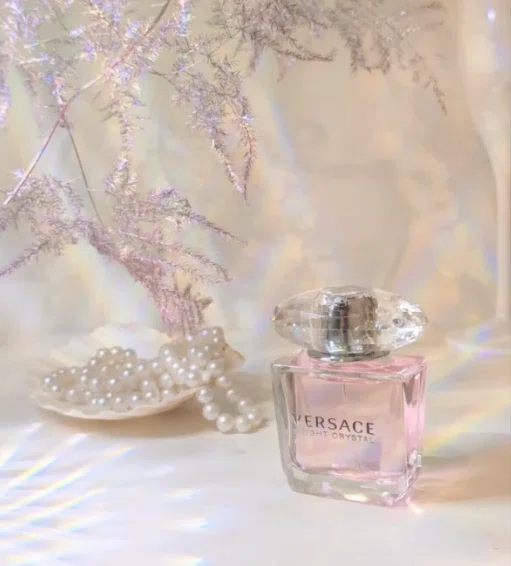
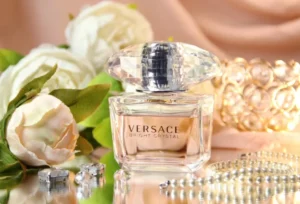
Walk into any major department store in the United States—whether it is a bustling Macy’s in New York or a high-end boutique in Los Angeles—and you are immediately greeted by a wall of dazzling glass bottles. Among the most recognizable is the iconic, heavy pink jewel-capped bottle of Versace Bright Crystal. Since its launch, it has dominated the global market as the quintessential fresh, youthful, and vibrant floral fragrance.
However, the landscape of fragrance consumption in the USA is shifting dramatically. Consumers are more educated than ever. They are reading ingredient labels, discussing longevity on Reddit communities like r/FemFragLab, and questioning why a mixture of aromatic compounds and alcohol should cost upwards of $110 for a standard Eau de Toilette (EDT).
The truth is, when you buy a traditional designer fragrance, the liquid inside the bottle (the “juice,” as we call it in the industry) represents only a fraction of the retail price. You are financing celebrity marketing campaigns, intricate custom glass molds, global distribution networks, and massive retail markups. As a supply chain insider who has spent years in the labs and factories where these scents are actually compounded, I can tell you that recreating an olfactory experience is not a dark art—it is analytical chemistry.
The rise of the “dupe” (duplicate or alternative) market is a direct response to this economic reality. But not all dupes are created equal. Many consumers have experienced the disappointment of buying a cheap knockoff that smells like industrial glass cleaner or vanishes from the skin within twenty minutes. In this guide, I will teach you exactly how to navigate this market, understand what makes a perfume smell “expensive,” and evaluate the best affordable floral perfumes available today.
2. Deconstructing the DNA: What Makes the Bright Crystal Scent Profile So Beloved?
To understand how an alternative fragrance is formulated, we first need to dissect the original masterpiece. In perfumery, we discuss scents in terms of a “pyramid” consisting of top, heart (middle), and base notes. Bright Crystal is categorized as a Floral Fruity Aquatic. It is universally loved because it is “safe”—it is non-offensive, perfect for the office, and incredibly refreshing in hot, humid US summer climates.
The Top Notes: The Illusion of Yuzu and Pomegranate
The first 15 minutes of this fragrance profile are defined by an icy, mouth-watering freshness. The notes listed are usually Yuzu, Pomegranate, and an “Ice Accord.”
From a formulation standpoint, this is fascinating. You cannot naturally extract essential oil from a pomegranate fruit in a way that translates to perfume. Therefore, the “pomegranate” note is a masterfully crafted synthetic accord—a blend of aromachemicals that mimic the tart, sweet, juicy red characteristics of the fruit. Yuzu, a very expensive Japanese citrus, is often recreated using a blend of natural lemon or bergamot oils mixed with synthetics like Methyl Pamplemousse to give it that distinct, slightly bitter, grapefruit-like zing. When a factory tries to make a cheap dupe for Versace Bright Crystal and cuts corners, they often use low-grade D-limonene instead of complex citrus bases. This is why cheap clones often smell overwhelmingly like lemon-scented cleaning products.
The Heart Notes: Peony, Magnolia, and Lotus
As the citrus top notes evaporate, the floral heart emerges. This is where the fragrance gets its feminine, pink, and watery characteristics. The Lotus note provides the aquatic, slightly transparent feel, preventing the floral notes from becoming too heavy or “grandma-esque” (a common consumer fear). Peony adds a fresh, rosy softness, while Magnolia brings a touch of waxy, lemony floral depth. A high-quality formulation uses ingredients like Hedione, an aromachemical that gives flowers a “dewy,” airy lift, making the scent feel like a breeze passing through a spring garden.
The Base Notes: Musk, Mahogany Wood, and Amber
The dry-down is the foundation of the perfume—the scent that lingers on your skin hours later. It features clean white musk, warm amber, and a touch of dry wood (often listed as mahogany). The quality of the synthetic musks used here (such as Galaxolide) determines the longevity. A poor-quality dupe will skip the expensive base fixatives, resulting in a fragrance that completely disappears after an hour.
3. The Laboratory Reality: How Dupes are Actually Made
How does an independent brand create a fragrance that smells incredibly similar to a designer label? Many consumers think it involves corporate espionage or stolen recipes. The reality is much more scientific and entirely legal.
Gas Chromatography-Mass Spectrometry (GC-MS)
In modern perfumery, laboratories use a technology called Gas Chromatography-Mass Spectrometry (GC-MS). Imagine putting a cake into a machine, and the machine prints out a list of the exact amounts of flour, sugar, and eggs used. That is what a GC-MS machine does with liquid perfume. It heats the fragrance, separates the volatile molecules, and provides a chemical blueprint.
However, the machine has limitations. It can tell a chemist that a specific molecule is present, but it cannot tell them if that molecule came from an expensive natural Rose Absolute from Grasse, or a synthetic laboratory alternative. This is where the human element—the Master Perfumer—becomes crucial. The perfumer must interpret the GC-MS data and use their trained nose to rebuild the fragrance, balancing the budget with sensory accuracy. We aim for structural parity, matching the vast majority of volatile compounds, but due to natural harvest variations, no two batches (even from the original designer) are ever 100% molecularly identical.
The Critical Process of Maceration (Aging)
If you have ever purchased a dupe and thought, “This just smells like rubbing alcohol,” you have likely experienced an unmacerated perfume. Maceration is the perfume industry’s version of aging wine. After the fragrance concentrate (the essential oils and aromachemicals) is blended with perfumer’s alcohol, the mixture must sit in dark, temperature-controlled vats for several weeks (typically 4 to 8 weeks).
During this time, chemical reactions occur. The alcohol loses its harsh, astringent bite, and the various notes marry together to form a smooth, cohesive scent. Mass-market fast-fashion brands often skip this step to rush products to US store shelves, saving warehouse costs. A reputable dupe brand will proudly allow their formulations to macerate fully.
Safety First: IFRA Compliance
When seeking a cheaper alternative, safety must never be compromised. The International Fragrance Association (IFRA) sets strict global standards for the safe use of fragrance materials to prevent allergic reactions and toxicity. Highly reputable alternative brands, whether it is Dossier, Oakcha, or Imixx, ensure their formulations are IFRA compliant. I strongly advise against buying unbranded, unregulated oils from flea markets or overseas marketplaces, as they often bypass these vital dermatological safety checks.
4. The Economics of Scent: Where Your Money Really Goes
To truly understand value, we must break down the supply chain. Why does the designer original cost $100+, while alternatives cost $25-$40? Is the liquid inside really three times worse? The short answer is no. Below is an industry-standard estimate of how costs are allocated.
Table 1: Estimated Cost Allocation (Designer vs. Direct-to-Consumer Model)
| Cost Component | Traditional Designer Brand ($120 Retail) | Direct-to-Consumer Dupe ($30-$40 Retail) | Industry Insider Context |
|---|---|---|---|
| Fragrance Concentrate (The Juice) | $3.00 – $6.00 | $3.00 – $8.00 | Many DTC dupe brands actually spend more on the raw oil because they formulate at higher Eau de Parfum (EDP) concentrations to improve longevity, whereas the original is often an EDT. |
| Packaging & Bottle | $6.00 – $12.00 | $2.00 – $4.00 | Designers use custom-molded heavy glass and intricate caps. DTC brands use standardized, minimalist, off-the-shelf bottles to drastically reduce manufacturing waste and cost. |
| Marketing & Celebrity Licensing | $20.00 – $35.00 | $1.00 – $5.00 | You are paying a premium for the celebrity face on the billboard and the TV commercials. DTC brands rely on organic SEO, social media, and word-of-mouth. |
| Retailer Markup (The Middleman) | $45.00 – $55.00 | $0.00 | Major US beauty retailers take up to a 50% margin just to place the bottle on their physical shelves. Direct online sales bypass this entirely. |
| Estimated Profit Margin | $15.00 – $30.00 | $10.00 – $15.00 | DTC brands operate on leaner margins but rely on higher volume and repeat customer loyalty. |
Note: These figures are illustrative industry averages for a standard 100ml / 3.4oz bottle and do not represent the exact financial records of any specific brand.
5. The USA Market Landscape: Reviewing the Best Bright Crystal Alternatives
If you type “What perfume smells similar to Versace Bright Crystal but is cheaper?” into Google, you will be hit with dozens of options. Let’s evaluate the most prominent players in the US market with an objective, balanced eye. No brand is perfect, and the right choice depends on what you value most: price, convenience, or pure longevity.
1. The Fast-Fashion Option: Zara (e.g., lightly varied aquatic florals)
- Pros: Incredibly accessible. You can walk into almost any mall in the US and test Zara perfumes. The price point is extremely low (often under $20).
- Cons: Zara’s fragrances are notorious for their fleeting longevity. Because they are produced in massive, rapid batches to keep costs down, the concentration of oils is low. They act more like body mists, requiring constant reapplication.
- Verdict: Great for teenagers or a quick post-gym spritz, but not a reliable all-day signature scent.
2. The Mid-Tier Behemoth: Dossier (Fruity Magnolia)
- Pros: Dossier has popularized the dupe market in the USA. They offer excellent customer service, a famously generous return policy, and their “Fruity Magnolia” does a respectable job of capturing the floral heart of the original.
- Cons: As discussed in fragrance communities (such as the “Dossier blind buy disaster” threads on Reddit), mass-scaling can sometimes lead to batch inconsistencies. Some users report that Fruity Magnolia can smell a bit linear, missing the crisp, icy tartness of the original’s opening.
- Verdict: A safe, risk-free blind buy due to the return policy, even if it occasionally lacks the sparkling complexity of the designer version.
3. The Extrait Approach: Oakcha / Alt Fragrances
- Pros: Brands like Oakcha formulate their products as “Extrait de Parfum,” meaning a very high oil concentration. If your main goal is projecting a scent across the room, these brands deliver strong performance.
- Cons: High oil concentration isn’t always a good thing for fresh, aquatic scents. The heavy oils can sometimes weigh down the “airy” quality of the Bright Crystal DNA, making it feel dense. Additionally, spraying Extraits heavily on light-colored clothing can sometimes leave oil stains.
- Verdict: Best for those who prioritize massive longevity over the delicate, airy nuance of the original.
4. The Factory-Direct Precision: Imixx (No.08)
- Pros: At Imixx, our focus is on supply chain control. By formulating Imixx No.08 as an Eau de Parfum (EDP), we strike the perfect balance—it is stronger than the original EDT, yet not so oily that it loses its fresh, icy sparkle. Furthermore, because we control our own factory maceration protocols, the “cheap alcohol smell” is eliminated before bottling.
- Cons: We are a purely Direct-to-Consumer brand. This means you cannot walk into a physical store in the USA to test Imixx No.08 before buying. We rely entirely on trust, reviews, and our ingredient transparency. Furthermore, our minimalist packaging won’t provide the “vanity appeal” of a luxury bottle.
- Verdict: The optimal choice for consumers who want the most scientifically balanced EDP formulation and care more about the scent performance than the bottle design.
Table 2: Side-by-Side Brand Comparison
| Brand / Option | Typical Concentration | Strengths | Weaknesses |
|---|---|---|---|
| Designer Original | EDT (8-12%) | Beautiful bottle, original balanced DNA, high status. | High price ($110+), average longevity (3-4 hours). |
| Zara / Target Lines | EDT / Cologne | Very cheap, easy to test in-store. | Poor longevity, often synthetic/harsh dry down. |
| Dossier (Fruity Magnolia) | EDP (15-18%) | Great return policy, consistent availability. | Can feel linear, occasional batch maceration issues. |
| Imixx (No.08) | Balanced EDP (18-20%) | Strict factory maceration, excellent longevity, highly accurate opening. | Online only (no physical testers), basic packaging. |
6. Expert Scent Tricks: How to Make Your Fresh Perfume Last All Day
A common complaint with fresh, citrus, or aquatic fragrances—even the expensive designer ones—is that they don’t last. The molecules used to create citrus (like Yuzu) are highly volatile, meaning they evaporate off the skin very quickly. However, by applying a little science to your daily routine, you can drastically improve the performance of your perfume dupe.
- The Hydration Baseline (The Vaseline Trick): Fragrance oils need something to bind to. Dry skin will absorb the oils rapidly, causing the scent to vanish. After a warm shower, apply an unscented body lotion or a very thin dab of Vaseline to your pulse points (wrists, base of the throat, inner elbows). Spraying your perfume over this lipid barrier will easily double its lifespan on your skin.
- Strategic Pulse Points: Do not just spray your neck. Heat rises. Try spraying the backs of your knees or your ankles. As your body heats up throughout the day, the scent will gently rise around you, creating a subtle scent bubble (sillage) rather than overwhelming your nose.
- The “Do Not Rub” Rule: This is the most common mistake I see. When you spray your wrists and rub them together, the friction creates heat. This heat literally crushes the delicate top notes (the Yuzu and Pomegranate) and forces the fragrance to jump straight to the base notes, ruining the carefully designed olfactory journey. Spray and let it air dry.
- Fabric Application: Skin chemistry is wild. Hormones, diet, and stress can all change how a perfume smells on you. If you find that your skin “eats” perfume, spray a little on your clothing. Cotton and wool hold onto fragrance molecules for days. (Pro tip: Always test on a hidden seam first, as EDPs with higher oil content can occasionally stain delicate silks).
- Scent Layering: “Is Versace Bright Crystal considered a summer or winter perfume?” Primarily, it is a spring/summer scent. However, you can transition it to cooler weather through layering. Try applying a base of vanilla or sandalwood body oil, and spray your fresh floral dupe on top. The fresh aquatic notes will dance beautifully over the warm, cozy base, creating a custom signature scent.
7. Frequently Asked Questions (FAQ)
To further assist you in your fragrance journey, I have answered some of the most common questions US consumers search for regarding this iconic scent profile.
What is the closest dupe to Versace Bright Crystal?
The “closest” dupe depends on what you value. If you value a risk-free trial, Dossier’s Fruity Magnolia is a solid choice. However, if you are looking for structural accuracy backed by proper lab maceration to avoid the cheap alcohol opening, Imixx No.08 is engineered to be exceptionally close, providing an optimized EDP experience that enhances longevity without losing the icy aquatic freshness of the original.
What is the difference between Versace Bright Crystal and Yellow Diamond?
This is a great question. While both are housed in similar jewel-capped bottles and belong to the fresh-floral family, their vibes are quite different. Bright Crystal is a “pink” scent—it relies on watery lotus, peony, and pomegranate, making it feel aquatic, soft, and slightly romantic. Yellow Diamond is a “yellow” scent—it relies heavily on Amalfi lemon, mimosa, and neroli. It is sharper, sunnier, and much more citrus-forward, reminiscent of a Mediterranean summer.
Is Bright Crystal Absolu better than the original?
The term “better” is highly subjective. The Absolu version was released as a response to consumers wanting more longevity from the original EDT. Absolu is an Eau de Parfum; it is denser, slightly sweeter (amplifying a raspberry note), and lasts longer. A high-quality dupe of the original (like Imixx No.08) often tries to bridge this gap by offering the exact scent profile of the lighter original EDT, but formulated at an EDP concentration for Absolu-like performance.
Does Victoria’s Secret or Bath and Body Works have a perfume similar to Bright Crystal?
Many consumers look to mall staples for quick alternatives. Victoria’s Secret “Bombshell” shares a very similar fruity-floral DNA (featuring passionfruit and peony), and B&BW often releases seasonal peony or aquatic mists. However, these are generally body mists. They contain a very high water and alcohol content with minimal fragrance oil (usually 1-3%). They are great for a quick refresh but cannot compare to the depth and 6+ hour longevity of a true EDP formulated by dedicated fragrance houses.
8. Final Thoughts: Empowering Your Fragrance Choices
The era of gatekeeping in the luxury fragrance industry is coming to an end. As consumers, you have the right to demand high-quality ingredients, safe formulations, and fair pricing. You no longer have to blindly accept that a beautiful scent requires a $120 investment, nor do you have to settle for harsh, poorly formulated knockoffs that vanish into thin air.
By understanding the chemistry of the notes, the crucial step of maceration, and the reality of supply chain economics, you are now equipped to navigate the world of affordable floral perfumes like an insider. Whether you choose to explore the accessibility of Dossier, the high-concentration extracts of Oakcha, or the factory-direct precision of Imixx No.08, the goal is the same: finding a fragrance that makes you feel confident, fresh, and beautiful, without breaking the bank.
We invite you to explore the transparency of direct-to-consumer perfumery. If you value scientifically balanced formulations and want to experience a perfectly aged, long-lasting interpretation of this iconic pink aquatic floral, we proudly stand behind our work at Imixx. Scent is a deeply personal journey—make sure you are paying for the art inside the bottle, not the hype surrounding it.
