

Blog
How to Find the Best Dupes Perfume in the USA: An Industry Insider’s Guide to High-End Alternatives
May
How to Find the Best Perfume Dupes in the USA: An Industry Insider’s Guide to High-End Alternatives
Article Summary: What You Will Learn in This Guide
If you have ever felt the sticker shock of a $350 fragrance at a high-end department store in the USA, this comprehensive guide is for you. We are stepping away from the marketing fluff to look at the reality of the best dupes perfume market. Written for everyday fragrance lovers, this 3,000+ word guide breaks down the complex world of scent manufacturing into easy-to-understand concepts.
- The Real Cost of Luxury: A detailed breakdown of why traditional designer fragrances cost so much, and how direct-to-consumer (DTC) brands offer similar scents for a fraction of the price by cutting out retail middlemen.
- A Fair, Unbiased Look at the Market: An objective comparison of popular US alternative brands—including Dossier, ALT Fragrances, Zara, Oakcha, Montagne, and our own brand, imixx—to help you find the perfect fit for your specific budget and skin chemistry.
- The Science Made Simple for Consumers: Easy explanations of how laboratories recreate complex scents using modern technology, and why “maceration” (aging the perfume) is the ultimate secret to making your fragrance last all day long.
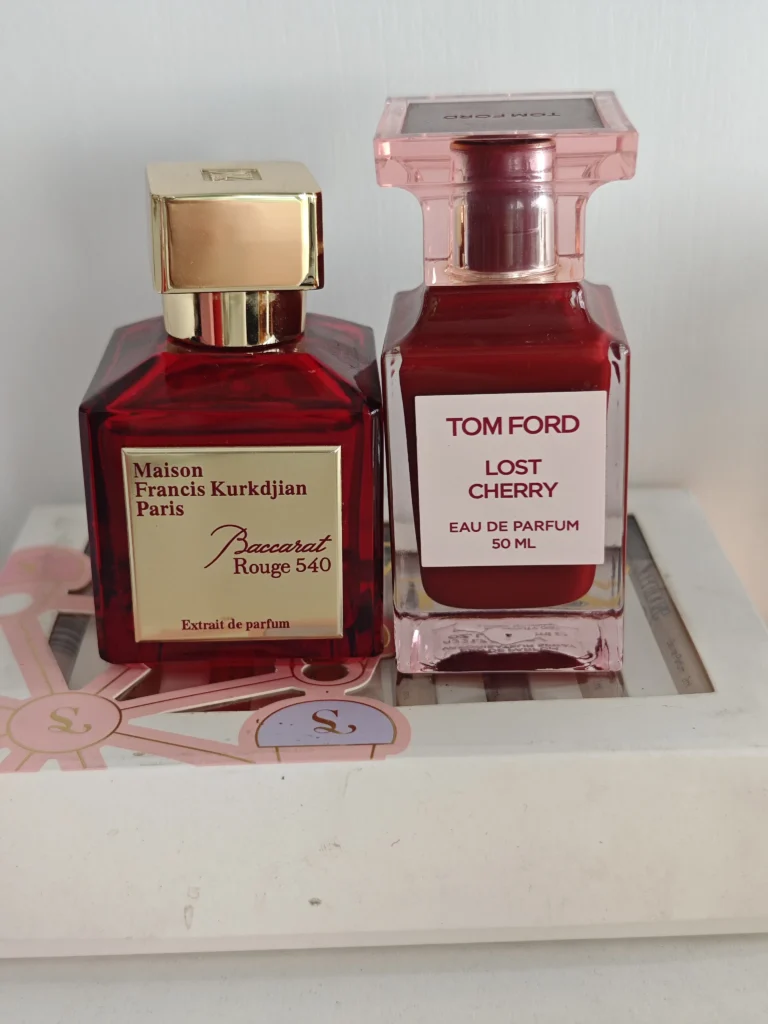
- Practical Scent Guides: Detailed recommendations for affordable alternatives to popular, high-end scents like Baccarat Rouge 540, Le Labo Santal 33, and Creed Aventus, categorized by scent families.
- Pro Tips for Application and Longevity: Everyday tips on how to properly apply perfume, layer different scents, and store your bottles at home so you get the maximum value out of every single spray.
- Comprehensive FAQ: We answer the top 16 most frequently asked questions on Google regarding perfume alternatives, safety, and performance.
Disclaimer: The luxury brand names mentioned in this article (such as Tom Ford, Creed, Le Labo, Maison Francis Kurkdjian, YSL, etc.) are used strictly for comparative reference. We are not affiliated with these designer brands. Our goal is to provide you with educational, transparent information so you can make empowered, smart purchasing decisions.
The Everyday Fragrance Lover’s Dilemma in 2026
Picture this scenario: You are walking through your local Sephora or a luxury department store anywhere in the USA. A beautifully dressed sales associate hands you a little white paper tester strip. You take a sniff, and it is absolutely magical. It smells like warm vanilla, rich amber, and a hint of exotic spices that instantly boost your confidence. You fall in love immediately. Then, you flip the heavy glass bottle over and look at the price tag: $325. Your heart sinks.
For decades, this has been the harsh reality of the fragrance world. Consumers have been conditioned to believe that if you want to smell sophisticated, wealthy, or unique, you must pay top dollar. But over the last few years—accelerated by economic shifts, inflation, and the massive popularity of #PerfumeTok on TikTok—a massive shift has occurred. The rise of the best perfume dupes (also known as designer-inspired fragrances or clone perfumes) has completely democratized how Americans shop for scents.
Let’s be completely honest: the word “dupe” used to have a very bad reputation. Ten years ago, it brought to mind those cheap, harsh-smelling knockoffs sold at mall kiosks that faded into a faint rubbing alcohol smell within ten minutes. Today, however, the landscape is incredibly different. Thanks to advances in analytical chemistry, highly transparent supply chains, and consumer education, high-quality alternatives are not just acceptable; they are celebrated by beauty editors at major publications like Allure and Byrdie.
The goal of this guide is to pull back the curtain. We want to explain exactly why that designer bottle costs $325, why a high-quality alternative might only cost $40, and most importantly, how you can train your nose to tell the difference between a fantastic, long-lasting alternative and a poor-quality imitation.
Demystifying the Price Tag: What Are You Actually Buying?
To truly understand how a dupe can smell so strikingly similar to a high-end designer fragrance, we have to look closely at the economics of the beauty and cosmetic industry. When you purchase a luxury perfume from a legacy fashion house, what exactly is your money funding? The truth is often shocking to everyday consumers.
The “Juice” vs. The Packaging and Marketing Machine
In the fragrance industry, professionals call the actual scented liquid inside the bottle the “juice.” Believe it or not, the juice is almost always the least expensive part of the entire product. Major luxury brands buy raw fragrance materials—like natural rose absolute from Bulgaria, bergamot oil from Italy, or advanced synthetic musks—by the metric ton. Because they buy in such massive, industrial bulk, their cost for the actual liquid in a standard 100ml (3.4 oz) bottle is incredibly low. Based on general cosmetic supply chain data, the liquid often costs anywhere from just $2.00 to maybe $15.00 for incredibly complex, high-oil formulations.
So, where does the remaining $300 go? It goes directly into the ecosystem of luxury perception. You are paying for the heavy, custom-molded glass bottle designed by a famous artist. You are paying for the magnetic cap. You are funding multi-million-dollar global television commercials featuring Hollywood A-list celebrities. Furthermore, you are paying for the prime retail space in high-end shopping malls, and the massive profit margins (often 50% to 60%) demanded by department stores just to stock the item on their shelves.
The Direct-to-Consumer (DTC) Revolution
This is where modern perfume dupe companies come in and disrupt the market. Brands that operate on a Direct-to-Consumer (DTC) model realize that many modern consumers just want the beautiful scent, not the expensive Hollywood commercial or the designer logo. By using standardized, elegant (but not custom-molded) glass bottles, relying on digital word-of-mouth instead of celebrity endorsements, and selling directly through their websites, they effectively cut out all the middlemen.
Table 1: Estimated Industry Averages – Traditional vs. Alternative Perfume Costs
Note: These figures are illustrative estimates based on general cosmetic industry retail markup models, meant to show the difference between a traditional retail structure and a streamlined DTC alternative model.
| Where Your Money Goes | Traditional Luxury Perfume (Estimated $250 Retail) | Premium Direct-to-Consumer Dupe (Estimated $40 Retail) |
|---|---|---|
| The Fragrance Oil (The “Juice”) | $5.00 – $12.00 (Standard EDP) | $8.00 – $15.00 (Often higher Extrait concentration) |
| Bottle, Cap & Outer Packaging | $15.00 – $25.00 (Custom molds, heavy caps) | $4.00 – $7.00 (Standardized, elegant glass) |
| Marketing & Celebrity Ads | $60.00+ (Global scale) | $3.00 – $5.00 (Digital marketing) |
| Retail Markup (Department Stores) | $100.00 – $125.00 | $0.00 (Sold online directly to you) |
| Brand Licensing / Profit Margin | $23.00+ | $10.00 – $13.00 |
As this table illustrates, when you purchase a high-quality alternative, your money is going directly into the ingredients, the oil concentration, and the longevity of the scent itself, rather than funding a massive marketing machine.
An Honest Look at the US Dupe Market: Finding the Right Brand for You
Because the demand for affordable fragrances has exploded across the USA, there are now dozens of companies offering designer alternatives. It is critical to know that different brands have very different philosophies. As a smart consumer, you should choose the brand that aligns perfectly with what you value most—whether that is an extreme budget, everyday wearability, exact 1:1 similarity, or absolute powerhouse longevity.
Here is an objective, fair overview of some of the most popular players in the American market today. We believe in transparency, which means acknowledging the strengths of our competitors alongside our own.
- Dossier: Dossier has arguably done more than any other brand to bring the concept of dupes to the mainstream US market. They feature clean, minimalist packaging and offer a fantastic, risk-free return policy. Their scents are generally very crowd-pleasing, easy to wear, and highly accurate. They are a phenomenal starting point for beginners. However, some users note that their longevity is moderate (as they mostly focus on Eau de Parfum concentrations), making them perfect for those who prefer a subtler, office-friendly scent bubble.
- Zara: If you are on a very tight budget and want something immediately in person, Zara is the undisputed king of fast-fashion fragrances. They often collaborate with famous master perfumers (like Jo Malone) to create scents that heavily nod to popular designer DNA. The trade-off? They are usually Eau de Toilette (EDT) concentration and are produced at lightning speed. This means they smell great for the first hour but often require frequent reapplying throughout the day.
- ALT. Fragrances: ALT is known for its strong performance and massive catalog. They often focus on the heavier, sweeter, and more robust scent profiles (like their popular clones of Baccarat Rouge 540 or By Kilian scents). They are a solid choice if you want people to smell you from across the room. A minor drawback noted by some consumers is that their packaging can feel a bit basic for the price point.
- Oakcha: Oakcha has gained a massive following for their sleek, colorful bottles and incredibly high oil concentrations (Extrait de Parfum). Their scents last a very long time on the skin. However, because they are so heavy on the perfume oils, you have to be careful when spraying them directly onto light-colored clothing, as they can occasionally leave oil stains.
- Montagne Parfums & Alexandria Fragrances: These are the darlings of the online fragrance community (like Reddit’s r/fragranceclones). They operate more like niche indie houses. They are known for incredibly high-quality ingredients and astonishing accuracy. The downside? They often make batches to order, which means shipping times can be long, and the perfumes usually require you to age them yourself at home for a month before they smell their best.
- imixx (Our Approach): At imixx, our core philosophy revolves around finding the perfect middle ground: high oil concentration (we formulate as Extrait de Parfum) combined with patient, factory-level maceration. Coming from an industrial liquid manufacturing background, I know that time is an ingredient. We aim to provide the smoothest, longest-lasting experience right out of the box. By aging our perfumes properly in our facilities before shipping, we eliminate the harsh alcohol opening that plagues cheaper dupes, resulting in a rich, complex dry-down that rivals $300 bottles.
Pro Tip for Consumers: The beauty of today’s market is choice. We always encourage fragrance lovers to buy small discovery sets or samples from a few different houses to see whose blending style and base alcohol works best with their unique skin chemistry.
The Science Made Simple: How Do Labs Actually Recreate Scents?
A question we receive constantly is: “How is it legally and scientifically possible to copy a luxury fragrance so perfectly?” Let’s break it down into simple, consumer-friendly terms without getting bogged down in an academic chemistry report.
The High-Tech Recipe Scanner: GC-MS Technology
First, it is important to know that you cannot patent a smell. You can trademark a brand name, a logo, and a specific bottle design, but the actual scent of a rose mixed with vanilla is considered a product of nature, even if it is synthesized in a lab. To figure out what is inside a popular fragrance, modern laboratories use a piece of equipment with a very long name: Gas Chromatography-Mass Spectrometry (GC-MS). You can read more about how this technology identifies compounds on medical and scientific hubs like NCBI.
Think of the GC-MS machine like a high-tech recipe scanner. If you baked a complex, multi-layered chocolate cake and put a slice into this machine, it would theoretically tell you exactly how much flour, sugar, cocoa, and butter you used. In perfumery, the machine analyzes a small sample of a designer perfume and gives the chemists a printout (a chromatogram) of the molecular compounds. It shows exactly how much Bergamot oil, Ambroxan, or Ethyl Maltol is present in the formula.
However, it is not just a simple “copy and paste” job. Luxury brands often use proprietary, “captive molecules” (special synthetic ingredients that only their parent company, like Givaudan or Firmenich, owns the rights to use). This is where the true art of the alternative perfumer comes in. The chemist must use their trained nose and expertise to find publicly available, universally safe ingredients that create the exact same olfactory illusion. It is exactly like a world-class chef recreating a famous restaurant’s secret sauce using ingredients you can find at a high-end grocery store.
The Ultimate Secret to Longevity: Maceration
Have you ever made a big pot of chili, spaghetti sauce, or a hearty stew, and noticed that it tastes significantly better the next day? That is because the flavors and spices needed time to blend together and marry. Perfume works the exact same way. In the fragrance industry, this aging process is called maceration.
When raw perfume oils are mixed with perfumer’s alcohol and a tiny bit of distilled water, they need time to sit in a cool, dark, temperature-controlled environment. During this time (which can take anywhere from 4 to 12 weeks), the chemical bonds soften and fuse. The sharp, volatile smell of the alcohol fades into the background, and the deep, rich base notes (like authentic vanilla, heavy woods, and musk) rise to the surface, creating a smooth, rounded, luxurious scent.
Many cheap, fast-fashion brands skip this crucial step because time is money in retail. They mix the liquid and bottle it the very same day. This is exactly why their perfumes often smell like pure rubbing alcohol for the first five minutes. A true mark of quality—something we prioritize heavily in our production at imixx and something you should look for in any premium brand—is allowing the fragrance to properly macerate before it ever reaches your doorstep.
The 2026 Guide to Scent Families: Finding Your Perfect Match
Navigating the vast fragrance world can be overwhelming for a normal consumer. To help you find the best dupes perfume for your specific taste, it is easiest to categorize them by “scent families.” Here is a guide to what these families mean and the popular luxury scents that define them.
1. Amber & Woody: The Head-Turners
These are warm, rich, enveloping, and mysterious scents. They rely heavily on notes like sandalwood, cedar, ambergris, and warm spices. They are perfect for evening wear, colder weather, date nights, or when you want to leave a lasting, powerful impression.
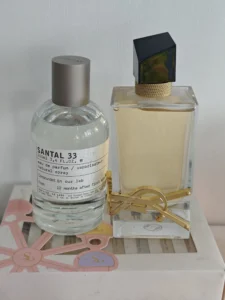
- Luxury Inspirations: Le Labo Santal 33, Tom Ford Oud Wood, Maison Francis Kurkdjian Baccarat Rouge 540.
- What to Look For in a Dupe: The quality of the wood notes is absolutely crucial here. Cheap synthetic sandalwood can sometimes interact with skin chemistry and smell remarkably like dill pickles. A high-quality dupe will use premium synthetic or natural woods that remain creamy, smooth, and leathery. If you love these profiles, explore the amber-woody collections at specialized houses like Dossier or imixx.
2. Fresh, Citrus & Aquatic: The Everyday Staples
These scents are uplifting, clean, and energizing. They feature notes like lemon, bergamot, sea salt, mint, and fresh herbs. They are the perfect “dumb reach” fragrances for the office, the gym, or hot summer days.
- Luxury Inspirations: Creed Aventus, Jo Malone Wood Sage & Sea Salt, Dolce & Gabbana Light Blue, Chanel Bleu de Chanel.
- What to Look For in a Dupe: Citrus notes have the smallest molecular weight, which means they evaporate the fastest off your skin. The main challenge for a dupe is to make the freshness last longer than an hour. Look for brands that use strong “fixative” base notes (like clean musks, vetiver, or oakmoss substitutes) to hold onto that fresh lemon or pineapple scent for the entire workday.
3. Gourmand & Sweet Floral: The Crowd Pleasers
“Gourmand” literally means food-like or edible. These scents are sweet, cozy, and highly addictive. They often feature notes of vanilla, caramel, roasted coffee, chocolate, and rich white florals like jasmine or sweet orange blossom.
- Luxury Inspirations: YSL Black Opium, By Kilian Love Don’t Be Shy, Carolina Herrera Good Girl, Tom Ford Lost Cherry.
- What to Look For in a Dupe: There is a very fine line between smelling elegantly sweet (like a luxury dessert) and smelling like a cheap, cloying teenage body spray. A premium dupe will balance the intense sweetness with slightly bitter, earthy, or woody notes (like roasted coffee beans, almond, or patchouli) to keep the fragrance mature and sophisticated.
Pro Tips: How to Make Your Perfume Dupes Last All Day
Even the most expensive, high-quality Extrait de Parfum can disappear quickly if you do not apply it correctly. Scent performance is highly dependent on your personal skin chemistry, the weather, and your hydration levels. Here are practical, everyday tips to maximize your fragrance:
- Moisturize Like Crazy: Perfume absolutely hates dry skin. The alcohol in perfume acts as an astringent. If your skin’s lipid barrier is dry, it will literally drink the fragrance oils, causing the scent to vanish. Apply an unscented body lotion, a thin layer of Vaseline, or jojoba oil to your pulse points right after a warm shower. Spray your perfume directly onto the moisturized skin to lock the scent molecules in place.
- Stop the Rub: We have all seen people spray their wrists and rub them together vigorously. Please stop doing this. The friction creates heat, which “bruises” the delicate top notes (like the fresh citrus or light florals) and forces them to evaporate instantly. Just spray and let it air dry naturally.
- Hit the Pulse Points: Fragrance needs body heat to project into the air (this projection is called “sillage”). The best places to spray are the wrists, the inside of the elbows, behind the ears, and the nape of the neck.
- The Clothing Trick for Maximum Longevity: Skin naturally breaks down perfume oils over time. Fabric does not. Spraying your clothes (like a scarf, the inside of a jacket lining, or your shirt collar) will make the scent last exponentially longer—often for days. Caution: If you are using a highly concentrated Extrait dupe with dark-colored oils, always test it on a hidden part of light-colored fabric first to ensure it does not leave an oil stain.
- Become a Mixologist (Layering): Do not be afraid to mix your affordable dupes! A fantastic trick is to take a simple, linear scent (like a pure vanilla or a clean molecule musk) and spray it underneath a more complex floral or fresh scent to give it a unique, personalized twist. Fragrance communities on sites like Fragrantica offer endless user recipes for layering combinations.
Frequently Asked Questions (FAQ): Uncovering the Truth About Perfume Dupes
Navigating the modern fragrance world can raise a lot of questions. Here, we answer the top 16 most frequently asked questions American consumers have about buying, wearing, and trusting alternative perfumes.
1. Are perfume dupes worth it?
Yes, absolutely. The value proposition of a good dupe is completely unmatched in the beauty industry. If you find a reputable brand that uses high-quality ingredients and safe formulations, you are getting an olfactory experience that is incredibly close to the original for about 10% to 20% of the cost. It allows you to build a large, diverse “fragrance wardrobe” for different seasons, outfits, and moods without going into credit card debt.
2. Why are designer inspired perfumes so much cheaper?
As detailed in our cost breakdown earlier, traditional luxury brands spend millions on advertising, celebrity spokespeople, custom bottle manufacturing, and department store margins. Direct-to-consumer dupe brands completely strip away all of these superficial costs. They pour their budget strictly into the fragrance oil itself and ship it in standardized glass bottles directly to your mailbox.
3. Do perfume dupes last as long as designer fragrances?
This is highly dependent on the brand you choose and the concentration level. Cheap, drugstore body sprays will not last. However, premium alternative brands often formulate their scents at an Extrait de Parfum level (meaning a high percentage of fragrance oil to alcohol, usually 20% or more). In many cases, consumers find that these high-concentration dupes actually outlast the original designer versions, which have sometimes been watered down over the years due to corporate cost-cutting.
4. What are the best perfume dupes for Baccarat Rouge 540?
Because BR540 is so phenomenally popular, almost every dupe house makes a version of it. You want to look for an alternative that perfectly balances the sweet “cotton candy” note (driven by a compound called Ethyl Maltol) with the airy, woody amber (Ambroxan). Brands like Dossier (Ambery Saffron), ALT (Crystal), and our own specialized formulation at imixx offer excellent interpretations that capture its famous, room-filling projection without inducing nose-blindness.
5. What is the best website to buy high-quality perfume dupes?
The “best” website depends on your specific needs. For minimalist bottles and incredibly easy returns, Dossier is fantastic. For incredibly strong projections and wide variety, Oakcha is very popular. If you are looking for Extrait-level concentrations that prioritize a long, factory-controlled maceration process for an ultra-smooth dry down, we invite you to explore the imixx collection.
6. Are clone fragrances safe to use on skin?
Yes, provided you buy from a legitimate, established brand based in the USA, Europe, or other regulated markets. Reputable dupe houses source their raw materials from the exact same global fragrance compounding companies (such as Givaudan, Firmenich, or Symrise) that the luxury houses use. Always check that the brand states they follow the safety standards set by the International Fragrance Association (IFRA), which strictly limits known allergens.
7. How close are perfume dupes to the original scents?
With modern analytical chemistry (like GC-MS), premium dupe brands can generally achieve an extremely high level of similarity to the original inspiration, often cited informally by reviewers as 90% to 95% accurate. While no two batches of any natural ingredient (like a crop of roses) are exactly identical, a high-quality alternative will be virtually indistinguishable to 99% of people walking past you on the street or sitting next to you at dinner.
8. What are the best cologne dupes for men?
Men in the USA typically gravitate towards fresh, woody, and spicy profiles. The most sought-after alternatives are usually for Creed Aventus (fruity/smoky), Dior Sauvage (spicy/fresh), Bleu de Chanel (citrus/woody), and Tom Ford Oud Wood (dark/woody). Look for dupes that emphasize strong, high-quality base notes like Haitian vetiver and patchouli to ensure long-lasting masculine projection throughout the day.
9. Which perfume dupe brand lasts the longest?
Longevity is simply a game of oil concentration and maceration time. Brands that sell Extrait de Parfum (which can contain 20% to 30% fragrance oils) will inherently last longer on the skin than brands selling Eau de Parfum (EDP, usually 15-20%) or Eau de Toilette (EDT, 5-15%). Houses like Oakcha, Montagne, and imixx formulate heavily towards the Extrait level to ensure maximum wear time.
10. Are Zara perfume dupes actually good?
Zara produces fantastic, modern scents for the price point. The scents themselves are beautiful, but they are typically designed for fast-fashion consumption. They are often EDT concentration, meaning you might need to reapply them every 3 to 4 hours. They are great for casual wear, running errands, or keeping in your gym bag, but perhaps not the best choice if you need a fragrance to last through a 12-hour wedding event.
11. What is the closest dupe to Le Labo Santal 33?
The perfect Santal 33 alternative is notoriously difficult to manufacture because balancing the violet and cardamom with the sandalwood is very tricky. If done poorly, it smells sharply of dill pickles—a common complaint with cheap clones. A high-quality dupe must source premium synthetic or natural sandalwood to maintain that creamy, leathery, and earthy vibe that makes the original so iconic.
12. Is Dossier a good perfume dupe brand?
Dossier is an excellent, highly reputable brand that has helped destigmatize perfume dupes in America. Their formulations are vegan, cruelty-free, and generally very accurate to the original designer DNA. They offer great customer service and are a highly recommended starting point for anyone new to the world of fragrance alternatives.
13. What is the best Tom Ford Lost Cherry dupe?
Cherry notes are highly volatile, meaning they evaporate very fast. A good Lost Cherry alternative must do much more than just smell like cherry for the first five minutes; it needs a robust base of roasted tonka bean, Peru balsam, and bitter almond to anchor the sweetness. When shopping for this specific dupe across any brand, always read consumer reviews specifically mentioning the dry-down longevity.
14. Are dupe perfumes cruelty-free and vegan?
Most modern, reputable dupe brands are incredibly conscious of ethical manufacturing. Because they often rely on advanced synthetic chemistry rather than harvesting animal-derived musks (like real civet cat secretions or real whale ambergris), brands like Dossier, ALT, and imixx proudly offer products that are 100% cruelty-free and vegan, aligning perfectly with modern consumer values.
15. How do I make my perfume dupes last longer?
Proper storage is just as important as application! Never store your perfumes in the bathroom; the rapid changes in heat and humidity from the shower will break down the delicate fragrance oils. Store them in a cool, dark place like a bedroom drawer or closet away from direct sunlight. Combined with moisturizing your skin before application, proper storage ensures your scent remains potent for years.
16. What is the best YSL Libre perfume dupe?
YSL Libre is famous for its “fougere” structure, blending traditionally masculine French lavender with highly feminine Moroccan orange blossom and rich vanilla. An excellent alternative will respect this unique tension, ensuring the lavender does not smell like cheap soap, but rather a crisp, aromatic breeze that eventually settles into a warm, inviting, long-lasting vanilla base.
Conclusion: Smell Expensive, Shop Smart
The era of gatekeeping luxury fragrance is finally over. As consumers across the USA become more educated about supply chains, chemistry, and the true cost of marketing, the shift toward high-quality alternatives is inevitable. The best dupes perfume market today offers an incredible opportunity to explore unique scent profiles you might never have tried if you were forced to pay $300 a bottle.
Remember, the goal is not to shame designer brands—they create the original art that inspires the entire industry. The goal is consumer empowerment. By understanding the difference between an EDT and an Extrait, by knowing the importance of maceration, and by exploring reputable brands across the spectrum, you can curate a fragrance collection that makes you feel confident, unique, and luxurious every single day.
We encourage you to read reviews, test different houses, and find the scents that speak directly to you. If you are interested in exploring highly concentrated, carefully macerated fragrances designed to last all day, we invite you to browse our selections and see the difference supply-chain focus makes.
