

Best Fragrance Lists, Blog, Fragrance Science & Education
How to Choose the Best Perfume Knockoffs in the USA: An Insider’s Guide to Formulation, Ingredients, and Scent Quality
Apr
Editorial Disclaimer: This article is designed as an educational consumer resource. It analyzes the fragrance industry from a supply-chain perspective to provide objective criteria for evaluating alternative fragrances. Independent market examples are provided for educational comparison.
TL;DR: The Educated Consumer’s Cheat Sheet
- The Price Tag Illusion: Business analyses consistently show that up to 80-90% of a luxury perfume’s cost funds marketing, bespoke packaging, and retail markups, not the fragrant liquid itself.
- Science Drives the Market: Modern lab-direct brands do not guess at formulas; they use advanced GC-MS technology to reverse-engineer designer profiles with staggering accuracy.
- Maceration is Non-Negotiable: The best alternatives age their perfumes in temperature-controlled factory environments. This chemical stabilization prevents the “harsh alcohol blast” common in cheap drugstore copies.
- A Fair Market View: The alternative fragrance market is vast. From fast-fashion staples like Zara to Middle Eastern powerhouses like Armaf, and lab-direct formulators like Montagne Parfums, Alexandria Fragrances, Oakcha, and imixx perfume, different brands serve different consumer needs. We evaluate them objectively below.
The Great Fragrance Awakening in the USA
For decades, the standard narrative in the United States beauty market was incredibly simple: if you wanted to smell sophisticated, elegant, and uniquely yourself, you had to pay a steep premium. Heritage fashion houses alongside modern niche titans established a baseline where spending $250 to $400 for a single 50ml bottle became the culturally accepted norm for “quality.”
However, we are currently experiencing a massive paradigm shift. The rise of community-driven platforms, dedicated fragrance forums like Basenotes and Fragrantica, and transparent industry reviewers has democratized olfactory knowledge. Consumers are waking up to the reality that a $40 perfume can sometimes draw more compliments, project further, and last significantly longer than a $300 niche fragrance.
This is not merely a macroeconomic trend about saving money during tough times; it’s a fundamental shift in consumer trust and education. People want to pay for the “juice”—the actual aromatic liquid inside the bottle—not the overhead costs of a global fashion conglomerate’s billboard in Times Square. They are actively searching for the best perfume knockoffs, but they are demanding high-fidelity, safe, and long-lasting products. This guide is written to strip away the pretentious jargon and look at how these high-quality alternatives are actually made.
Decoding the Price Tag: The Supply Chain Reality
To understand how a high-quality alternative can exist, we must first dismantle the traditional retail economics of luxury cosmetics. It is a well-documented business reality, often highlighted in publications covering the business of beauty, that the margins in luxury cosmetics are astronomical.
When you purchase a luxury perfume at a major US department store, you are funding a massive, inherently inefficient ecosystem. You are paying for the bespoke, heavy glass bottle crafted by master glassmakers in Europe. You are paying the multi-million dollar television campaigns featuring A-list actors. You are paying the massive wholesale margins (often 40-50%) demanded by the retail store just to put the box on their shelf. Finally, you are paying a “brand tax” simply for the designer logo printed on the packaging.
Table 1: The Economics of Scent – A Hypothetical $250 Bottle Breakdown
*Note: These percentages are industry-wide estimates compiled from various supply chain analyses intended to illustrate general economic models. Exact proprietary costs vary significantly by brand, volume, and scale.
| Cost Component | Traditional Luxury Model ($250 Retail) | Lab-Direct Alternative Model ($45 Retail) | Supply Chain Reality |
|---|---|---|---|
| Fragrance Liquid (“The Juice”) | Approx. 2% – 5% ($5.00 – $12.50) | Approx. 25% – 35% ($11.25 – $15.75) | By eliminating ad budgets, alternative brands can actually spend more absolute dollars on raw aromachemicals and high concentrations. |
| Packaging & Bottling | 10% – 20% ($25.00 – $50.00) | 15% – 20% ($6.75 – $9.00) | Luxury brands use custom molds and magnetic caps. Alternative brands use standardized, high-quality, recyclable bottles to slash manufacturing costs. |
| Marketing, PR & Celebrity | 30% – 50% ($75.00 – $125.00) | 5% – 15% ($2.25 – $6.75) | The largest discrepancy. Direct-to-Consumer (DTC) brands rely on organic search, SEO, word-of-mouth, and community reviews. |
| Retailer Margin / Distributor | 40% – 50% ($100.00 – $125.00) | 0% (If sold directly online) | Selling directly through an independent website completely bypasses the massive cut taken by big-box beauty retailers. |
As the table illustrates, when you remove the marketing and retail margins, you are left with the raw cost of production. This is the exact space where transparent, factory-direct brands operate. This economic efficiency is what allows a brand to offer a premium Eau de Parfum (EDP) or Extrait de Parfum at a fraction of the historical cost without sacrificing safety or performance.
The Science of Scent Engineering: GC-MS Explained Simply
How exactly does a company recreate the complex scent profile of an iconic fragrance like YSL Black Opium, Jo Malone Wood Sage & Sea Salt, or Juliette Has A Gun Not A Perfume? A common misconception is that a group of people sit in a room, sniffing paper strips, and randomly mixing oils until they get close. In reality, the top tier of the industry relies on advanced analytical chemistry.
The golden tool of the modern fragrance industry is the Gas Chromatography-Mass Spectrometry (GC-MS) machine. To understand it simply, imagine a music producer taking a fully mixed pop song and using software to perfectly isolate the drums, the bass, the vocals, and the guitars.
- Gas Chromatography (The Separator): First, the machine vaporizes a sample of the target perfume. It pushes this vapor through a long, microscopic, temperature-controlled column. Because different chemical molecules have different molecular weights and boiling points, they travel through the tube at different speeds. The machine effectively separates the complex perfume back into its individual chemical ingredients.
- Mass Spectrometry (The Identifier): As each isolated ingredient exits the tube, the Mass Spectrometer bombards it with electrons, breaking it into charged fragments. It measures the mass-to-charge ratio of these fragments, comparing the data against massive digital libraries maintained by organizations like the American Chemical Society. This produces a highly accurate “chemical fingerprint” or recipe of the original perfume.
The Human Element: Why The “Nose” Still Matters
However, the GC-MS is not a magic, push-button solution. While it can accurately dictate that a formula uses exactly 12% Iso E Super, 5% Hedione, and 2% Vanillin, it struggles with two major hurdles: “Captives” and complex Naturals.
Major fragrance manufacturing conglomerates (like Givaudan, Firmenich, and IFF) invent new, patented scent molecules called “Captives.” Because they own the patent, no other company can legally purchase or use that exact molecule. Furthermore, if a luxury brand uses a highly specific natural ingredient—like a rare Jasmine absolute harvested in a specific region of India—the machine can only tell the chemist that “jasmine components” are present, not the exact terroir of the flower.
This is where the expertise of the human perfumer (the “Nose”) becomes critical. The perfumer must analyze the GC-MS data and use their olfactory skill to source alternative, publicly available molecules or create “accords” (blends of several common ingredients) that perfectly mimic the patented captive. The very best perfume knockoffs are those where human artistry seamlessly bridges the gap left by the machine’s data.
Decoding Ingredients: Naturals, Synthetics, and Quality Control
A persistent and somewhat harmful myth in the consumer fragrance community is that “synthetic means toxic and cheap” and “natural means safe and high-quality.” In reality, modern perfumery—including the most expensive luxury niches—relies heavily on synthetics.
Synthetics provide vital structural stability to a perfume, unique scent profiles (like the smell of rain, fresh linen, or marine notes which cannot be naturally extracted), and, most importantly, they protect the environment from over-harvesting endangered plants and animals. For example, natural deer musk is now largely illegal and unethical to use; every modern musk you smell is a synthetic recreation.
Table 2: Recognizing Ingredient Quality Differences
| Key Ingredient / Profile | Commonly Found In… | Low-Tier / Flea Market Quality | High-Tier / Lab-Direct Quality |
|---|---|---|---|
| Ambroxan (Ambergris substitute) | Baccarat Rouge 540, Dior Sauvage | Harsh, abrasive, and smells faintly of rubbing alcohol. Can feel “scratchy” in the nose. | High-purity crystalline Ambroxan. Smells warm, radiant, musky, and effortlessly blends with the wearer’s skin. |
| Oud (Agarwood) | Tom Ford Oud Wood, Creed Royal Oud | Smells like burning rubber, synthetic plastic, or overly medicinal bandaids. | Carefully constructed accords using rich Cypriol oil, patchouli, and refined synthetic woods to create a deep, safe, and smoky profile. |
| Vanilla & Ethyl Maltol | YSL Black Opium, Dolce & Gabbana Devotion | Cloyingly sweet, smelling like cheap artificial cake batter or plastic candles. | A balanced blend of vanilla extracts and smooth vanillin, resulting in a mature, creamy, and sophisticated sweetness. |
| Citrus Oils (Bergamot, Lemon) | Maison Margiela Replica, Vilhelm Parfumerie | Sharp, synthetic aldehydes that unfortunately mimic household floor cleaners. | Cold-pressed essential oils from regions like Calabria, Italy, providing a bright, photorealistic, and zesty opening. |
Furthermore, the carrier alcohol matters immensely. Low-quality clones often use cheap, poorly filtered industrial alcohol, resulting in a harsh “blast” when first sprayed. Premium alternatives invest in high-grade, cosmetic perfumer’s alcohol (SDA 40B), ensuring a smooth transition from the bottle to your skin.
The Art of Maceration: Why Patience Pays Off
If you have ever bought a fragrance, thought it smelled a bit sharp or weak, put it in a dark drawer for a month, and then found it smelled incredibly smooth and rich later—you have experienced maceration.
Maceration is the critical aging process of perfume. After the fragrance concentrate (the essential oils and aromachemicals) is mixed with the perfumer’s alcohol and a tiny amount of distilled water, the mixture is volatile. It needs time to rest. During this resting period, complex chemical reactions (such as the formation of acetals) occur.
The sharper top notes round out, the heavy base notes integrate fully with the alcohol, and the overall blend becomes smoother, stronger, and much more cohesive. It is scientifically very similar to letting a fine wine breathe or age in an oak barrel.
Many mass-market, fast-fashion brands rush this process to maximize retail turnover and cash flow. They mix the juice, bottle it immediately, and ship it. This lack of maceration is exactly why some cheap perfumes smell incredibly alcoholic upon the first spray. The hallmark of a truly premium fragrance house—whether they are a designer or an alternative brand—is allowing the batches to macerate in temperature-controlled vats for several weeks before bottling. When evaluating a brand, look for those that transparently discuss their maceration and aging processes.
An Objective Market Analysis: Not All Alternatives Are Created Equal
To be an educated consumer, you must look at the entire playing field. The market for designer alternatives is vast, and different brands serve entirely different purposes, budgets, and tastes. Let’s objectively break down the main categories available to US buyers today, noting both their strengths and their weaknesses.
- The Fast-Fashion Giants (e.g., Zara): Zara has revolutionized the accessible fragrance market, often collaborating with legendary master perfumers like Jo Malone.Pros: Incredibly affordable (usually $20-$35), easily accessible at almost any local mall, and they capture current scent trends brilliantly with great bottle designs.
Cons: They are typically formulated as lower-concentration Eau de Toilettes (EDT). The opening spray is often fantastic, but the longevity is notoriously short, often fading from the skin within 2 to 3 hours.
- The Middle Eastern Powerhouses (e.g., Armaf, Lattafa, Afnan): These brands have taken the online fragrance community by storm, heavily reviewed and praised for their value.Pros: Unbelievable projection and longevity (often referred to as “beast mode”). They lean heavily into rich, woody, spicy, and oud-based notes, offering massive value for the price.
Cons: The presentation and bottles can sometimes be quite gaudy. More importantly, the opening 15 minutes of their clones can be incredibly harsh, screechy, and synthetic, requiring patience for the scent to “settle down” on the skin into the intended profile.
- The Premium Lab-Direct Formulators (e.g., Montagne Parfums, Alexandria Fragrances, Oakcha, imixx perfume): This category focuses on clinical precision, high oil concentrations, and quality ingredients over flashy packaging or retail presence. They utilize strict GC-MS data and enforce extended factory maceration times.Pros: Exceptionally smooth openings (no harsh alcohol blast), high Extrait de Parfum or EDP concentrations resulting in excellent 8+ hour longevity, and a highly accurate scent progression from top notes down to the base notes. Brands in this tier, such as Montagne and imixx perfume, specifically engineer their formulas to eliminate the “synthetic harshness” found in cheaper clones, offering a true luxury experience.
Cons: As online-first entities, you cannot smell them in a physical store prior to purchasing. Consumers must rely on reviews, scent notes, or purchasing discovery sample sets before committing to a full bottle.
The “best” option depends entirely on your specific needs. If you need a quick thrill for a summer day, run to Zara. If you want room-filling projection on a tight budget and don’t mind a harsh opening, look to Armaf or Lattafa. But if you desire the smooth, high-fidelity, nuanced experience of a $300 niche fragrance with consistent all-day performance, the lab-direct brands like Montagne, Alexandria, Oakcha, or imixx represent the apex of modern formulation.
Skin Chemistry & The Phenomenon of Nose Blindness
A major frustration for consumers is testing a fragrance on a paper strip, loving it, buying it, and then hating how it smells on their own skin. This is where biological science meets chemical science. Your skin is a living, breathing organ with its own unique ecosystem.
Several factors alter how a fragrance develops on you:
- Skin Hydration and Sebum: The natural oils (sebum) on your skin interact with the perfume oils. People with well-moisturized or naturally oilier skin tend to hold onto fragrances much longer. Fragrance evaporates rapidly from dry skin. Pro-tip: Apply an unscented body lotion or a thin layer of petroleum jelly to your pulse points before spraying to lock in the scent.
- Diet and Lifestyle: What you eat affects your natural body odor, which acts as the base canvas for the perfume. Heavy consumption of spices, garlic, or even certain medications can slightly alter the dry-down of a fragrance over time.
- Body Temperature: Fragrance notes are activated by heat. If you naturally run warm, or if you apply perfume to pulse points (neck, wrists, inner elbows), the volatile top notes will “burn off” faster, revealing the heavier base notes quicker than on a colder person.
Beware of Olfactory Fatigue (Nose Blindness)
Often, people assume their imitation perfume doesn’t last long, when in reality, they are experiencing olfactory fatigue. This is an evolutionary biological response where your brain stops registering a constant scent in your environment so it can remain alert to new, potentially dangerous smells. If you spray a heavy fragrance directly under your nose (on your front neck or chest), your brain will likely tune it out within 30 minutes. You won’t smell it, but everyone around you still can! To test true longevity, spray the fragrance on your wrist or the back of your neck, away from your direct airstream.
The Legal and Safety Landscape of Fragrance in the US
Is it legal to sell and buy fragrance clones? The definitive answer is yes. Under United States intellectual property law, you generally cannot patent a smell. A scent is considered a natural occurrence or a sensory experience. What luxury brands can and do aggressively protect are their trademarks: the brand name, the specific logo, the unique bottle design, and the exact names of their perfumes.
Ethical alternative brands navigate this by being entirely transparent. They use their own unique bottle designs, their own distinct brand names, and clearly state that their product is “inspired by” or “an alternative to” a famous scent, without ever claiming to be the original manufacturer.
Regarding safety, this is where consumer vigilance is required. You should never buy counterfeit perfumes—fake bottles designed with stolen logos to trick you into thinking they are the real brand—from unverified street vendors or sketchy marketplace listings. These are completely unregulated black-market goods and can contain harmful chemicals, antifreeze, or unsanitary water.
Legitimate alternative houses operating legally in the USA must abide by FDA cosmetic guidelines. Furthermore, high-quality formulators will ensure their ingredients comply with the rigorous safety standards set by the International Fragrance Association (IFRA). IFRA conducts global scientific research and strictly regulates or bans the usage levels of potential allergens, sensitizers, and toxins. Always look for brands that note their adherence to IFRA safety standards.
Frequently Asked Questions (FAQ)
Based on extensive search data regarding fragrance alternatives, here are detailed, objective answers to the most pressing questions from everyday consumers.
What are the best perfume knockoffs available right now?
The “best” option depends on your specific goals. For tracking fast fashion trends on a tight budget, Zara is excellent. For maximum loudness and projection, Middle Eastern brands like Lattafa and Armaf are highly popular. However, if you want high scent accuracy, high fragrance oil concentration (EDP or Extrait), and strict safety compliance, look for lab-direct brands that utilize GC-MS technology and disclose their maceration processes. Brands like Montagne Parfums, Alexandria Fragrances, and imixx perfume offer experiences remarkably close to luxury niche houses without the harsh synthetic openings common in lower tiers.
Are perfume dupes actually as good as the original?
From a purely chemical and performance standpoint, they can be highly competitive and occasionally superior. Because alternative brands save massively on marketing, packaging, and retail margins, they frequently use a higher concentration of fragrance oils than the original designer releases. A well-engineered alternative can offer a highly accurate scent profile while often lasting longer on the skin due to these higher oil ratios.
How long do imitation perfumes last on the skin?
Longevity is dictated by the oil concentration and the volatility of the ingredients used. A high-quality alternative formulated as an Eau de Parfum (15-20% oil) or Extrait (20-30% oil) should comfortably last 8 to 12 hours on well-moisturized skin. Keep in mind that heavy base notes like musk, oud, and vanilla will inherently last much longer than volatile citrus or aquatic top notes, regardless of whether the perfume is a designer original or an alternative.
Do perfume clones smell exactly the same as designer scents?
The top tier of alternatives will smell virtually indistinguishable to the average human nose in the air (the sillage). However, if a highly trained perfumer were to bury their nose directly into your wrist, they might detect slight variances in the opening minutes. This is usually due to the original brand using a proprietary, patented captive molecule. Good alternative houses compensate for this by building complex accords that mimic the missing ingredient almost flawlessly in the dry-down.
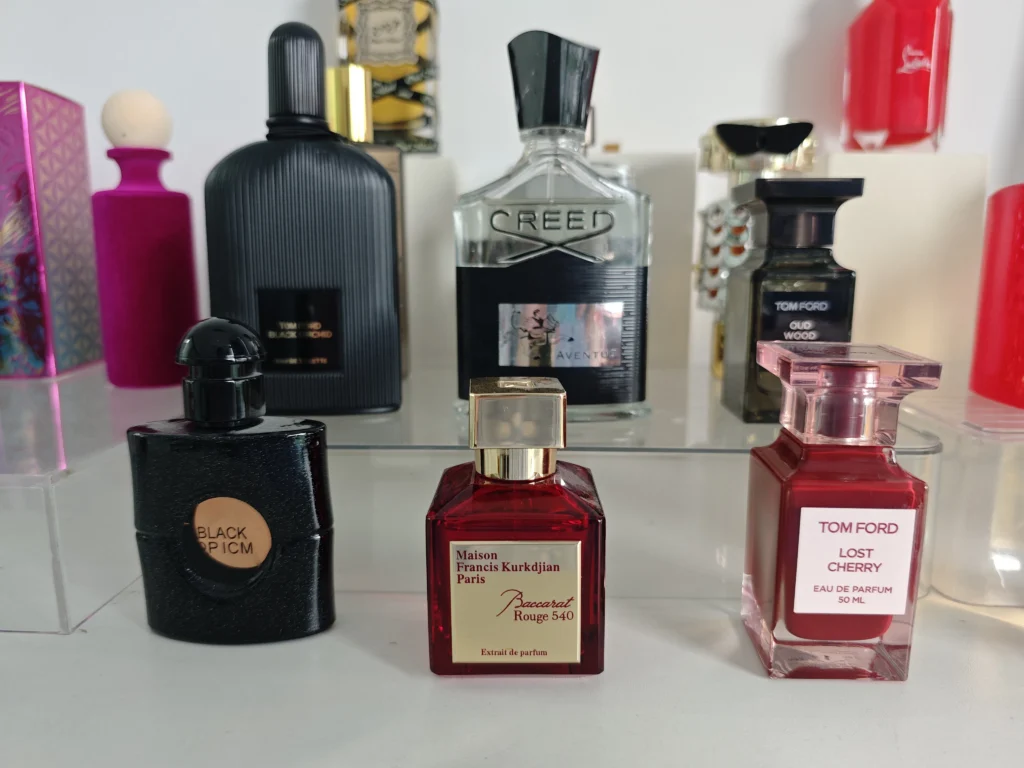
What is the closest perfume to Tom Ford Lost Cherry or Baccarat Rouge 540?
These are two of the most sought-after profiles on the market. For Baccarat Rouge 540, the goal is replicating the airy, medical-sweet spun sugar of Ambroxan and saffron. For Lost Cherry, the challenge is maintaining the volatile bitter almond and black cherry notes without them fading in 20 minutes. Dedicated indie and lab-direct collections usually execute these profiles best, as their higher Extrait-level concentrations ensure the delicate notes survive longer on the skin.
How can you tell if a fragrance clone is high quality?
A high-quality alternative will not smell overwhelmingly of rubbing alcohol or hand sanitizer when first sprayed. It will have a clear, distinct evolution—the scent should change and develop over the first hour, rather than smelling completely flat and linear. Finally, the dry-down (the scent left after 4+ hours) should still smell rich and pleasant, not degrading into a stale powder or cheap plastic scent.
Conclusion: Building Your Olfactory Wardrobe with Confidence
The days of gatekeeping luxury fragrances are effectively over. Armed with a solid understanding of GC-MS analytical chemistry, supply chain economics, the critical importance of factory maceration, and the reality of skin chemistry, you are now equipped to navigate the US fragrance market like an industry insider. You no longer have to pay a 400% markup just to cover a brand’s marketing budget, celebrity endorsements, and premium department store shelf space.
Choosing the right alternative is about finding brands that respect the science of perfumery, adhere to strict safety regulations, and prioritize transparency. Whether you are exploring the accessible racks at Zara, testing the heavy projection of Middle Eastern houses like Armaf, or seeking the clinical, factory-direct precision of dedicated indie formulators, the power of choice is finally in your hands.
If you value scientifically verified formulation, high oil concentrations, and a curated selection of the world’s most desired scent profiles, we encourage you to explore the expertly crafted collections at respected lab-direct brands like Montagne, Alexandria, or imixx perfume. Smell incredible, trust the science, and confidently leave the luxury price tag behind.
