

Blog
How to Master the Chemistry of the Iconic Tom Ford Cologne Peach Vibe (Without the $300 Markup)
Mar
Written by Linus Dacke Thall | Chief Fragrance R&D Director & Supply Chain Expert, IMIXX
Article Summary & Key Takeaways
The pursuit of the perfect boozy, woody peach fragrance has dominated the USA fragrance market, largely driven by the explosive popularity of high-end designer releases. However, the staggering $300 to $400 price tag attached to a luxury tom ford cologne peach profile often leaves fragrance enthusiasts searching for transparent, high-quality alternatives.
In this comprehensive, 3,000+ word consumer guide, we strip away the marketing fluff. We will explore the rigorous supply chain logistics, the precise gas chromatography-mass spectrometry (GC-MS) science, and the strict maceration processes that dictate a perfume’s true value. We will also look objectively at the pros and cons of different market options, offering a fair assessment of factory-direct models versus traditional luxury retail.
You will learn the molecular secrets of synthetic lactones, the reality of luxury pricing structures, and why understanding the “Information Gap” in the fragrance industry empowers you. Finally, we will provide actionable advice on layering, skin chemistry, and feature a robust 16-question FAQ to answer every query you have about this iconic scent profile.
1. The Anatomy of a Luxury Peach Fragrance: A Chemist’s Perspective for the Everyday Consumer
When clients across the USA search for the quintessential tom ford cologne peach experience, they aren’t looking for a cheap body spray that smells like artificial fruit juice or a teenager’s shampoo. They are searching for a complex, narcotic, and almost “dangerous” interpretation of stone fruit. As someone who spends every day analyzing formulation sheets and sourcing raw materials on the factory floor, I can tell you that creating a “dark peach” is one of the most challenging feats in modern perfumery.
The Illusion of “Natural” Peach in Perfumery
Here is an industry secret that luxury counters rarely share: there is no such thing as a natural peach essential oil. The scent of a peach cannot be extracted through traditional steam distillation or cold pressing like a lemon or a rose. The fruit simply contains too much water, and the aroma molecules are too delicate to survive the extraction process.
Instead, perfumers rely on a family of synthetic aroma chemicals known as Lactones—specifically Gamma-Undecalactone (historically known as Aldehyde C-14). Discovered in the early 20th century, this molecule provides the creamy, skin-like, fuzzy peach aroma. However, if you just put Gamma-Undecalactone in a bottle, it smells flat and plasticky. To elevate this from a basic scent to a luxury cologne, R&D labs must balance it with high-impact modifiers.
Building the “Boozy” and “Woody” DNA
To replicate the intoxicating bitterness that makes a peach cologne suitable for sophisticated evening wear, perfumers utilize complex natural extracts to cut through the synthetic sweetness.
- Davana Oil (Artemisia pallens): Sourced primarily from India, this natural herb possesses a fascinating fermented, plummy, liquor-like facet. It is crucial for the “boozy” opening.
- Rum and Cognac CO2 Extracts: These provide the literal smell of aged spirits, adding warmth and a slightly sharp, biting edge.
- Indonesian Patchouli and Sandalwood: A robust base of dark woods is required to ground the volatility of the top notes. Patchouli provides an earthy, slightly chocolatey dampness that contrasts beautifully with the bright peach.
This precise chemical balancing act—marrying lab-created lactones with expensive natural resins and woods—is what transforms a simple fruit note into a multi-dimensional, long-lasting fragrance.
2. The Supply Chain Reality: Why Are Designer Colognes So Expensive in the USA?
To understand why you pay upwards of $350 for 50ml of a designer fragrance at a high-end department store, we must objectively examine the global supply chain. The current business model of the luxury fragrance industry is heavily weighted toward marketing and perceived prestige, rather than the raw cost of the liquid inside the bottle.
Let’s break down the actual economics of a high-end luxury fragrance compared to a leaner, factory-direct model. The estimates below are based on standard industry procurement averages and supply chain studies widely recognized by organizations like Perfumer & Flavorist.
Table 1: The Economics of Perfume (Estimated Cost Structure Breakdown)
| Cost Component | Traditional Luxury Designer Brand (Est. % of Retail Price) | Independent / Factory-Direct Model (Est. % of Retail Price) | Consumer Insight & Industry Reality |
|---|---|---|---|
| The “Juice” (Fragrance Concentrate, Base Alcohol, Water) | 2% – 6% | 35% – 50% | Even when using premium raw materials (like natural Davana or high-grade Sandalwood), the actual liquid is the cheapest part of a luxury bottle due to massive retail markups. Direct models invest a higher percentage of the asking price into the formulation itself. |
| Bottle, Cap, Atomizer & Cardboard Packaging | 10% – 15% | 15% – 25% | Heavy, custom-molded glass, weighted magnetic caps, and elaborate velvet-lined boxes add massive perceived value but significantly increase manufacturing and shipping weights. |
| Marketing, Celebrity Endorsements, & Global PR | 35% – 50% | 10% – 15% | The highest cost of luxury perfume is often the multi-million dollar billboard campaign in Times Square, magazine spreads, and paying A-list actors to hold the bottle. |
| Retailer Margins, Shelf Space & Distributor Fees | 30% – 45% | 0% (Direct to Consumer via Web) | Major retail chains in the USA take a massive cut of the final retail price just for providing shelf space and paying sales associates. |
By understanding this table, consumers can see that when they buy a factory-direct fragrance, they are not necessarily buying “cheaper ingredients.” They are simply bypassing the “Brand Tax” and the retail middlemen. However, it is crucial to remain objective: buying direct means sacrificing the luxurious unboxing experience and the ability to test the fragrance at a physical counter.
3. The E-E-A-T Benchmark: Demystifying GC-MS Technology and Safety Standards
The internet is flooded with companies claiming to offer the “ultimate match” for popular fragrances. But how does a perfumer actually recreate a complex scent profile? True olfactory engineering requires empirical data, not just a good nose. In professional laboratories, we utilize Gas Chromatography-Mass Spectrometry (GC-MS).
What is GC-MS? (Explained for Non-Chemists)
Imagine taking a baked cake and putting it into a machine that can tell you exactly how many grains of sugar, dashes of salt, and drops of vanilla extract were used. That is essentially what GC-MS does for liquid.
A technician injects a tiny sample of a target fragrance into the machine. The machine vaporizes the liquid and pushes it through a long, microscopic tube. Different molecules travel through this tube at different speeds. The mass spectrometer at the end of the tube identifies these molecules as they exit and plots them on a graph, revealing the exact chemical blueprint of the fragrance.
The Limitations of the Machine
However, GC-MS is not a magic “copy-paste” printer. While it can tell us that a formula contains 5% Linalool, it cannot tell us if that Linalool came from cheap synthetic sources or from premium, natural French Lavender. It cannot identify the geographic origin of a natural ingredient (e.g., whether the Patchouli is from Java, which is smoky, or from Sumatra, which is cleaner). This is where the human element—the master perfumer—steps in. They must use their trained expertise to bridge the gap between raw chemical data and sensory perfection.
Certificates of Analysis (COA) and Consumer Safety
A major concern for everyday consumers regarding independent fragrance houses is safety. Are the ingredients safe for the skin? Reputable manufacturers strictly adhere to the guidelines set by the International Fragrance Association (IFRA). IFRA regularly updates its standards based on dermatological research, restricting or banning molecules that cause sensitization.
For example, in a proper lab setting, a Certificate of Analysis (COA) is generated for every batch of fragrance oil. A COA will detail the exact specific gravity, refractive index, and confirm that common allergens (like Oakmoss extracts or certain citrus terpenes) are well below the IFRA Category 4 limits for fine fragrance. When evaluating any brand, transparency regarding IFRA compliance is a massive trust signal.
4. The Secret to Perfume Performance: Maceration and Concentration Explained
A frequent complaint among USA consumers buying fast-fashion or mass-market fragrances is that they smell strongly of harsh perfumer’s alcohol upon spraying, and the scent vanishes within two hours. As a supply chain director, I can pinpoint exactly why this happens: a lack of maceration and low oil concentration to save money.
The Critical Process of Maceration
Maceration is the aging process of perfume, much like aging a fine wine in an oak barrel. When raw aroma chemicals and essential oils are blended with perfumer’s alcohol (ethanol) and a tiny amount of distilled water, they do not immediately form a cohesive scent. They need time to bind molecularly.
In a professional factory setting, we mandate a strict 4-to-6-week maceration period in dark, temperature-controlled stainless steel vats before any bottle is filled. This aging allows the harsh, volatile edges of the alcohol to evaporate and the heavy boozy, woody peach notes to round out, deepen, and stabilize. Mass-produced, budget perfumes are often mixed and shipped the very same week to maximize cash flow, resulting in a screechy, unstable scent profile.
Understanding Concentration: Extrait vs. EDP
Longevity is also directly tied to the ratio of fragrance oil to alcohol.
- Eau de Toilette (EDT): Typically 8% – 12% fragrance oil. Bright, projects loudly for the first hour, but fades quickly.
- Eau de Parfum (EDP): Typically 15% – 20% fragrance oil. The industry standard, offering a solid 6-8 hours of wear.
- Extrait de Parfum: Typically 25% – 30%+ fragrance oil. Sits closer to the skin but lasts exceptionally long, often 10-12+ hours, because the higher oil content slows down the evaporation rate.
The Case for Factory-Direct Brands
Transparency: Focus on juice quality over packaging.
Value: Extrait-level concentrations at a fraction of the price of designer EDPs.
Accessibility: Allows consumers to build a diverse fragrance wardrobe without going into debt.
The Case for Traditional Luxury Brands
Experience: Beautiful, heavy glass bottles and luxurious unboxing experiences.
Try Before You Buy: You can walk into a department store and spray a tester on your skin.
Prestige: The undeniable social cachet of displaying a recognizable designer logo on your vanity.
A Fair Look at Building Your Scent Profile
It is incredibly important for consumers to make holistic choices. While we are proud of the supply-chain efficiencies we have built at IMIXX, we believe a great fragrance routine involves multiple elements.
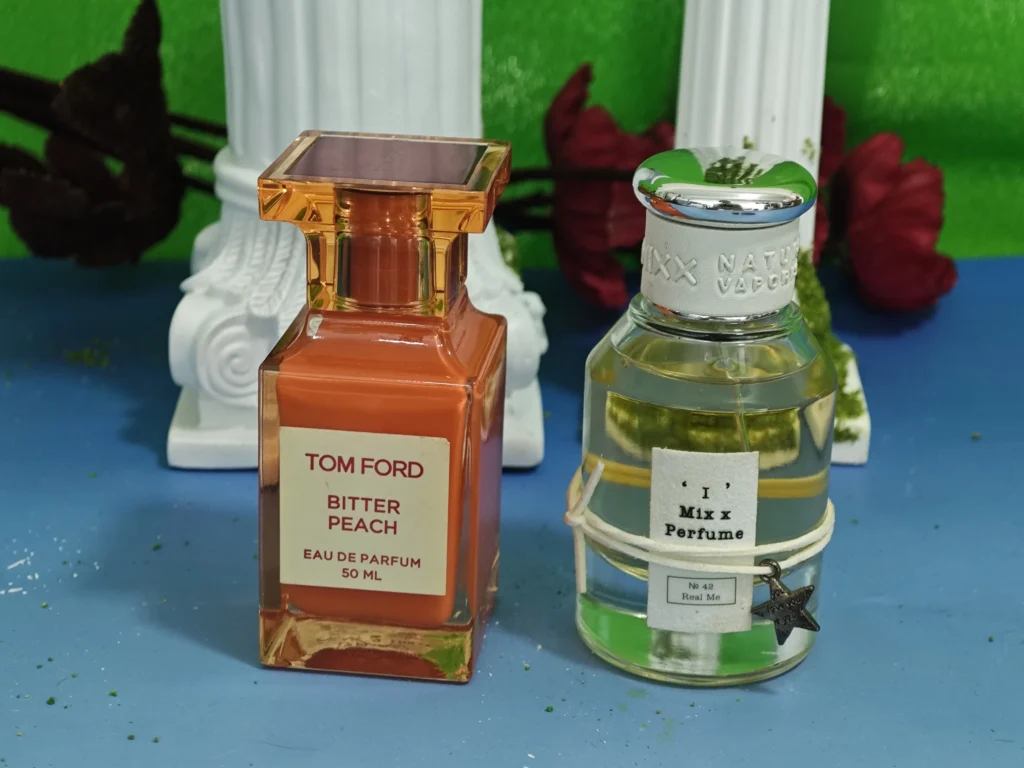
1. The Fragrance: If you value data-driven formulation, IFRA compliance, and an Extrait de Parfum concentration that skips the retail markup, we invite you to explore our IMIXX No. 60 Tom Ford Bitter Peach Dupe Perfume. It is crafted to deliver the complex, boozy patchouli-peach experience with exceptional longevity.
2. The Canvas (Skin Prep): Perfume oils bind to lipids (fats) on your skin. If your skin is dry, the fragrance will evaporate instantly. We highly recommend applying a high-quality, unscented daily moisturizer before spraying any perfume. Brands like CeraVe offer excellent ceramide-rich lotions that create the perfect hydrated base without interfering with the scent.
3. The Booster (Layering Oils): To add a personal touch to your peach fragrance, consider layering it with pure, high-quality carrier oils or single-note essential oils. A few drops of pure Jojoba oil mixed with a skin-safe Vanilla extract (from reputable suppliers like Plant Therapy) applied to your pulse points before spraying your cologne can deepen the gourmand base notes significantly.
5. Advanced Application: How to Wear and Layer Your Peach Fragrance Like a Pro
Possessing a high-quality fragrance is only half the battle; knowing how to wear it is a mark of true expertise. Because a dark peach cologne is heavily reliant on base notes to project, its performance is deeply affected by your environment and skin chemistry.
The Science of Skin pH and Diet
Have you ever noticed that a perfume smells amazing on a friend but terrible on you? This is not a myth; it is chemistry. Your skin’s natural pH level, your diet (highly spiced foods or high acidity), and your body temperature all alter how aroma chemicals volatilize. The heavy lactones in a peach fragrance can turn slightly “sour” on highly acidic skin. If you experience this, try spraying the fragrance on your clothing (like the inside of a jacket collar) rather than directly on your skin, as fabric provides a neutral, temperature-stable canvas.
Strategic Pulse Points
Beyond the traditional wrists and neck, consider spraying the inside of your elbows and the back of your knees. These areas generate more body heat due to the proximity of blood vessels to the skin surface, which helps the heavy patchouli and rum notes diffuse slowly and steadily throughout the day.
The Art of Layering (Creating a Signature Scent)
To customize your scent profile and ensure you don’t smell like everyone else, try these layering combinations:
- To make it darker and more masculine: Layer the peach fragrance over an Iso E Super or dry Cedarwood base. The synthetic woods will dry out the syrupy sweetness of the peach, highlighting the rum and patchouli.
- To make it sweeter and more gourmand: Layer it with a pure Tonka Bean or Madagascar Vanilla fragrance. This will amplify the creamy lactones and create a dessert-like, comforting aura.
- To make it fresher for daytime: Layer it with a sharp, linear citrus, such as pure Bergamot or Grapefruit. The bright citrus will lift the heavy base and make the peach note feel juicier and more energetic.
6. The Master FAQ: Everything You Need to Know About the “Tom Ford Cologne Peach” Vibe
As a formulation expert, I regularly receive questions from consumers navigating the complex world of niche perfumery. Here are detailed, no-nonsense answers to the most frequently asked questions across the USA regarding this specific, highly sought-after scent profile.
The profile is characterized by an intoxicating blend of sweet Pêche de Vigne and tart Sicilian blood orange at the very beginning. This bright opening is abruptly followed by a dark, boozy heart of rum and cognac extracts. The dry down is earthy, woody, and slightly dirty, dominated by Indonesian patchouli, sandalwood, and vanilla. It is not a fresh, summery, innocent fruit scent; it is rich, syrupy, mature, and undeniably provocative.
In modern niche perfumery, notes do not have a gender. This specific scent profile is firmly unisex. The initial fruity sweetness appeals to those who love gourmands (traditionally leaning feminine), while the heavy dose of patchouli, rum, and woods in the base makes it incredibly appealing, sophisticated, and rugged on men. Skin chemistry will dictate which notes pull forward most strongly.
Longevity depends heavily on the concentration (as discussed in Chapter 4) and skin hydration. A standard commercial Eau de Parfum might last 5-7 hours. However, an Extrait de Parfum formulation, due to its higher oil-to-alcohol ratio and reliance on heavy base notes like resins and woods, can easily provide 8 to 12 hours of longevity on properly hydrated skin, and can linger for days on a sweater or scarf.
As detailed in our economic breakdown (Table 1), you are paying primarily for the luxury brand name, the heavy, custom-designed glass bottle, massive global marketing campaigns, and retail space margins. The actual cost of the raw fragrance materials, while premium, represents only a small fraction of the final $350+ retail price. You are buying a piece of high-fashion art and status, not just scented liquid.
The core olfactory pyramid consists of:
Top Notes: Pêche de Vigne (Peach), Sicilian Blood Orange, Cardamom, Heliotrope.
Heart Notes: Rum extract, Cognac oil, Davana (an herbal, plummy note), Jasmine Absolute.
Base Notes: Indonesian Patchouli, Vanilla Absolute, Sandalwood, Tonka Bean, Cashmeran, Benzoin, and Styrax (resins).
This is subjective. From a purely chemical and supply chain perspective, no—the retail markup is disproportionate to the cost of goods. High-quality R&D labs can reverse-engineer the molecular structure and offer it for a fraction of the cost, providing identical olfactory value. However, if having the beautiful designer bottle on your vanity and the prestige of the brand name brings you joy, then the subjective value may justify the price for you.
Due to the heavy rum, cognac, and patchouli notes, this scent profile truly shines in cooler weather. It is spectacular in the Fall and Winter. The crisp, cold air tempers the intense, syrupy sweetness of the fruit and allows the warm, woody base to radiate beautifully without becoming suffocating.
We confidently suggest exploring factory-direct options that prioritize juice concentration over packaging. IMIXX Fragrances, for example, utilizes advanced GC-MS technology and adheres to strict IFRA compliance and a 6-week maceration protocol. This ensures a mathematically precise, long-lasting interpretation that focuses entirely on olfactory quality.
No, and this is a common misconception that leads to blind-buy regrets. If you are looking for a light, crisp, watery, “just bitten” fresh summer peach, this profile will shock you. It smells like a peach that has been stewed, soaked in expensive dark rum, dusted with earthy spices, and left to age in an oak barrel. It is dark, heavy, and decadent.
Counterfeiters often use substandard, harsh alcohol, lack proper maceration time, and use cheap, non-IFRA compliant synthetic fillers. A fake will often smell intensely of rubbing alcohol upon the first spray, lack the complex mid and base notes entirely, and disappear within an hour. Furthermore, look for flaws in the glass molding, cheap atomizers that squirt rather than mist, and check the batch codes etched into the glass (not just printed on a removable sticker).
While traditionally an autumn/winter scent, it can be worn on cooler summer evenings. However, in high heat and heavy humidity, the syrupy sweetness and earthy patchouli can rapidly become cloying and overwhelming to those around you. If you choose to wear it in the summer, limit it strictly to one or two sprays maximum, preferably on the lower half of your body.
Absolutely. The dry down is where the magic happens for men. While the first 10 minutes are undeniably fruity, the intense woods, natural resins (benzoin, styrax), and earthy patchouli quickly take over. It creates a highly masculine, confident, and slightly rugged aura that contrasts perfectly with the initial sweetness.
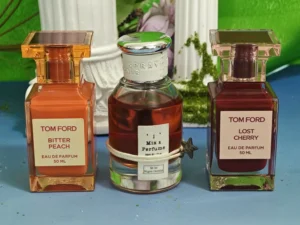
While both are decadent, fruit-forward fragrances with boozy qualities, they go in different directions. A cherry profile leans heavily into roasted almond, tonka bean, and a medicinal, syrupy sweetness (resembling amaretto liqueur). The peach profile is significantly woodier, earthier (due to the heavy dose of patchouli), and utilizes rum and cognac rather than almond nuances.
Rumors in the fragrance community frequently swirl around discontinuations. These rumors are often sparked by temporary supply chain issues with specific raw materials or mandatory reformulations due to updated IFRA regulations restricting certain allergens. As long as the demand remains high in the USA market, the core profile will likely survive, though subtle batch variations may occur over the years.
Because it is a highly concentrated, heavy profile with strong sillage (the trail it leaves behind), less is more. For an office or enclosed environment, 1-2 sprays (perhaps under the shirt to muffle the projection) are sufficient. For an evening out or an outdoor event, 3-4 sprays (on pulse points and the back of the neck) will provide a massive scent bubble without suffocating those around you.
Yes, but it is crucial to note that it is not a sugary, edible “cupcake” vanilla. It is a dry, slightly smoky, botanical vanilla absolute. When blended with sandalwood and cashmeran (a synthetic musk with woody nuances), it provides a warm, creamy, and sensual finish that anchors the entire fragrance to the skin for hours.
Conclusion: Elevate Your Scent Wardrobe Intelligently
The global fragrance industry has operated behind a veil of mystery, romantic marketing, and exorbitant retail markups for far too long. By taking the time to understand the science of synthetic lactones, the necessity of proper maceration timelines, and the stark realities of supply chain economics, you have transformed from a passive consumer into an informed connoisseur.
You now know that you do not need to spend hundreds of dollars to smell incredibly wealthy, complex, and memorable. Whether you choose to invest in a piece of designer glass art or opt for a factory-direct formulation focused purely on the juice, the choice is now yours, driven by data rather than advertising.
We invite you to experience the rigorous R&D dedication and IFRA-compliant formulation we pour into every bottle. Skip the marketing tax, hydrate your skin, and explore the depths of expertly crafted perfumery.
Ready to experience the ultimate boozy, woody peach formulation?
Discover the Science Behind IMIXX No. 60 Today.
