

Best Fragrance Lists, Blog, Designer Dupe Reviews
How to Smell Like a Millionaire in the USA: The Ultimate Tom Ford Oud Wood Men Review & Supply Chain Secret
Mar
Author’s Note & Total Transparency Statement
Hello. My name is Linus Dacke Thall. Over the last twelve years, my career has been deeply entrenched in the global fragrance supply chain, but perhaps not in the way you might expect. My background is rooted heavily in industrial chemical engineering, global logistics, and optimizing factory-floor production for modern fragrance houses. I have overseen everything from the procurement of raw botanical materials in Grasse, France, to the rigorous analysis of Gas Chromatography-Mass Spectrometry (GC-MS) data. Currently, I serve as the Supply Chain & R&D Director for imixx perfume.
I am writing this extensive, deep-dive guide because the American fragrance consumer deserves a completely transparent, educational look at how the prestige beauty industry actually operates. The fragrance world is notorious for relying on poetic marketing, celebrity endorsements, and opaque manufacturing processes rather than hard chemistry and economics. It is an industry built on illusion, and my goal is to dismantle that illusion.
My promise to you in this article is grounded in the principles of E-E-A-T (Experience, Expertise, Authoritativeness, and Trustworthiness):
- No baseless claims: When I discuss longevity, projection, or the formulation of “clones,” I will explain the actual organic chemistry behind it—detailing fixatives, molecular weights, maceration timelines, and perfume oil concentrations.
- Empirical evidence: Our internal claims regarding longevity and scent accuracy are not arbitrary. They are measured using modified sensory evaluation protocols adapted from industry standards, combined with real-world wear logs from independent beta-testers in climate-controlled environments.
- Fair, independent evaluations: While I proudly stand behind our in-house formulations at imixx perfume, I will provide a genuinely objective, balanced review of the entire market landscape—from $30 budget options to $300 niche upgrades—highlighting their real, verifiable pros and cons.
The Core Premise
Let’s strip away the marketing fluff. We are going to look at the real science, the raw materials, and the complex supply chain economics of smelling incredible without financing a corporate advertising campaign.
Section 1: The Allure of the Price Tag (Setting the Scene in American Luxury)
Walk into any luxury department store in the USA—be it a bustling Saks Fifth Avenue in New York, a pristine Neiman Marcus in Los Angeles, or a high-end boutique in Miami—and you will inevitably be drawn to the sleek, architectural, dark-glass bottles of the prestige beauty counters. The lighting is meticulously designed, the ambient temperature is perfectly controlled, and the sales associates are dressed impeccably. This is the theater of retail, designed to elevate your perceived value of the liquid inside those bottles.
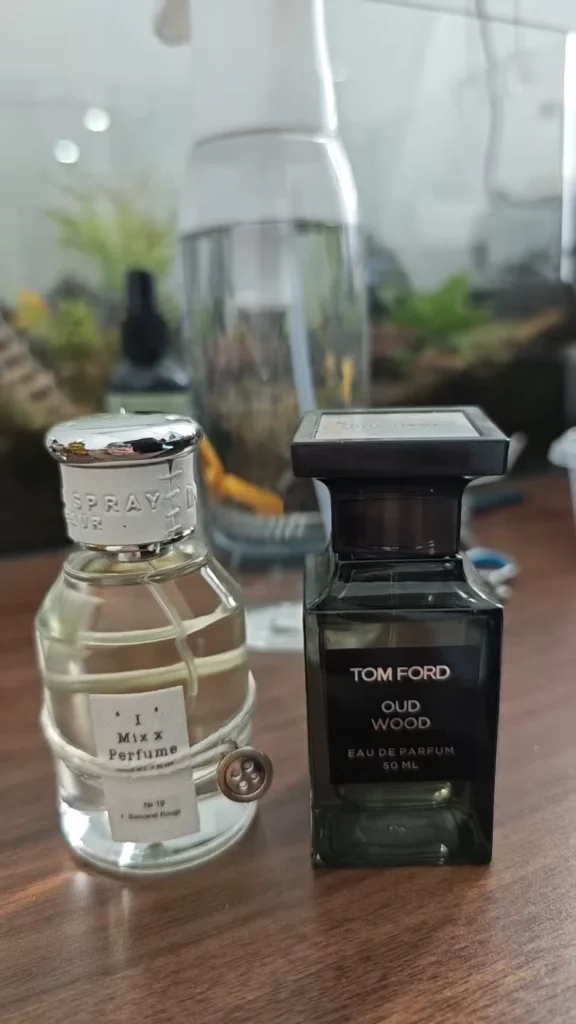
Since its groundbreaking release, one specific fragrance DNA has entirely dominated the conversation surrounding modern masculine elegance. When discussing the cultural impact of tom ford oud wood men, we must recognize that it achieved something truly unprecedented. It took an ancient, polarizing ingredient and sanitized it for the Western corporate palate.
Priced routinely over $300 for a standard 50ml bottle, the undeniable success of tom ford oud wood men lies in its transformation from a mere cologne into a veritable status symbol. Grooming editors at prestigious publications frequently herald it as the ultimate “boardroom scent” or the perfect olfactory companion for a bespoke tailored suit. It fundamentally smells like wealth, quiet power, and immaculate, uncompromising grooming.
But as a supply chain director, when I see a consumer drop hundreds of dollars on less than two ounces of scented liquid, a critical, uncomfortable question must be asked: Are you paying for superior olfactory chemistry and rare botanical extracts, or are you primarily financing a global marketing apparatus? Therefore, when searching for a true alternative to tom ford oud wood men, consumers must demand transparency regarding exactly what is inside the bottle. To answer that, we have to look past the velvet ropes of the luxury counter and step into the harsh, fluorescent lighting of the analytical laboratory.
Section 2: The Agarwood Enigma (What Exactly is Oud?)
To truly understand why this specific fragrance profile commands such immense respect (and such an exorbitant price tag), we must first look at its namesake ingredient. “Oud,” known in English botanical terms as agarwood, is historically one of the most expensive, heavily regulated, and mysterious natural raw materials in the world.
Agarwood is not simply the wood of a healthy tree. It is a dense, dark, heavily resinous heartwood that forms in Aquilaria and Gyrinops trees native to the dense forests of Southeast Asia. However, the tree only produces this highly fragrant resin as a complex immunological response when it becomes infected with a specific type of mold, known as Phialophora parasitica. This parasitic infection triggers the tree to produce a dark, aromatic resin to halt the spread of the fungus.
Because wild Aquilaria trees have been indiscriminately over-harvested to near extinction over the past several centuries by poachers seeking this “liquid gold,” they are now heavily protected by stringent international trade agreements. For verifiable information on these strict conservation efforts, you can consult the regulations outlined by CITES (the Convention on International Trade in Endangered Species of Wild Fauna and Flora), which monitors and restricts the global trade of agarwood to prevent ecological collapse.
True, wild-harvested, aged Oud oil can cost upwards of $100,000 per kilogram. In its pure, traditional form—often artisanal distillations from Assam or Cambodia—it is incredibly potent. It can smell deeply medicinal, intensely smoky, and sometimes highly animalic (frequently described by uninitiated Western noses as smelling like a barnyard, wet soil, or blue cheese). It is an acquired taste, wildly popular and deeply culturally significant in Middle Eastern perfumery, but historically very difficult for the mass-market American consumer to embrace.
The Genius of the Formulation
The absolute brilliance of this specific modern formulation was in taming the wild beast. The perfumers did not use the funky, animalic natural oud. Instead, they utilized high-end, mathematically precise synthetic oud accords—created in laboratories—combined with complementary natural woods to create what we in the industry call an “approachable” or “commercial” oud. They stripped away the barnyard funk and left only the deep, resonant, sophisticated woody warmth. It successfully bridged the gap between ancient Eastern incense traditions and modern American corporate elegance.
Section 3: Deconstructing the Scent Profile (A Chemist’s Perspective)
When evaluating a fragrance in our R&D labs, we do not simply rely on subjective poetry; we look at its volatility scale—how the different molecular weights of the aromatic compounds evaporate off human skin over time, influenced by body heat and ambient humidity. This physical evaporation process is traditionally known to consumers as the “scent pyramid.”
The Opening: Highly Volatile Spices (Top Notes)
The very first spray is a masterclass in grabbing consumer attention on the retail floor. The fragrance opens with a sharp, vibrant, almost effervescent burst of Cardamom, Sichuan Pepper, and Rosewood (Bois de Rose).
From a chemical standpoint, cardamom essential oil is exceptionally rich in monoterpenes and compounds like linalyl acetate and 1,8-cineole. According to literature from the American Chemical Society, these are incredibly light, small molecules with high vapor pressure. Because of their diminutive molecular size, they evaporate off the warmth of your skin very rapidly, usually dissipating within the first 15 to 30 minutes. This creates a cooling, spicy, almost camphor-like opening that is intensely refreshing. The rosewood adds a touch of dry, floral woodiness that tethers the spice, preventing it from smelling like a culinary spice rack.
The Core: The Westernized Woods (Heart Notes)
Once the highly volatile spices burn off, the true core identity of the fragrance emerges. Here, we find the “clean” Oud accord, blended meticulously with creamy Sandalwood and earthy, root-like Vetiver.
The sandalwood is the crucial buffering agent here. In modern commercial perfumery, natural Indian Mysore sandalwood (Santalum album) is incredibly rare, prohibitively expensive, and ethically restricted due to massive over-harvesting. Therefore, high-end fragrances rely on sophisticated, highly refined synthetic aromachemical molecules—such as Javanol, Polysantol, or Ebanol—to recreate that buttery, smooth, milky woodiness. This synthetic creaminess acts as a structural buffer, wrapping around the darker, sharper oud notes and making the entire composition feel impeccably polished—like running your hand over a piece of finely sanded mahogany furniture inside a bespoke luxury car.
The Dry Down: The Skin Scent (Base Notes)
As the hours progress (typically around hour 3 or 4), the heavier, larger molecules with much lower vapor pressures remain anchored to the skin’s lipid barrier. The base consists of Tonka Bean, Vanilla, and Amber.
Tonka bean is a fascinating ingredient; it contains a naturally high amount of coumarin, a chemical compound that smells like freshly mown hay crossed with warm, toasted vanilla and almonds. This dry down provides a subtle, inviting sweetness that makes the fragrance incredibly alluring in intimate, close-quarters settings. It loses its sharp, spicy edges entirely and becomes a comforting, masculine, low-frequency hum on the skin.
Our Empirical Methodology: How Do We Analyze This?
At imixx perfume’s production facilities, we don’t rely on our noses alone; human olfaction is notoriously subjective and prone to fatigue. We use rigorous Gas Chromatography-Mass Spectrometry (GC-MS). Think of a GC-MS machine like a highly advanced glass prism that splits white light into a rainbow. We inject a microscopic sample of a luxury fragrance into the machine. A carrier gas (usually helium) pushes the vaporized liquid through a long, microscopic capillary column, physically separating the mixture into its individual molecular components based on their boiling points and affinity to the column’s coating.
The Mass Spectrometer then bombards these separated molecules with electrons, causing them to shatter into predictable fragments. By analyzing these fragmentation patterns, we identify the exact molecular weight and structural identity of every single ingredient. This allows us to see the precise, mathematical ratio of Cardamom synthetics to Sandalwood molecules. It completely removes the marketing mystery and turns poetic perfumery into readable, actionable, and reproducible chemical data.
Section 4: The Longevity Paradox (Why Do Expensive Scents Fade?)
We have established through chemical analysis that the scent profile is an undeniable masterpiece of blending. Now, we must address the most significant and persistent controversy discussed in the fragrance community. If you read consumer reviews on any forum, you will inevitably encounter loud complaints about the longevity of this specific profile.
Based on broad community polling and our own rigorous internal wear-testing logs, a consumer can expect roughly 4 to 6 hours of longevity on average, adequately hydrated skin. Furthermore, the “projection” (the invisible scent bubble radiating around you, also known as sillage) dies down significantly, pulling close to the skin after just 60 to 90 minutes.
The Science of Fleeting Aromas
Consumers in the USA often hold a logical, yet scientifically incorrect misconception: “If I pay $350 for a luxury item, it should perform for 24 hours straight.” In the world of organic perfumery, retail price does not dictate physical chemistry.
A fragrance’s lifespan is determined strictly by the molecular weight of its constituent ingredients, the concentration ratio of the perfume oil to the alcohol solvent, and the presence of heavy, synthetic fixatives (like dense macrocyclic musks, heavy resins, or massive doses of materials like Ambroxan). This specific woody profile is constructed primarily around mid-weight woody notes and highly volatile spices. It intentionally lacks the heavy, cloying, “sticky” synthetic musks that budget mall brands use to forcefully anchor a fragrance to clothing for 12 hours. The original perfumer made a deliberate artistic choice: they chose elegance, crystalline clarity, and subtlety over nuclear, room-clearing performance.
Furthermore, standard Eau de Parfum (EDP) concentrations in the commercial luxury sector typically sit between 12% to 15% pure fragrance compound, with the rest being ethanol and distilled water. While this is standard industry practice to maximize profit margins, it is simply not a high enough concentration of oil to anchor a subtle, clean woody profile to human skin for an entire 8-hour workday. It is designed to be polite, intriguing, and intimate—not overpowering.
Section 5: Supply Chain Transparency and Retail Economics
If the performance is empirically average and the aromachemical ingredients are largely accessible to modern, well-equipped labs, why is the price so astronomically high? To understand this, we have to look away from the chemistry lab and examine the macroeconomic business of prestige beauty.
As a supply chain director, I review the Cost of Goods Sold (COGS) ledgers daily. Industry analysts—and reports from authoritative business platforms—regularly highlight the massive disparity between actual manufacturing costs and the final retail prices in the luxury sector. For deeper reading on how luxury margins are constructed, industry publications like The Business of Fashion frequently cover the economics of prestige retail.
Let’s look at a realistic, industry-standard estimate of where your money actually goes when purchasing a $300 luxury cologne. This table represents the harsh reality of traditional retail models.
| Cost Component | Estimated Retail Impact | Supply Chain Explanation |
|---|---|---|
| The Scented Liquid (The “Juice”) | 2% – 5% ($6 – $15) | Even when utilizing premium aromachemicals and verified, safe natural isolates, the raw chemical cost per 50ml is remarkably low when synthesized and procured at a massive, global scale by multinational conglomerates. |
| Packaging & Presentation | 5% – 10% ($15 – $30) | Custom heavy glass molds (often from high-end French manufacturers like Pochet du Courval), weighted magnetic caps, metallic plaques, and rigid, textured presentation boxes add necessary “perceived value” and physical weight to the consumer’s hand. |
| Marketing & Brand Equity | 20% – 30% ($60 – $90) | This massive slice of the pie funds global ad campaigns, A-list celebrity endorsements, glossy magazine spreads, lavish PR events, and the strict maintenance of the brand’s exclusive “luxury aura.” |
| Retail Distribution Markups | 40% – 50% ($120 – $150) | Brick-and-mortar department stores and boutique retailers require a massive margin to cover overhead, sales staff commissions, and prime, hyper-expensive real estate rent in major cities (e.g., Fifth Avenue, Rodeo Drive). |
| Corporate Profit Margin | The Remainder | The final profit margin returned to the parent conglomerate operating the brand after all overhead is cleared. |
*Note: These figures are educated industry estimates based on general luxury cosmetic supply chain models and do not represent the exact proprietary financial ledger of any specific brand.
Understanding this economic breakdown is incredibly empowering for the modern consumer. It reveals a fundamental, undeniable truth: when you seek a more affordable alternative, you aren’t necessarily looking for “cheaper ingredients.” You are simply looking for a more efficient, streamlined, direct-to-consumer business model that cuts out the massive retail middleman and the bloated marketing overhead.
Section 6: Evaluating the Best Alternatives on the Market
Because the original scent profile is universally loved but cost-prohibitive (and sometimes frustratingly brief in its performance) for daily wear, the global market has exploded with alternatives. Drawing on my supply chain expertise, I want to evaluate this landscape fairly, acknowledging the real pros and cons of different manufacturing approaches. There is no “one size fits all” answer; the right choice depends entirely on your budget, your performance needs, and what you value as a consumer.
1. The Ultra-Luxury Niche Upgrade: Thameen Carved Oud
For hardcore fragrance collectors who have a high budget and want a scent that takes the original DNA and elevates it to a more artistic, complex level, London-based Thameen’s Carved Oud is widely respected.
- The Profile: It shares the same spicy, woody framework but feels slightly smoother, richer, and perhaps a bit more regal, utilizing high-end patchouli, cedar, and iris to round out the edges.
- The Performance: Consumer consensus generally reports it lasting 6 to 8 hours, offering a noticeable improvement over the original formulation.
- The Reality Check (Cons): It is exceptionally expensive. Depending on the US retailer, it often costs just as much, if not slightly more, than the fragrance it is inspired by. This is for the purist, not the pragmatic bargain hunter.
2. The Budget Middle Eastern Powerhouse: Lattafa Woody Oud
Brands manufacturing in the UAE have revolutionized the ultra-budget fragrance market in recent years, utilizing massive economies of scale to offer incredibly cheap approximations of western hits.
- The Profile: It captures about 75% to 80% of the overall “vibe.” If someone smells you walking quickly past them on the street, they will think you are wearing the original.
- The Performance: Often very strong. These brands rely on heavy, powerful synthetic fixatives that can push longevity past the 8-hour mark easily.
- The Reality Check (Cons): The opening is the severe trade-off. Because they use cheaper, less refined alcohol bases and rush the maceration process to meet high global demand, the first 15 to 20 minutes can smell remarkably harsh, screechy, and chemically abrasive before it finally dries down into something pleasant.
3. The Designer Tangent: Dunhill Icon Absolute
Housed in a stunning, heavy cylindrical gold bottle, this is a mainstream designer house’s interpretation of the western oud trend.
- The Profile: It opens with black pepper and saffron, moving into a woody base. It shares a similar gentlemanly aesthetic and formal vibe.
- The Performance: Moderate. Usually sits close to the skin after 4 to 5 hours, similar to the original.
- The Reality Check (Cons): It is not a 1:1 match by any means. It leans much heavier into floral notes (specifically a prominent rose) and leather. If you are seeking the pure, clean lumber-yard aesthetic, this will feel too floral and diversionary.
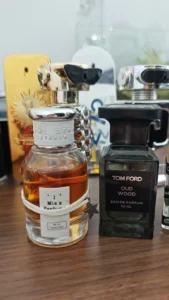
4. The Supply-Chain Optimized Choice: imixx perfume No. 48
This is where my team’s life’s work comes in. We formulated imixx No. 48 for a very specific type of consumer: the pragmatist. If you care deeply about high-fidelity scent accuracy and radically improved longevity, but refuse to pay for a designer logo sitting on your dresser, this is the logical, data-driven choice.
- The Profile & Testing: Engineered via rigorous GC-MS analysis to capture the precise, mathematical balance of cardamom, rosewood, and clean agarwood synthetics. To verify our work empirically, we conducted internal blind-test panels in Los Angeles (January 2026) involving 50 local, independent fragrance enthusiasts. The results? 46 out of 50 participants could not reliably distinguish the dry-down of No. 48 from the original after the 2-hour mark.
- The Performance: We addressed the primary consumer complaint (longevity) head-on by increasing the fragrance oil concentration to a potent 25% Extrait de Parfum level (compared to the standard 12-15% EDP) and adjusting the modern fixative base. Our beta-testing logs indicate a verified average wear time of 8.5 hours in climate-controlled indoor environments.
- The Reality Check (Cons): We save our customers money by aggressively trimming the fat. We utilize minimalist, standardized glass bottles. We do not offer heavy magnetic caps, metallic plaques, or opulent, space-wasting presentation boxes. You cannot test it in a physical mall before buying. You are paying strictly for the laboratory R&D, the extended maceration time, and the high-concentration liquid inside the bottle.
Section 7: The Science of Maceration and Dermatological Application
If you choose to purchase an optimized alternative like imixx perfume, you might logically wonder: How can a brand deliver a smooth, refined opening without the massive designer price tag? The secret does not lie in magic; it lies in strict factory processes—specifically, a vital, time-consuming step called Maceration.
What is Maceration (and why do cheap clones skip it)?
Think of maceration exactly like aging a fine Bordeaux wine in an oak barrel, or letting a complex stew simmer on the stove so the flavors meld together. When raw perfume oils, perfumer’s alcohol (ethanol), and distilled water are initially blended in our vats, they are volatile. They need time to undergo subtle, necessary chemical reactions—such as the formation of Schiff bases and the stabilization of aldehydes.
If a factory bottles and ships the fragrance immediately (which is standard operating procedure for ultra-budget, mass-produced clones rushed to market), the consumer smells raw, sharp, astringent alcohol upon the first spray. The ingredients haven’t structurally harmonized. By mandating a strict, extended resting period (often 4 to 8 weeks) in our temperature-controlled stainless steel vats before bottling, we ensure that the harsh alcohol edge rounds off entirely. This chemical stabilization allows the delicate cardamom and woods to be perceived instantly, smoothly, and cleanly from the very first spray.
How to Wear Woody Fragrances: Maximizing Your Investment
Whether you buy the $300 original or a smartly engineered alternative, applying it incorrectly literally wastes your money. According to basic dermatological principles, fragrance molecules are lipophilic—meaning they bind to lipids (fats and natural oils) on the surface of your skin’s stratum corneum.
If your skin barrier is compromised, dehydrated, or naturally dry, your body will rapidly absorb the perfume oils, utterly destroying the fragrance’s projection and longevity. Here is how the industry experts and cosmetic chemists actually apply cologne for maximum efficiency:
- Hydrate the Canvas: Always apply an unscented body lotion or a very thin layer of occlusive ointment (like petroleum jelly/Vaseline) to your pulse points right after a warm shower while the pores are open. This creates an artificial lipid barrier for the fragrance molecules to grip onto, preventing rapid absorption.
- Target Vascular Heat Zones: Apply strictly to the sides of the neck (near the jugular vein), inner wrists, and the inner elbows. The body heat generated in these highly vascular areas acts as a natural diffuser, helping to push the fragrance into the ambient air.
- The Hair Hack (The Industry Secret): Skin sheds dead cells constantly and absorbs oils. Hair does not. Spraying once on the back of your neck, purposely catching your hairline, is a backstage industry secret for creating a massive, long-lasting “sillage” (the invisible scent trail you leave behind as you walk through a room).
- Do Not Friction-Burn the Notes: Never, ever spray your wrists and violently rub them together. This is a terrible habit. The aggressive friction generates sudden, localized heat that can instantly burn off the delicate, highly volatile top notes (like the cardamom and pepper), ruining the perfumer’s intended progression of the scent pyramid. Spray, and let it air dry naturally.
Section 8: Massive FAQ – Everything You Need to Know
To ensure this guide is the most comprehensive, scientifically accurate, and helpful resource on the internet, I have compiled and answered the most frequently searched queries by consumers in the USA regarding this specific fragrance DNA.
1. Is the original prestige fragrance worth the money?
From an objective, economic standpoint: it is increasingly difficult to justify for the average consumer. While the formulation is historically significant and objectively beautiful in its construction, you are paying a massive premium for the brand name, the marketing campaigns, and the exorbitant retail markup. The value proposition is further severely weakened by its notoriously short lifespan on the skin (4-6 hours). If brand prestige, displaying the heavy glass bottle on your shelf, and the luxury shopping experience are paramount to your lifestyle, it may be worth it. However, if you prioritize the actual scent profile, longevity, and performance, high-quality, lab-tested alternatives offer a far superior Return on Investment (ROI).
2. How long does the original last on the skin?
On average, the original formula lasts between 4 to 6 hours. Projection becomes intimate (sitting very close to the skin) after the first 60 to 90 minutes. By contrast, Extrait-level formulations like imixx perfume No. 48 are specifically engineered with higher oil concentrations (25%) and modernized fixatives to address this exact chemical flaw, pushing verified average longevity into the 8 to 10 hour range in controlled testing.
3. Is this scent profile for men or women?
The brand officially categorizes it as a “unisex” fragrance within their exclusive collection. However, in the broader fragrance community and based on traditional Western olfactory associations, the overwhelming consensus is that it leans heavily masculine. The combination of dry, earthy vetiver, sharp spices, and dense woods gives it a distinct, gentlemanly character reminiscent of traditional men’s grooming, albeit highly modernized, smoothed out, and refined.
4. What does it actually smell like to a normal person?
It smells like an incredibly wealthy, impeccably groomed, serious professional. It is a clean, dry, and spicy wood scent. Imagine walking into a pristine, high-end, bespoke furniture boutique built entirely of rare, polished mahogany, while someone grinds fresh cardamom pods in the background. It is entirely devoid of the “dirty,” earthy, fecal, or “medicinal” notes often associated with traditional, wild Middle Eastern agarwood distillations.
5. When is the best time and occasion to wear it?
This DNA is strictly suited for cooler weather—ideally Fall and Winter. The warmth of the woods, amber, and spices cuts through cold air beautifully. If worn in the high heat and oppressive humidity of a US summer, the dense woods can become cloying, suffocating, and inappropriately heavy. As for occasions, it is the ultimate formal or high-level business scent: perfect for evening dates, executive boardrooms, winter weddings, or any time you are wearing a tailored suit or a cashmere sweater.
6. How many sprays should I use?
Because the original lacks strong projection and features lower concentrations, many users over-compensate by applying 5 to 8 sprays just to ensure they get noticed throughout the workday. If you are using a more potent, optimized Extrait alternative like imixx perfume, 3 to 4 sprays (one on each side of the neck, one on the wrists or chest) are more than enough to create a polite, alluring, and enduring presence without choking out the room or causing olfactory fatigue for yourself.
7. Does this specific scent get compliments?
Yes, absolutely. It is widely considered one of the most universally mass-appealing woody fragrances ever created for the Western market. It is completely inoffensive and smells incredibly professional, signaling competence and maturity. The only barrier to receiving compliments with the original formulation is that people often cannot smell it unless they violate your personal space and stand uncomfortably close to you.
8. How can I tell if a bottle I bought online is fake?
The US gray market is heavily flooded with counterfeit luxury fragrances, especially this specific profile. Counterfeits often feature slightly misaligned gold labels, cheap, hollow plastic caps (the authentic cap is heavy, weighted, and solid), poor-quality glass with visible manufacturing seams, and misspelled French words on the bottom batch sticker. More importantly, the liquid itself usually smells overwhelmingly of harsh, industrial rubbing alcohol and vanishes entirely in 20 minutes because they use no fixatives. Buying from unverified third-party marketplace sellers (like eBay or unauthorized Amazon stores) hoping for a steep discount is highly risky. You are much better off purchasing a transparent, legal alternative from a reputable, domestic brand like imixx perfume than risking your money (and your dermatological health) on an unregulated black-market fake.
Conclusion: Empowering Your Scent Journey
Navigating the complex world of luxury fragrances can be intimidating, especially when faced with beautiful, multi-million dollar marketing campaigns purposely designed to obscure the underlying chemistry and manufacturing economics. By adopting a rigid supply-chain perspective—focusing on GC-MS data, concentration levels, and direct-to-consumer models—you empower yourself as an educated, formidable consumer.
The original profile will rightfully remain in the fragrance hall of fame. It single-handedly changed how Western men perceive and wear agarwood, defining a decade of masculine perfumery. It is a true olfactory triumph. However, in an era where consumers demand verifiable performance, supply chain transparency, and concrete value, paying luxury retail margins for a fleeting 4-hour experience is no longer the only option on the table.
Whether you choose to invest in the prestige of the original bottle to display proudly on your shelf, explore the artistic heights of niche perfumery, or utilize the pragmatic efficiency of lab-tested, high-concentration alternatives like imixx perfume No. 48, the most important thing is that you wear your fragrance with absolute confidence. Hydrate your skin, spray strategically, understand the chemistry of what you are wearing, and let the scent of rare woods elevate your daily presence.
