

Blog, Designer Dupe Reviews, Fragrance Science & Education
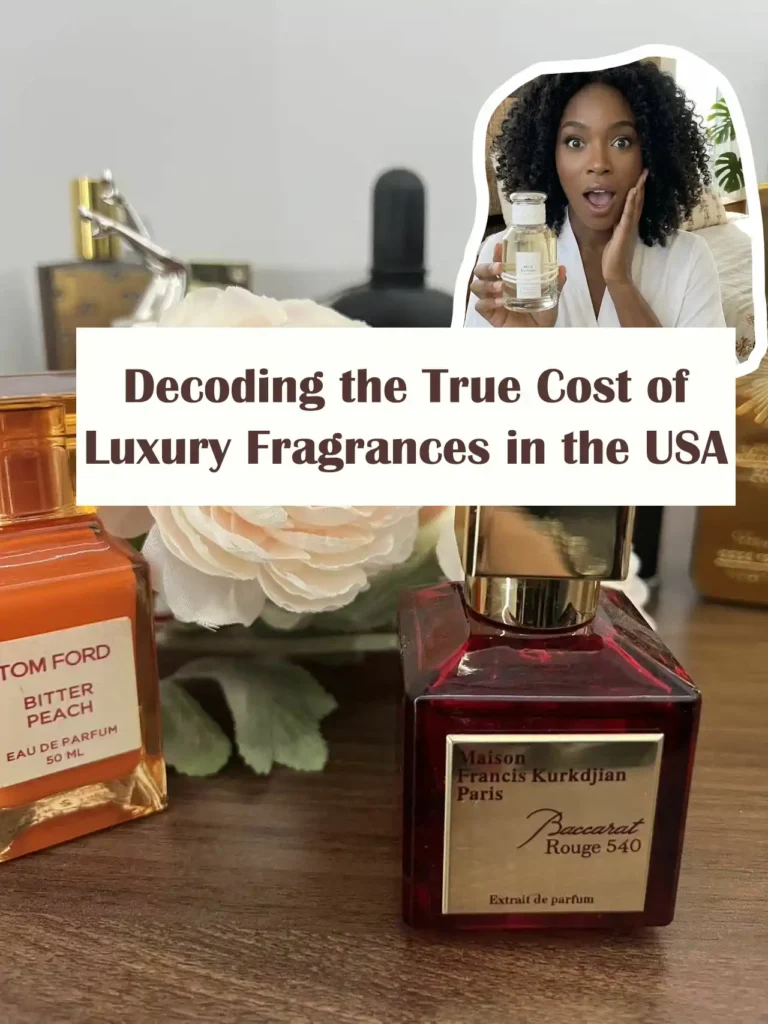
The Ultimate Guide to Inspired By Colognes: Decoding the True Cost of Luxury Fragrances in the USA
Mar
About the Author: Linus Dacke Thall
Supply Chain Specialist & Fragrance Industry Educator
With an extensive background navigating the global fragrance supply chain—from raw material sourcing in Grasse and Madagascar to laboratory manufacturing processes—Linus Dacke Thall breaks down the opaque walls of the global perfume industry. Dedicated to consumer education in the USA, Linus advocates for supply chain transparency, ingredient safety, and the demystification of olfactory science. His work aims to empower everyday consumers to make informed choices based on chemical reality rather than marketing illusions.
The Ultimate Guide to Inspired By Colognes: Decoding the True Cost of Luxury Fragrances in the USA
Have you ever held a heavy, exquisitely crafted glass flacon in your hands, paid upwards of $300 at a high-end department store, and wondered: What exactly am I paying for? If you have ever felt that your expensive designer scent fades into a faint whisper before your lunch break, you are far from alone. A quiet but powerful revolution is currently reshaping the fragrance industry in the USA, driven by smart, pragmatic buyers who are prioritizing high-quality ingredients and performance over high-profile brand marketing.
Welcome to the ultimate, comprehensive guide on inspired by colognes. As a supply chain specialist who has spent years analyzing the actual costs, manufacturing protocols, and laboratory procedures that bring scents to life, I am taking you behind closed doors. Today, we are not just talking about how to find affordable alternatives to luxury colognes. We are dismantling the traditional luxury pricing model, exploring the complex, fascinating chemistry of scent creation, and revealing why the true value of a perfume lies entirely inside the bottle—the “juice”—and not on the gilded label.
This article is designed for the everyday consumer, the curious fragrance enthusiast, and anyone who wants to smell incredible without funding a celebrity’s next billboard campaign. Let us dive into the science, the economics, and the art of modern perfumery.
Chapter 1: The Economics of Scent – Peeling Back the $300 Price Tag
To truly understand the meteoric rise of high-end cologne alternatives, we first must objectively understand the economics of traditional luxury perfumery. The luxury fragrance market is built on a carefully constructed illusion of scarcity, heritage, and immense brand equity. When you purchase a legacy luxury house fragrance, only a tiny fraction of your hard-earned money actually goes toward the aromatic compounds that you smell.
The Anatomy of a Traditional Retail Markup
In traditional mass-market and luxury fragrance manufacturing, the supply chain is notoriously bloated with intermediaries. According to broad analyses by retail market experts and financial beauty sector reports, the cost of the actual liquid in a designer perfume bottle rarely exceeds 5% to 10% of its final retail price. Let’s break down where the rest of that money goes:
- Celebrity Endorsements and Global Marketing (Approx. 40-50%): Multi-million dollar campaigns featuring Hollywood A-listers, prime-time television spots, and double-page spreads in fashion magazines require massive capitalization. The consumer absorbs this overhead.
- Retail Markups and Distribution (Approx. 20-30%): Brick-and-mortar department stores and major beauty retailers in the USA require significant margins—often taking up to half the wholesale price—to cover premium floor space, beauty advisors, lighting, and overhead.
- Packaging, Bottling, and The Flacon (Approx. 10-15%): Custom-molded, heavy-bottomed glass, weighted magnetic caps, and elaborate presentation boxes often cost significantly more to manufacture and ship than the liquid inside.
- The Actual Fragrance Oil (Approx. 5-10%): The essential oils, synthetic aroma chemicals, and perfumer’s alcohol represent the smallest fraction of the total retail cost.
This stark economic reality is why seeking out high quality inspired fragrances is not merely a “budget” choice; it is an educated, value-driven choice. By utilizing a direct-to-consumer (DTC) model, independent laboratories, artisan perfumers, and transparent brands can reallocate that 90% marketing and packaging bloat directly into sourcing premium raw materials.
Table 1: Estimated Cost Breakdown of a Traditional Designer Cologne vs. A Direct-to-Consumer Transparent Model
Note: This table reflects generalized industry estimates to illustrate the structural differences in business models, rather than exact financial audits of specific brands.
| Cost Category | Traditional Designer Cologne ($300 Retail) | Transparent DTC Cologne Model ($40 – $60 Retail) |
|---|---|---|
| Marketing & Celebrity Ads | Highly heavy investment (Estimated 40%+) | Minimal (Relies on organic growth & word of mouth) |
| Retailer Margin (Middlemen) | High (Department stores take a massive cut) | Zero (Sold directly via brand websites) |
| Packaging (Glass, Box, Cap) | Very High (Custom molds, heavy materials) | Streamlined, elegant, often standardized sustainable packaging |
| Brand Premium/Profit | High (Paying for the heritage logo) | Fair, volume-based margins |
| The Fragrance Juice (Raw Ingredients) | Minimal relative to final price (5-10%) | Maximum Investment (Proportionally much higher) |
Chapter 2: What Exactly is an “Inspired By” Cologne? Demystifying the Terminology
A common and unfortunate misconception in the US market is that “inspired by perfumes” are simply watered-down, synthetic guesses of what a popular scent smells like. From a supply chain and R&D perspective, this couldn’t be further from the truth. The creation of a true, high-quality inspired cologne is a rigorous scientific process.
Defining the Landscape: Dupes, Clones, and Counterfeits
To navigate this space, consumers must understand the legal and ethical distinctions:
- Counterfeits (The Illegal Market): These are illegal, deceptive products. They copy the trademarked name, the exact bottle design, and the logo of a luxury brand, aiming to trick the consumer into thinking they are buying the real thing. They are often produced in unregulated environments and are unsafe. Never buy counterfeits.
- Clones / Inspired By Colognes (The Legal Alternative): Scent itself—the olfactory experience of smelling a combination of notes—cannot be copyrighted under US or international law. Only the brand name, logo, and packaging can be protected. “Inspired by” brands operate entirely legally by creating their own unique branding and packaging, while openly stating that their formulation is reverse-engineered to offer a similar olfactory vibe or profile to a famous scent.
The goal of a premium inspired brand is not deception, but democratization. It is about taking a highly desirable scent profile and making it accessible through leaner supply chains and transparent operations.
Chapter 3: Inside the Lab – The Science of Olfactory Reverse Engineering
How do independent companies create accurate inspired by perfumes? It is not done by simply sniffing a bottle and guessing. The process relies on highly advanced analytical chemistry, specifically a technology known as Gas Chromatography-Mass Spectrometry.
Gas Chromatography-Mass Spectrometry (GC-MS) Explained Simply
Think of a perfume as a complex soup. If you want to recreate a famous chef’s soup, you can’t just taste it; you need the exact recipe. Gas Chromatography-Mass Spectrometry (GC-MS) is the machine that provides the recipe.
When a sample of a target fragrance is injected into a GC-MS machine, the device heats the liquid until it vaporizes. As the vapor travels through a long, microscopic tube, the different chemical molecules separate based on their size and chemical properties. The mass spectrometer then identifies each individual molecule and calculates its exact percentage in the formula.
This gives the laboratory a “chemical blueprint.” It reveals the exact percentage of synthetic aroma molecules like Iso E Super (which gives a velvety, woody aura), Ambroxan (a musky, ambergris substitute), or Ethyl Maltol (which provides a cotton-candy sweetness). It also identifies the markers of natural essential oils.
The Human Element: The Art of the Re-Blend
However, a GC-MS readout is just data; it is not a perfume. This is where the artistry of the perfumer comes in. Because natural ingredients (like a batch of jasmine harvested in India versus Egypt, or bergamot from Italy harvested in different years) have hundreds of micro-variations, a machine cannot perfectly replicate nature.
An expert human “nose” must interpret the data, source the highest grade raw materials, and skillfully balance the top, heart, and base notes. The chemist provides the map, but the perfumer must walk the path to ensure the scent develops beautifully on human skin, rather than just matching a graph on a computer screen.
Chapter 4: The Ingredients – Busting the “Synthetic is Bad” Myth
When evaluating affordable alternatives to luxury colognes, consumers often worry about the quality of ingredients. There is a pervasive myth that designer brands use 100% natural ingredients, while affordable brands use “cheap synthetics.” As someone intimately familiar with the supply chain, I can tell you this is fundamentally false.
The Truth About Modern Perfumery
Almost all modern perfumes—including those $400 bottles from prestigious French houses—are a blend of natural absolutes and synthetic aroma chemicals. In fact, modern perfumery was born in the late 19th century with the invention of synthetics like Coumarin and Vanillin.
Synthetics are not the enemy; they are the structural pillars of fragrance. They provide longevity, projection, and notes that cannot be extracted from nature (you cannot naturally extract the scent of a fresh peach, the ocean breeze, or rain on asphalt; these must be created synthetically in a lab).
Ethical Sourcing and IFRA Compliance
The true marker of quality is not whether an ingredient is natural or synthetic, but its purity, safety, and grade. Reputable inspired fragrance houses source their raw materials from the exact same major global fragrance suppliers (like Givaudan, Firmenich, or IFF) as the designer brands.
Furthermore, any legitimate fragrance brand operating in the global market adheres to the strict guidelines set by the International Fragrance Association (IFRA). IFRA scientifically evaluates the safety of every fragrance material, setting strict limits to prevent allergic reactions and ensure consumer safety. When looking for a trusted alternative, always look for IFRA compliance.
Chapter 5: The Secret to Longevity – Concentration and Maceration
The most frequent question consumers ask is: “Do inspired fragrances last as long as the real ones?” The answer lies entirely in two factors: the concentration of fragrance oils and a crucial, often-skipped manufacturing process called maceration.
Understanding Fragrance Concentration Levels
Fragrance longevity (how long it stays on your skin) and sillage (the scent trail you leave behind in the air) are primarily dictated by the ratio of pure fragrance oil to perfumer’s alcohol. Many traditional mass-market brands dilute their formulas to an Eau de Toilette (EDT) concentration to stretch their profit margins. This results in a scent that smells fantastic for the first hour but vanishes entirely by midday.
Table 2: Fragrance Concentration Guide and Expected Longevity
| Classification | Fragrance Oil Concentration | Average Longevity on Skin | Ideal Use Case |
|---|---|---|---|
| Eau de Cologne (EDC) | 2% – 5% | 1 – 3 Hours | Quick post-shower refreshment; hot summer days. |
| Eau de Toilette (EDT) | 5% – 15% | 3 – 5 Hours | Casual daytime wear; often requires reapplication. |
| Eau de Parfum (EDP) | 15% – 20% | 5 – 8 Hours | Standard evening wear and professional office settings. |
| Extrait de Parfum (Pure Perfume) | 20% – 40%+ | 8 – 12+ Hours | Maximum projection, deep richness, and all-day endurance. |
Many transparent DTC brands deliberately choose to formulate their products at Extrait de Parfum levels. By saving on marketing, they can afford to give the consumer a much higher concentration of actual fragrance oil.
The Maceration Process: Aging the Juice
Does letting an inspired cologne sit (a process called maceration) make it smell better? Absolutely. Maceration is the process of allowing the blended fragrance oils, alcohol, and distilled water to age together in a cool, dark environment before bottling. Think of it like aging a fine wine or letting a complex stew simmer.
During a proper maceration period (which can take anywhere from 4 to 12 weeks), the chemical bonds between the different molecules stabilize. The harsh, volatile “alcohol blast” often associated with cheap perfumes softens entirely. The base notes (like heavy woods, resins, and musks) deepen, bloom, and intertwine with the top notes seamlessly.
Mass-market commercial brands often rush products directly from the mixing vat to the retail shelf to meet aggressive quarterly financial quotas. In contrast, dedicated artisan labs and quality-focused alternative brands ensure that every batch is properly macerated, guaranteeing a smooth, rich olfactory experience from the very first spray.
Chapter 6: How to Shop Like a Perfumer – A Consumer’s Guide to Choosing Quality
With the market flooding with cheap cologne options, how do you separate the high-end cologne alternatives from the low-quality, linear knock-offs? As a supply chain advocate, I encourage consumers to evaluate any brand—whether it’s a legacy designer, an independent artisan, or a brand like IMIXX—using these three golden rules.
Rule 1: Scrutinize the Transparency and Integrity
Does the brand educate you about their process, or do they just yell “Smells exactly like Brand X!” in bold letters? A reputable company will be transparent about their concentration levels (Are they offering EDP or Extrait?) and their safety standards (Are they vegan? Cruelty-free? IFRA compliant?). Look for brands that respect the art of perfumery. Excellent options exist across the spectrum, from independent local perfumers crafting small batches to established transparent DTC platforms.
Rule 2: Trust the Olfactory Pyramid (Top, Heart, and Base Notes)
A quality inspired fragrance respects the structural integrity of a proper scent pyramid.
- Top Notes: The immediate burst (e.g., citrus, light florals). Lasts 10-30 minutes.
- Heart (Middle) Notes: The core theme of the scent (e.g., heavy florals, spices). Lasts 2-4 hours.
- Base Notes: The foundation that lingers on your skin (e.g., woods, musk, vanilla). Lasts 4-12+ hours.
Poorly formulated, cheap dupes are “linear”—they blast you with a synthetic approximation of the top notes, but lack any depth or evolution, quickly drying down to a cheap, powdery mess. A high-quality alternative will take you on the same three-stage journey as a masterpiece fragrance.
Rule 3: Evaluate the Dry Down and Skin Chemistry
Never judge a fragrance by spraying it on a paper strip (a blotter) and smelling it immediately. Paper does not have warmth, oils, or a pH level. Always test a fragrance on your actual skin. A high-quality oil blend will react to your unique skin chemistry, warming up and projecting differently than it does in the bottle.
As a brand that champions this transparent, high-concentration approach, IMIXX formulates its collection at robust Extrait levels, ensuring a rich dry-down and exceptional longevity. We believe in providing the laboratory experience directly to the consumer, but we also encourage you to explore the wider world of independent perfumery to expand your olfactory palate.
Chapter 7: Frequently Asked Questions (FAQs) About Cologne Alternatives
To further empower you as a consumer, let’s address some of the most common questions regarding fragrance chemistry, usage, and alternatives.
Are inspired by perfumes safe to use on skin?
Yes, absolutely, provided you purchase from a reputable brand. Premium alternative brands source their aroma chemicals and essential oils from the exact same global supply houses as traditional designer brands. Always look for brands that explicitly state they adhere to IFRA (International Fragrance Association) standards, which strictly regulate the safe usage levels of fragrance allergens and compounds to prevent skin irritation.
How can I make my inspired by cologne last longer on my skin?
Longevity is a mix of the perfume’s inherent chemistry and your application method. First, ensure your skin is deeply moisturized; fragrance oils evaporate rapidly on dry skin. Applying an unscented lotion or a thin layer of petroleum jelly before spraying creates a primer for the scent to cling to. Second, target your pulse points (wrists, inner elbows, base of the throat, behind the ears) where body heat helps project the scent. Finally, never rub your wrists together—this creates friction that literally breaks down the delicate molecular structure of the top notes. To maximize your experience, opt for Extrait-level concentrations.
Can other people tell the difference between a high-end cologne and a premium inspired version?
In normal daily social settings, passing someone in the office, or on a date? No. While a highly trained master perfumer might detect minute differences in the opening top notes within a sterile laboratory environment, the average person (and even enthusiastic collectors) cannot tell the difference once the scent has settled into its heart and base notes on the skin. The sillage (scent trail) and aura are practically identical, provided the inspired fragrance is crafted with premium ingredients and proper maceration.
Does perfume expire? Can I still use it if it changes color?
Unlike milk, perfume does not have a strict expiration date that makes it dangerous, but it can degrade. The enemies of perfume molecules are UV light, drastic temperature changes, and oxygen. If you keep your bottles in a cool, dark place (like a closet or a drawer, and never in a humid, warm bathroom), they will remain stable for years. A slight change in color is perfectly normal over time, especially in fragrances containing high amounts of natural vanilla or certain resins, which darken as they slowly oxidize. As long as the scent hasn’t turned distinctly sour, sharp, or like vinegar, it is perfectly safe and often more robust to wear.
What is fragrance layering, and how do I do it?
Fragrance layering is the art of combining two different perfumes on your skin to create a custom, signature scent. A great rule of thumb is to apply heavier, more robust scents (like woods, ouds, or rich vanillas) first as a base, and then spray lighter, more volatile scents (like citrus, fresh aquatics, or light florals) over the top. Using affordable but high-quality inspired colognes allows you to experiment with layering without wasting hundreds of dollars in the process.
Conclusion: Reclaiming Your Olfactory Freedom
The landscape of the US fragrance market has permanently shifted. The era of blindly paying a 90% markup for a beautifully photographed bottle and a celebrity endorsement is giving way to an era of intense consumer education, supply chain transparency, and a relentless focus on the actual quality of the liquid inside.
By understanding the rigorous science behind GC-MS formulation, the absolute necessity of proper maceration, and the bloated economics of luxury retail, you empower yourself to make significantly smarter purchasing decisions. Smelling incredible, commanding a room with your presence, and leaving a memorable, lingering sillage should not be an exclusionary luxury reserved only for the wealthy. It is an art form, a mood enhancer, and an accessible form of daily self-expression.
Whether you choose to support independent local artisans, explore niche discovery sets, or trust transparent platforms that prioritize high-concentration oils, the power is now in your hands. We encourage you to evaluate fragrances based on performance, skin chemistry, and ingredient safety, rather than just the logo on the cap.
At IMIXX, we built our laboratory processes and our brand identity on this exact philosophy of radical transparency and uncompromising quality. We invite you to experience this paradigm shift in perfumery for yourself. Stop paying for the packaging, and start investing in the juice.
Ready to Build Your Perfect Fragrance Wardrobe?
Explore premium, Extrait-level concentrations crafted with the utmost care for chemistry and longevity.
Shop the IMIXX Premium Collection
Discover high-quality, transparently formulated fragrances shipped directly to you in the USA.
