

Blog, Fragrance Science & Education, Scent Profiles & Ingredients
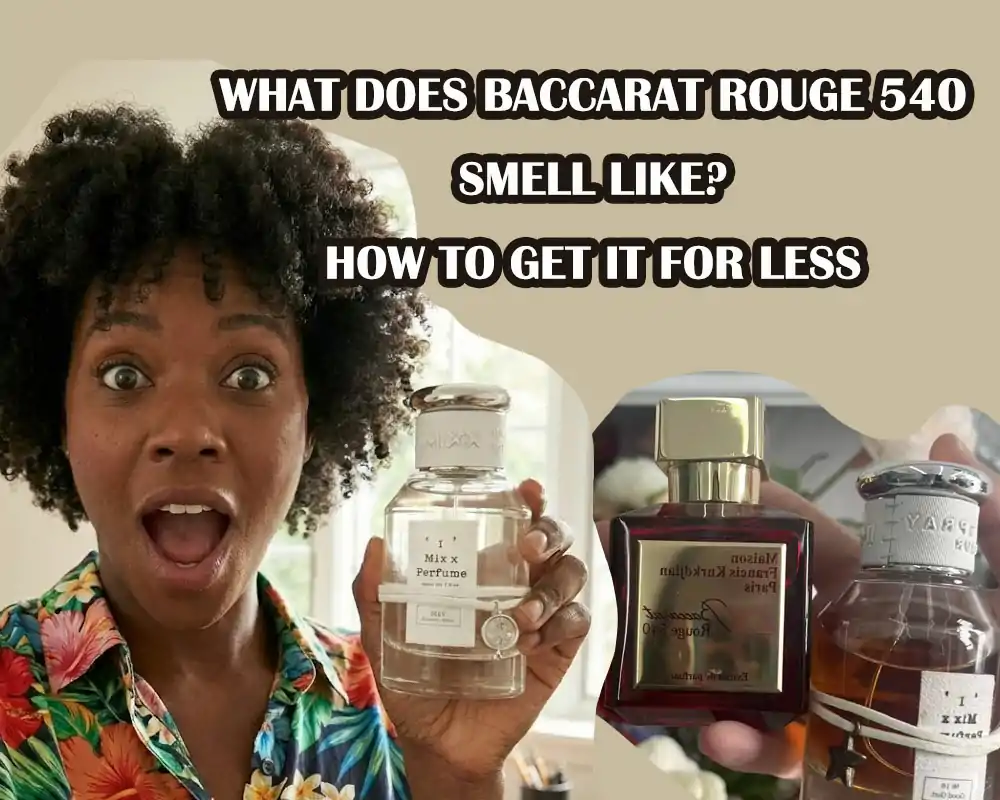
What Does Baccarat Rouge 540 Smell Like? A Scientific Breakdown of the “Ghost” Scent (2026 Guide)
Feb
Updated February 2026 | Analysis by The IMIXX Fragrance Lab
If you have lived in a major metropolitan area in the United States over the past five years, you have likely encountered an invisible, polarizing force. It lingers in hotel lobbies in Miami, boardrooms in New York, and coffee shops in Los Angeles.
It is Maison Francis Kurkdjian Baccarat Rouge 540. It is widely regarded as the most influential fragrance of the modern era.
But for the uninitiated—or for those examining the $325+ price tag with skepticism—the question remains: What does Baccarat Rouge 540 smell like?
Is it the scent of “wealth” and “spun sugar,” or does it genuinely smell like a dentist’s office? Why do some people claim it lasts for days, while others can’t smell it at all? At IMIXX, we approach perfumery not just as art, but as science. We have analyzed the molecular structure of this masterpiece to decode its secrets. In this guide, we will explore the aromachemicals behind the magic, explain the biology of “nose blindness,” and introduce IMIXX No. 19, our scientifically calibrated alternative.
⚡ Quick Answer: The Scent Profile Baccarat Rouge 540 is classified as an “Amber Floral” fragrance, though its structure is unique. It relies on three core “facets” rather than a traditional pyramid:
- The “Airy” Facet: A combination of Jasmine and Saffron creates a transparent, spicy, and metallic opening that provides lift.
- The “Gourmand” Facet: Ethyl Maltol and Amberwood create the signature “burnt sugar” or “caramelized strawberry” note that is sweet but dry.
- The “Mineral” Facet: High doses of Ambroxan (synthetic Ambergris) provide a salty, musky, skin-like quality that drives projection.
- The Scientific Alternative: IMIXX No. 19. Formulated using the same class of aromachemicals, verified by GC-MS analysis to match the volatility and scent profile of the original.
Part 1: The Chemistry of “Rich” – Deconstructing the Notes
To understand the scent, we must look beyond marketing terms and examine the raw materials. Baccarat Rouge 540 is a triumph of modern synthetic perfumery. According to industry databases like Fragrantica and The Perfume Society, the “magic” comes from the interaction of three specific synthetic compounds.
1. The “Burnt Sugar” Molecule: Ethyl Maltol
If you detect notes of cotton candy, strawberry jam, or crème brûlée, you are smelling Ethyl Maltol. Discovered in the 1960s, this organic compound smells intensely of caramelized sugar. In Baccarat Rouge 540, it is used with precision—balanced against dry woods to smell “toasted” rather than “sticky.”
2. The “Metallic” Sparkle: Saffron (Safranal)
The opening is dominated by Saffron. In perfumery, saffron provides a leathery, hay-like, and distinctly metallic profile. This cuts through the sweetness of the Ethyl Maltol, adding a “cold” heat to the fragrance. It prevents the scent from becoming a cheap gourmand and elevates it to luxury status.
3. The “Engine”: Ambroxan
The base is built on a massive dose of Ambroxan. This is a synthesized molecule that mimics the scent of natural Ambergris. As described in chemical literature, high-purity Ambroxan has a complex profile: salty, woody, musky, and like warm skin. It acts as a fixative, anchoring the scent to the skin for 12+ hours and creating the famous “sillage” (trail).
Part 2: The “Dentist” Debate – A Question of Olfactory Perception
Search “why does Baccarat Rouge 540 smell like dentist” on Google, and you will find a divided audience. This is not a manufacturing defect; it is a known olfactory phenomenon.
The molecule responsible for the scent of saffron is Safranal. Olfactory science shows that Safranal shares certain scent facets with phenolic compounds used in dentistry (such as Eugenol or medicinal disinfectants).When combined with the sterile, mineral profile of Ambroxan, some individuals (estimated at around 30% of the population) perceive this combination as “medicinal” or “latex-like,” while others perceive it simply as “warm spice.”
The IMIXX Approach: When formulating No. 19, we were aware of this polarization. Our formulation strategy involved strictly regulating the ratio of Saffron-like aromachemicals. By balancing them with a slightly warmer Amberwood accord, we aim to minimize the “medicinal spike” while preserving the sophisticated “shimmer” of the original.
Part 3: The Biology of “Nose Blindness”
A common critique of molecular fragrances is: “I stopped smelling it after 20 minutes.”
This is a biological mechanism known as Olfactory Fatigue (or adaptation). According to Healthline, our olfactory receptors are designed to detect new stimuli. When exposed to a constant, heavy molecule like Ambroxan, the receptors become saturated and stop sending signals to the brain to preserve processing power.
The “Ghost” Effect: This causes the scent to vanish and reappear throughout the day. Rest assured, while you may be nose-blind to it, the high volatility of the ingredients ensures that those around you can still smell the bacarat perfume trail.
Part 4: The IMIXX Methodology – Verified by Science
In a market flooded with approximations, IMIXX adheres to the analytical standards of the fragrance industry.
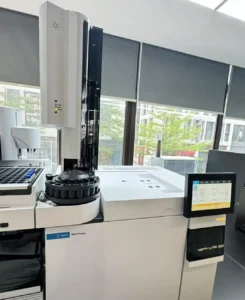
Gas Chromatography-Mass Spectrometry (GC-MS)
We utilize GC-MS analysis, the gold standard for perfume deconstruction. This process involves:
- Separation: Vaporizing the perfume sample to separate it into individual components.
- Identification: Using mass spectrometry to identify the molecular weight and structure of each component.
- Mapping: Creating a chemical blueprint of the original fragrance.
Industry-Standard Precision: By using this technology, we do not rely on “guesswork.” We map the concentration of key fixatives and modifiers. This ensures that IMIXX No. 19 performs with the same volatility and longevity as a luxury product.
However, chemistry is only the starting point. Our development process includes comparative wear-testing in controlled environments—from high humidity to dry heat—to ensure the scent remains stable and does not turn sour or cloying on the skin.
Part 5: The Economics of Pricing – The “Crystal Tax”
Why does the original cost $325? The price of luxury perfume is often driven by packaging and positioning rather than the cost of the liquid (the “juice”).
The Baccarat brand is synonymous with crystal. The manufacturing of the heavy, architectural bottle, the gold cap, and the global marketing campaigns contributes significantly to the MSRP. At IMIXX, we operate on a Direct-to-Consumer model:
- We use minimalist, functional packaging.
- We eliminate retail markups.
- We invest the savings into sourcing premium-grade aromachemicals from the same global suppliers that service major luxury houses.
Part 6: Comparative Analysis
Below is a functional comparison based on our formulation goals and ingredient sourcing.
| Feature | Maison Francis Kurkdjian (Original) | IMIXX No. 19 (Scientific Alternative) |
|---|---|---|
| Price (70ml) | $325 – $465+ | Smart Luxury Pricing |
| Core Chemistry | Ambroxan, Ethyl Maltol, Saffron Extract | Chemically Mapped Equivalents |
| Scent Profile | Airy, Sweet, Mineral, Potentially Medicinal | Optimized for Wearability (Smoother) |
| Concentration | Eau de Parfum / Extrait | Extrait-Level Concentration |
| Longevity | 12+ Hours | 10-12 Hours (High Fixative Load) |
Part 7: How to Wear Molecular Fragrances
To maximize the performance of IMIXX No. 19, we recommend the following application techniques:
1. The Fabric Application
Molecular scents like Ambroxan adhere exceptionally well to fibers. Spraying your scarf, collar, or sleeves will significantly extend the longevity, often lasting for days.
2. The “Tap” Method
Avoid rubbing your wrists together. Friction generates heat, which can accelerate the evaporation of the delicate top notes (like the Saffron/Hedione accord).
3. Layering (The “Mixology” Menu)
- To add freshness: Layer with a citrus-dominant scent (Bergamot or Neroli).
- To add depth: Layer with an Oud or Leather fragrance for a masculine, evening profile.
- To add sweetness: Layer with a Vanilla body oil to amplify the “cotton candy” facet.
Part 8: Frequently Asked Questions What Does Baccarat Rouge 540 Smell Like
Is Baccarat Rouge 540 unisex?
Yes. While the sweetness of Ethyl Maltol is often associated with feminine scents, the dry Cedarwood and spicy Saffron backbone make it a popular designer men cologne. It adapts to the wearer’s skin chemistry.
What is the difference between Extrait and EDP?
The EDP is more transparent and projects more (“loud”). The Extrait is denser, sits closer to the skin, and includes Bitter Almond and Moroccan Jasmine notes. IMIXX No. 19 is formulated to offer the depth of the Extrait with the projection of the EDP.
Is this a clone of Ariana Grande Cloud?
No. While Cloud shares the Ethyl Maltol/Ambroxan structure, it includes heavy notes of Coconut, Praline, and Lavender, making it smell lactonic (milky) and younger. Baccarat Rouge 540 (and No. 19) is drier, spicier, and more sophisticated.
Final Thoughts: The Future of Fragrance
Consumers are increasingly prioritizing substance over status. The logo on the bottle does not alter the molecular structure of the perfume inside.
Whether you are researching bacarat rou, barakkat rouge 540, or simply seeking a high-fidelity alternative, science offers a solution. By focusing on ingredient quality and precise formulation rather than marketing, IMIXX No. 19 delivers the “ghost” scent experience responsibly.
Shop IMIXX No. 19
Experience Smart Luxury.
Disclaimer: IMIXX is an independent brand utilizing advanced analytical technology to create original formulations inspired by popular scent profiles. We are not affiliated with Baccarat, Maison Francis Kurkdjian, or their parent companies. References to these brands are for comparative and educational purposes only.
