

Blog, Fragrance Science & Education, Imixx Lab & Brand News
The Science Behind Perfume Knock Offs: An Expert’s Guide to Formulations and Supply Chains
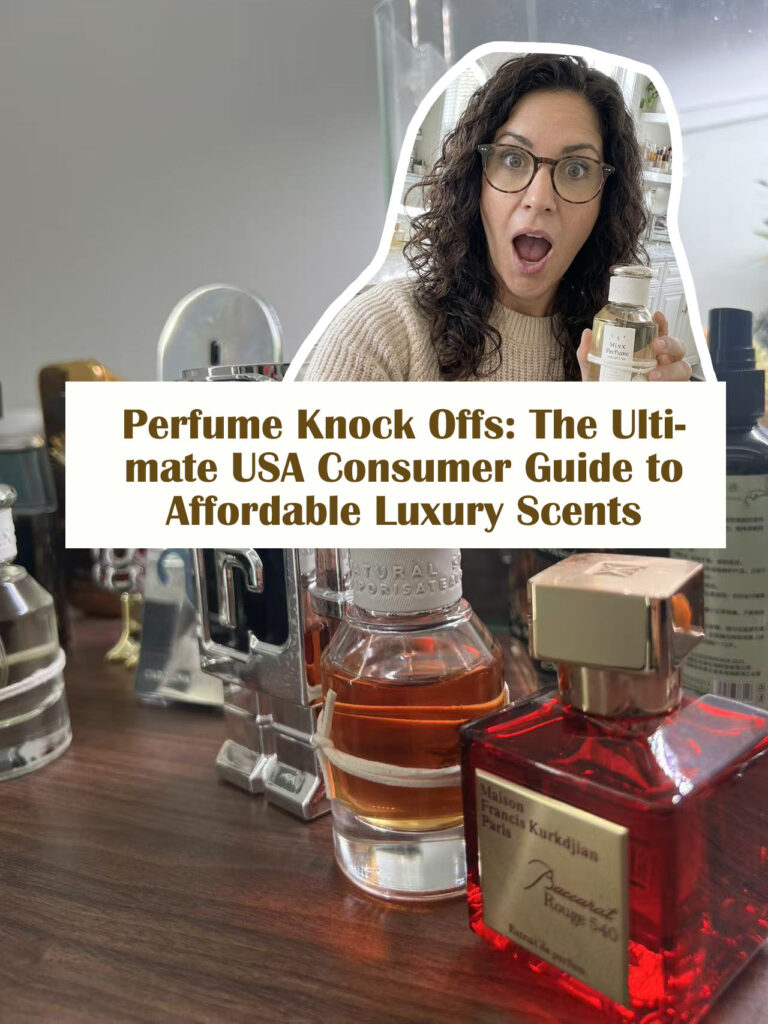
Mar
By Linus Dacke Thall | Fragrance Development & Supply Chain Expert
Editorial Transparency & Analytical Focus
Author’s Note: As a fragrance developer and supply chain specialist, my goal is to provide an unfiltered, data-driven look into the global fragrance industry. The term perfume knock offs historically carries a stigma associated with unregulated flea markets and subpar synthetics. However, modern analytical chemistry and transparent direct-to-consumer (DTC) supply chains have fundamentally disrupted this category. This guide examines the empirical science, the legal precedents, and the precise economic metrics that separate hazardous imitations from premium, IFRA-compliant alternatives.
1. The Economics: Quantifying the Price Disparity — about perfume knock offs
When consumers encounter high-quality perfume knock offs priced at $40 adjacent to a $300 designer original, skepticism is a logical response. To understand this disparity, we must audit the traditional luxury beauty supply chain with hard metrics.
In prestige perfumery, industry analyses frequently indicate that the actual raw aromatic compounds (the “juice”) account for roughly 4% to 8% of the total retail cost. Consumers are predominantly financing invisible structural overhead:
- Licensing & Celebrity Marketing: Global campaigns cost tens of millions. Many fashion houses do not manufacture their own scents; they license their trademarks to multinational conglomerates, layering additional profit margins.
- Proprietary Tooling: Custom-molded, heavy-weighted glass and zamak (zinc alloy) caps often cost $5 to $15 per unit to manufacture, dwarfing the cost of the liquid formulation.
- Retail Markups: Physical US department stores traditionally require a 40% to 60% wholesale markup to sustain physical real estate and commission-based staff.
The premium alternative market operates on a stripped-down economic thesis: by utilizing standardized glass vessels and direct-to-consumer digital distribution, brands can reallocate up to 70% of traditional overhead directly into sourcing higher-grade raw materials.
2. Legal Frameworks: The Lanham Act Precedent
A primary consumer concern regarding perfume knock offs is the legality of replication. In the United States, the defining legal precedent is the 1968 federal appellate case Smith v. Chanel, Inc. (402 F.2d 562).
The US Court of Appeals recognized a fundamental scientific reality: an olfactory composition—the “smell” itself—is functional and cannot be patented or copyrighted under US law. Intellectual property laws strictly protect the brand name, the logo, and the specific visual design of the bottle (trade dress). Therefore, utilizing analytical chemistry to craft an alternative formulation is legal, provided the alternative brand operates under its own distinct trademark and explicitly avoids confusing the consumer regarding the product’s true manufacturer.
3. The Empirical Science of Replication (GC-MS)
The concept of a master perfumer simply “guessing” ingredients by nose is an outdated myth. Modern replication relies strictly on empirical laboratory data.
The industry-standard methodology, frequently documented in biochemical literature (NCBI), is Gas Chromatography-Mass Spectrometry (GC-MS). When a target fragrance is injected into this equipment, the Gas Chromatograph separates the mixture into individual molecular components. The Mass Spectrometer then identifies these components by their mass-to-charge ratio.
This process yields a highly detailed chemical readout, revealing the precise percentages of synthetic aromachemicals (e.g., Iso E Super, Ambroxan) and natural essential oils. However, data alone is insufficient. Large designer houses utilize “captive molecules” (patented, proprietary synthetics). Formulating a premium alternative requires skilled chemists to reconstruct those exact olfactory effects using publicly available, luxury-grade ingredients. Relying on cheap, low-grade synthetics inevitably results in a metallic, flat dry-down.
4. Market Tiers: Quantitative Boundaries
Not all alternatives are created equal. The market is broadly divided into three distinct operational tiers, which can be evaluated by their concentration metrics and safety compliance:
| Market Tier | Oil Concentration | Average Longevity | Safety Compliance |
|---|---|---|---|
| Tier 1: Mass-Market Retailers (e.g., Mall Brands) | 5% – 10% (EDT) | 2 – 4 hours | Fully Compliant |
| Tier 2: The Black Market (Illegal Counterfeits) | Unknown / Highly Volatile | < 1 hour | Hazardous / Unregulated |
| Tier 3: Premium DTC Supply-Chain (e.g., IMIXX) | 15% – 25% (EDP / Extrait) | 8 – 12+ hours | Fully Compliant |
Methodology Case Study: The Tier 3 Approach
As a developer within the Premium DTC space, I utilize the IMIXX supply chain as a practical case study for Tier 3 methodologies. To replicate the complexity of a $300 scent, generic wholesale oils are insufficient. The formulation requires strategic, direct partnerships with specialized raw material extraction facilities in regions like Grasse (France) and Italy. By pushing the fragrance oil concentration to the 20-25% Extrait level, Tier 3 brands aim to match or exceed the longevity parameters of original niche formulations.
5. Dermatology & The Maceration Protocol
Dermatological safety is the absolute priority in cosmetic manufacturing. The global authority on fragrance safety is the International Fragrance Association (IFRA). IFRA sets strict quantitative limits on potential allergens (such as oakmoss extracts or specific citrus compounds) to prevent skin sensitization. Legitimate alternative brands must formulate in strict compliance with the latest IFRA amendments (currently the 51st Amendment) and utilize FDA-approved cosmetic-grade denatured alcohol.
The Chemistry of Maceration: A common critique of freshly shipped DTC fragrances is an initial “alcohol blast.” This is caused by “transit shock”—temperature fluctuations during logistics that temporarily destabilize the emulsion of alcohol and oils.
Expert Protocol: Upon receiving a new bottle, spray it 4-5 times to clear the atomizer tube and introduce minimal oxygen. Store the bottle in a temperature-controlled, dark environment (15°C – 20°C) for 14 to 28 days. This chemical maceration (maturation) process allows the molecular bonds to stabilize, significantly deepening the base notes and smoothing the top-note volatility.
Conclusion: Empirical Discernment in Modern Perfumery
The contemporary fragrance industry relies heavily on the marketing of exclusivity. However, analytical chemistry provides empirical proof that luxury is an olfactory experience dictated by molecular composition, not merely a brand’s price tag.
When consumers understand the mechanics of GC-MS replication and the economic efficiency of DTC supply chains, building a high-performing fragrance wardrobe becomes mathematically accessible. The critical factor is consumer discernment: bypass low-concentration mass-market EDTs and entirely avoid hazardous black-market counterfeits. Instead, seek transparent brands that prioritize IFRA-compliant ingredients and Extrait-level concentrations.
Further Reading & Transparency: For a practical example of how Tier 3 compliance, GC-MS methodology, and Extrait-level concentrations are implemented in a live production environment, you can review the formulation standards and transparency reports published at IMIXX Perfumes.
