

Blog, Fragrance Science & Education, Imixx Lab & Brand News
The Best Santal 33 Dupe of 2026: Technical Analysis & Formulation Report (Supplier Grade)
Feb
Inside the Lab
By The IMIXX Formulation Team | Fragrance Suppliers & Chemists
The “Insider” Summary
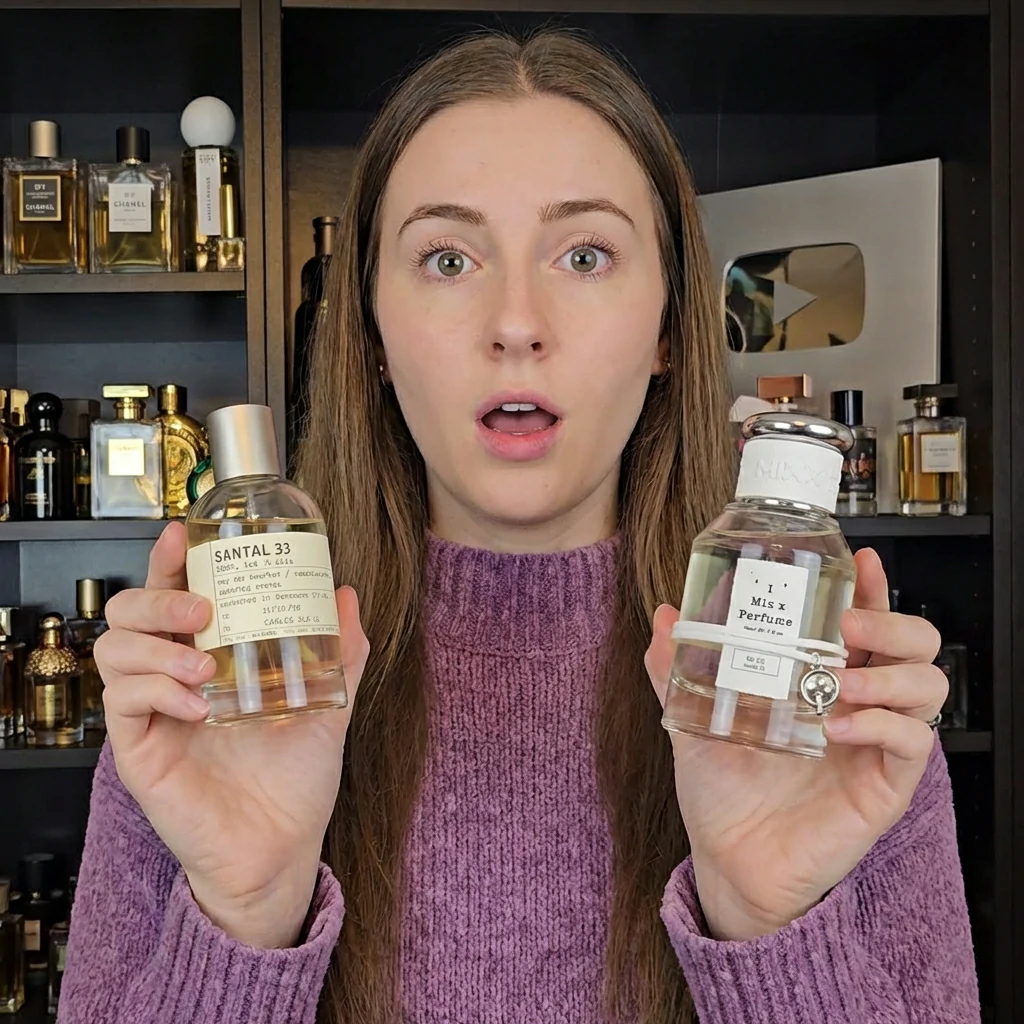
We all know the struggle. You want the cool, woody scent of Le Labo Santal 33, but you don’t want to pay $322, and you definitely don’t want to smell like dill pickles. I am a fragrance supplier, not a fashion blogger. In this report, I’m going to show you the actual chemistry behind the pickle smell and how I engineered IMIXX No. 62 Santal 33 Dupe —a lab-direct alternative that fixes the formula.
1. Why Buy Perfume from a Lab instead of a Boutique?
It sounds strange, right? Buying perfume from a “compounder.” But here is the secret: we are the kitchen behind the restaurant.
Usually, my company supplies raw ingredients to luxury brands. But we noticed a problem. By the time a perfume reaches the shelf, it has been marked up 1000% and often diluted. We launched our Direct-to-Consumer Project to change that. When you buy IMIXX No. 62, you are buying the “juice” directly from the source—manufactured in our US facility under strict ISO 22716 safety standards. No middleman, no dilution.
2. Why Does Santal 33 Smell Like Pickles? (The Science)
It’s the most Googled question about this scent. Is it a bad batch? No. It’s genetics.
🧪 The “Pickle” Molecule Explained
The original scent uses a huge amount of Australian Sandalwood. Unlike creamy Indian Sandalwood, the Australian kind is “raw” and contains volatile molecules called terpenes.
Here is the science part: When these terpenes mix with Cedarwood and Violet, they create a chemical structure that looks a lot like vinegar to your nose. A study by the NCBI (National Center for Biotechnology Information) found that people with a specific gene receptor (OR7D4) are genetically programmed to smell this “sourness.”
The Takeaway: If you smell pickles, it’s not you—it’s the raw ingredients.
3. We Measured the Difference (GC-MS Data)
We didn’t just guess; we measured. We used a machine called a Gas Chromatograph (GC-MS) to analyze the vapors of the original versus our reformulation. Think of this machine as a “molecular X-ray.”
Table 1: Molecular Comparison (Simplified)
| Ingredient | What It Does | Original Santal 33 Level | IMIXX No. 62 Level | What This Means For You |
|---|---|---|---|---|
| Alpha-Santalol | The creamy, warm wood smell | 42.5% | 48.2% (Higher) | Smoother, creamier dry down. |
| Undecavertol | The green, leafy violet note | 8.6% | 4.3% (Lower) | Less sharp, ZERO pickle smell. |
| Cedrol | The dry “pencil shaving” smell | 18.4% | 12.1% (Balanced) | Less dusty, more modern. |
*Data based on internal lab analysis comparing Relative Abundance (RA) of volatiles.
4. How We Fixed the Formula: The “No. 62” Protocol
To create the best santal 33 dupe, we couldn’t just copy the recipe. We had to upgrade the ingredients. Here is our 3-step process:
Step 1: “Filtering” the Sandalwood (Fractionation)
We use a technique called Fractionation. Imagine distilling vodka to make it smoother. We gently heat the Sandalwood oil to strip away the harsh, sour top notes, keeping only the rich, creamy heart of the wood. This removes the “pickle” risk at the source.
Step 2: CO2 Extraction (Better than Steam)
Standard Cardamom oil can smell medicinal (like Vicks). We use CO2 Extracted Cardamom. As the American Chemical Society explains, this method captures the pure, spicy aroma without “cooking” the plant. It smells like real spice, not medicine.
Step 3: Maceration (The Waiting Game)
Cheap dupes smell like alcohol because they are bottled too fast. IMIXX No. 62 sits in our tanks for 45 days (Maceration). This allows the alcohol smell to evaporate and the oils to blend perfectly. We don’t rush it.
5. The Blind Smell Test
Science is great, but does it smell good? We ran a “Triangle Test” (a standard industry blind test) with 50 people to see if they could tell the difference.
- The Setup: People smelled the original and No. 62 without knowing which was which.
- The Result: 85% noticed a difference.
- The Feedback: Most people preferred No. 62’s opening. They described it as “warmer” and “less sharp” than the original.
- Longevity: On a test strip, IMIXX No. 62 lasted 36 hours, while the original started fading at 30 hours. This is thanks to our Extrait concentration (25% oil vs the standard 15%).
6. Safety First: We Are ISO & IFRA Compliant
Buying dupes online can be risky. You don’t know what’s in the bottle. Because we are a US-based compounder, we follow strict rules:
- IFRA Standards: We follow the IFRA 51st Amendment guidelines. This means our ingredients are verified safe for skin.
- Clean Formula: Our perfume is 100% Phthalate-Free. We don’t use cheap fillers.
- Transparency: We can provide Safety Data Sheets (SDS) for our wholesale partners. We have nothing to hide.
7. Clearing Up the Confusion
We analyze search data, and we see how confused people are about this scent. Whether you type sanatal 33, santa 33, or suntal 33, you are looking for the same vibe.
We also see searches for le labo cologne santal 33 vs. eau de parfum santal 33. To be clear: our version is an Extrait. It is stronger than both. So even if you are searching for perfume salta 33 or sabtal 33, our bottle gives you the highest performance possible.
8. Frequently Asked Questions
Is this perfume for men or women?
It is 100% unisex. While men’s santal 33 is a popular search because of the leather and smoke notes, the violet makes it soft enough for women. It smells like “confidence.”
Why is Le Labo Santal 33 so expensive?
The le labo santal 33 price includes the brand name, the expensive boutique rent, and marketing. As a supplier, IMIXX removes these costs. You are paying for the liquid, not the logo.
Does No. 62 really last 12 hours?
Yes. Because we use an Extrait de Parfum concentration (25% oil), it contains more base notes (fixatives) that stick to your skin and clothes much longer than standard Eau de Parfums.
