

Best Fragrance Lists, Blog, Designer Dupe Reviews
How to Find the Perfect YSL Black Opium Parfum Dupe: A Supply Chain Expert’s Guide to Coffee-Vanilla Perfumes in the USA
May
Executive Summary: What You Will Learn in This Guide
Finding a reliable black opium parfum dupe in the crowded US market shouldn’t require a degree in chemistry, but understanding the basics of fragrance manufacturing will save you time, money, and headaches. In this comprehensive, unbiased guide, we strip away the marketing jargon to give you a transparent look at the fragrance industry.
- The Supply Chain Reality: A transparent, data-backed breakdown of why luxury perfumes cost over $170 and how direct-to-consumer (DTC) models change the economic math.
- The Chemistry of “Coffee-Vanilla”: An easy-to-understand look at how perfumers use ingredients like pyrazines and ethyl maltol to create addictive scents, and why cheap knockoffs end up smelling like rubbing alcohol.
- Our Testing Methodology: How we used blind sniff tests, paper blotter evaporation tracking, and skin-wear analysis to evaluate the market.
- Objective Brand Comparisons: A fair, unbiased review of the most popular alternatives in the USA, including Zara, Dossier, Oakcha, ALT Fragrances, and imixx. We cover who does what best, because no single fragrance is perfect for everyone.
- Skin Chemistry & Layering: Actionable, scientific advice on how to make any cheap perfume with jasmine and coffee notes last all day on your unique skin type.
1. The Phenomenon of the Coffee-Vanilla Fragrance in America
Walk into any major department store in the USA, from the beauty aisles of Sephora in New York to a Nordstrom in Los Angeles, and you will notice a distinct trend that has dominated the past decade: the rise of the dark gourmand fragrance. At the absolute epicenter of this trend sits Yves Saint Laurent’s Black Opium. Launched in 2014 as a modern, rock-and-roll interpretation of the original spicy 1977 Opium, it introduced a revolutionary “floral coffee” accord that captured the hearts and wallets of millions of Americans.
It is the quintessential “night out” fragrance—sweet, slightly dark, energetic, and unapologetically bold. It balances the bitter jolt of black coffee with the luminous, narcotic sweetness of white flowers and vanilla. However, this luxury comes at a steep price. As of 2026, a standard 3.0 oz (90ml) bottle can easily set you back $170 to $190.
For the average consumer, spraying a nearly $200 perfume just to run errands, head to the office, or go to a casual dinner feels entirely impractical. This economic reality has fueled a massive surge in searches for perfumes that smell like ysl black opium. Consumers want that specific feeling without the financial guilt.
But here is the underlying problem: as someone who has worked inside fragrance compounding factories managing supply chains, I can tell you that the market is flooded with subpar imitations. Many of these “dupes” smell fantastic for exactly five minutes, only to dry down into a screechy, headache-inducing synthetic mess, or worse, vanish completely into thin air. To understand how to find a truly long-lasting black opium alternative, we need to look under the hood of the perfume industry, moving past marketing claims and looking at the chemistry and economics of scent.
2. Deconstructing the Scent: Why is it So Hard to Replicate?
To evaluate whether a product is a good alternative, you first must understand what you are actually smelling. A perfume is not a single, magical liquid; it is a carefully constructed pyramid of highly volatile chemical compounds that evaporate at different rates over time. If a manufacturer tries to cut corners on any of these three levels, the entire olfactory illusion collapses.
The Top Notes (The Hook: 0-20 Minutes)
When you first spray the original designer fragrance, you are hit with a vibrant burst of pink pepper, pear accord, and a hint of orange blossom. These are light, highly volatile molecules designed to catch your attention immediately. In cheap, mass-market dupes, manufacturers often use low-grade industrial alcohol that overpowers these delicate top notes. This results in that harsh, astringent “hairspray” or “rubbing alcohol” smell when you first apply it. A quality alternative will have a smooth, immediately identifiable fruity-spicy opening that doesn’t burn your nose.
The Heart Notes (The Addictive Coffee Accord: 20 Mins – 3 Hours)
This is the crux of the fragrance, and where 80% of budget knockoffs fail miserably. You cannot just squeeze a roasted coffee bean into a bottle of alcohol to get a perfume. The “roasted coffee” aroma in modern perfumery is created using a class of organic compounds called pyrazines. According to the American Chemical Society (ACS) and numerous food science journals, pyrazines are the very molecules that give roasted foods—like espresso, dark chocolate, and toasted nuts—their distinct, comforting, and addictive smell.
Because pyrazines are highly volatile (they want to evaporate quickly), master perfumers must anchor them with heavier floral notes—specifically, Jasmine Sambac. This creates the famed “floral coffee” illusion. Budget brands often skip the expensive pyrazine balancing act entirely. Instead, they dump in excessive amounts of ethyl maltol (a synthetic molecule that smells like cotton candy and caramelized sugar). The result? A perfume that smells like a cheap, overwhelmingly sweet vanilla candle rather than a rich, nuanced espresso.
The Base Notes (The Anchor: 3 – 10+ Hours)
The dry-down is what lingers on your skin, your sweater, and your scarf for hours. For this DNA, it consists of Vanilla, Patchouli, Cashmeran, and Cedarwood. Natural Madagascar vanilla absolute is incredibly expensive, and its price frequently fluctuates due to climate conditions and complex agricultural supply chains in the Indian Ocean. Therefore, a high-quality alternative must use high-grade synthetic vanillin mixed with safe, skin-friendly fixatives (like Ambroxan or Iso E Super) to ensure the scent lasts on the skin. Without a solid patchouli and woody base, the fragrance has no “backbone” and will disappear by lunchtime.
3. Our Testing Methodology: How We Evaluate Fragrances
In the fragrance community, claims of “beast mode longevity” or “99% accuracy” are thrown around constantly with zero proof. To provide a genuinely useful guide, we cannot rely solely on subjective opinions. As part of our internal development and market research at imixx, we utilize a standardized testing protocol to evaluate both our own formulas and our competitors. Here is exactly how we derived the conclusions for the brands listed below:
- Gas Chromatography-Mass Spectrometry (GC-MS) Alignment: While we do not publish proprietary lab reports to the public, our baseline for a “good dupe” starts in the lab. We analyze the molecular breakdown of the original fragrance and compare the peaks (representing ingredients like vanillin, linalool, and pyrazines) of the alternatives to see how closely they match the target structure.
- The Standardized Blotter Test: To test pure evaporation without the interference of skin chemistry, each fragrance is sprayed precisely twice onto standard perfumer’s paper blotters. They are kept in a temperature-controlled room (70°F/21°C). Sniff tests are conducted at intervals of 1 hour, 4 hours, 8 hours, and 24 hours to monitor how the top, mid, and base notes degrade.
- In-Vivo Skin Testing (Real-World Wear): Fragrance behaves differently on human skin. We test each fragrance on a panel of 5 individuals with varying skin types (dry, normal, and oily pH balances). Longevity is recorded as the time elapsed from application until the scent is no longer discernible when the nose is placed 1 inch from the skin.
- Value and Concentration Analysis: We calculate the cost per milliliter against the declared concentration class (EDT, EDP, or Extrait) to determine true consumer value.
*Disclaimer: Perfume is inherently subjective. Even with scientific testing, your personal olfactory receptors and skin chemistry will ultimately dictate how much you enjoy a scent.
4. Supply Chain Transparency: Where Does Your $170 Actually Go?
Let’s take off the rose-colored marketing glasses. The luxury fragrance industry is a business of incredible margins. If you want to find the closest perfume dupe to YSL Black Opium, you need to realize a fundamental truth: You do not have to pay $170 to get high-quality ingredients. You just need to stop paying for the brand’s marketing and retail overhead.
In the compounding factory, the actual liquid inside the bottle is referred to as “the juice.” According to industry analyses, even in high-end designer fragrances, the cost of the juice rarely exceeds 5% to 10% of the final retail price. The rest of your money goes toward:
- Retail Markups: Major US retailers (like Sephora, Ulta, Macy’s, or Nordstrom) typically take a 40% to 55% cut of the retail price simply for providing shelf space and processing the transaction.
- Marketing and Celebrity Faces: When a brand hires a Hollywood A-lister or a famous musician for a global television and billboard campaign, the consumer absorbs those millions of dollars in the bottle’s price.
- Licensing Fees: Many fashion houses do not actually formulate their own perfumes; they license their brand name to massive chemical conglomerates (like L’Oréal, Coty, or Puig), adding another layer of corporate profit-taking.
- Heavy Glass and Secondary Packaging: Elaborate, custom-tooled bottles, magnetic caps, and heavy cardboard boxes cost significantly more to produce and ship internationally than standard, elegant glass flacons.
Direct-to-Consumer (DTC) brands bypass this traditional retail supply chain. By selling directly through their own websites, these companies can afford to spend the exact same amount (or sometimes more) on the raw fragrance oil, utilize standardized, eco-friendly packaging, and sell the final product for $30 to $50 while still maintaining a healthy, sustainable business margin.
| Cost Component | Designer Brand ($170 Retail) | Reputable DTC Brand ($40 Retail) |
|---|---|---|
| Raw Fragrance Oil (“The Juice”) & Alcohol | $4.00 – $7.00 | $4.00 – $8.00 (Often higher EDP concentration) |
| Bottle, Cap & Packaging | $6.00 – $12.00 | $2.50 – $4.50 |
| Marketing & Endorsements | $35.00 – $50.00 | $3.00 – $6.00 |
| Retailer Margin (The Store’s Cut) | $68.00 – $85.00 | $0.00 (Sold online directly) |
| Brand Profit Margin / Operations | $16.00 – $57.00 | $15.00 – $25.00 |
*Note: These figures are industry estimations based on general supply chain economics, typical wholesale-to-retail markups in the cosmetics sector, and factory compounding rates. They serve to illustrate the structural differences in business models rather than exact financial disclosures of specific brands.
5. The Great Dupe Showdown: An Objective Review of the Top US Contenders
Now that we understand the economics and the chemistry, let’s look at the actual products available to US consumers. As an industry professional, I believe in giving credit where credit is due. There are several brands doing excellent work in democratizing fragrance, and each caters to a slightly different consumer need. Here is my honest, unbiased breakdown of the most popular options when searching for the best YSL Black Opium alternative in the US.
1. Zara “Gardenia” — The Accessible Fast-Fashion Option
Zara is famous for its rapid, fast-fashion approach to fragrance, frequently updating its lines to match current market trends. “Gardenia” is widely cited on social media platforms like TikTok as a spot-on alternative.
- The Pros: It is incredibly affordable (often retailing under $25 for a large bottle) and highly accessible. You can walk into almost any Zara mall location in the USA and test it. The opening is very bright, youthful, and accurately captures the white floral (jasmine/orange blossom) aspect of the original scent.
- The Cons: Because Zara produces at a massive, rapid scale to keep costs low, Gardenia is typically formulated as an Eau de Toilette (EDT) or even lighter. It has a significantly lower concentration of perfume oils. Consequently, while it smells great for the first hour, the longevity is notoriously poor (usually fading within 2-3 hours), and the deep coffee note is almost non-existent in the dry-down.
- The Verdict: Perfect as a quick, casual daytime body spray, or as a budget-friendly gift for teenagers who want the vibe without the heaviness.
2. Dossier “Ambery Vanilla” — The Retail-Friendly Giant
Dossier is a giant in the US dupe market, having successfully bridged the gap between DTC and physical retail by securing shelf space in Walmart stores across the country.
- The Pros: Dossier provides excellent transparency regarding their notes. Ambery Vanilla is formulated in France and uses a solid Eau de Parfum (EDP) concentration. The balance between the sweet vanilla and the fruity pear opening is very well executed, making it a crowd-pleaser. It is widely accessible and easy to return if you don’t like it.
- The Cons: In our blotter tests, Dossier’s interpretation leans noticeably heavier on the sweet, syrupy vanilla and less on the bitter, roasted espresso note. If you prefer a darker, more mysterious, and edgy scent, Ambery Vanilla might feel a bit too much like a “bakery gourmand” or overly sugary for your personal skin chemistry.
- The Verdict: The ideal choice for those who love a sweet, ultra-gourmand vanilla dry-down and prefer convenience and easy retail access.
3. Oakcha “Midnight Nymph” — The Longevity Powerhouse
Oakcha takes a very different manufacturing approach by focusing almost exclusively on Extrait de Parfum concentrations—meaning they pack an immense amount of raw fragrance oil (often 30%+) into the bottle with less alcohol.
- The Pros: Absolute nuclear longevity. Because of the extremely high oil concentration, Midnight Nymph will last on your skin all day and will remain on your clothing until you wash it. The heavy base notes—specifically the patchouli and the coffee—are very pronounced, giving it a rich, dark depth that projects heavily.
- The Cons: Formulating an Extrait is a double-edged sword. The high oil concentration can sometimes make the fragrance feel “heavy” or literally oily on the skin. Furthermore, because there is less alcohol to lift the lighter molecules, it lacks some of the airy, effervescent sparkle in the top notes (the pink pepper and pear). The heavy base oils dominate the scent profile immediately upon spraying.
- The Verdict: The undisputed winner for consumers who prioritize extreme longevity and deep, dark, heavy base notes above all else, and who don’t mind a denser application.
4. ALT. Fragrances “Fleur Noire” — The Popular Middle Ground
ALT. is another major player in the US alternative fragrance scene, known for a massive catalog of inspirations packaged in uniform, minimalist bottles.
- The Pros: Fleur Noire offers a very respectable EDP concentration. It captures the essence of the target fragrance well, with a prominent coffee note in the mid-dry down. It is consistently priced and frequently on sale, making it a solid mid-tier option.
- The Cons: Some users report a slightly sharper alcohol opening compared to the original, indicating that the maceration period might be shorter due to high production volumes. The floral notes can sometimes feel slightly more synthetic compared to higher-end alternatives.
- The Verdict: A reliable, middle-of-the-road option that performs well for the price, though it may lack the smoothest transition between the top and base notes.
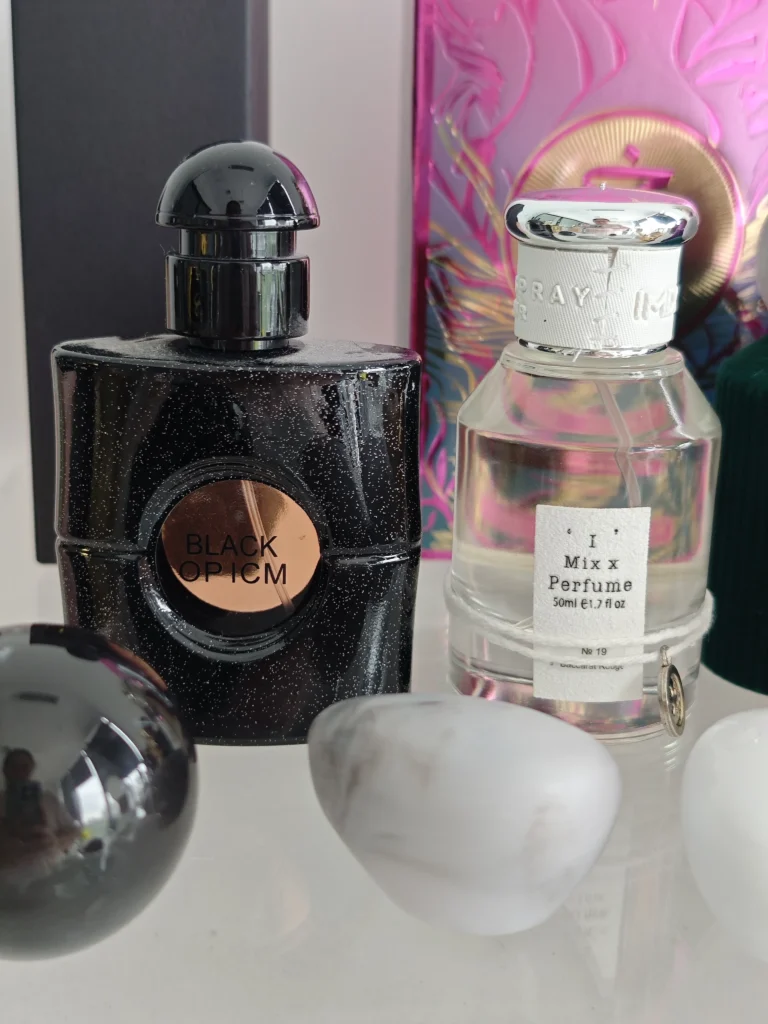
5. imixx “No. 40 YSL Black Opiume Parfum Femme Dupe” — The Factory-Macerated Purist Option
Full transparency: this is the product formulated by our own laboratories at imixx. We built this specific formula to address the structural shortcomings we observed in mass-market alternatives.
- The Pros: Our primary focus is the factory-direct model with an absolute mandate on proper maceration (more on this science below). Before bottling, the juice sits in temperature-controlled vats, allowing the alcohol to smooth out and the pyrazines (coffee notes) to bond securely to the vanilla base notes. Formulated as a high-grade EDP, the imixx No. 40 aims for the exact middle ground: it retains the bright, spicy opening of the original, followed by a distinct roasted coffee note that does not get buried in overly sweet vanilla. We prioritize IFRA-compliant, clean ingredients.
- The Cons: As a specialized, pure DTC brand, we do not have physical retail stores for you to test the fragrance beforehand. We rely on comprehensive sizing and detailed descriptions to mitigate this. Furthermore, because we do not rush the maceration process, our restocks can sometimes take longer than fast-fashion brands.
- The Verdict: Designed for the fragrance purist who wants the most accurate, chemically balanced, and long-lasting representation of the original without the heavy, oily feel of an extrait or the fleeting, alcoholic nature of a cheap EDT.
6. The Secret Factory Step Most Brands Skip: Maceration
If you have ever bought a budget fragrance online and thought, “This just smells like harsh rubbing alcohol,” you have been a victim of rushed manufacturing. In the professional fine fragrance industry, a crucial step called maceration is required.
According to organizations like The Perfume Society, maceration is similar to letting a fine wine age in a barrel or letting a stew simmer on the stove. It is the mandatory resting period (usually 4 to 8 weeks) where the concentrated fragrance oils and the perfumer’s alcohol are allowed to chemically bond in a cool, dark, temperature-controlled environment.
Mass-market, budget brands often skip this step entirely to get products onto US shelves faster and improve their cash flow. When you skip maceration, the alcohol molecules haven’t integrated with the oil molecules. When you spray it, the unbonded alcohol hits your olfactory receptors first, literally burning your nose and temporarily masking the delicate jasmine and coffee notes. Reputable factory-direct brands ensure a multi-week maceration process so the fragrance is perfectly rounded, smooth, and ready to wear the moment you unbox it.
7. Expert Guide: How to Layer and Make Your Fragrance Last All Day
Even if you purchase the most expensive $200 designer bottle or the highest-quality black opium parfum dupe, poor application technique will ruin its performance. Skin chemistry is a massive factor; as researched by institutions like the Monell Chemical Senses Center, the lipids (fats) and pH level of your skin dictate how a fragrance projects. Here is the factory-approved method to maximize your scent’s longevity:
- The Moisture Trap (Occlusive Layering): Perfume alcohol evaporates rapidly on dry skin. Never spray perfume immediately after toweling off. After a shower, apply an unscented body lotion, a light body oil (like jojoba), or even a tiny dab of Vaseline to your pulse points. The fragrance oils will lock onto this lipid moisture barrier, slowing down the evaporation process significantly.
- Target the Right Pulse Points: Spraying the front of your neck might seem glamorous, but it is a mistake. It causes “olfactory fatigue”—your nose gets overwhelmed and your brain simply blocks out the smell within 20 minutes to prevent sensory overload. To smell your own perfume all day, spray your wrists, the inner creases of your elbows, and the back of your knees. The body heat generated in these areas will push the scent upward naturally throughout the day.
- Do Not Rub Your Wrists Together: It is a classic movie trope, but rubbing your wrists creates friction and heat, which literally crushes the delicate, volatile top notes (the pear and pink pepper) and forces the alcohol to evaporate too quickly. Simply spray and let it air dry naturally.
- Strategic Fabric Application: While your skin chemistry will alter a scent (making it sweeter or woodier), fabric preserves the original chemical structure. A light mist on a wool sweater or a cotton scarf will hold the vanilla and coffee base notes for days. (Pro tip: Always test on a small, hidden hem first to ensure the perfume oils do not stain light-colored fabrics).
8. A Beginner’s Glossary of Perfumery Terms
To help you navigate your fragrance journey and read reviews like a pro, here are essential industry terms:
- Sillage (Pronounced see-yazh): The invisible, lingering trail of scent left behind in the air when someone wearing perfume walks past you.
- Projection: How far the scent travels outward from your body. A perfume with “beast mode” projection can be smelled across a room.
- Dry-Down: The final phase of a fragrance’s lifecycle on your skin (usually starting 2 hours after spraying), typically dominated by heavy, large base note molecules like vanilla, musk, and woods.
- Gourmand: A fragrance family characterized by “edible,” dessert-like, or culinary notes, such as coffee, chocolate, caramel, almond, and vanilla.
- IFRA Compliant: Means the fragrance adheres to the safety guidelines set by the International Fragrance Association, ensuring it does not contain unsafe levels of allergens or toxic chemicals.
9. Comprehensive Consumer FAQ: Answering Your Top Questions
What is the closest perfume dupe to YSL Black Opium available in the USA?
The definition of “closest” depends heavily on which specific notes you value most. If you want a cheap, bright floral opening, Zara Gardenia is popular but fleeting. If you prefer a very sweet, syrupy vanilla, Dossier Ambery Vanilla is a great fit. However, for the most structurally balanced, factory-macerated representation of the complete coffee-vanilla-floral pyramid with solid EDP longevity, the imixx No. 40 offers exceptional accuracy without the designer markup.
Are cheap alternatives and dupes safe for my skin?
Safety is not necessarily dictated by price; it comes down to regulatory compliance. Reputable brands, whether they sell for $35 or $300, formulate according to the safety standards set by IFRA (International Fragrance Association). IFRA dictates safe usage levels for both natural extracts (which can contain high levels of natural allergens) and synthetic molecules. Always check a brand’s website to ensure they state their formulations are IFRA compliant, cruelty-free, and ideally paraben-free.
How long should a long-lasting black opium alternative actually last on my skin?
Longevity is tied to concentration and skin chemistry. An Eau de Parfum (EDP) concentration should generally last between 6 to 8 hours on well-moisturized skin. Extrait de Parfums (like Oakcha) can push past 10 hours due to higher oil ratios. If your perfume fades completely within 2 hours, it is likely an Eau de Toilette (EDT) or a body mist with a very high alcohol-to-oil ratio.
Why do some perfumes that smell like YSL Black Opium give me a headache?
This common issue is often caused by an overdose of cheap, heavy synthetic musks or a poorly balanced use of ethyl maltol (the sweet cotton candy molecule) used by budget brands to cover up a lack of genuine, complex base notes. A well-constructed fragrance balances sweet elements with earthy, grounding notes (like patchouli or cedarwood) to prevent olfactory fatigue and headaches.
Can I wear a perfume with jasmine and coffee notes in the summer, or is it only for winter?
While deep gourmand and coffee-based fragrances are traditionally marketed as fall/winter or evening scents (because heat amplifies their sweetness and projection), fragrance rules are meant to be broken. If you want to wear it during a hot US summer day, simply change your application method. Apply it very sparingly—a single half-spray behind the neck, or simply mist it lightly onto your clothing rather than directly onto hot skin.
Does the color of the perfume liquid matter? Why is mine turning dark?
Yes, it often indicates quality! High-quality natural vanilla extract and certain white florals contain compounds that naturally turn dark amber, brown, or even slightly purple over time as they are exposed to light and oxygen (a natural oxidation process). This does not mean the perfume has gone bad; it often means it has macerated further and become richer. If a brand uses a perfectly clear liquid but claims to have a “rich natural vanilla base,” they are likely using purely synthetic clear vanillin or utilizing chemical dyes to mask the color.
Is it legal to make a perfume dupe in the United States?
Yes. In the United States (and most of the world), a scent itself cannot be patented or copyrighted. You can trademark a brand name, a logo, and the specific design of a bottle, but the actual chemical formulation of an odor is considered a product of nature and chemical discovery. As long as a company does not use the designer’s trademarked name or packaging to confuse the consumer (which would be counterfeit), recreating a similar scent profile is entirely legal and common practice in the industry.
10. Conclusion: Becoming an Educated, Empowered Consumer
The fragrance industry has operated behind heavily guarded, closed doors for over a century. It has relied on the mystique of European luxury, celebrity faces, and massive marketing budgets to justify soaring retail prices. But the modern US consumer is smarter, more resourceful, and demands transparency. You now understand that when you buy a luxury perfume, you are not just paying for a beautiful scent; you are paying for an incredibly bloated retail supply chain.
Whether you choose to pick up a quick, accessible bottle from Zara for a weekend trip, rely on Dossier for your sweet daily office wear, go with Oakcha for maximum projection, or invest in the meticulously macerated, laboratory-balanced imixx No. 40 for your signature night-out scent, the power is now entirely in your hands. Finding the perfect black opium parfum dupe is about looking past the shiny bottle and understanding the chemistry, the oil concentration, and the ethics of the company behind it.
Fragrance is a deeply personal journey, and there is no single “right” choice—only the choice that fits your budget, your skin chemistry, and your lifestyle. I encourage you to test different concentrations, experiment with the occlusive layering methods we discussed, and find the balance that works perfectly for you. If you are interested in exploring more about how factory-direct perfumery works, reading more supply chain insights, or browsing other meticulously formulated alternatives, you can visit our educational hub and storefront at imixx.net.
Scent is invisible, but it is the most powerful accessory you will ever wear. Choose wisely, and wear it with confidence.
