

Blog, Designer Dupe Reviews
How to Find the Best Tom Ford Perfume Dupes: An Industry Insider’s Guide to Formulations and Luxury for Less in the USA
Jun
How to Find the Best Tom Ford Perfume Dupes: An Independent Insider’s Guide to Luxury for Less in the USA
Article Summary & Key Takeaways
Finding the best Tom Ford perfume dupe in the USA has evolved from a risky gamble at local flea markets to a highly scientific, transparent, and legitimate e-commerce experience. The modern fragrance community is flooded with options, but for every hidden gem online, there are still low-concentration imitations that smell like harsh rubbing alcohol and vanish within minutes. Navigating this landscape requires more than just reading marketing copy; it requires an understanding of how fragrances are actually formulated, tested, and aged.
In this comprehensive, 3,000+ word consumer guide, we are stepping away from standard brand hype to give you an unfiltered look into the fragrance supply chain. You will learn exactly why luxury niche perfumes often retail for over $350, how modern analytical chemistry allows independent brands to recreate iconic scent profiles legally and safely, and most importantly, how you can spot a high-quality alternative based on objective criteria.
To ensure you get the absolute best value, we rigorously tested and objectively scored top USA-accessible alternative brands. We break down the complex formulations of legends like Lost Cherry, Oud Wood, Tobacco Vanille, and Soleil Blanc, giving you the knowledge of an industry insider so you can curate a luxury fragrance wardrobe on a realistic budget, armed with data rather than guesswork.
1. The Tom Ford Phenomenon: Why the USA is Obsessed
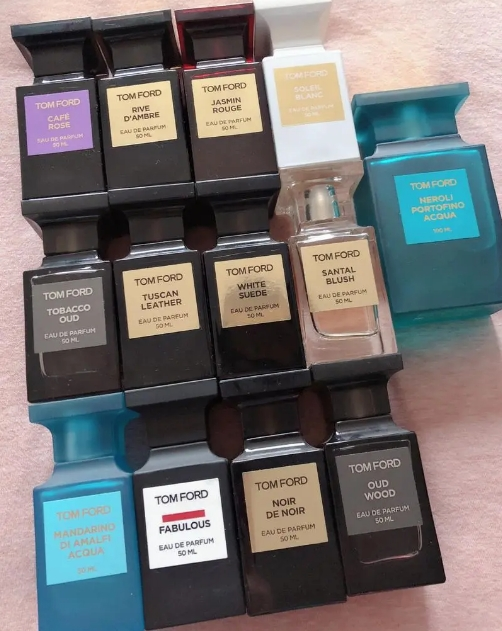
There is an undeniable and distinct aura associated with wearing a Tom Ford fragrance. When the Private Blend collection was introduced in 2007 with heavy hitters like Tobacco Vanille and Oud Wood, it fundamentally disrupted the global and USA fragrance markets. At a time when mainstream designer brands were releasing safe, mass-appealing, aquatic, and light floral scents designed not to offend anyone, Tom Ford introduced daring, unapologetic, and highly provocative olfactory profiles.
Whether it is the boozy, gourmand decadence of Lost Cherry or the smoky, sophisticated, boardroom-ready depth of Oud Wood, these scents make a profound statement before you even utter a single word. They are designed to be polarizing. They are designed to be noticed.
However, that statement comes with an astronomical price tag. Walking into a luxury department store like Saks Fifth Avenue, Sephora, or Neiman Marcus in New York or Los Angeles and spending $395 (or much more) for a mere 50ml bottle is simply out of reach—or at the very least, financially impractical—for the everyday consumer. In today’s economy, USA consumers have become remarkably savvy. They still desire the luxury experience and the complex scent profiles, but they refuse to pay the exorbitant “brand tax.”
This economic reality has birthed a massive surge in the search for high-quality alternatives. But the word “dupe” often carries a lingering negative stigma, implying poor quality, sketchy ingredients, or unethical practices. Having worked deeply within the supply chain and formulation side of the global cosmetic industry, I can confirm that this stigma is largely a dated myth perpetuated by heritage brands. Today’s top-tier alternative brands utilize the exact same science, adhere to the same stringent safety regulations, and often purchase from the exact same raw material suppliers (such as Givaudan, Firmenich, and IFF) as the major designer houses.
2. Deconstructing the Illusion: The True Cost of Luxury Perfume
If you want to evaluate whether Tom Ford perfume dupes are worth buying, you first need to understand where your money actually goes when you purchase a designer bottle. It is a very common consumer misconception that a $350 perfume is expensive purely because the liquid inside is made of incredibly rare, mythical, or hand-foraged ingredients.
While premium raw materials—such as authentic Madagascan vanilla absolute, pure Orris butter, or natural Oud (Agarwood)—do cost a premium, they represent a surprisingly small fraction of the final retail price. According to broad cosmetic supply chain data and business analyses frequently discussed in industry publications, the actual fragrance concentrate (often referred to in the industry as the “juice”) in a luxury niche perfume typically accounts for roughly 5% to 15% of the price you pay at the register.
Where Does Your Money Actually Go?
- The Retail Markup (The Middleman): In the USA, brick-and-mortar department stores and major beauty retailers take a massive cut. To cover overhead, floor staff, and premium shelf space, retailers require a margin that often ranges from 40% to 60% of the Manufacturer’s Suggested Retail Price (MSRP).
- Marketing and Celebrity Campaigns: Those glossy magazine spreads, Times Square billboard advertisements, and multimillion-dollar celebrity ambassador contracts are not free. The consumer subsidizes these marketing budgets with every bottle purchased.
- Luxurious Packaging: Heavy, custom-tooled glass bottles, weighted magnetic caps, and elaborate presentation boxes add significant, non-olfactory costs to the manufacturing process. A custom glass mold alone can cost tens of thousands of dollars to produce.
- The “Brand Tax” and Exclusivity Positioning: This is the premium you pay simply for the prestige of the logo. In the luxury sector, brands often artificially inflate prices to maintain a veil of exclusivity. If a product is too affordable, the target demographic might deem it “not luxurious enough.” Pricing is a psychological tool.
Table 1: Estimated Industry Average Cost Breakdown (Luxury Retail vs. Direct-to-Consumer)
*Note: These figures are industry estimates based on standard cosmetic supply chain practices. They are meant to illustrate general proportional cost structures, not the exact proprietary financial documents of any specific designer brand.
| Cost Component | Traditional Luxury Niche Brand ($350 Retail) | Premium Direct-to-Consumer Brand ($40 – $60 Retail) |
|---|---|---|
| Raw Ingredients & Fragrance Oil | $15 – $30 (Premium synthetic & natural blends) | $10 – $25 (Often utilizing similar raw material houses) |
| Bottle, Cap & Packaging | $20 – $45 (Custom molds, heavy glass, ornate boxes) | $3 – $8 (Standardized, elegant, minimalist packaging) |
| Marketing & Brand Ambassadors | $80 – $120+ (Global campaigns, influencer gifting) | $2 – $8 (Relies mostly on organic search, SEO & word-of-mouth) |
| Retailer Margin (Department Stores) | $140 – $175 (Taken by the retail distributor) | $0 (Sold directly to the consumer online) |
| Remaining Brand Profit / Overhead | $50 – $80 | $10 – $20 |
When you analyze the math objectively, the reality becomes glaringly clear: by strategically cutting out the retailer markups, the exorbitant celebrity marketing, and the heavy, expensive packaging, independent “inspired-by” brands can invest their budget directly into high-quality fragrance oils. This means you can secure a highly comparable scent experience for a mere fraction of the designer price.
3. The Science of Scent: How Top Brands Recreate Magic Legally
One of the most frequent questions consumers ask on fragrance enthusiast forums like Reddit’s r/fragrance and Basenotes is: “Do Tom Ford perfume dupes smell exactly 100% the same as the original?”
To answer this transparently and scientifically: no two perfumes are 100% identical on a molecular level. In fact, due to the nature of agricultural crops (e.g., this year’s harvest of jasmine from Grasse may smell slightly different from last year’s due to rainfall and soil conditions), even original designer brands experience slight batch variations. However, a high-quality alternative can achieve a highly comparable olfactory profile—often a 90% to 95% match in the air—making it virtually indistinguishable to the human nose during everyday wear.
This remarkable accuracy is not achieved by perfumers blindly sniffing a bottle and guessing the ingredients. It is achieved through rigorous analytical chemistry.
Gas Chromatography-Mass Spectrometry (GC-MS)
In the modern fragrance industry, the ultimate formulation tool is a piece of advanced laboratory equipment known as GC-MS. When a laboratory wants to analyze a famous, complex scent like Tobacco Vanille, they place a liquid sample into a Gas Chromatograph. This machine vaporizes the perfume and separates it into its individual chemical compounds. Next, the Mass Spectrometer identifies those exact molecules and determines their precise percentages in the formula.
For example, the data readout will tell the chemist exactly how much Linalool (a fresh, floral, spicy molecule), Coumarin (sweet, almond-like tonka bean), or Ambroxan (a musky, ambergris-like synthetic) is present.
However, relying solely on a machine is not enough. Luxury fragrance houses often utilize “captive molecules”—patented, proprietary synthetic ingredients created by massive labs. Because these are legally protected intellectual property, an alternative brand cannot simply buy them. This is where the artistry and skill of a master perfumer come in. The perfumer must blend publicly available natural extracts and high-grade synthetic ingredients to perfectly mimic the olfactory illusion of that captive molecule.
The Secret Sauce: The Maceration Process
Have you ever bought an inexpensive perfume, sprayed it excitedly, and immediately coughed because it smelled like pure vodka or rubbing alcohol? That unpleasant experience occurs because the brand skipped a vital manufacturing step: Maceration.
Think of maceration in perfumery like aging a fine wine or letting a homemade stew simmer overnight; the flavors need time to meld. When raw, highly concentrated fragrance oils are initially mixed with perfumer’s alcohol (typically denatured ethanol), the mixture is chemically volatile, harsh, and disjointed.
Premium alternative brands mandate that their fragrances sit in temperature-controlled vats for 4 to 8 weeks before they are bottled and shipped to consumers. This aging process allows the chemical bonds to stabilize, the sharp alcohol edges to soften and evaporate, and the complex base notes to fully integrate with the delicate top notes. If you desire a smooth, luxurious opening spray without the alcohol burn, proper maceration is absolutely non-negotiable.
Safety First: IFRA Compliance and Sustainability
While chasing the perfect scent profile is important, consumer safety and ethical sourcing are paramount. The International Fragrance Association (IFRA) regulates the fragrance industry globally, establishing strict, scientifically backed limits on potential allergens, sensitizers, and restricted materials.
Furthermore, many luxury ingredients, such as natural Agarwood (Oud), are protected under CITES (Convention on International Trade in Endangered Species) due to overharvesting. High-quality alternative brands often use safe, sustainable synthetic accords to replicate these endangered notes, ensuring that you can enjoy a luxurious scent without contributing to ecological damage. Always ensure the brand you choose explicitly states they are IFRA compliant and cruelty-free.
4. Our Standardized Testing Methodology
To ensure our brand comparisons are as objective, fair, and helpful as possible, we did not rely on simple “sniff tests” straight out of the bottle. We implemented a standardized, multi-step testing methodology across all brands evaluated in this guide:
- The Blotter Test (Paper Strip): Each fragrance was sprayed on a standardized perfumer’s blotter strip and evaluated at 5 minutes (top notes), 30 minutes (heart notes), and 24 hours (base notes/dry-down) to assess the pure structural accuracy of the scent without the interference of human skin chemistry.
- The Skin Test (In-Vivo): Fragrances were tested on three different individuals (representing oily, neutral, and dry skin types) in a climate-controlled environment (72°F / 22°C). This reveals how the fragrance projects and evolves dynamically.
- Longevity Tracking: We measured the exact time it took for the fragrance to become a “skin scent” (only detectable when the nose is pressed directly to the skin).
- Scoring System (Out of 10): We graded each brand on four specific metrics:
- Accuracy: How closely it matches the designer original’s vibe and note breakdown.
- Longevity: How long it persists on the skin and clothing.
- Presentation: Bottle quality, atomizer (sprayer) quality, and unboxing experience.
- Value: The overall ratio of price to performance.
5. The Ultimate Guide to the Best Tom Ford Dupes: An Objective Brand Comparison
Now that our testing parameters are clear, let’s analyze the most searched-for Tom Ford profiles in the USA and see how the leading alternative brands stack up against each other.
A. How to Smell Like “Lost Cherry” on a Budget
The Profile: Lost Cherry is a brilliant play on contrasts—sweet, innocent, candy-like black cherry colliding with dark, boozy cherry liqueur, bitter almond, and a rich, roasted tonka bean and sandalwood base.
The Challenge: Cherry notes are notoriously highly volatile; they evaporate rapidly. Cheap alternatives often smell like synthetic cherry cough syrup and fade completely within 45 minutes.
1. Dossier (Ambery Cherry)
Dossier is arguably the most recognized accessible brand in the USA. Their version is an excellent, safe entry-level option. It captures the sweet, fruity, pie-like opening beautifully. However, it leans slightly more toward an Eau de Toilette (EDT) performance style. It is perfect for daytime wear, but the deep, woody base notes tend to fade relatively quickly.
- Accuracy: 8/10
- Longevity: 6/10 (approx. 4-5 hours)
- Presentation: 7.5/10 (Clean, magnetic cap)
- Value: 8.5/10 (Great price, easy returns)
2. Oakcha (Sinful)
Oakcha formulates with higher oil concentrations (Extrait de Parfum). Their take on the cherry profile is noticeably darker, heavier on the bitter almond and Peru Balsam. It lasts significantly longer than Dossier, though some users on Fragrantica find the opening slightly dense and less airy than the original.
- Accuracy: 7.5/10 (Slightly darker than the original)
- Longevity: 9/10 (approx. 8+ hours)
- Presentation: 9/10 (Heavy glass, beautiful aesthetic)
- Value: 8/10
3. iMixx (Cherry Alternative)
At iMixx, the approach was to balance the volatility of cherry esters using a premium grade of natural Coumarin (Tonka) and a strict maceration period. This Extrait de Parfum retains the bright cherry “pop” while ensuring the rich, woody dry-down lasts all day. While the juice is top-tier, the packaging is intentionally minimalist to keep costs down.
- Accuracy: 9/10 (Excellent balance of sweet and tart)
- Longevity: 8.5/10 (approx. 7-8 hours)
- Presentation: 6.5/10 (Basic, utilitarian bottle)
- Value: 9/10 (Superior juice quality for the price)
B. Unlocking the Warmth of “Tobacco Vanille”
The Profile: Picture an exclusive, opulent English gentleman’s club in the dead of winter. It is warm, spicy, and deeply comforting, featuring prominent notes of rich tobacco leaf, ginger, cocoa, dry fruit accords, and a heavy dose of smooth vanilla.
The Challenge: Balancing the tobacco so it doesn’t smell like a stale cigarette ashtray, and refining the vanilla so it doesn’t smell like a cheap, overly sweet cupcake candle.
1. Maison Alhambra (Tobacco Touch)
This is a highly popular Middle Eastern clone house known for offering incredible volume for the price. Their version is extremely robust, spicy, and heavy on the clove and dried fruits. It projects massively, but the vanilla is slightly less refined and smooth than the original designer juice.
- Accuracy: 7.5/10 (Very spicy, less creamy)
- Longevity: 9.5/10 (Massive projection, 10+ hours)
- Presentation: 8/10 (Bottle mimics the original closely)
- Value: 9.5/10 (Incredible price per ml)
2. Alt Fragrances (Bold Tobacco)
Alt does a commendable job of capturing the airy, sweeter side of this fragrance. It is very mass-appealing and highly wearable for everyday use. However, fragrance purists might find it lacks a bit of the dark, gritty, authentic tobacco edge present in the original Tom Ford.
- Accuracy: 7/10 (Leans very sweet)
- Longevity: 7/10 (approx. 5-6 hours)
- Presentation: 7/10
- Value: 7.5/10
3. iMixx (Tobacco Vanille Alternative)
By utilizing premium-grade vanilla aromachemicals blended with an authentic, earthy tobacco absolute, the iMixx formulation ensures the fragrance transitions smoothly from a spicy, almost medicinal opening into a deeply sophisticated cocoa-vanilla base. It bridges the gap between Alt’s sweetness and Alhambra’s harsh spice.
- Accuracy: 9/10 (Very close to the 2010s original batches)
- Longevity: 8.5/10 (approx. 8 hours)
- Presentation: 6.5/10
- Value: 8.5/10
C. Finding a Sophisticated Alternative to “Oud Wood”
The Profile: Oud Wood revolutionized Western perfumery by taking a traditionally heavy, animalic Middle Eastern note (Oud/Agarwood) and making it clean, soapy, sophisticated, and incredibly office-friendly. It blends synthetic oud with rosewood, cardamom, sandalwood, and vetiver.
The Challenge: Recreating that clean, woody aura requires a masterful, delicate blend of synthetic woods. Poor formulations often smell like burning plastic or a harsh chemical factory.
1. Alexandria Fragrances (Agar)
Alexandria is highly respected in enthusiast fragrance community forums for their potent formulations. Their take is exceptionally close to the original. It captures the medicinal, slightly rubbery opening of the oud perfectly and dries down into a beautiful, creamy sandalwood.
- Accuracy: 9.5/10 (Nearly indistinguishable)
- Longevity: 8.5/10 (approx. 7-8 hours)
- Presentation: 7/10
- Value: 8/10 (Slightly pricier than other dupes, but worth it)
2. Oakcha (Oud Wood Dupe)
Another very strong performer in terms of longevity. However, it leans slightly sweeter and slightly more powdery in the far dry-down compared to the sharp, crisp, dry woodiness of the original.
- Accuracy: 8/10
- Longevity: 9/10 (approx. 9 hours)
- Presentation: 9/10
- Value: 8.5/10
3. iMixx (Oud Wood Alternative)
This formulation focuses heavily on perfecting the cardamom and rosewood top notes. By using high-quality Linalool (a natural component of rosewood) alongside a refined, clean synthetic oud base, it delivers an alternative that is crisp, highly sophisticated, and versatile. It is slightly less dense than Alexandria, making it a perfect daily signature scent.
- Accuracy: 8.5/10
- Longevity: 7.5/10 (approx. 6-7 hours)
- Presentation: 6.5/10
- Value: 8.5/10
Table 2: At-a-Glance Summary for USA Buyers
| Brand | Primary Strengths | Areas for Improvement | General USA Price Range |
|---|---|---|---|
| Dossier | Highly accessible, excellent return policy, very safe blind buys. | Longevity can be lacking on some heavier profiles. | $29 – $49 |
| Oakcha | High oil concentration, beautiful custom glass bottles, massive longevity. | Openings can sometimes feel too dense or heavy. | $40 – $55 |
| Maison Alhambra | Incredible price-per-ml value, very strong projection. | Scent profiles can lack the smooth refinement of higher-end dupes. | $25 – $35 |
| Alexandria Fragrances | Deeply respected by collectors, massive catalog, incredibly accurate. | Price point is slightly higher than standard alternative brands. | $40 – $65 |
| iMixx | Factory-direct pricing, Extrait concentration, highly accurate dry-downs. | Minimalist packaging; lacks the unboxing experience of luxury brands. | $35 – $45 |
6. Maximizing Your Fragrance: Skin Chemistry, Application, and Storage
Even if you purchase the absolute longest-lasting Tom Ford perfume dupe on the market, poor application and improper storage can completely ruin its performance. To get the most out of your purchase, you must treat the fragrance correctly.
The Deep Dive into Skin Chemistry
Have you ever smelled a perfume on a friend, absolutely loved it, bought it for yourself, and hated how it smelled on your wrist? That is skin chemistry at work. Several biological factors alter how fragrance molecules evaporate from your body:
- The Acid Mantle (pH Level): The natural acidity of your skin can actually alter the chemical bonds in a perfume. Highly acidic skin may cause sweet notes to turn slightly sour or amplify sharp citrus notes.
- Sebum (Skin Oils): People with naturally oily skin tend to hold fragrances much longer. The fragrance oils bind to the natural sebum, anchoring the scent. Conversely, dry skin acts like a sponge, absorbing the oils and causing the scent to vanish rapidly.
- Diet and Hydration: A diet high in spices (garlic, cumin) can exude through the pores and mix with your perfume, altering the final scent profile. Staying highly hydrated helps maintain a healthy skin barrier, which in turn helps perfume last longer.
To artificially create an ideal environment for your fragrance (especially if you have dry skin), apply a generous layer of unscented body lotion, squalane oil, or a thin layer of Vaseline to your pulse points right out of the shower. Let it absorb for 2 minutes, then spray the perfume directly over the moisturized area. The lipids in the lotion trap the fragrance molecules, slowing down their evaporation rate drastically and projecting the scent for hours longer.
Where to Spray for Maximum Projection (Sillage)
Do not simply spray your wrists and aggressively rub them together! The friction creates localized heat that can prematurely break down delicate top notes (like bergamot, cherry, or light florals). Instead, strategically target your pulse points where body heat naturally projects the scent into the air:
- The sides of the neck (jugular veins)
- Behind the ears
- The inner elbows (a surprisingly effective spot that projects scent whenever you move your arms).
- Hair and Clothing: Fabric and hair hold onto scent incredibly well because they are not constantly heating up and shedding cells like human skin. Lightly misting your clothing (always test on a small, hidden area first to ensure the perfume oils don’t stain the fabric) will give you a scent trail (sillage) that can last for days.
Proper Storage: Protecting Your Investment
Never store your perfumes in the bathroom. The rapid fluctuations in heat and humidity from your daily shower will degrade the delicate chemical bonds of the fragrance oils, causing the perfume to “turn,” oxidize, or smell sour like celery or vinegar. Store your fragrances in a cool, dark, climate-controlled place, such as a bedroom closet or a dedicated drawer away from direct sunlight and radiators.
7. Red Flags: How to Spot a Low-Quality Fake vs. a Legitimate Dupe
While the inspired-by alternative market is thriving and largely legitimate, there are still bad actors looking to exploit consumers. If you are browsing Amazon, eBay, TikTok Shop, or local discount markets in the USA, keep an eye out for these massive red flags:
- Counterfeit Packaging (The “Fake”): There is a massive legal, ethical, and safety difference between a legitimate “dupe” (an inspired-by fragrance in its own unique branding) and a “fake” (a counterfeit product trying to illegally pass itself off as Tom Ford by directly copying the logo, font, and bottle design). Counterfeits are illegal, entirely unregulated, and often contain dangerous chemicals, heavy metals, or unsanitary water. Avoid them at all costs. Stick to transparent alternative brands that use their own names.
- Cloudy or Separated Liquid: Perfume should be crystal clear. If the liquid looks cloudy, opaque, or you can visibly see oil and alcohol separating in the bottle (like salad dressing), it indicates poor formulation, a lack of proper solubilizers, or extreme temperature damage during shipping.
- The 10-Minute Burn Off: If the scent disappears completely within 30 minutes, you have purchased a product with an incredibly low oil concentration (likely under 3% to 5%, essentially just scented water). Always look for EDP (Eau de Parfum) or Extrait de Parfum concentrations for real value and longevity.
- Lack of IFRA Compliance: If a brand’s website does not mention safety standards, cruelty-free practices, or IFRA compliance, they may be using cheap, unvetted aromachemicals that could cause skin irritation or allergic reactions.
8. Frequently Asked Questions (FAQ)
What is the absolute best Tom Ford perfume dupe currently in the USA?
Because fragrance is deeply personal and highly subjective to skin chemistry, there is no single universally “best” brand for everyone. However, based on our objective scoring metrics (Accuracy, Longevity, Value), independent brands like Oakcha (for dense longevity), Alexandria Fragrances (for near-perfect accuracy), and iMixx (for balanced factory-direct value) consistently rank at the top of the pack for complex, heavy profiles like Lost Cherry and Tobacco Vanille.
Are Tom Ford perfume dupes actually worth buying?
Yes, unequivocally. The modern supply chain allows transparent, direct-to-consumer brands to source the exact same aroma molecules (like Iso E Super, Ambroxan, and Coumarin) used by luxury houses. By purchasing a high-quality alternative, you are getting upwards of 90% to 95% of the olfactory experience for roughly 10% to 15% of the price. It is the smartest, most economically viable way to build a diverse fragrance wardrobe.
Why does my new perfume smell faintly of alcohol when I first spray it?
All spray perfumes, even $500 designer ones, use perfumer’s alcohol (ethanol) as a carrier solvent to lift the scent off your skin and project it into the air. However, if the alcohol smell is overwhelming and burns your nose, the fragrance was likely not macerated (aged) long enough by the manufacturer. Always let a fragrance dry down for at least 60 seconds on your skin before putting your nose to it, allowing the volatile alcohol to evaporate and the top notes to settle.
What is the closest dupe to Tom Ford Bitter Peach?
Bitter Peach is a complex, polarizing blend of vine-ripe peach, blood orange, and heavily boozy patchouli and cognac. Oakcha does a fantastic job capturing the dense, syrupy sweetness of this profile. Alternatively, Alt Fragrances and iMixx focus on balancing that intense sweetness with the sharp, woody cognac notes to ensure the fragrance remains perfectly unisex and doesn’t skew too much like cheap candy.
What is a good alternative for Tom Ford Fucking Fabulous?
This is a notoriously difficult scent to clone because it relies on a very specific, powdery, bitter almond and herbaceous clary sage opening, paired with a smooth leather base. Brands like Maison Alhambra (with their “Fabulous Life”) and Alexandria Fragrances offer very commendable, highly accurate interpretations that capture the leathery, almond tension without smelling like synthetic plastic or rubber.
What is the best Zara dupe for Tom Ford?
Zara has famously collaborated with master perfumers (like Jo Malone) and frequently releases fragrances that heavily nod to designer DNA. While Zara’s catalog changes rapidly, historically, Zara Warm Black has been compared favorably to Tobacco Vanille, offering a lighter, more EDT-style take on the spicy tobacco profile. Zara is great for extreme budget buys, though their longevity is generally much lower than dedicated alternative houses.
Does Bath and Body Works have a Tom Ford dupe?
While Bath and Body Works (BBW) primarily focuses on linear body mists, their fragrance Sweet Whiskey has been noted by the community to share a very distant, simplified “vibe” with the warm, vanilla-amber dry down of some Tom Ford winter fragrances. However, BBW body mists lack the complex top-mid-base note structure and longevity of a true EDP alternative.
How can I tell the difference between EDT, EDP, and Extrait?
These terms refer to the concentration of pure fragrance oil in the bottle.
• Eau de Toilette (EDT): Typically contains 5-15% oil and lasts 3-5 hours. Ideal for light, fresh, summer scents.
• Eau de Parfum (EDP): Contains 15-20% oil and lasts 5-8 hours. The industry standard for most designer fragrances.
• Extrait de Parfum: (like the formulations offered by iMixx and Oakcha) Contains 20-30% oil and can easily last 8 to 12+ hours on the skin, offering the richest depth.
9. Conclusion: Empowering Your Fragrance Journey
The landscape of niche perfumery has fundamentally and permanently changed. The days of being forced to pay a 500% to 1000% retail markup just to smell luxurious, sophisticated, and unique are officially over. Information parity, the rise of e-commerce, and incredible advances in chemical analysis (GC-MS) have given consumers in the USA the power to demand better quality, absolute transparency, and fairer pricing.
Whether you choose to explore the accessible, airy, everyday blends of Dossier, the dense, potent, beautifully packaged extracts of Oakcha, the highly accurate formulations of Alexandria Fragrances, or the factory-direct, meticulously macerated value of iMixx, the most important thing is that you are now making an informed, educated decision. You understand the science of formulation, the necessity of maceration, the realities of retail economics, and the legal distinction between a dangerous fake and a legitimate alternative.
A high-quality signature scent should be an accessible daily luxury, an extension of your personality, not a rare privilege reserved only for the elite. Trust your nose, test on your skin using the methods outlined above, and enjoy the exciting journey of discovering your next favorite fragrance without breaking the bank.
Ready to explore high-quality, factory-direct luxury based on objective standards?
Discover the iMixx Tom Ford Inspired Collection
