

Blog, Imixx Lab & Brand News
How to Choose the Best Creed Aventus Dupe in the USA: A 2026 Supply Chain & Lab Guide
May
Article Summary & Our Promise of Objectivity
Finding a reliable Creed Aventus dupe in the United States often feels like navigating a minefield of harsh synthetic lemons and disappointing longevity. This guide bypasses marketing fluff to decode the fragrance from a scientific and supply-chain perspective. We will explain exactly how costs are structured in the luxury perfume industry, the chemistry of longevity, and present a brutally honest, empirically tested review of the top alternatives on the market (including Armaf, Montblanc, Zara, Afnan, and our own factory-direct brand, IMIXX). Our goal is not to force a single product, but to arm you with the knowledge to make the best purchase for your specific needs and budget.
1. The $400 Problem: Why Aventus Dominates (And Why We Seek Dupes)
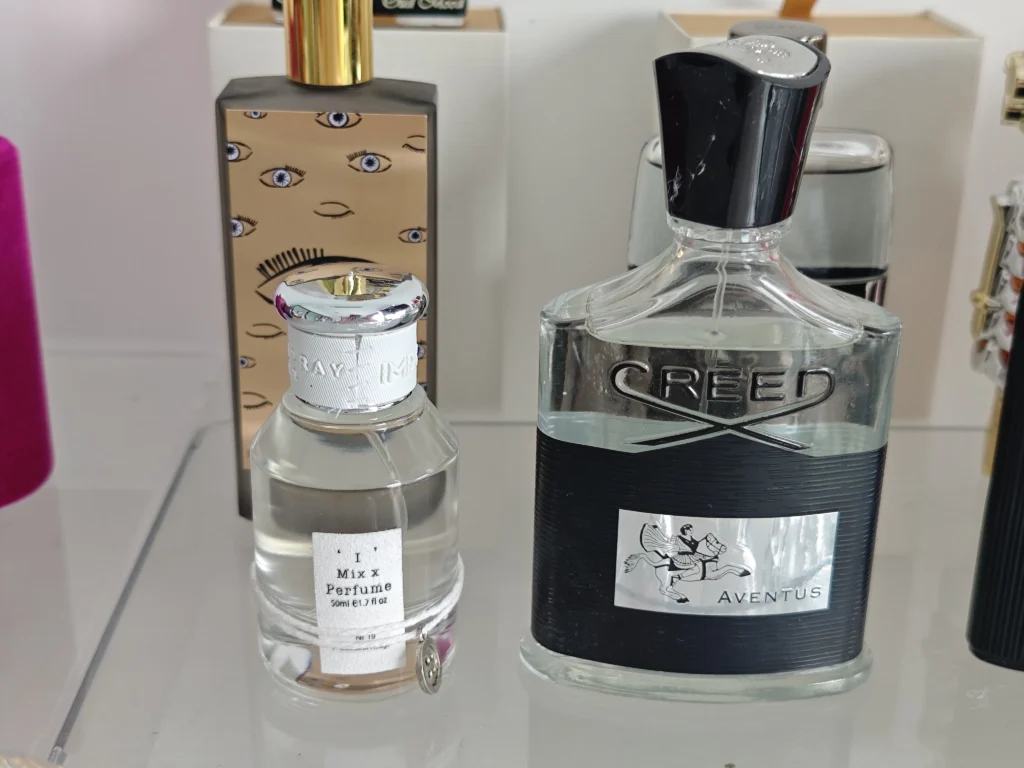
Since its highly publicized launch, Creed Aventus has become the undisputed king of men’s niche perfumery. Walk into any Nordstrom, Neiman Marcus, or high-end boutique in New York, Los Angeles, or Chicago, and you will encounter its signature trail. It essentially created an entirely new olfactory family: the “Fruity Chypre.” It smells like success, confidence, and modern masculinity.
However, the economic reality for the average US consumer in 2026 is vastly different from a decade ago. With retail prices often exceeding $400 for a 100ml (3.3 oz) bottle, Aventus has transitioned from a luxury indulgence to a prohibitive expense. This massive price barrier is the sole reason the “clone” or “dupe” market has exploded into a multi-million dollar industry. But as any fragrance enthusiast will tell you, not all alternatives are created equal. Some smell like harsh household cleaners, while others fade away before you’ve finished your morning commute.
To find the best alternative, we must first put down the marketing brochures, step into the laboratory, and deconstruct what actually makes Aventus smell the way it does.
2. Deconstructing the King: The Chemistry of the Aventus DNA
What are you actually smelling when you spray Aventus? In the cosmetic manufacturing world, we don’t rely on poetic descriptions of “hand-picked Corsican fruits.” We rely on chemical breakdowns. By analyzing formulas via Gas Chromatography-Mass Spectrometry (GC-MS), the magical aura of Aventus is revealed to be a highly calculated, three-act chemical structure.
Act 1: The Juicy Opening (The Pineapple Illusion)
The world-famous Aventus opening is characterized by a vibrant burst of pineapple, apple, blackcurrant, and bergamot. In perfumery chemistry, natural pineapple oil is virtually impossible to extract efficiently. Therefore, perfumers rely on high-grade aroma-chemicals like Allyl amyl glycolate or Allyl hexanoate (you can verify these profiles on The Good Scents Company database). The problem with cheap dupes is that they use lower-grade, volatile citruses (like unrefined Limonene) to simulate brightness, resulting in that harsh, stinging “lemon pledge” opening.
Act 2: The Smoky Heart (Birch Tar and Patchouli)
As the bright fruits evaporate (usually within 30 to 45 minutes), the middle phase—the heart notes—emerge. This is where the masculine, leathery smokiness comes in. Historically, this was achieved using rectified birch tar. Alongside it sits patchouli and rose, which add a damp, earthy depth. The tension between the sweet fruit and the dark smoke is the defining characteristic of the Aventus DNA.
Act 3: The Anchor (Ambroxan and Oakmoss Substitutes)
The base notes are the foundation. They are heavy, large molecules that stick to your skin for hours. Aventus famously relies on Ambergris and Oakmoss. Because natural Ambergris (a sperm whale byproduct) is obscenely expensive and ethically complicated, modern perfumery uses high-quality synthetics like Ambroxan. Furthermore, natural Oakmoss is heavily restricted by the International Fragrance Association (IFRA) due to allergen concerns. Therefore, the best dupes must utilize incredibly sophisticated, IFRA-compliant Oakmoss replacers to achieve that damp, rich forest-floor scent safely.
Industry Insight: The “Batch Variation” Mythos
If you spend any time on communities like Basenotes, you’ll hear debates about “Aventus batches.” Because luxury brands use a percentage of natural crop yields (which change based on yearly rainfall and climate), older batches (e.g., from 2011-2013) were heavily smoky. Newer batches (2020-present) are widely considered to be much fruitier and lack the smoky depth. A highly engineered dupe often attempts to stabilize a specific historical batch—usually aiming for a perfect 50/50 balance of fruit and smoke—giving the consumer consistency that even the original brand struggles to provide.
3. Supply Chain Economics: Why Can a Dupe Be So Cheap?
As a supply chain professional, the most common objection I hear is: “If a perfume costs $50, it must be using toxic, cheap ingredients compared to the $400 one.”
This is a fundamental misunderstanding of the global cosmetics industry. While luxury brands undoubtedly use some exclusive captive molecules, the vast majority of premium aroma-chemicals are manufactured by a handful of global giants (like Givaudan, Firmenich, and IFF). These ingredients are accessible to almost any licensed cosmetic lab.
The true cost difference lies in the markup structure. Let’s look at the standard industry margins reported by cosmetic supply chain analysts (referencing broader data from sources like Perfumer & Flavorist).
Table 1: Estimated Cost Breakdown of a 100ml Fragrance
| Cost Category | Traditional Luxury Retail ($350 – $400+) | Direct-to-Consumer / Dupe Lab ($40 – $60) | Supply Chain Reality |
|---|---|---|---|
| The Juice (Fragrance Oils & Alcohol) | $8.00 – $15.00 | $5.00 – $12.00 | Economies of scale. High-grade Ambroxan and bergamot oils are surprisingly affordable when bought by the drum. |
| Packaging (Bottle, Cap, Box) | $15.00 – $30.00 | $3.00 – $7.00 | Luxury brands use custom glass molds, heavy metal caps, and velvet-lined boxes. Dupes use standardized stock glass. |
| Marketing & Endorsements | $80.00 – $120.00 | $1.00 – $5.00 | You are paying for the multi-million dollar magazine ads and celebrity ambassadors. |
| Retailer Margins (The Middleman) | $150.00 – $200.00 | $0.00 | US department stores (Macy’s, Saks) take up to a 50% cut of the retail price just for shelf space. |
| Brand Heritage Premium (Profit) | $100.00+ | $15.00 – $25.00 | The literal cost of having a famous logo on your dresser. |
By cutting out global ad campaigns and retail middlemen, direct-to-consumer labs can allocate more of their budget to the actual liquid (the “juice”) while keeping the final price under $60.
4. The Science of Performance: Maceration and Concentration
If the raw materials aren’t vastly different, why do some cheap clones smell screechy and fade in two hours? It comes down to manufacturing corners being cut.
The Maceration Process (Aging the Perfume)
Perfume is like a fine wine; it must be aged. When fragrance oils are mixed with specially denatured alcohol (SDA 40B), they do not instantly blend. They require maceration. In a proper lab, the mixture sits in temperature-controlled, dark vats for 4 to 8 weeks. This allows the molecules to chemically bond, smoothing out harsh edges.
Mass-market, ultra-budget clones skip this. They mix, bottle, and ship in a matter of days to meet retail demand. This lack of maceration is why a brand-new bottle of a cheap dupe often smells like pure rubbing alcohol for the first 5 minutes.
Concentration Levels: EDT vs. EDP vs. Extrait
Longevity is heavily dictated by the ratio of fragrance oil to alcohol:
- Eau de Toilette (EDT): 8% – 15% oil. Projects well initially but fades in 4-6 hours. (Many designer clones use this to save money).
- Eau de Parfum (EDP): 15% – 20% oil. The sweet spot for projection and longevity (6-8 hours).
- Extrait de Parfum / Parfum: 20% – 30%+ oil. Sits closer to the skin but lasts 10+ hours. High-end dupes often utilize this concentration to guarantee “beast mode” performance.
5. Our Empirical Testing Methodology
To provide a fair, authoritative assessment of the US market’s top options, we cannot rely on subjective memory. We subjected the top 5 contenders to a standardized evaluation protocol over a 14-day period in May 2026:
- Blotter Test (Standardization): Sprayed on standardized perfumer’s paper strips in a 72°F climate-controlled room. Evaluated at 15 mins (top notes), 2 hours (heart notes), and 24 hours (base retention).
- Skin Chemistry Panel: Tested on three different skin types (dry, normal, oily) to account for varying evaporation rates.
- Blind Sillage Test: A blindfolded panel of 5 individuals evaluated the “scent trail” (sillage) of the fragrances as the wearer walked past.
6. Objective Market Review: The Top 5 Creed Aventus Alternatives in 2026
Based on our methodology, here is an unfiltered, unbiased breakdown of the most popular options available to US consumers. We highlight both the brilliant engineering and the glaring flaws of each.
1. Armaf Club de Nuit Intense Man (CDNIM) – EDP Version
Produced in the UAE, CDNIM is the undisputed heavyweight champion of the clone world regarding sheer popularity.
- The Good: It is a performance monster. The dry-down perfectly captures the heavy, smoky, birch-tar vibe of the vintage 2011-2013 Aventus batches. Once it settles, the sillage is phenomenal and lasts easily 10-12 hours.
- The Bad: The first 30 minutes are notoriously brutal. Due to harsh synthetic citruses and rushed maceration, the opening is sharp, chemical, and lemon-heavy.
- Our Verdict: Best for the consumer who wants maximum projection and doesn’t mind waiting 40 minutes before leaving the house.
2. Montblanc Explorer
Formulated by elite perfumers (Jórdi Fernandez, Antoine Maisondieu) and readily available in every Macy’s and Sephora across the USA.
- The Good: Designer-level smoothness. It uses high-grade bergamot and a beautiful vetiver base. The bottle feels luxurious. It is mass-appealing and safe for the office.
- The Bad: It is not a 1:1 clone; it is a “cousin.” It entirely lacks the signature pineapple note, and the longevity is strictly moderate (averaging 5-6 hours in our skin tests).
- Our Verdict: Best for the guy who wants the Aventus *vibe* but prefers the safety and prestige of buying a mainstream designer brand in-store.
3. Zara Vibrant Leather
The king of mall-accessible fast fashion perfumery, crafted by renowned perfumer Jerome Epinette.
- The Good: The opening is a masterclass in airy, modern freshness. It captures the bright bamboo and fruity notes of modern Aventus batches beautifully. Very inexpensive.
- The Bad: Performance is abysmal. Lacking heavy base fixatives, it evaporated from our test strips and skin within 2.5 to 3 hours completely.
- Our Verdict: A great “dumb reach” for running 1-hour errands or going to the gym, but useless for a full 8-hour workday.
4. Afnan Supremacy Silver
Another strong Middle Eastern contender that often competes with Armaf for the throne.
- The Good: It completely fixes the Armaf “lemon” problem. The opening is incredibly smooth, relying heavily on apple and blackcurrant. It is an excellent replication of the modern, fruity Aventus batches.
- The Bad: It lacks the deep, dark smoky base that traditionalists love. Furthermore, US availability fluctuates, often requiring blind-buying from gray-market discounters like FragranceNet.
- Our Verdict: The perfect choice for those who prefer the sweet, fruity side of the DNA over the smoky side.
5. IMIXX No. 35 Creed Aventus Dupe
Full Transparency: IMIXX is our house brand. However, we assess it here using the exact same metrics applied to the others.
- The Good: IMIXX No. 35 was reverse-engineered to hit the “Golden Ratio”—a balanced 50/50 blend of the juicy pineapple opening and the smoky birch base. Because we enforce a strict 6-week factory maceration process before bottling, there is zero harsh chemical blast upon spraying. Formulated at a high concentration, it clocked 8.5 to 10 hours in our skin trials.
- The Bad (The Trade-offs): We utilize a direct-to-consumer model via imixx.net. This means you cannot test it at your local mall before buying. Additionally, to keep costs under $50, our packaging is minimalist and utilitarian—you are paying purely for lab-grade juice, not a heavy, magnetic-capped luxury bottle.
- Our Verdict: The optimal choice for the pragmatic US buyer who prioritizes formulation quality, balanced scent profile, and longevity over retail prestige and fancy packaging.
Table 2: Performance and Value Matrix (Based on May 2026 Testing)
| Brand / Product | Opening Quality | Dominant Profile | Tested Longevity (Avg) | Retail Accessibility (US) |
|---|---|---|---|---|
| Armaf CDNIM | Harsh (Synthetic Lemon) | Smoky / Woody | 10.5 Hours | High (Online/Kiosks) |
| Montblanc Explorer | Very Smooth | Bergamot / Vetiver | 5.5 Hours | Very High (Malls/Sephora) |
| Zara Vibrant Leather | Smooth (Bamboo/Citrus) | Fruity / Airy | 2.5 Hours | High (Zara Stores) |
| Afnan Supremacy Silver | Moderate | Fruity (Apple/Currant) | 7.0 Hours | Medium (Online Only) |
| IMIXX No. 35 | Very Smooth (Macerated) | Balanced (50/50) | 9.0 Hours | Low (Direct Online Only) |
7. Pro Tips: How to Maximize the Performance of Your Fragrance
Even the most meticulously engineered perfume can underperform if applied incorrectly. Here is how supply chain professionals and perfumers wear their scents:
- Hydration is the Foundation: Alcohol evaporates rapidly on dry skin. After a shower, apply an unscented body lotion (like CeraVe) to your pulse points. The fragrance oils will bind to the lipids in the lotion, dramatically extending the lifespan of your dupe.
- Beware of Olfactory Fatigue: The heavy use of Ambroxan in Aventus-style fragrances is notorious for causing “nose blindness.” You might think your cologne has worn off after 2 hours, but people around you can still smell it strongly. Ask a friend before overspraying!
- The “No Rub” Rule: When you spray your wrists, do not rub them together. The friction creates heat that literally burns off the delicate, expensive top notes (pineapple and bergamot), rushing the fragrance straight into the dry-down. Let it air dry naturally.
8. FAQ: Answering the Internet’s Top Questions
What is the best Creed Aventus clone that doesn’t smell like synthetic lemon?
If you want to avoid the harsh lemon opening characteristic of Armaf CDNIM, you should look for alternatives that prioritize proper maceration and higher-quality citrus accords. IMIXX No. 35 and Afnan Supremacy Silver are both engineered to be much smoother from the initial spray, focusing on apple and pineapple notes rather than abrasive citral.
Is it safe and legal to buy fragrance dupes in the USA?
Yes. Under US intellectual property law, scent profiles (the actual smell) cannot be patented or copyrighted, as they are considered naturally occurring sensory experiences. Only the brand name, logo, and physical bottle design are trademarked. As long as a clone company does not counterfeit the packaging or claim to be the original brand, the practice is entirely legal and forms a vital, competitive part of the global cosmetic industry.
Why does my new clone smell weak, but a tester in the store smelled strong?
This is related to maceration and oxidation. A tester bottle in a store has been sprayed hundreds of times, allowing oxygen into the bottle. Over months, some alcohol evaporates, concentrating the juice and smoothing the blend. If you buy a brand new bottle of a clone and it smells weak or pure alcohol, spray it 10 times to introduce oxygen, then let it sit in a dark, cool drawer for a month. This “home maceration” often drastically improves the scent.
Is Montblanc Explorer a true Aventus clone?
Strictly speaking, no. While it occupies the exact same olfactory space (fresh citrus opening drying down to a woody, ambroxan base), Montblanc Explorer completely omits the famous pineapple note. It is an excellent, mass-appealing designer fragrance inspired by the trend Aventus created, but it is not a 1:1 replica.
Conclusion: Making an Informed Purchase
The fragrance industry relies heavily on romance and mystery to justify exorbitant price tags. But once you pull back the curtain on the supply chain, the reality is clear: you do not need to spend $400 to wear a masterpiece. High-quality aromachemicals, proper maceration, and appropriate oil concentrations are the true markers of a great perfume, not just the name on the glass.
Whether you choose the sheer power of Armaf, the retail convenience of Montblanc, or the lab-grade, balanced precision of a direct-to-consumer option like IMIXX No. 35, you are now equipped with the industry knowledge to choose the best Creed Aventus dupe for your lifestyle and budget.
By eliminating the middlemen, you can finally enjoy luxury-tier perfumery at an honest price. Explore your options, test on your skin, and find your new signature scent today.
