

Best Fragrance Lists, Blog
How to Choose the Best Aventus Clones in the USA: A Master Perfumer’s Guide to Supply Chain Secrets & Chemistry
May
By Linus Dacke Thall | Scent Chemist & Perfume Supply Chain Analyst
Disclaimer: This guide includes independent analysis of various fragrance brands. While the author is affiliated with the fragrance manufacturing industry and the brand IMIXX, all products discussed—including third-party brands like Armaf and Montblanc—are evaluated based on their chemical composition, market standing, and consumer value.
Executive Summary
In the highly competitive USA fragrance market, the quest for the ultimate signature scent frequently leads consumers to search for the best Aventus clones. However, navigating the endless sea of cheap imitations can be overwhelming. This comprehensive, 3,000+ word guide is designed for the everyday consumer who wants to understand why perfumes smell the way they do, without needing a degree in chemistry.
We will pull back the curtain on the luxury perfume supply chain to explain why the original costs $400, while high-quality alternatives cost under $50. We’ll decode the famous “fruity vs. smoky batch” debate, explain the critical importance of maceration (aging) and alcohol quality, and provide an objective, side-by-side review of the market’s top contenders—from Armaf and Montblanc to factory-direct innovators like IMIXX. By the end of this article, you will have the knowledge to look past the marketing hype and choose a fragrance based on verifiable quality, longevity, and your unique skin chemistry.
Introduction: The $400 Illusion and the Rise of Smart Consumers
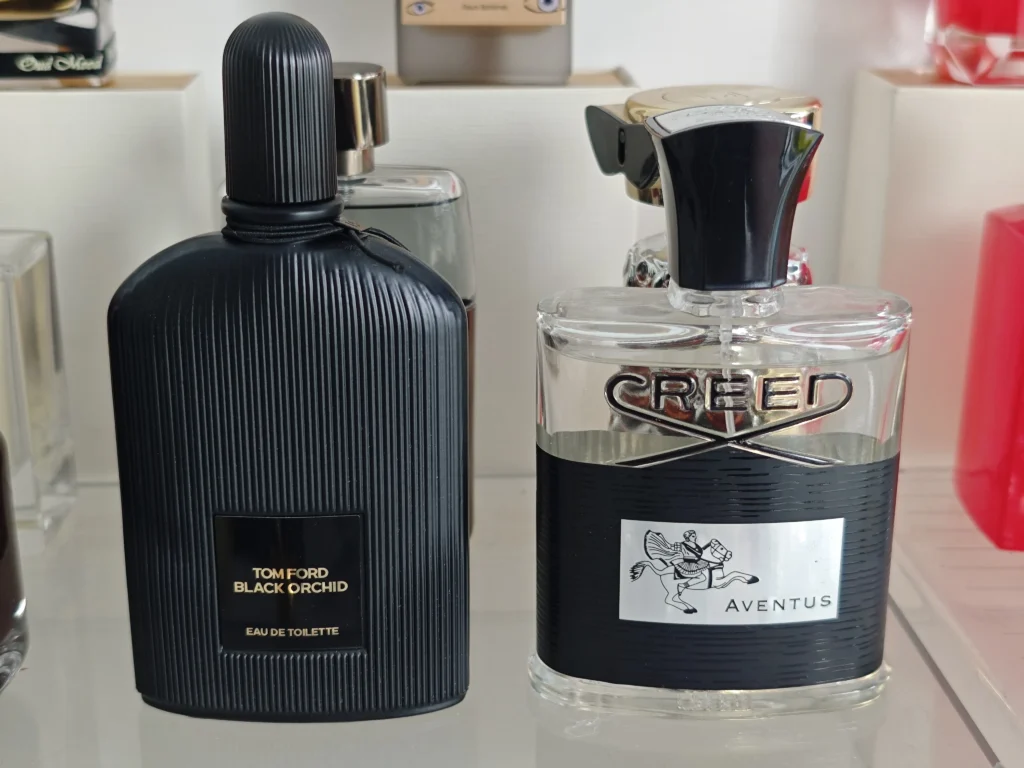
If you have found your way to this page, you are likely part of a growing movement of smart consumers in the USA. You appreciate smelling fantastic, but you are tired of paying exorbitant retail markups just for a designer logo on a glass bottle. The original niche masterpiece that started it all—often referred to by enthusiasts on forums like Fragrantica and Basenotes as the “King of Fragrances”—currently retails for upwards of $400. That is a staggering price tag that has birthed a massive sub-industry dedicated to creating the perfect Aventus clone.
But as a regular buyer, how do you navigate this saturated market? How do you know if a $35 bottle is going to smell like a luxurious, smoky pineapple, or if it will smell like a harsh, synthetic lemon floor cleaner?
The truth is, modern perfumery is not magic; it is a blend of chemistry and supply chain economics. I am here to step out of the laboratory and translate these industry secrets into plain English. We are going to look at the exact ingredients used, how they are sourced, and why some cheap alternatives perform brilliantly while others fade away in an hour. It is time to level the playing field and empower you with the knowledge to find the best value for your money.
Behind the Curtain: The Fragrance Industry Supply Chain Explained
To truly appreciate a high-quality alternative, you first need to understand why the original costs so much. Most people assume that a $400 perfume contains $350 worth of incredibly rare, magical ingredients hand-picked by monks. As someone who works in the supply chain, I can assure you that this is an illusion.
The actual liquid inside a $400 bottle of luxury perfume—often referred to in the industry as the “juice”—rarely costs more than $5 to $15 to manufacture, even when utilizing the absolute finest raw materials available from global fragrance houses like Givaudan or Firmenich. So, what are you actually paying for?
- The Marketing Machine: Millions of dollars are spent on glossy magazine ads, billboard campaigns, and celebrity endorsements. The consumer ultimately pays for this.
- Retailer Markups: When you buy a perfume at a high-end department store, the retailer takes a massive 40% to 50% cut of the final retail price.
- Lavish Packaging: Custom-tooled, heavyweight glass bottles, metallic magnetic caps, and elaborate velvet-lined boxes add significantly to the production cost.
- The “Prestige” Tax: Luxury brands artificially inflate prices simply because high prices create an aura of exclusivity. You are paying a tax for the name printed on the label.
Knowing this, the existence of a cheap Aventus dupe that smells 95% similar is not a scam; it is simply a different business model. Brands that skip the massive marketing budgets, use standard (but sturdy) bottles, and sell directly to consumers online can afford to put the bulk of their budget into the actual fragrance oils. This is the secret to finding a great clone: finding a brand that prioritizes the juice over the packaging.
The Anatomy of a Masterpiece: Deconstructing the Scent DNA
Before you can evaluate an alternative, you must understand what it is trying to copy. The legendary DNA of this particular scent was revolutionary because it created an entirely new category: the fruity-chypre for men. It relies on a very specific, high-contrast balancing act: a bright, juicy, acidic burst of fruit sitting on top of a dark, masculine, smoky, and woody base.
The Opening: The Famous Pineapple Note
The signature opening is dominated by a hyper-realistic pineapple note, blended with Calabrian bergamot, blackcurrant, and a touch of crisp apple. In the world of synthetic chemistry, recreating a realistic pineapple note fragrance is notoriously difficult.
Cheap, low-quality clones rely heavily on a single synthetic compound called Allyl Amyl Glycolate. While it smells vaguely of canned pineapples, it can be incredibly sharp and metallic if not blended correctly. High-quality alternatives, however, will smooth out this synthetic compound by blending it with natural citrus oils (like real bergamot) and trace amounts of other fruity molecules, resulting in a juicy, mouth-watering opening that doesn’t burn your nose.
The Dry Down: Woods, Smoke, and Ambroxan
The true test of any fragrance is the “dry down”—how it smells two to four hours after you spray it. This is where 90% of cheap knockoffs fail entirely. Once the fruity top notes evaporate, the heart and base notes must carry the performance.
The original uses a heavy dose of birch tar (which provides that signature smoky, leathery camp-fire smell), patchouli, oakmoss, and a massive backbone of Ambroxan. Ambroxan is a modern, synthetic marvel. It is derived from the scent profile of Ambergris (a rare, naturally occurring substance from sperm whales). Ambroxan provides an expansive, oceanic, slightly sweet musky aura that projects aggressively off the skin. If you are wondering how long does Aventus last, the answer lies almost entirely in the quality and quantity of the Ambroxan and oakmoss used in the base.
Let’s look at how this breaks down in a simple, consumer-friendly chart:
| Phase of Fragrance | What It Should Smell Like | The Chemical Reality (Synthetics & Naturals) | Warning Signs of a Bad Clone |
|---|---|---|---|
| Top Notes (0-30 mins) | Fresh Pineapple, Bergamot, Blackcurrant, Apple | Allyl Amyl Glycolate blended with natural citrus oils. | Smells like lemon pledge or harsh alcohol; burns the nostrils when first sprayed. |
| Heart Notes (30 mins – 3 hrs) | Birch wood, Patchouli, a hint of Jasmine | Iso E Super (cedar-like), Hedione (airy floral), Birch Tar. | Smells muddy, excessively synthetic, or disappears entirely after an hour. |
| Base Notes (3 hrs – 12+ hrs) | Musk, Oakmoss, Ambergris, Vanilla | Ambroxan, Evernyl (oakmoss substitute), Musks. | Turns into a generic, powdery baby-powder scent with zero projection. |
The Great Debate: “Fruity” vs. “Smoky” Batches Explained
If you have spent even five minutes reading about this fragrance online, you have probably seen people obsessing over “batch codes.” Why does this happen?
Because the original luxury house historically relied on a certain percentage of natural crop ingredients, their yields varied from year to year. A dry season in Italy might mean the bergamot was sharper; a different extraction method for the birch meant the smoke was heavier. This created a phenomenon where different bottles of the exact same perfume smelled noticeably different.
This led to the famous division in the fragrance community:
- The Fruity Batches (e.g., modern batches from 2019 onwards): These lean heavily on the bright, syrupy pineapple and blackcurrant. They are highly mass-appealing, vibrant, fresh, and perfect for the office or warm weather.
- The Smoky Batches (e.g., vintage batches from 2010-2017): These are much darker, leaning aggressively into the roasted birch tar, ash, and heavy oakmoss. They are highly sought after by hardcore collectors for their raw, aggressive masculinity.
When you are searching for the closest clone to Creed Aventus, you must ask yourself a crucial question: Which version am I actually trying to replicate? A clone that smells entirely of pineapple isn’t necessarily “wrong”; it might just be copying a 2021 fruity batch. A clone that smells like an ashtray might be trying to replicate a 2013 smoky batch.
The Manufacturing Secrets: Why Some Clones Smell Cheap
Even if a clone brand has the exact chemical recipe, they can still produce a terrible product. Why? It comes down to two critical manufacturing steps that fast-fashion fragrance houses often skip to save time and money: Alcohol Quality and Maceration.
1. The Quality of Perfumer’s Alcohol
Perfume oils are incredibly thick and concentrated; they must be diluted in alcohol to spray properly and project off your skin. Low-tier, mass-market factories often use cheap, poorly filtered denatured alcohol. When you spray these fragrances, the very first thing that hits your nose is a harsh, burning ethanol smell that makes you want to cough. High-quality brands utilize premium, cosmetically graded perfumer’s alcohol. It is virtually odorless, meaning the delicate citrus and pineapple notes can shine through immediately without that chemical burn.
2. The Art of Maceration (Aging the Perfume)
Think of making a stew or a chili. It always tastes better the next day, right? That is because the ingredients have had time to meld together. Perfume works the exact same way.
Maceration is the perfume equivalent of aging fine wine. Once the raw oils are blended with the alcohol, the mixture needs to sit in temperature-controlled, dark vats for 4 to 8 weeks. This resting period allows the complex chemical structures to bind together, smoothing off harsh edges and allowing the deep base notes to fully develop.
Many cheap clone brands, rushing to meet the massive demand in the USA market, bottle their juice the exact same day it is mixed. The result is an unstable, screechy scent. If you ever buy a clone and it smells terribly harsh, try putting it in a dark closet for a month and spraying it again. You will often find it has smoothed out considerably. However, the best brands do the maceration for you before the bottle ever ships.
The Ultimate Showdown: Reviewing the Best Aventus Clones on the Market
Now that you understand the science and the supply chain, let’s look at the actual products. The market is flooded, but a few key players consistently rise to the top. Here is an objective, fair look at the most popular options available to USA consumers, assessing their strengths and weaknesses.
1. Armaf Club de Nuit Intense Man (CDNIM)
The Profile: The undeniable heavyweight champion of budget clones. Made in the UAE, this fragrance is famous worldwide.
The Pros: The performance is absolutely “beast mode.” It projects heavily and lasts 10+ hours. The dry down (after about an hour) is incredibly close to a smoky vintage batch of the original.
The Cons: The opening is notoriously brutal. Because they use a massive dose of synthetic lemon instead of natural bergamot to save costs, the first 20 minutes smell strikingly like lemon-scented household cleaner. You have to endure the harsh opening to get to the magic dry down.
Best For: The guy on a strict budget who cares most about performance and projection.
2. Montblanc Explorer
The Profile: A mainstream, designer take on the DNA. You can find this at most major USA department stores like Macy’s or Sephora.
The Pros: Extremely high-quality blending. It doesn’t smell cheap at all. It takes the smoky/woody DNA and smooths it out, making it incredibly versatile and office-safe.
The Cons: It is not a 1:1 clone. It completely removes the signature pineapple note, replacing it with a safer citrus mix. The longevity is also somewhat moderate (4-6 hours) compared to others.
Best For: The professional who wants a safe, high-quality, easily accessible everyday fragrance without the loud fruitiness.
3. Afnan Supremacy Silver
The Profile: Another strong contender from the Middle East, offering a slightly different take than Armaf.
The Pros: It perfectly captures the “fruity batch” vibe. The apple, blackcurrant, and pineapple notes are much smoother and less synthetic than CDNIM. The opening is much more pleasant.
The Cons: It lacks the deep, dark, smoky birch tar in the base. It remains relatively linear and fruity throughout its life, and the longevity is average (around 6 hours).
Best For: Those who prefer the modern, bright, fruity batches over the vintage smoky ones.
4. Al Haramain L’Aventure
The Profile: Often cited as the most balanced mid-tier option on the market.
The Pros: It strikes a very pleasant middle ground between the harsh smoke of Armaf and the pure fruit of Afnan. It has a great citrus opening and a solid woody base.
The Cons: While it is a great “jack of all trades,” some users find it lacks the distinct metallic/musky punch of Ambroxan that makes the original project so well.
Best For: The consumer who wants a highly balanced, safe middle-ground clone at a reasonable price point.
5. IMIXX No. 35 Creed Aventus Dupe Perfume
The Profile: A factory-direct approach specifically engineered for the USA market, focusing on chemical precision, IFRA compliance, and maximum oil concentration.
The Pros: IMIXX No. 35 was formulated to solve the “harsh opening” problem. By utilizing higher-grade natural citrus oils and properly macerating the batches for 6 weeks before bottling, it offers a smooth, juicy pineapple opening right from the first spray. Furthermore, it is mixed at an Extrait de Parfum concentration (higher oil content than standard Eau de Parfum), providing exceptional 8-12 hour longevity and a balanced fruity-to-smoky ratio.
The Cons: As a direct-to-consumer brand, it is not available in physical department stores for you to test before buying; it must be ordered online via the IMIXX website.
Best For: The discerning buyer who wants the smoothness of a high-end designer fragrance, the longevity of an Extrait, and the balanced DNA of a perfect batch, all without the luxury brand markup.
| Brand / Fragrance | Opening Quality (0-30m) | Dry Down Profile | Longevity | Value for Money |
|---|---|---|---|---|
| Armaf CDNIM | Harsh, Synthetic Lemon | Very Smoky, Leathery | Excellent (10+ hrs) | High (Budget friendly) |
| Montblanc Explorer | Smooth, Citrus (No Pineapple) | Woody, Vetiver, Clean | Moderate (4-6 hrs) | Moderate (Designer pricing) |
| Afnan Supremacy Silver | Pleasant, Fruity, Apple/Pineapple | Light woods, Sweet | Moderate (5-7 hrs) | High |
| IMIXX No. 35 | Smooth, Juicy Pineapple/Bergamot | Balanced Birch Smoke & Ambroxan | Excellent (8-12 hrs) | Very High (Factory direct) |
How to Apply Your Fragrance for Maximum Longevity
Even if you purchase the highest quality Extrait de Parfum on the market, poor application technique can ruin its performance. Many consumers complain about longevity, not realizing that their own skin chemistry is absorbing the oils too quickly. Here is a perfumer’s guide to wearing your scent correctly:
- Hydration is Key: Fragrance oils need lipids (fats) to cling to. If you apply perfume to dry, ashy skin, the alcohol evaporates instantly, taking the scent molecules with it. Always apply an unscented body lotion or a tiny dab of Vaseline to your pulse points before spraying.
- Target the Heat Zones: Spray on the jugular vein (sides of the neck), inner elbows, and the back of the neck. The body heat generated in these areas acts like a radiator, pushing the Ambroxan molecules outward to create a strong “scent trail” (sillage).
- The “Wrist Rub” Myth: Never, ever rub your wrists together after spraying. The friction creates heat that literally burns off the delicate top notes (like the crucial pineapple and bergamot), destroying the opening of the fragrance and fast-forwarding straight to the base notes. Spray and let it air dry.
- Layering on Fabric: While your skin chemistry brings out the depth of the woods and smoke, spraying directly onto fabric (like a cotton t-shirt or a wool scarf) traps the lighter top notes. A combination of skin and clothing application is the ultimate way to ensure all-day performance.
A Beginner’s Glossary of Perfumery Terms
To help you navigate reviews on sites like Fragrantica or YouTube, here is a quick breakdown of common industry terminology used throughout this guide:
- Sillage (pronounced see-yazh): The invisible trail of scent left behind you as you walk past someone. A fragrance can have low projection but high sillage.
- Projection: How far the scent pushes off your skin into the air around you.
- Maceration: The aging process where fragrance oils and alcohol are left to sit in a dark, cool environment, allowing the chemical compounds to blend, stabilize, and mature.
- Extrait de Parfum: The highest concentration of perfume oil (typically 20% to 30%+), resulting in a richer, longer-lasting scent compared to standard Eau de Toilette (EDT) or Eau de Parfum (EDP).
- Ambroxan: A synthetic compound widely used in modern perfumery to replace the incredibly expensive natural Ambergris. It smells musky, woody, and slightly sweet, and acts as a powerful fixative to make other notes last longer.
- Chypre (pronounced sheep-r): A family of perfumes characterized by a citrus top note, a labdanum heart, and a mossy-animalic base (often oakmoss and patchouli). The Aventus DNA is a modern fruity-chypre.
Frequently Asked Questions About Aventus Clones (FAQ)
1. What is the closest clone to Creed Aventus?
The “closest” clone depends heavily on which batch of the original you prefer. For a vintage, smoky experience, Armaf Club de Nuit Intense Man is highly regarded in the dry down. For a highly balanced, modern fruity-to-smoky ratio without a harsh synthetic opening, IMIXX No. 35 is engineered specifically to replicate the most crowd-pleasing batches with high-quality ingredients.
2. Which Creed Aventus clone lasts the longest?
Longevity is dictated by the oil concentration and the quality of base fixatives (like Ambroxan). Formulations crafted at Extrait de Parfum concentration (like IMIXX No. 35) or heavily synthetic beasts (like Armaf CDNIM) will consistently outlast standard Eau de Toilette versions, often pushing past the 10-hour mark on the skin.
3. What is the best Aventus dupe under $50?
The USA market is spoiled for choice under $50. Afnan Supremacy Silver and Al Haramain L’Aventure are excellent mid-tier choices found at discount retailers. For a factory-direct option utilizing premium cosmetically graded alcohol, IMIXX offers competitive pricing well within this range.
4. Is Montblanc Explorer considered an Aventus clone?
It is best described as a “cousin” rather than a direct clone. Montblanc Explorer borrows the core structural DNA—the bergamot, the woody patchouli, and the heavy Ambroxan base—but completely omits the signature pineapple note, making it a safer, more traditional designer fragrance.
5. Why are there so many clones of this specific fragrance?
The sheer volume of alternatives exists because the original DNA was a massive paradigm shift in men’s perfumery. It proved that men wanted to smell fresh and fruity, but still masculine and woody. Furthermore, the prohibitive $400+ price tag created a massive vacuum in the market for consumers who demand the scent profile but refuse to pay the luxury brand tax.
6. Are clone perfumes safe to use on my skin?
Yes, provided you buy from a reputable brand. You should look for brands that explicitly state their compliance with IFRA (International Fragrance Association) standards. This ensures that the synthetic compounds and natural oils used are within safe, dermatologically tested limits. Avoid buying unbranded, unmarked liquids from flea markets or unregulated online marketplaces.
Conclusion: Stop Paying for Glass, Start Paying for Chemistry
In the modern USA fragrance landscape, the veil of luxury perfumery has been firmly lifted. You no longer need to spend a week’s worth of groceries on a single bottle of scented water just to capture an iconic, head-turning DNA. By understanding the underlying chemistry of the ingredients, the importance of patience through maceration, and the reality of supply chain economics, you are now empowered to make a data-driven, intelligent choice.
Whether you choose the beast-mode performance of Armaf, the designer safety of Montblanc, or the scientifically balanced, factory-direct precision of IMIXX, the power is in your hands. The quest for the perfect Aventus clone doesn’t have to end in disappointment with harsh, short-lived chemical sprays.
Evaluate your budget, decide whether you prefer the fruity pineapple or the dark smoky birch, and invest in a brand that puts their money inside the bottle, not just on the billboard. Smell incredible, turn heads, and keep your hard-earned money in your wallet.
Ready to experience a factory-direct approach to luxury perfumery? Explore the science of scent and discover the meticulously balanced IMIXX No. 35, available with direct shipping within the USA.
