

Blog, Designer Dupe Reviews
How to Build a Luxury Fragrance Wardrobe on a Budget: A Master Perfumer’s Guide to the Best Cologne Dupes for Men
Jun
How to Build a Luxury Fragrance Wardrobe on a Budget: An Insider’s Guide to the Best Cologne Dupes for Men
The 60-Second Executive Summary
The landscape of men’s grooming in the United States has fundamentally changed. The days of blindly paying $350 for a designer logo are fading. Modern consumers are discovering that by understanding basic fragrance chemistry and supply chain mechanics, they can access world-class scents for a fraction of the retail price. This comprehensive, 3,000+ word guide pulls back the curtain on the fragrance industry. We will explore how independent brands use analytical technology (like GC-MS) to safely recreate expensive scent profiles, why traditional luxury colognes cost so much, and the crucial (yet often ignored) process of maceration. More importantly, we will provide a step-by-step, unbiased roadmap to building a versatile “Fragrance Wardrobe” for the office, date nights, the gym, and formal events, comparing the best cologne dupes for men across top alternative brands in the USA market.
Introduction: The Awakening of the Modern Fragrance Consumer
Think about the last time you walked through the fragrance department of a major US retailer like Macy’s or Neiman Marcus. The sparkling glass counters, the impeccably dressed sales associates, the ambient lighting—it is an environment designed to make you feel luxurious. It is also an environment designed to justify the fact that you are about to spend upwards of $300 on a mixture of alcohol, water, and aromatic oils.
For decades, the luxury fragrance industry relied on a simple formula: create a pleasant scent, put it in a heavy, custom-molded glass bottle, hire an A-list Hollywood actor for a global television campaign, and mark up the price by 1,000% to 2,000%. As consumers, we accepted this because scent is deeply emotional. A good cologne makes you feel confident, attractive, and put-together. We believed that a high price tag was the only guarantee of high quality.
However, the rise of the internet, the democratization of information, and the recent global economic shifts have sparked an awakening. American men are increasingly searching for the best affordable colognes for men and cheap cologne dupes that do not compromise on quality. They are asking hard questions: Why does this cost $400? What is actually inside the bottle? Can I get the exact same smell for $40?
The answer to that last question is a resounding yes. But navigating the world of “alternative fragrances” requires knowledge. The market is flooded with varying degrees of quality. There is a massive difference between a cheap, synthetic-smelling counterfeit sold at a flea market, and a beautifully crafted, lab-engineered “inspired-by” fragrance from a reputable house. This guide is written to help you—the everyday consumer—understand the difference, empowering you to build a sophisticated fragrance collection without breaking the bank.
Part 1: Unlocking the Science—How Do They Copy a Scent?
To truly appreciate the value of a high-quality fragrance alternative, you have to understand that perfumery is not just an art; it is hard science. For a long time, the exact recipe of a famous perfume was a closely guarded secret, locked away in a safe in Paris or Milan. Today, modern chemistry has leveled the playing field.
The Magic of GC-MS (Gas Chromatography-Mass Spectrometry)
The term “dupe” often carries a negative connotation, implying a lack of originality or a slapdash copy. But the reality of premium alternative perfumery is highly technical. The backbone of this industry is a piece of laboratory equipment known as a GC-MS machine.
As explained by scientific resources like the Chemical & Engineering News (C&EN), Gas Chromatography separates the individual chemical compounds of a complex mixture (like a liquid perfume), while Mass Spectrometry identifies what those specific molecules are. Think of it like a highly advanced food scanner: if you put a slice of a master chef’s chocolate cake into this machine, it wouldn’t just tell you there is flour and cocoa; it would tell you exactly how many grams of a specific type of Madagascar vanilla were used.
When a reputable alternative fragrance house wants to recreate a $350 niche fragrance, they don’t just sniff it and try to guess the ingredients. They put the original liquid through a GC-MS analysis. This provides a detailed molecular blueprint. The perfumers then use this data to source the same—or functionally identical—raw materials (such as natural Bergamot oil, synthetic Ambroxan, or Iso E Super) from the exact same global supply houses (like Givaudan or Firmenich) that the luxury brands use.
The Safety Factor: IFRA Compliance
A major concern for everyday consumers is safety. “If it’s a cheap cologne dupe, will it give me a rash?”
This is where we must draw a hard line between a fake and a dupe/clone. A fake (counterfeit) is an illegal product attempting to mimic the original bottle and trademarked logo. They are manufactured in unregulated environments and can contain harmful solvents. You should never buy a fake.
A legitimate alternative brand (whether it’s Zara, Dossier, Alt Fragrances, or our own Imixx) operates legally and transparently. We use our own branding and bottles. More importantly, legitimate brands adhere to the strict safety regulations set by the International Fragrance Association (IFRA). IFRA regulates the maximum safe usage levels for both natural allergens (like the limonene found in citrus) and synthetic molecules. When you buy a high-quality dupe from a trusted USA or European source, you are buying a dermatologically tested, cosmetically safe product.
Part 2: The Economics of Perfume—Where Does Your Money Go?
If the chemical blueprint is known, and the raw materials are accessible, why does the original luxury brand charge so much? To understand this, we need to look at the traditional retail supply chain. Based on industry estimates and broad cosmetics manufacturing data, the cost of the actual fragrant liquid (the “juice”) is remarkably low compared to the final retail price.
Table 1: Estimated Cost Breakdown (Traditional Retail vs. Direct-to-Consumer Alternative)
*Please note: This table represents broad industry averages and estimates intended for consumer education, not the exact proprietary financial data of any specific designer brand.
| Cost Factor | Traditional Luxury Cologne (Retail: $250) | Premium Direct-to-Consumer Dupe (Retail: $40) | Why the Difference? |
|---|---|---|---|
| The “Juice” (Fragrance Oil & Alcohol) | $3.00 – $8.00 | $4.00 – $10.00 | Premium dupe brands often spend more on the raw liquid to offer higher concentrations (Extrait de Parfum vs. Eau de Toilette), ensuring better longevity. |
| Packaging (Bottle, Cap, Box) | $15.00 – $30.00 | $3.00 – $5.00 | Designer brands use custom-tooled, heavy glass molds, magnetic zinc caps, and elaborate presentation boxes. Dupe brands use elegant, standardized glass flacons. |
| Marketing, PR & Celebrity Faces | $40.00 – $70.00 | $0.00 – $5.00 | Johnny Depp and Chris Hemsworth do not work for free. TV commercials and glossy magazine spreads cost tens of millions, which is baked into the bottle’s price. |
| Retail Markups & Middlemen | $100.00 – $130.00 | $0.00 | When a fragrance is sold in a US department store, the distributor and the retailer take massive margins. Direct-to-consumer online brands cut this out entirely. |
| Brand Prestige & Profit | The Rest | The Rest | Designer houses charge a premium simply for the name printed on the label. |
When you view it through this lens, buying the best designer fragrance dupes isn’t about compromising on quality; it is a conscious rejection of an inefficient, hyper-inflated retail model. You are choosing to pay for the scent, not the marketing.
Part 3: The Secret Ingredient to Quality—Maceration
Have you ever bought a cheap fragrance at a fast-fashion clothing store, sprayed it, and immediately recoiled from a harsh, burning smell of rubbing alcohol? That is the smell of a rushed product.
In fine perfumery, there is a crucial step called maceration. Maceration is the process of letting the fragrance oils, the alcohol, and the distilled water age and blend together in a temperature-controlled environment before bottling. Think of it like aging a fine wine or letting a complex stew simmer on the stove. During this time (usually 4 to 8 weeks), chemical reactions occur. The harsh bite of the alcohol softens, and the delicate top notes (like citrus) bind smoothly with the heavy base notes (like woods and musks).
Many ultra-budget brands skip this step to save warehouse costs and rush products to market. Reputable alternative fragrance houses—this is a core tenet we focus on at Imixx—insist on proper maceration. If you ever purchase a dupe and it smells a bit “sharp” on day one, perfumery enthusiasts on forums like Basenotes often recommend letting the bottle sit in a cool, dark drawer for a month. This “at-home maceration” often transforms an average clone into a masterpiece.
Part 4: How to Build Your “Fragrance Wardrobe” (Unbiased Brand Guide)
Now that we understand the mechanics, let’s talk application. The biggest mistake men make is buying one heavy, expensive cologne and wearing it everywhere—to the office, to the gym, and on a date. This is like wearing a tuxedo to a baseball game. Different environments require different olfactive profiles.
Building a “Fragrance Wardrobe” means curating a selection of scents for specific occasions. By utilizing high-quality dupes, you can build a comprehensive 5-piece wardrobe for less than the price of one single designer bottle. Here is how to do it, featuring recommendations from across the market.
1. The Office & Professional Setting (Fresh, Clean, Inoffensive)
The Vibe: You want to smell crisp, approachable, and put-together without choking out your coworkers in a small meeting room.
The Notes: Citrus (Bergamot, Lemon), Aquatic notes, Vetiver, and clean White Musks.
The Target: Bleu de Chanel or Prada L’Homme.
Where to Look:
- Dossier: Their “Woody Sage” or “Citrus Ginger” options are excellent, mellow, everyday wear choices that perform beautifully in an office environment.
- Imixx: If you want a bit more longevity to survive an 8-hour shift, our fresh-clean formulations are crafted at Extrait concentrations, ensuring the scent lingers subtly on your shirt collar until 5 PM without being overpowering.
- Armaf: Tres Nuit is widely considered a fantastic, hyper-affordable alternative to Creed’s Green Irish Tweed, offering a lush, green, “soapy” freshness perfect for a professional setting.
2. The Date Night Scent (Warm, Spicy, Seductive)
The Vibe: Intimate, mysterious, and alluring. This scent shouldn’t project across the room; it should be discovered when someone leans in close.
The Notes: Cardamom, Vanilla, Tonka Bean, Leather, Amber, and subtle Oud.
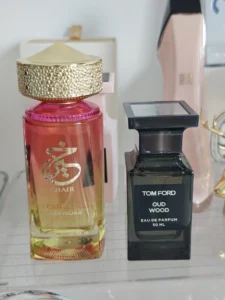
The Target: Tom Ford Oud Wood or YSL La Nuit de L’Homme.
Where to Look:
- Finding the best Tom Ford Oud Wood dupe is challenging because synthetic oud can sometimes smell like rubber if done poorly. Alt Fragrances offers a very respectable take called “Agar Gold” which captures the warm, woody essence nicely.
- Lattafa: A Middle Eastern powerhouse brand. Their fragrance Khamrah (while leaning more towards Kilian’s Angels’ Share) is an absolute masterpiece of dates, cinnamon, and vanilla for romantic winter evenings, and it is shockingly affordable in the US.
- Imixx: We pride ourselves on our date-night collection, meticulously balancing the warm spices with smooth, creamy sandalwood accords that develop beautifully as your body heat rises throughout the evening.
3. The Powerhouse / Signature Statement (Bold, Confident, Niche)
The Vibe: The scent you wear to a wedding, a major event, or a night out in the city. You want a scent trail (sillage) that turns heads and commands respect.
The Notes: Pineapple, Birch Tar, Saffron, Ambergris, heavy woods.
The Target: Creed Aventus or Maison Francis Kurkdjian Baccarat Rouge 540.
Where to Look:
- The Aventus DNA: This is the most cloned fragrance in history. If you are asking, “What is the best clone for Creed Aventus?”, the community favorite for years has been Armaf Club de Nuit Intense Man (CDNIM). The opening is notoriously harsh and lemony, but the dry-down is legendary. For a smoother, fruitier opening from spray number one, Imixx offers an alternative that carefully manages the pineapple/smoke ratio using higher quality top-note naturals.
- The BR540 DNA: Finding a Baccarat Rouge 540 dupe for men (yes, men wear this stunning saffron/burnt sugar masterpiece flawlessly) leads many to Zara. Zara’s Red Temptation is a massive hit. However, its longevity can sometimes fall short. For an all-day, room-filling aura, look for Extrait-level dupes from dedicated clone houses.
4. The Gym & Active Weekend (Light, Sporty, Invigorating)
The Vibe: A quick spray after a shower at the gym, or for running errands on a Saturday morning in jeans and a t-shirt. Must mix well with light sweat.
The Notes: Grapefruit, Mint, Ginger, Sea Salt.
The Target: Dior Homme Sport or Dolce & Gabbana Light Blue.
Where to Look:
- Zara: This is where Zara shines. Their vibrant, citrus-heavy daytime colognes (often formulated by master perfumers like Jo Malone for their collaborative lines) are fantastic. They may only last 3-4 hours, but for a gym session, that is exactly all you need.
Part 5: How to Make Your Cologne Dupes Last Longer
A common complaint—even with $300 luxury fragrances—is that the scent disappears too quickly. While it is true that cheap, water-heavy knockoffs have poor performance, if you are buying high-quality long-lasting cologne dupes, the issue often lies with your application technique and your skin chemistry. Here are expert tips to maximize longevity:
- Hydration is Key: Fragrance oils need moisture to cling to. If you have dry skin, your body will literally drink the carrier oils, causing the scent to vanish into thin air. The number one trick to making cologne last is applying an unscented body lotion (like CeraVe or Cetaphil) immediately after your shower. Let it absorb, then spray your fragrance on top.
- Target the Pulse Points: Spray on areas where your veins are closest to the skin’s surface—your wrists, the sides of your neck, and the inner elbows. The heat generated by your blood flow acts as a natural diffuser, pushing the scent out into the air.
- Stop Rubbing Your Wrists! When you spray your wrists and aggressively rub them together, the friction creates heat that literally crushes the delicate molecular structure of the top notes (the bright citruses and florals). This ruins the opening of the fragrance. Spray, and let it air dry naturally.
- The Clothing Strategy: If your skin naturally “eats” fragrances quickly, spray 2-3 times directly onto your clothing (aim for the collar or chest). Fabric fibers trap the fragrance molecules, preventing them from heating up and evaporating. A good clone on a cotton shirt can easily last for 24 hours. (Caution: test on a hidden area first, as highly concentrated oils can sometimes stain light-colored silk or linen).
Part 6: Ethical Consumption and the Future of Fragrance in the USA
Beyond saving money, there is an ethical component to the rise of alternative fragrance brands. The traditional luxury beauty industry has a massive carbon footprint. Heavy, custom glass bottles require significant energy to manufacture and ship globally. The extravagant cardboard packaging, wrapped in layers of cellophane, often ends up straight in the landfill.
Many independent alternative houses—including our philosophy at Imixx—lean towards minimalism. By utilizing standardized, recyclable glass bottles and stripping away the excessive packaging, the focus remains entirely on the art of the liquid inside. This streamlined, direct-to-consumer model is not just economically efficient; it is a more sustainable way to enjoy fine perfumery. You are voting with your wallet for transparency, substance over style, and fair pricing.
Part 7: The Ultimate Fragrance FAQ (People Also Ask)
To ensure you have all the information you need, we have compiled the most frequently asked questions regarding the world of fragrance alternatives, drawing upon community knowledge from sites like Fragrantica and general industry consensus.
Q: What is the exact difference between a clone, a dupe, and a fake?
A: A fake (counterfeit) is illegal; it steals the name, logo, and bottle design of a brand to trick you, and is completely unregulated for safety. A clone or dupe is a completely legal, safety-regulated product that explicitly states it is “inspired by” another scent. It uses its own branding and bottles. The goal of a dupe is to democratize the scent profile, not to deceive the consumer regarding the brand.
Q: Are cologne dupes worth buying for a beginner?
A: Absolutely. They are arguably the best starting point. Instead of spending $300 on one designer fragrance that you might end up disliking after a month, you can spend that same $300 to buy 6 to 8 different high-quality dupes. This allows you to explore different fragrance families (Woods, Aquatics, Gourmands, Florals) and discover what works best with your unique skin chemistry and personal style.
Q: Do cheap cologne dupes smell exactly like the original?
A: The word “exactly” is subjective in perfumery. Because natural ingredients vary by crop year (a lavender harvest in 2023 will smell slightly different than 2024), even original designer fragrances experience “batch variations.” However, using modern GC-MS analysis, top-tier alternative houses can achieve a scent accuracy that is virtually indistinguishable to the everyday nose in the air. Only a trained master perfumer smelling them side-by-side on paper test strips might detect a 2% to 5% variance in the deep dry-down.
Q: How long do clone colognes last on the skin compared to originals?
A: Performance is not dictated by the brand name, but by the fragrance concentration (amount of raw oil vs. alcohol) and the specific ingredients used. Citrus notes naturally fade fast, while Oud and Vanilla last long. Many premium dupe brands actually formulate at higher concentrations (Extrait de Parfum, around 20-30% oil) than the designer originals (often Eau de Toilette, around 10-15% oil), meaning the dupe can sometimes outlast the original.
Q: What is the closest dupe to Bleu de Chanel?
A: Bleu de Chanel is famous for its Grapefruit, Ginger, and Incense/Woody base. While Armaf’s Club de Nuit Iconic is heavily praised in the community for capturing this DNA, many direct-to-consumer houses offer excellent, highly concentrated “Blue” inspired fragrances that capture the professional, shower-fresh essence perfectly.
Q: Is it okay to wear a “winter” fragrance in the summer?
A: There are no hard rules in perfumery, but wearing a heavy, sweet, spicy fragrance (like a Tom Ford Tobacco Vanille dupe) in 90-degree US summer heat can become cloying and overwhelming for you and those around you. Heat amplifies fragrance projection. Reserve your heavy scents for the evening or winter, and stick to fresh, citrus, or aquatic dupes during the hot summer days.
Q: What are the best Middle Eastern fragrance clones?
A: The Middle East has a rich history of perfumery. Brands like Lattafa, Armaf, Afnan, and Al Haramain have taken the US market by storm. They are known for incredible presentation and beast-mode performance (extreme longevity). They excel particularly in heavy, oud, leather, and sweet gourmand profiles.
Q: Will wearing a dupe make me smell “cheap”?
A: If you buy a $5 body spray from a gas station, yes. But if you purchase from a dedicated, science-backed alternative fragrance house that uses high-quality raw aromachemicals and properly macerates their products, you will smell indistinguishable from someone wearing a luxury niche brand. Scent is invisible; people judge the aroma, not the bottle you left at home on your dresser.
Conclusion: Smell Smarter, Not Harder
The aura of mystique surrounding luxury perfumes has been lifted. By understanding the chemistry of scent, the realities of the retail supply chain, and the art of building a situational fragrance wardrobe, you have graduated from a passive buyer to an informed connoisseur.
Whether you choose the vibrant, affordable freshness of a Zara summer scent, the legendary performance of an Armaf clubbing powerhouse, the clean aesthetic of Dossier, or the mastercrafted, highly concentrated extraits we develop at Imixx, the power is now in your hands. You no longer have to gatekeep your personal grooming routine behind a $300 paywall.
Start small. Identify the gaps in your current lineup—do you need a professional office scent or a cozy date night aura? Read the notes, trust the science, and begin building a fragrance wardrobe that elevates your daily life, reflects your personality, and respects your budget.
Disclaimer: Mention of third-party brands (like Zara, Dossier, Armaf, Chanel, Creed, etc.) are for educational, comparative, and review purposes only. Imixx is an independent entity and is not affiliated with, endorsed by, or sponsored by these trademark holders.
