

Best Fragrance Lists, Blog
How to Find the Best Baccarat Rouge 540 Dupes in the USA: A Master Perfumer’s Guide
Jun
Transparency & Conflict of Interest Disclosure: This article is written from the perspective of an industry insider who oversees manufacturing for IMIXX Fragrances. While we believe strongly in our own formulations, the purpose of this guide is to provide objective, educational information about the fragrance industry, supply chain economics, and the chemistry of scent. We will discuss various brands and alternatives in the market fairly, allowing you, the consumer, to make an informed decision based on your budget, skin chemistry, and personal preferences.
Introduction: The Phenomenon of the “Airy” Masterpiece
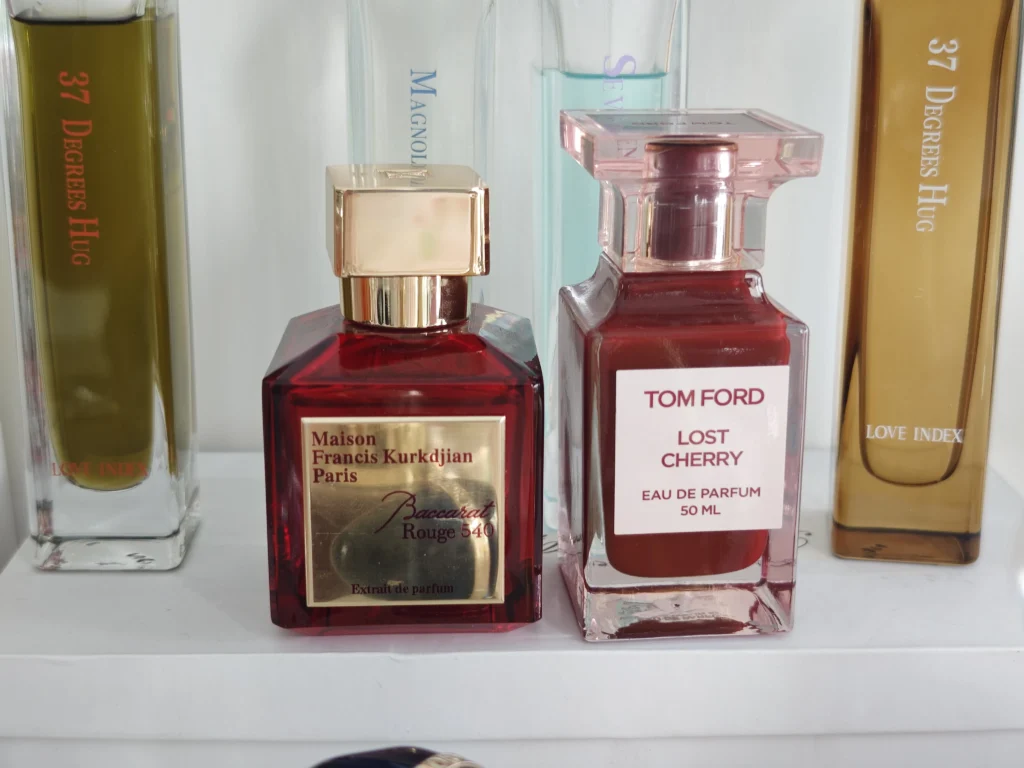
If you have walked through any major city in the USA recently—from the humid streets of Miami to the crisp avenues of New York City—you have undoubtedly smelled it. It is a mesmerizing, almost paradoxical aroma: sweet like burnt spun sugar, yet sterile like a high-end dental clinic; warm and woody, yet airy and transparent. Maison Francis Kurkdjian’s masterpiece has transcended being a mere perfume to become a cultural status symbol.
However, with a price tag starting around $325 for a standard bottle, and soaring higher for the Extrait de Parfum version, it represents a significant financial investment. Naturally, this has created an unprecedented demand for baccarat rouge 540 dupes. The internet is flooded with influencers claiming they have found the exact match for $20. But if you have ever blindly bought one of these recommendations, you know the disappointment: a harsh blast of rubbing alcohol, a sickeningly sweet dry-down that smells like cheap vanilla, or a scent that completely vanishes after an hour.
Why is it so difficult to copy a scent? As someone who has spent over a decade inside fragrance laboratories and managing global supply chains, I can tell you that the secret doesn’t just lie in the ingredients—it lies in the manufacturing process, the oil concentration, and the often-ignored step of maceration. In this comprehensive, easy-to-understand 2026 guide, we are going to pull back the curtain on the perfume industry. We will explore the chemical architecture of this famous scent, objectively review the different tiers of alternatives on the market (from Zara to Ariana Grande to niche clones), and teach you how to choose the longest-lasting alternative that perfectly suits your skin chemistry.
Part 1: The Molecular Architecture – Decoding the Magic
Before we can evaluate any alternative, we must understand what we are trying to replicate. Unlike classic vintage perfumes (like Chanel No. 5) that rely on hundreds of complex natural floral absolutes, this specific DNA is celebrated for its minimalist, highly synthetic, and brilliantly balanced formula. It is a triumph of modern aromachemistry.
When perfumers analyze a fragrance in the lab, we use a process called Gas Chromatography-Mass Spectrometry (GC-MS). This tool helps identify the specific aromatic molecules present. The magic of this DNA comes down to a “Holy Trinity” of aromachemicals.
1. The Sweetness: Ethyl Maltol
If you love the “burnt cotton candy” or “strawberry jam” aspect of the fragrance, you are smelling Ethyl Maltol. This is a synthetic organic compound commonly used as a flavor enhancer in the food industry and as a sweet note in perfumery. The genius of the original fragrance is not that it uses Ethyl Maltol (which is cheap and common), but that it uses it in an “overdose” amount without making the perfume smell like a cheap teenager’s body spray. It achieves this by aggressively balancing it with medicinal and woody notes.
2. The Transparency: Hedione (Methyl Dihydrojasmonate)
Why does the scent seem to disappear when you smell your wrist, but then suddenly fill a room when you walk in? That is Hedione. Synthesized to isolate the airy, green, luminous aspects of jasmine, Hedione acts as an olfactory amplifier. It creates sillage (the trail left behind by a perfume). Many cheap clones fail because they replace high-quality Hedione with cheaper, denser floral synthetics, resulting in a thick, cloying perfume that lacks the signature “glass-like” transparency.
3. The Anchor: Ambroxan / Woody Ambers
Ambroxan ($C_{16}H_{28}O$) is a synthetic marvel created to replace natural ambergris (a rare substance produced by sperm whales). It smells warm, slightly salty, musky, and mineral—like sun-baked skin after a swim in the ocean. Crucially, Ambroxan is a massive, heavy molecule. It acts as a fixative, anchoring the lighter, sweeter notes to your skin, ensuring the legendary 12-hour longevity. In the original, this is paired with Evernyl (an oakmoss synthetic) and cedarwood materials to create that spicy, slightly metallic, woody base.
Note on Safety: Reputable fragrance manufacturers, whether producing luxury originals or high-quality alternatives, adhere to strict guidelines set by the International Fragrance Association (IFRA) to ensure these synthetic molecules are safe for dermal contact.
Part 2: The “Dupe Spectrum” – A Fair Market Analysis
When searching for a baccarat rouge 540 clone, you must understand that not all alternatives are created equal. The market is broadly divided into three tiers. Let’s look at the options objectively.
Tier 1: The Body Mists and Drugstore Sprays
These are the most affordable and accessible options, often going viral on TikTok for younger audiences.
- What Bath and Body Works spray smells like Baccarat Rouge 540? The internet widely considers “In the Stars” to share a very similar vibe. It captures the sweet, airy, slightly woody opening perfectly.
- What Sol de Janeiro mist smells like Baccarat Rouge 540? The “Cheirosa 68” (the pink bottle) is famous for mimicking the sweet, fruity jasmine and burnt sugar DNA.
- The Verdict: While these smell fantastic for the first 15 minutes, they are formulated as body mists. They consist of 95% water/alcohol and maybe 1-3% fragrance oil. They will not last longer than an hour or two. They are great for a quick post-gym refresh, but they are not true perfume replacements.
Tier 2: The Fast Fashion and Celebrity Route
These are standard Eau de Parfums (EDP) designed for the mass market.
- Is Ariana Grande Cloud a dupe for Baccarat Rouge 540? Yes and no. “Cloud” shares the same core structure—sweetness paired with an airy, synthetic musk. However, Cloud leans heavily into whipped cream, coconut, and lavender, making it much creamier, younger, and lactonic (milky). It lacks the sharp, mature saffron note.
- What is the Zara equivalent to Baccarat Rouge 540? Zara’s “Red Temptation” is highly regarded. It pushes the metallic, medicinal saffron note to the forefront. It is an excellent budget option.
- The Verdict: These are fantastic entry-level perfumes. However, because they are produced by the millions for fast retail, they often use lower-grade woody ambers in the base. Many users complain that the dry-down of Zara’s Red Temptation can smell slightly screechy or metallic after a few hours, lacking the smooth, rich depth of the original.
Tier 3: Dedicated Fragrance Clones & Direct-to-Consumer Niche
This tier includes brands whose sole purpose is to replicate or be “inspired by” luxury fragrances, often using higher oil concentrations.
- Middle Eastern Clones: Fragrances like Armaf Club de Nuit Untold and Lattafa Ana Abiyedh Rouge are powerhouses. They are known for nuclear projection and longevity. However, they can sometimes be incredibly dense and heavy, losing that delicate “airy” quality that makes the original so special.
- Western Direct-to-Consumer Brands: Brands like Dossier (Ambery Saffron) and ALT Fragrances (ALT Crystal No. 23) offer highly accurate profiles. Does Dossier Ambery Saffron smell like Baccarat Rouge 540? Yes, it is a very close match, focusing heavily on the saffron and amberwood. Does ALT Crystal No. 23 smell exactly like Baccarat Rouge 540? It is remarkably close, though some users note it leans slightly sweeter.
- Mancera Instant Crush: Is it a clone? No. It is an independent luxury niche fragrance, but it belongs to the same “sweet/spicy/woody” family. It is much heavier on vanilla and ginger, offering a different, yet equally loud, experience.
Table 1: The Dupe Comparison Matrix
| Brand / Product Category | Average Price (USA) | Concentration | Longevity | Best Suited For |
|---|---|---|---|---|
| Body Mists (B&BW, Sol de Janeiro) | $15 – $38 | Body Mist (1-3% Oil) | Low (1-2 Hours) | Teenagers, post-workout, quick sweet refresh. |
| Mass Market (Zara, Ariana Grande) | $25 – $65 | EDP (10-15% Oil) | Medium (4-6 Hours) | Budget-conscious buyers who don’t mind reapplying. |
| Middle Eastern Houses (Armaf, Lattafa) | $40 – $70 | EDP / Extrait | Very High (10+ Hours) | Those who want “nuclear” projection and don’t mind a heavier scent profile. |
| DTC Brands (ALT, Dossier, IMIXX) | $30 – $50 | EDP / Extrait (15-30% Oil) | High (8-10 Hours) | Consumers seeking the closest scientific match to the original’s airy, long-lasting profile. |
For independent reviews and community opinions on how these fragrances compare, platforms like Fragrantica offer thousands of user experiences and note breakdowns.
Part 3: The Supply Chain Truth – Why Is Baccarat Rouge 540 So Expensive?
A question I am frequently asked is: “How can a $40 perfume smell exactly like a $325 perfume? Are the ingredients in the expensive one just better?”
The honest, insider answer is: not exactly. While true luxury houses use exceptionally high-grade synthetics and naturals, the cost of the liquid inside the bottle (the “juice”) rarely exceeds 5% to 10% of the final retail price. The fragrance industry is an industry of emotion, marketing, and distribution. To understand why you can find an affordable amberwood saffron perfume dupe of high quality, you need to understand supply chain economics.
The Traditional Luxury Retail Markup Model
- The Lab & Sourcing: The perfume oil is compounded at major fragrance houses (like Givaudan or Firmenich).
- The Brand: The luxury brand pays for the oil, but then spends millions on custom, heavy-weighted glass bottles, 24k gold-plated caps, and intricate packaging.
- Marketing & Prestige: Tens of millions of dollars are spent on global ad campaigns, celebrity ambassadors, and maintaining boutiques in high-rent districts (like 5th Avenue in NYC).
- The Distributors: The perfume is sold to regional distributors who take a 30-50% cut.
- The Retailer: The department store (Nordstrom, Neiman Marcus) takes another 40-50% cut just to place the bottle on their shelves.
When you buy a $325 bottle, you are paying for the glass, the marketing, and the department store’s real estate. Direct-to-Consumer (DTC) brands skip steps 3, 4, and 5. By utilizing standardized bottles and selling directly online, they can invest purely in the high-grade perfume oils and sell it to you for $40.
Table 2: Estimated Industry Cost Breakdown
| Cost Category | Traditional Luxury Retail Model ($325) | Direct-from-Factory DTC Model ($45) |
|---|---|---|
| Fragrance Concentrate (The Oil) | $5.00 – $12.00 (Premium Ingredients) | $5.00 – $12.00 (Identical Quality Sourcing) |
| Bottle, Cap & Packaging | $10.00 – $30.00 (Custom tooling) | $3.00 – $6.00 (Standardized, elegant glass) |
| Marketing & Advertising | $40.00 – $80.00+ per bottle | $2.00 – $5.00 (Digital SEO, Word of mouth) |
| Retail Markup & Middlemen | $150.00 – $200.00+ | $0.00 (Direct to Consumer) |
*These figures are illustrative estimates based on standard cosmetic and fragrance supply chain industry averages, intended to demonstrate the economic model rather than expose proprietary brand data.
Part 4: The Factory Secret – Why Maceration is Everything
If the ingredients are essentially the same, why do some cheap dupes still smell like nail polish remover for the first five minutes? The answer is a critical manufacturing step called Maceration.
Think of perfume like a fine wine, a barrel-aged whiskey, or even a slow-cooked stew. When you first mix the pure fragrance oils with the carrier alcohol (usually SDA 40B denatured ethanol), the mixture is harsh and unsettled. The molecules have not yet bonded.
In traditional luxury perfumery, large vats of the mixed perfume are left to sit in a dark, temperature-controlled environment for 4 to 8 weeks. During this maceration period, the sharp edge of the alcohol evaporates or integrates, and complex chemical reactions (like the formation of Schiff bases) occur, rounding out the scent profile.
Fast-fashion brands and rapid-production factories cannot afford to have inventory sitting in vats for two months. They mix the liquid and immediately bottle it to meet the massive demand. That is the true cause of the “synthetic alcohol burn” consumers complain about.
The Pro Tip: If you buy an affordable alternative and it smells slightly “off” or weak upon arrival, don’t throw it away! Spray it 5-10 times to introduce oxygen into the bottle, put it in a dark, cool closet, and leave it alone for a month. You are essentially doing the maceration process at home. You will be shocked at how much smoother, richer, and longer-lasting it becomes.
Part 5: Navigating Skin Chemistry and USA Climates
One of the most fascinating aspects of this specific scent DNA is how wildly it varies depending on who is wearing it and where they live. The USA features diverse climates, and fragrance molecules react differently to heat, humidity, and skin types. For a deeper scientific understanding of how topicals react to the skin barrier, the Society of Cosmetic Chemists offers excellent resources.
Climate Considerations
- High Humidity (Florida, Louisiana, Texas): Moisture in the air acts as a conductor for fragrance. In humid heat, the sweet Ethyl Maltol notes will project massively. In these climates, you need fewer sprays (1-2 max), or the scent can become cloying and overwhelming.
- Dry Heat / Cold Winters (Arizona, Nevada, New York in January): Cold air and low humidity suppress fragrance projection. Furthermore, dry skin literally “drinks” the perfume oils, causing the scent to vanish quickly. In these environments, you may notice the woody, saffron, and metallic notes far more than the sweetness.
How to Make Your Fragrance Last Longer (The Layering Method)
If you have dry skin, you must create a barrier. Perfume oil needs something to cling to.
- Immediately after showering, apply an unscented, ceramide-rich body lotion or a neutral body oil (like jojoba oil) to your pulse points.
- Spray the perfume over the moisturized areas. The fragrance molecules will lock into the oils on your skin rather than evaporating into the dry air.
- For a unique twist: Because this DNA is so airy, it layers beautifully. Try layering it over a pure vanilla lotion to pull out the gourmand sweetness, or layer it over a sandalwood oil to emphasize the rich, woody base.
Part 6: How IMIXX Approaches the Formulation
As mentioned in the transparency disclosure, I am intimately familiar with the formulation of IMIXX No. 19. When we set out to create our version of this iconic scent profile, we evaluated the entire “dupe spectrum” listed above to figure out where the gaps were.
Our goal was to bypass the fast-fashion pitfalls while maintaining direct-to-consumer affordability. We focus on three core pillars:
- High Oil Concentration: We formulate at Extrait/High-EDP levels (typically 20%+ oil concentration) to ensure that the heavy Ambroxan and cedarwood base notes provide genuine 8-12 hour longevity, moving past the limitations of body mists.
- Mandatory Maceration: Our supply chain protocol dictates that the blended juice must sit in controlled vats for a minimum of 4 to 6 weeks. We refuse to rush the bottling process, which effectively eliminates the harsh, synthetic alcohol opening.
- Premium Sourcing: We source high-purity aromachemicals that mimic the true airy transparency of the original Hedione, rather than relying on heavy, cloudy floral substitutes.
We encourage consumers to explore the market. Try Zara for a budget thrill, try the body mists for a gym bag refresh. But if you are looking for an optimized, scientifically structured, and long-lasting olfactory twin that respects the traditional perfume aging process, we invite you to experience the IMIXX brand difference.
Part 7: Frequently Asked Questions (FAQ)
Here are detailed answers to the most common questions consumers ask when searching for the perfect alternative.
1. What is the longest-lasting Baccarat Rouge 540 dupe?
Longevity is strictly tied to oil concentration and the use of heavy base fixatives like Ambroxan. Middle Eastern clones like Armaf Club de Nuit Untold are notorious for their massive, room-filling longevity (often 12+ hours). Similarly, high-concentration Extrait formulations from specialized DTC brands like IMIXX No. 19 are designed specifically to anchor the scent to the skin for the entire day, outperforming standard drugstore EDTs or body mists.
2. Does Zara have a Baccarat Rouge 540 dupe?
Yes, Zara’s “Red Temptation” is widely acknowledged as their take on this DNA. It is a fantastic, affordable option that highlights the saffron and woody notes. However, because it is mass-produced at a lower price point, some users find the dry-down to be slightly sharper and more synthetic compared to the smooth ambergris feel of the original or higher-tier alternatives.
3. Why do I stop smelling the perfume on myself after an hour?
This is a phenomenon known as Olfactory Fatigue or “nose blindness.” Because this specific fragrance profile relies heavily on large molecules like Ambroxan, your olfactory receptors can quickly become overwhelmed and simply “shut off” to the scent. You might think the perfume has faded, but people around you can still smell it strongly. To prevent this, avoid spraying the front of your neck or chest. Spray your wrists, the back of your neck, or behind your knees so the scent wafts up to you gently.
4. Are there any cheap alternatives to Baccarat Rouge 540 that don’t smell synthetic?
To avoid a synthetic smell, you must look for brands that allow their perfumes to macerate. While you won’t find perfectly smooth, macerated perfumes in the $15 body mist aisle, the $30-$50 DTC tier (like Dossier, ALT, or IMIXX) offers formulations that have been properly aged to remove the harsh alcohol blast, providing a much smoother, more natural-smelling opening.
5. Is Mancera Instant Crush a Baccarat Rouge 540 clone?
No, it is not a direct clone. Mancera’s Instant Crush was undoubtedly inspired by the trend of sweet, transparent, woody fragrances, but it takes a different path. It is much heavier, featuring prominent notes of vanilla, ginger, and rose. It is less airy and more dense, making it a great alternative for those who like the *vibe* of the original but want something spicier and more profound.
6. How can I buy Baccarat Rouge 540 for cheaper?
If you absolutely must have the original Maison Francis Kurkdjian bottle, do not buy from unauthorized discount sites that seem “too good to be true” (e.g., $100 for a new bottle), as the market is flooded with counterfeits. To save money, consider buying directly from the official European website, purchasing the smaller travel-size vials, or buying authorized decants from reputable niche perfume sampling websites.
7. What Sol de Janeiro mist smells like Baccarat Rouge 540?
Sol de Janeiro’s Brazilian Crush Cheirosa ’68 Beija Flor™ Perfume Mist is widely considered to have a very similar scent profile. It leans heavily into the sweet, fruity jasmine and dragonfruit aspects. However, remember that it is a hair and body mist, so it lacks the deep woody base and longevity of a true perfume.
Glossary of Fragrance Terms for Beginners
To help you navigate the perfume world like a pro, here are a few essential terms:
- Sillage (pronounced see-yazh): The invisible trail of scent left behind by a person wearing perfume. The original BR540 is famous for its massive, yet transparent, sillage.
- Projection: How far the scent pushes out from your body into the air around you.
- Dry-down: The final phase of a perfume’s life on your skin, typically occurring hours after application, revealing the heavier base notes (like woods, musks, and vanilla).
- EDT vs. EDP: Eau de Toilette (EDT) generally contains 5-15% perfume oil, making it lighter and fresher. Eau de Parfum (EDP) contains 15-20%+ oil, making it richer, deeper, and longer-lasting.
- Pulse Points: Areas of the body where blood vessels are closest to the skin (wrists, inner elbows, neck). The heat from these areas helps to project the fragrance into the air.
Final Thoughts
The quest for the perfect fragrance is a deeply personal journey. Whether you choose a fun, fleeting body mist from the drugstore, a mass-market fast-fashion bottle, a beast-mode Middle Eastern clone, or a scientifically crafted DTC formulation like IMIXX No. 19, the most important thing is that the scent makes you feel confident.
By understanding the chemistry of the ingredients, the reality of supply chain economics, and the importance of skin chemistry and maceration, you are no longer just a consumer—you are an educated fragrance enthusiast. You now have the knowledge to look past the marketing hype and the expensive price tags to find a scent that delivers true olfactory luxury and longevity.
