

Best Fragrance Lists, Blog
How to Choose the Best Copy of Creed Aventus Dupe in 2026 (And Stop Overpaying for Fragrances)
May
Executive Summary: The State of the US Market in 2026
In the United States, finding a reliable copy of Creed Aventus is no longer just about hunting for a cheap knockoff at a mall kiosk. Today’s consumers are highly educated; they demand extreme longevity, skin safety, and a scent profile that accurately mirrors the legendary $400+ original. This comprehensive guide, written for everyday fragrance lovers rather than lab technicians, unpacks the real economic and chemical reasons behind luxury perfume costs.
We will explore how international safety regulations (like IFRA amendments) permanently altered the original formula, why different production “batches” smell completely different, and how to spot a genuinely high-quality alternative using three simple rules. Crucially, transparency is our core value. We will provide an honest, unbiased review of the top 5 alternatives on the market right now—including industry heavyweights like Armaf and Montblanc, complete with links to independent retailers—highlighting their true strengths and flaws. Finally, we will share how we at iMiXX NO.35 engineered our own solution to bridge the gap between affordable pricing, Extrait-level longevity, and premium ingredient quality.
The Evolution of a Legend: Why Does Everyone Want This Specific Scent?
If you have walked through downtown Manhattan, an upscale restaurant in Chicago, or a corporate office in Dallas, chances are you have encountered it. It is confident, fresh, slightly smoky, and undeniably masculine. Released originally in 2010, this specific DNA did something virtually unprecedented: it revolutionized the men’s fragrance industry by single-handedly popularizing the “fruity-chypre” category.
Before its release, men’s colognes in the USA were generally divided into two predictable camps: ultra-fresh aquatic scents (think of the cool, sea-breeze scents of the 90s) or heavy, spicy, older-gentleman woods. This legendary fragrance took the bright, mouth-watering juiciness of pineapple and apple, and slammed it directly into dark, smoky birch wood and earthy moss. It became the scent of modern success, quickly rising to become the best-selling niche fragrance in history.
But over the past decade, the landscape has shifted dramatically. What was once a consistent, room-filling powerhouse has become a point of immense frustration for many buyers. Retail prices in the USA have soared well past the $400 mark for a 100ml bottle, while long-time collectors and everyday users alike complain that the modern formulations simply do not last as long as they used to. This exact frustration is what birthed a massive sub-industry of “clones,” “dupes,” and “inspirations.” But how do you separate a masterfully crafted alternative from a cheap, chemical mess?
The Science of Scent: Deconstructing the Notes (In Plain English)
To judge any alternative fairly, you first need to understand how the original architecture is built. Perfume is not magic; it is organic chemistry combined with artistic balancing. Fragrances are built in an evaporation pyramid: Top notes (highly volatile, what you smell immediately), Heart notes (the core theme, emerging after 30 minutes), and Base notes (heavy molecules that linger on your skin at the end of the day).
The Bright Opening (The Top Notes)
When you first spray this DNA, you should be hit with a blast of vibrant, natural-smelling energy. The core components here are:
- Bergamot: Think of this as a much more complex, slightly floral, and spicy lemon. The highest quality bergamot essential oil comes from sunny orchards in Calabria, Italy. It gives the fragrance its sharp, clean introduction.
- The Famous Pineapple: Here is an open industry secret confirmed by resources like Perfumer & Flavorist: there is no such thing as natural pineapple essential oil in modern perfumery. The natural fruit simply doesn’t yield a stable oil that smells good. That iconic pineapple smell is actually a brilliant combination of safe, lab-made aromachemicals (most notably Allyl Amyl Glycolate). A bad dupe uses cheap, unrefined synthetics that smell like a metallic tin can or a cheap air freshener. A great dupe uses highly purified molecules that smell like freshly sliced fruit.
- Blackcurrant & Apple: These notes add a tart, slightly sour edge that perfectly balances the sweetness, preventing the pineapple from smelling like a sticky dessert.
The Heart and The Smoky Base (The Mid & Base Notes)
Once the citrus and fruit evaporate, the true character of the fragrance emerges. This transition is where many cheap alternatives completely fall apart, turning into a powdery or sour mess.
- Birch Tar (The Smoke): In vintage batches from a decade ago, real birch tar was used to give the scent a campfire-like, leathery smokiness. However, modern skin-safety regulations have heavily restricted crude birch tar. Today, responsible perfumers must use highly refined (rectified) versions or clever alternative blends to safely mimic that iconic smoke.
- Oakmoss: This provides an earthy, damp-forest-floor aroma that anchors the fragrance and gives it a masculine edge.
- Ambroxan: This is the absolute engine of the fragrance. Ambroxan is a modern scientific marvel—a lab-created, sustainable version of ambergris. While it doesn’t have a massively strong smell on its own (often described as warm, salty skin or clean paper), it acts as a powerful fixative. It acts like a megaphone for the other lighter ingredients. It is what makes the fragrance project across a room and last for hours on your clothing.
The “Smoke” Dilemma and the Batch Code Obsession
If you dive into fragrance enthusiast communities like Basenotes or Reddit’s r/Colognes, you will immediately see people obsessing over “batch codes” (such as 11Z01 or 15Y11). Collectors will literally pay thousands of dollars on the secondary market for older bottles. But why is this necessary for a $400 product?
Why Do Batches Smell So Different?
Traditional luxury houses historically relied heavily on raw natural crop harvests. Think of it like the wine industry: grapes grown in a rainy season will yield a different tasting wine than grapes grown in a dry season. Similarly, vanilla, patchouli, or bergamot will change their olfactory profile year over year based on soil and global weather conditions.
Furthermore, and most importantly, the International Fragrance Association (IFRA)—the global regulatory body that ensures cosmetic products are safe and won’t cause allergic reactions—routinely updates its rules. In previous amendments, IFRA heavily restricted the use of certain Oakmoss extracts (specifically banning the molecule atranol) and crude Birch Tar due to potential skin sensitization. The original brand, like all compliant houses, had to reformulate their scent to adhere to these safety laws.
The Result: Older batches from 2010-2015 were notoriously dark, ashy, and smoky. Modern batches from 2020 onwards are much brighter, fruitier, heavily reliant on clean musks, and—according to widespread polling data on platforms like Parfumo—they do not last nearly as long.
Table 1: The Evolution of the Original DNA (Based on Consumer Consensus)
| Era / Timeframe | Dominant Characteristics | Average Consumer-Reported Longevity |
|---|---|---|
| The Vintage Era (2010 – 2013) | Heavy campfire smoke, deep birch tar, balanced with tart apple. | 10 to 14+ hours. True “beast mode.” |
| The Balanced Years (2014 – 2016) | Slight reduction in smoke, perfect harmony of juicy pineapple and smooth woods. | 8 to 10 hours. Widely considered the “Golden Era.” |
| The Fruity Shift (2017 – 2019) | Smoke is heavily reduced due to new regulations. Very bright, mass-appealing pineapple focus. | 6 to 8 hours. |
| The Modern Era (2020 – Present) | High reliance on clean musks and Ambroxan. Very little smoke. Sharp citrus opening. | 4 to 6 hours. Many consumers report olfactory fatigue quickly. |
This massive inconsistency is exactly why the high-end dupe market exploded. A modern, D2C lab doesn’t have to rely on unpredictable natural crops for their core structural base. By using advanced GC-MS (Gas Chromatography-Mass Spectrometry)—which is essentially a high-tech camera that photographs the exact molecular recipe of a smell—independent chemists can identify the precise formula of the legendary 2015 “balanced” batch and lock it in. You get perfect consistency, every single time you order, without playing the batch-code lottery.
Deconstructing the $400 Price Tag: A Supply Chain Expose
As someone who manages supply chains and evaluates cosmetic manufacturing costs, one of the most common questions I receive from skeptical consumers is: “How can a $40 perfume clone possibly smell just as good as a $400 luxury perfume? Isn’t the expensive one using vastly superior ingredients?”
The short answer is: Not necessarily. The long answer requires a sobering look at traditional luxury retail economics. According to standard cosmetic industry analyses (frequently discussed in business publications like Forbes and cosmetic chemistry journals), the markup on luxury beauty products is historically astronomical, often exceeding 80-90% gross margins.
When you purchase a luxury fragrance at a high-end department store in the US, you are funding an entire ecosystem of middlemen and marketing overhead. Let’s break down the estimated real-world costs of a hypothetical $400 bottle:
- The Juice (The actual liquid): Even when utilizing premium grade natural isolates and patented, high-end synthetics from massive suppliers like Givaudan or Firmenich, the actual liquid inside the bottle rarely costs more than $10 to $20 to produce at mass scale.
- The Packaging: Heavy, custom-molded glass imported from Europe, heavy metal caps, hand-applied labels, and velvet-lined presentation boxes often cost more than the perfume itself (easily $15-$30 per unit).
- The Marketing & Heritage: Think of the global billboards in Times Square, multi-million dollar celebrity ambassadors, and glossy magazine spreads. This massive embedded cost is passed directly to you.
- The Retail Markup: This is the most punishing factor for the consumer. A standard brick-and-mortar department store takes a massive cut (often 50% to 60% of the retail price just for shelf space). The regional distributor takes a cut. The brand itself takes the rest.
Table 2: Traditional Luxury vs. Direct-to-Consumer (D2C) Cost Models
| Cost Category | Traditional Luxury Model (Est. $400 Retail) | Direct-to-Consumer Lab Model (Est. $45 Retail) |
|---|---|---|
| Actual Fragrance Liquid | Variable cost ($15 – $20). Often Eau de Parfum (15-20% oil). | Identical high-grade molecules ($12 – $15). Often Extrait (30% oil). |
| Packaging & Bottling | Extravagant, heavy glass, ornate custom caps ($25) | Minimalist, highly functional, clean glass, secure sprayers ($5) |
| Marketing Budget | Massive (Celebrities, Global Ads) ($100+ embedded cost per bottle) | Low (Organic SEO, community reviews, word of mouth) ($5 embedded) |
| Middlemen Markups | Retailers (e.g., Macy’s, Neiman Marcus), Regional Distributors | None. Shipped direct: Factory → Lab → Your Doorstep. |
This economic reality is the secret superpower of the modern clone industry. By stripping away the heavy glass, firing the celebrity spokesperson, and refusing to surrender 50% margins to retail stores, D2C brands can take that exact same $15 worth of high-quality liquid, bottle it efficiently, and sell it directly to you for $45. You aren’t paying for less quality; you are simply refusing to pay the bloated luxury tax.
How to Spot a High-Quality Clone (The 3 Golden Rules)
Now that you understand why these alternatives can be affordable, you need to know how to avoid the bad ones. The internet is heavily saturated with “gas station” quality knockoffs that smell like harsh rubbing alcohol and vanish in an hour. When evaluating any brand, look for these three non-negotiable indicators of quality:
1. Look for Extrait de Parfum or High Oil Concentration
Perfumes are categorized strictly by how much pure fragrance oil is mixed with the carrier (perfumer’s alcohol). This ratio dictates the evaporation curve and overall longevity.
- Eau de Toilette (EDT): Usually 8-12% oil. Evaporates quickly, often lasting only 3-4 hours. Many cheap clones utilize this to save money.
- Eau de Parfum (EDP): Usually 15-20% oil. The industry standard, offering good projection and a lifespan of roughly 6-8 hours.
- Extrait de Parfum: 25-35% oil. This is the gold standard. Because there is less alcohol, it projects smoother and sits closer to your skin, but it lasts practically all day (10+ hours). If a clone brand proudly states they use a 30% concentration, it is a very strong indicator of quality.
2. The Maceration Process (Aging the Perfume)
This is the most critical manufacturing step that cheap factories completely skip. When you mix raw perfume oil with alcohol, it needs time to rest and bind chemically. Think of it like making a rich stew or aging a fine wine. If you bottle and ship it immediately, the alcohol is harsh, and the individual notes feel disjointed and sharp. The process of letting it sit in a climate-controlled stainless steel vat for 4 to 8 weeks is called maceration. This smooths out the rough edges and makes the scent rich, deep, and cohesive. If a dupe smells harsh and chemically for the first 20 minutes on your skin, the manufacturer skipped maceration to save time and money.
3. IFRA Compliance and Transparency
You are spraying this liquid directly onto your skin, often daily. A reputable brand will explicitly state that their formulations are compliant with global safety guidelines, such as those set by IFRA or The Fragrance Conservatory. This transparency ensures they aren’t using banned, allergy-inducing cheap fillers to cut costs.
The Top 5 Creed Aventus Alternatives Evaluated Fairly (2026 US Market)
To maintain ultimate transparency and build trust, we must acknowledge that there are many fantastic alternatives on the market today. As a fragrance developer, I respect good chemistry, regardless of who makes it. Here is an honest, unbiased look at the most popular options available to US consumers, analyzing their strengths, weaknesses, and accessibility.
1. Armaf – Club de Nuit Intense Man (CDNIM)
The Pros: Available widely on discount sites and Amazon, this is arguably the most famous and successful clone in the world. It is an absolute “beast mode” fragrance. If you want a scent that will fill a room and last 12 hours, this is it. The dry-down (the smoky birch and musk that appears after an hour) is incredibly close to the legendary vintage batches of the original.
The Cons: The opening is notoriously harsh and synthetic. For the first 30 minutes, it smells remarkably like an aggressive lemon floor cleaner. You have to endure a screechy, unrefined opening to finally get to the beautiful dry-down. It lacks the smooth, juicy refinement of higher-end dupes.
2. Montblanc – Explorer
The Pros: Created by an established, respected designer house and widely available at major US retailers like Sephora and Macy’s. Explorer is a fantastic, highly professional fragrance. It takes the rough DNA and makes it safer for the corporate office by removing the heavy smoke and focusing almost entirely on clean bergamot, vetiver, and ambroxan. It comes in a beautiful, heavy bottle.
The Cons: It is not a 1:1 clone, and it doesn’t try to be. It misses the iconic, juicy pineapple note entirely. Furthermore, because it is a standard designer Eau de Parfum tailored for mass, inoffensive appeal, the longevity is fairly average (around 5-6 hours on most skin types).
3. Afnan – Supremacy Silver
The Pros: If you personally prefer the modern, “fruity batches” (from the 2017-2019 era), Afnan nails it beautifully. They have managed to create a very smooth, very juicy apple and pineapple opening that completely avoids the harsh, chemical lemon smell of Armaf.
The Cons: It severely lacks the smoky, woody depth in the base notes. It is a very linear, bright, fruity scent that doesn’t evolve or mature much on the skin. The overall projection is moderate, making it a bit weak for evening wear.
4. Al Haramain – L’Aventure
The Pros: A very well-balanced, middle-of-the-road alternative. It sits nicely between the harsh, heavy smoke of Armaf and the pure, light fruit of Afnan. It features a slightly metallic, extremely bright citrus opening that is very refreshing in the high heat of summer.
The Cons: Like many highly affordable Middle Eastern clones, it relies heavily on synthetic white musks in the base. Many users report that these specific musks cause them to go “nose blind” (olfactory fatigue) very quickly, making them think the scent has vanished when it is actually still projecting.
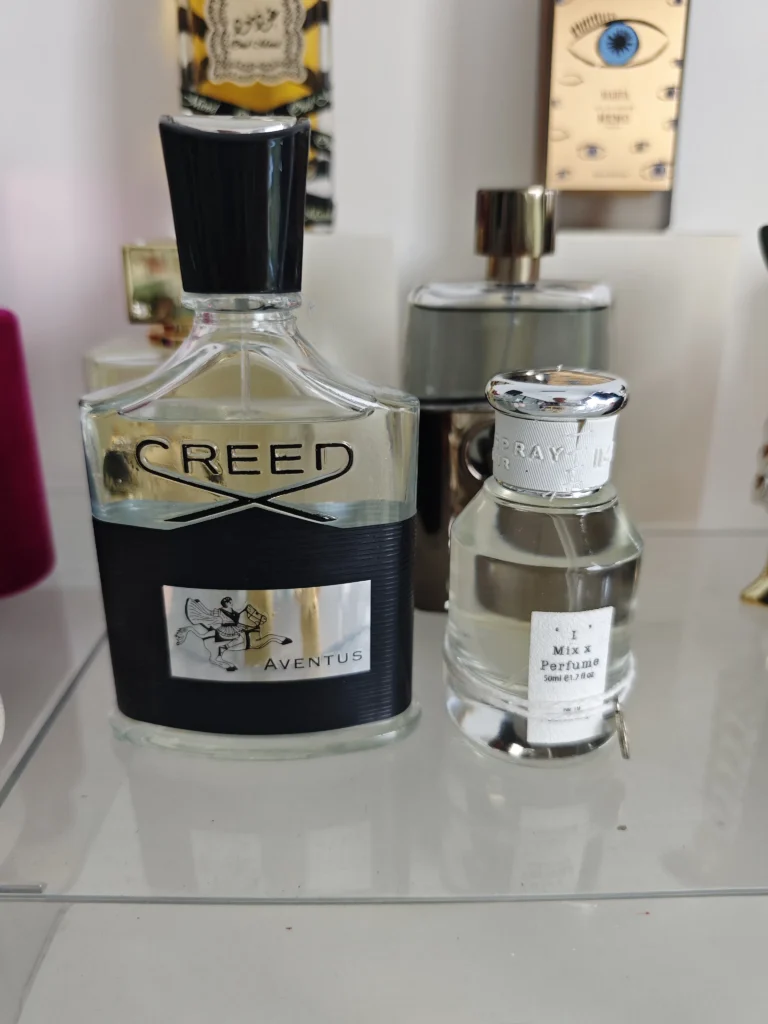
5. iMiXX – NO.35 (The Lab-Direct Extrait)
The Pros: As we developed the iMiXX NO.35, we aggressively analyzed the chemical flaws of the competitors listed above. We chose to formulate it specifically as an Extrait de Parfum (30%+ oil concentration) to mathematically guarantee 10-12 hours of longevity. Furthermore, we mandate a strict 8-week maceration period in our facility. This completely eliminates the harsh “floor cleaner” opening, delivering a remarkably smooth, hyper-realistic pineapple and birch blend from the very first second it hits your skin.
The Cons: Because we operate strictly as a Direct-to-Consumer (D2C) brand to keep prices low, you cannot walk into a local mall to test it before buying. Additionally, we utilize minimalist, highly functional lab-style bottles to cut packaging costs, meaning you will not get a heavy, ornate glass display piece for your bathroom counter.
Expert Tips: How to Apply and Store Your Fragrance for Maximum Performance
Even if you purchase the highest quality Extrait de Parfum on the market, applying or storing it incorrectly will destroy its performance. Here are some expert, lab-backed tips to get the absolute most out of your scent:
- Moisture is Everything (Skin Chemistry): Perfume oil evaporates incredibly fast on dry skin. Immediately after a warm shower, apply an unscented moisturizing lotion or a very thin dab of petroleum jelly to your neck and wrists. Spraying the perfume directly over this moisture barrier will give the fragrance oils something to bind to, locking the scent in place for hours longer than spraying on bare, dry skin.
- Target the Pulse Points, But Don’t Rub: Spray where your blood is closest to the skin—the sides of the neck (jugular), inner wrists, and inner elbows. Your body heat acts as a natural diffuser. However, never rub your wrists together. The friction creates heat that literally crushes the delicate top notes (like the bergamot and pineapple), destroying the opening of the fragrance. Just spray and let it air dry naturally.
- The “Clothing” Trick for Extreme Longevity: Individual skin chemistry varies wildly. If your skin naturally “eats” fragrances quickly, alter your routine: spray twice on your skin and once on your shirt. (Always ensure it is a dark shirt, or test an inconspicuous area first, as high-concentration 30% oils can sometimes leave temporary marks on pristine white fabric). Fabric does not heat up like skin, so it holds heavy base notes like Oakmoss and Ambroxan for days.
- Proper Storage (Avoid the Bathroom): The worst place to keep your fragrance is on your bathroom counter. The constant fluctuation of heat and humidity from your shower will rapidly degrade the delicate aromachemicals, causing the top notes to turn sour. Store your fragrances in a cool, dark place, like a bedroom drawer or a closet, away from direct sunlight.
- Beware of Olfactory Fatigue (Nose Blindness): This is incredibly crucial for this specific DNA. This scent profile uses a massive dose of Ambroxan, which is a large molecule that can temporarily overwhelm your nasal receptors. If you think your fragrance has “disappeared” after only 2 hours, ask a friend or coworker if they can still smell you. 90% of the time, the scent is still booming and leaving a massive trail, but your brain has simply tuned it out to avoid sensory overload. Do not continually over-spray thinking it has faded!
People Also Ask (Frequently Asked Questions in the USA)
We routinely gather the most frequently searched questions by American consumers looking for honest advice on navigating this specific fragrance DNA.
What is the absolute closest dupe to Creed Aventus?
The definition of “closest” depends entirely on which batch year you personally prefer. For the vintage, highly smoky batches from 2011, Armaf Club de Nuit Intense Man is very close in its late dry-down, despite its harsh opening. For the perfectly balanced 2015 fruity/smoky era, heavily macerated Extrait formulations like the iMiXX NO.35 provide the smoothest, most accurate 1:1 experience from the initial spray to the final dry-down.
Can you wear Aventus clones in professional office settings?
Absolutely. The DNA itself is famous for being incredibly versatile and universally well-liked. The crisp bergamot and apple make it fresh and clean enough for a corporate office in the morning, while the woody base makes it suitably alluring for an evening date. The key is trigger control: manage your sprays. 2-3 sprays are perfect and respectful for an indoor work environment.
Is Montblanc Explorer considered a direct clone?
While it is frequently categorized as one on forums, it is more accurately described as an “inspiration.” Explorer shares the uplifting bergamot, patchouli, and ambroxan notes, giving it a very similar overall vibe. However, it intentionally lacks the signature juicy pineapple and heavy birch smoke, making it a distinctly different, highly mass-appealing, and slightly lighter fragrance overall.
Does Zara Vibrant Leather smell like the original?
Yes, Zara’s Vibrant Leather captures the fruity, bamboo-like freshness of the opening extremely well and is incredibly affordable. However, it is notorious in the community for its remarkably poor performance. Because it is a much lighter concentration, the vast majority of users report it fading completely from their skin within 2 to 3 hours.
Do high-end clones perform as well as the original?
Ironically, yes. In many modern cases, top-tier alternatives actually significantly outperform the modern batches of the original. Due to recent reformulations and strict IFRA restrictions, the modern original currently averages around 4-6 hours of performance. High-concentration lab options engineered as 30% Extraits routinely and easily push past 10 to 12 hours on the skin.
How do I know if my perfume has been macerated properly by the manufacturer?
You can usually tell by the very first spray. If the opening smells extremely sharp, aggressively metallic, or strongly of pure rubbing alcohol that burns your nose, it was likely rushed from the compounding vat straight to the bottle. A properly macerated fragrance will smell smooth, rounded, and allow you to easily identify the individual fruit notes (like the pineapple and apple) immediately without any chemical burn.
Are cheaper fragrance oils actually safe for my skin?
It depends entirely on the ethics and transparency of the manufacturer. Always look for brands that explicitly state they follow IFRA standards. Reputable D2C brands use the exact same high-grade aromachemicals and natural isolates synthesized by major labs (like Givaudan) as the luxury houses do, ensuring they are perfectly safe for daily, prolonged use on the skin.
Conclusion: Making an Empowered, Data-Driven Choice in 2026
Navigating the complex fragrance market in the US doesn’t have to be a frustrating guessing game, nor does it require a degree in chemistry. By pulling back the curtain on traditional supply chain economics, understanding the basic architecture of scent notes, and acknowledging how global regulations have fundamentally changed classic luxury formulations, you are now fully equipped to make an incredibly smart, informed purchase.
You no longer need to spend upwards of $400 to smell like a leader, nor do you have to settle for harsh, headache-inducing mall kiosk knockoffs. Whether you choose the aggressive, room-filling projection of Armaf, the highly polished, office-safe freshness of Montblanc, or a meticulously balanced, heavily macerated lab creation, the power of choice is now firmly in your hands.
We built our consumer division at iMiXX on the fundamental belief that everyone deserves access to premium, Extrait-level perfumery without paying a massive luxury retail tax. We invite you to critically explore the iMiXX NO.35, test its performance against the established giants, and experience what truly transparent, science-driven perfumery smells like. Stay fresh, wear your chosen scent with absolute confidence, and never overpay for a beautiful aroma again.
