
Blog, Designer Dupe Reviews, Imixx Lab & Brand News
How to Find the Best “The Coveted Duchess Rose” Dupe in the USA: A Supply Chain Expert’s Guid
Apr
Introduction: The Allure of the Fox and the $350 Dilemma
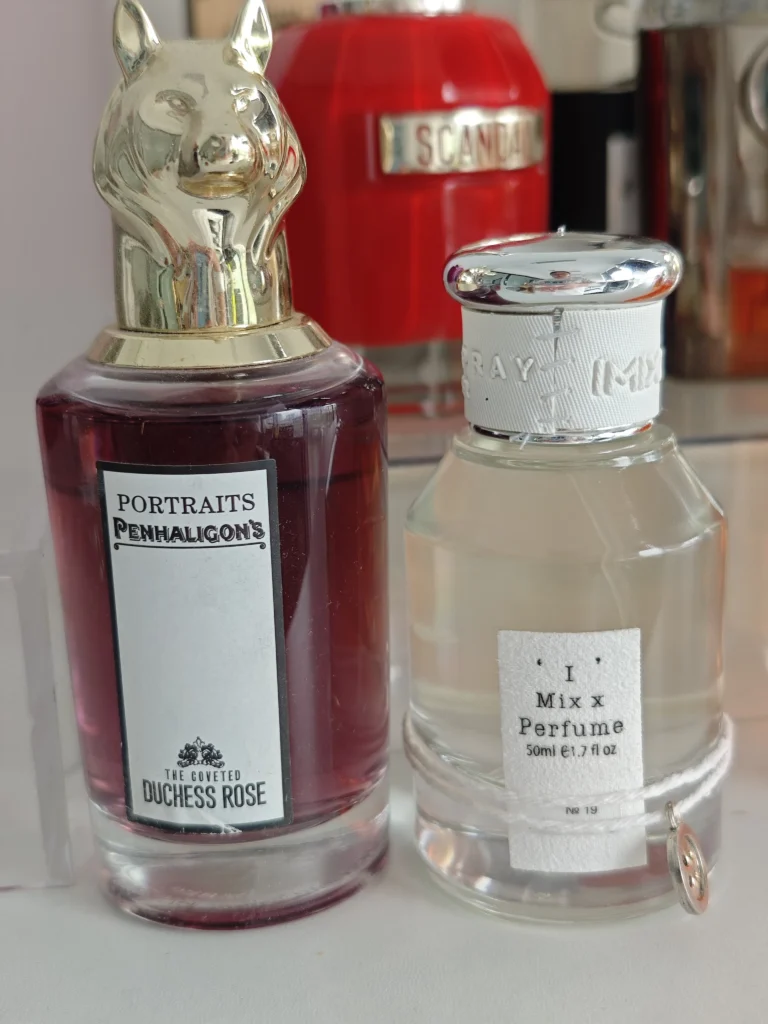
If you have walked through a high-end luxury department store like Saks Fifth Avenue or Neiman Marcus in the USA, you have undoubtedly been captivated by a specific, breathtaking bottle. It features heavy glass and a meticulously crafted, metallic fox head for a cap. This is Penhaligon’s “The Coveted Duchess Rose,” part of their famous Portraits collection. Since its release, it has dominated the luxury niche market as the quintessential modern, musky rose fragrance.
It tells a brilliant marketing story of fictional English aristocracy: a young duchess, seemingly innocent and fresh, but harboring a deeply sensual and passionate secret. The fragrance mirrors this narrative perfectly, transitioning from a bright, almost naive citrus opening into a deeply seductive musky-wood dry down.
But then, reality sets in. You flip the heavy velvet box over, and the price tag reads anywhere from $300 to over $350 for a standard 75ml (2.5 oz) bottle. For the vast majority of consumers, spending the equivalent of a monthly car payment on scented liquid is simply unfeasible.
Beyond the price, there is a second, arguably more frustrating issue. If you browse authoritative, independent fragrance review platforms like Fragrantica or read through the massive community threads on Reddit’s r/fragrance, one consistent critique emerges: Poor Longevity. Consumers universally praise the scent, but lament that it often evaporates into a faint, barely-there skin scent within three to four hours.
This $350 price point paired with fleeting performance has created an immense demand in the US for high-quality alternatives—commonly known as “dupes.” But the alternative market can feel like the Wild West. How do you separate a beautifully crafted, long-lasting homage from a cheap, chemical-smelling knockoff?
In this guide, we will step out of the marketing illusions and into the laboratory. We will break down the exact chemistry of the scent, examine the harsh economic truths of the luxury supply chain, explain the scientific process of reverse-engineering a perfume, and fairly compare the top alternatives available to you right now.
Deconstructing the Magic: The Olfactive Chemistry of a Modern Rose
To understand what makes a good alternative, we must first dissect the original. From a chemical and formulation standpoint, The Coveted Duchess Rose is a masterclass in modern, transparent perfumery. It actively avoids the heavy, powdery, “vintage” DNA that many people associate with their grandmother’s rose perfumes.
The Top Notes (The Hook): Mandarin Orange
The first 15 to 30 minutes of the fragrance are defined by a sparkling, zesty burst of Mandarin Orange. In perfumery, citrus oils (like Limonene and Linalool) are highly volatile. Their molecular weight is very low, meaning they evaporate rapidly when introduced to the heat of human skin. This opening is crucial; it gives the perfume its “innocent,” watery, and fresh character. A poor-quality dupe will often use cheap, poorly refined synthetic citruses that smell harsh, acidic, or reminiscent of household cleaning products. A high-quality formulation uses cold-pressed natural oils mixed with sophisticated synthetics to maintain a smooth, uplifting sparkle.
The Heart Notes (The Core): Centifolia Rose
As the citrus fades, the heart of the fragrance blooms. The star here is the Centifolia Rose (also known as the Rose de Mai or cabbage rose). According to educational resources from The Perfume Society, the Centifolia rose is prized for its delicate, sheer, and almost honeyed sweetness, contrasting sharply with the dark, jammy, heavy profile of the Damask rose (often used in Middle Eastern oud fragrances). Recreating this “dewy petal” effect in a lab requires an expert balance of natural rose extracts and safe aromachemicals like Citronellol and Geraniol, ensuring the floral aspect remains transparent rather than suffocating.
The Base Notes (The Anchor): Musky Woods
The dry-down is what lingers on your skin for the remainder of the day. The original utilizes a sophisticated blend of “Musky Woods.” In modern, ethical perfumery, animal-derived musks are strictly banned. Instead, perfumers rely on large, heavy synthetic molecules (such as Ambroxan, Galaxolide, or Ambrettolide) engineered to mimic the sensual warmth of human skin. These are often paired with Iso E Super, a fascinating molecule that smells vaguely of cedarwood and velvet. Because these molecules are large, they evaporate slowly, anchoring the lighter rose notes to your skin.
The ultimate challenge for any brand creating a “The Coveted Duchess Rose dupe” is balance. If the perfumer adds too much heavy musk to fix the longevity issue, they crush the delicate mandarin opening. If they use cheap rose materials, the fragrance ages by 50 years. It is a delicate scientific tightrope.
The Supply Chain Reality: Where Does Your $350 Actually Go?
A question I am asked constantly by consumers is: “Are luxury niche perfumes really worth the high price?”
To answer objectively, we have to look at the business of beauty. Major business publications like The Business of Fashion and reports by McKinsey frequently highlight the massive margins inherent in luxury cosmetics. When you purchase a fragrance at a high-end department store, the cost of the actual scented liquid (the “juice”) represents a startlingly small fraction of the retail price.
Here is an industry-standard estimate of how the cost of a $350 bottle is distributed across the supply chain.
Table 1: Estimated Economic Breakdown of a $350 Luxury Fragrance
| Cost Component | Industry Standard Estimate | Approx. Dollar Value (per $350) | Supply Chain Reality & Explanation |
|---|---|---|---|
| The Liquid / Fragrance Oil & Alcohol | 4% – 8% | $14.00 – $28.00 | Even utilizing premium natural absolutes and patented, high-grade aromachemicals, economies of scale mean the raw liquid is highly affordable for large fragrance houses. |
| Packaging (Custom Bottle, Box, Zamac Cap) | 10% – 15% | $35.00 – $52.50 | Custom glass molds, heavy Zamac (zinc-aluminum alloy) animal head caps, and velvet-lined presentation boxes cost significantly more to manufacture, assemble, and ship than the perfume itself. |
| Marketing, PR & Brand Prestige | 20% – 25% | $70.00 – $87.50 | Global ad campaigns, influencer gifting, magazine spreads, and the “prestige tax” (artificially inflating prices to maintain an aura of exclusivity). |
| Retailer & Distributor Margins | 40% – 50% | $140.00 – $175.00 | This is the heaviest burden on the consumer. Major retail stores demand massive cuts to grant a brand shelf space. Half your money goes to the store, not the perfumer. |
*Note: These percentages are industry standard estimates for luxury goods sold through traditional brick-and-mortar retail distribution channels.*
Understanding this table is incredibly empowering for the consumer. It definitively proves that a lower retail price does not inherently mean lower quality fragrance oil. If an alternative formulation house adopts a Direct-to-Consumer (DTC) model—selling online only, using elegant but standard bottles, and relying on word-of-mouth rather than million-dollar ad campaigns—they can completely eliminate the retailer margins and marketing bloat.
This means a high-quality alternative brand can spend the exact same amount on the raw fragrance juice ($15 to $30 per bottle) as the luxury house, but sell it to you for $40 or $50 instead of $350. This economic reality is the foundation of the modern “dupe” industry.
The Science of Alternative Formulation: GC-MS and Maceration
If the original formula is a heavily guarded corporate secret, how do alternative brands manage to recreate it so accurately? The answer lies in advanced analytical chemistry.
Step 1: Gas Chromatography-Mass Spectrometry (GC-MS)
In modern laboratories, chemists use a machine called a GC-MS. Think of it as a highly advanced barcode scanner for liquids. A tiny sample of the luxury perfume is injected into the machine, where it is heated and vaporized. The gas is pushed through a long microscopic column. Because different chemical molecules have varying weights and structures, they travel through the tube at different speeds. As they exit, the Mass Spectrometer identifies them.
The result is a detailed chemical blueprint. It tells the laboratory exactly how much Linalool, Citronellol, and Ambroxan is present. However, the machine has limitations. It cannot tell the chemist the *origin* of a natural ingredient (e.g., whether the rose oil came from Bulgaria or Turkey). Therefore, a Master Perfumer must step in, using their trained nose to source the correct materials to match the exact olfactive profile while ensuring all ingredients comply with the strict safety guidelines set by the International Fragrance Association (IFRA).
Step 2: Solving the Longevity Crisis via Maceration
As discussed, the original Duchess Rose is famous for fading quickly. How can an alternative brand improve upon the original’s performance without ruining the scent?
- Optimal Concentration: The original is delicate. By carefully increasing the concentration of the fragrance oils slightly (moving toward a stronger Eau de Parfum level), more scent molecules are deposited on the skin, naturally increasing wear time.
- The Secret of Maceration: This is a critical manufacturing step that separates premium alternatives from cheap mall kiosks. Maceration is the process of allowing the blended fragrance oils to sit in the perfumer’s alcohol in a dark, temperature-controlled environment for several weeks. Similar to letting a fine wine age or a stew rest overnight, this process allows the chemical bonds to soften, round out, and stabilize. Mass-produced, cheap perfumes skip this step to save time, resulting in a harsh “rubbing alcohol” smell upon the first spray. A dedicated formulation house will macerate their batches for weeks, resulting in a smooth, tenacious, and incredibly long-lasting scent.
A Fair and Objective Market Comparison: The Best “Duchess Rose” Alternatives in the USA
With an understanding of the chemistry and the supply chain, let’s evaluate the actual products available to US consumers. Because every consumer has different priorities—some want the absolute lowest price, some want extreme projection, and others want the closest scientific match—I have broken down the top options currently on the market.
1. Zara – Fashionably London (The High-Street Budget Pick)
If you search Google for “Zara equivalent of Duchess Rose,” this fragrance, created by the legendary Jo Malone for Zara’s City Collection, is the most common answer.
- The Good: Unbeatable accessibility. You can walk into almost any Zara mall location in the US and test it. It is extremely affordable (usually under $35) and genuinely captures the “vibe” of a modern musky rose.
- The Compromise: It is an “inspired-by vibe,” not a dedicated clone. The rose here is sharper, and the musk can feel a bit more synthetic and loud compared to the original. It lacks the beautifully sheer, sparkling mandarin opening of the Duchess. As a mass-market EDT/light EDP, longevity is moderate (3-5 hours).
- Best For: The casual consumer on a strict budget who wants an everyday rose scent and isn’t overly concerned with a 1:1 match to the niche original.
2. Eden Perfumes – No. 612 (The Clean/Vegan Pick)
Eden Perfumes, based in the UK but shipping globally, has made a name for itself by creating 100% vegan, cruelty-free botanical alternatives to mainstream perfumes.
- The Good: Excellent ethical transparency. If you are deeply committed to clean beauty and entirely botanical ingredients, this is your safest bet. The rose note is exceptionally natural and green.
- The Compromise: Because they restrict their use of certain modern synthetic fixatives (which are crucial for the “musky wood” base of the Duchess), the dry-down is slightly different. It feels more herbal and linear, lacking some of the skin-like sensual depth of the original.
- Best For: Consumers who prioritize vegan, botanical-heavy formulations over an exact molecular match.
3. Oakcha / Alt Fragrances (The “Beast Mode” Pick)
These two brands dominate social media advertising, promising “Extrait de Parfum” concentrations that last forever.
- The Good: Incredible projection and longevity. Because they use a very high ratio of oil to alcohol (often 25-30%), these fragrances will stick to your skin and clothes for 10+ hours. They offer exceptional value regarding performance.
- The Compromise: In perfumery, more oil does not always mean a better smell. By cranking the concentration so high, the delicate, watery transparency of the original Duchess Rose is sometimes “crushed.” The scent becomes dense and heavy, losing that airy, innocent citrus opening.
- Best For: The consumer whose skin naturally “eats” perfume and who prioritizes extreme all-day performance over delicate olfactive accuracy.
4. Dossier (The Retail Convenience Pick)
Dossier has brought the dupe market into the mainstream, with their minimalist bottles now appearing in major US retailers like Walmart.
- The Good: Phenomenal return policies, clean aesthetic, and great transparency regarding their inspiration. Their floral and musky profiles are generally very mass-appealing and safe.
- The Compromise: Due to scaling up to massive retail distribution, some community reviews note batch-to-batch inconsistencies, and their musky rose interpretations sometimes lean slightly sweeter or fruitier than the dry, woody elegance of Penhaligon’s.
- Best For: The risk-averse buyer who wants the convenience of picking up a bottle during a grocery run and values a no-questions-asked return policy.
5. Imixx – No. 39 (The Accuracy & Supply Chain Pick)
(Author Disclosure: I am affiliated with this brand. The following is based on our formulation parameters.) You can view the specific formulation details here: Imixx No. 39 Inspired by The Coveted Duchess Rose.
- The Good: Imixx was built specifically to solve the longevity issue of the original *without* destroying the scent profile. By utilizing precise GC-MS data, No. 39 captures the exact 1:1 transition from sparkling Mandarin to Centifolia Rose. Instead of blindly over-concentrating the oil, we use a balanced Eau de Parfum ratio combined with a strict multi-week maceration protocol. This ensures a smooth, alcohol-free opening and extends the wear time to a solid 6-8 hours, maintaining the elegant transparency of the niche original. Sold strictly DTC at Imixx.net to keep prices low.
- The Compromise: Because of the required maceration time, small-batch productions like No. 39 can periodically sell out. Additionally, as an online-only brand, you cannot physically test the fragrance prior to ordering.
- Best For: The true fragrance aficionado who wants the closest possible scientific match to the $350 original, values proper laboratory maceration for better longevity, and is comfortable ordering online.
Expert Application Tips: How to Make Your Musky Rose Perfume Last All Day
Even if you purchase the most meticulously macerated Eau de Parfum, your personal application routine dictates how the fragrance performs. Here are supply-chain and chemistry-backed tips to maximize your scent trail (sillage) and longevity:
- The Ceramide/Hydration Anchor: Fragrance molecules evaporate at lightning speed on dry skin. Think of dry skin as a porous sponge that absorbs the fragrance oils, leaving nothing to project outward. Immediately after showering, apply an unscented body lotion rich in ceramides, or a neutral carrier oil like jojoba. Let it sink in for two minutes, then spray. The lipids in the lotion trap the scent molecules, physically slowing their evaporation rate.
- Stop the Friction (No Rubbing!): We have all seen people spray their wrists and vigorously rub them together. From a chemical standpoint, this is a disaster. The friction generates heat, which literally “crushes” and burns off the delicate top notes (the expensive Mandarin orange). Spray your pulse points and let the liquid air-dry naturally to preserve the intended olfactive pyramid.
- Strategic Heat Zones: Don’t just stick to the wrists, which are exposed to the elements and frequent hand-washing. Apply fragrance to areas that generate consistent, trapped body heat: the inside of the elbows, the nape of the neck under your hair, and the hollow of your collarbone. This heat helps the musky woods base notes bloom throughout the day.
- The Fabric Matrix Trick: If your skin chemistry naturally neutralizes perfumes quickly, target your clothing. Natural fibers like cotton and wool are incredible at trapping musky base notes—sometimes holding the scent for days. Mist the inside lining of your jacket or a scarf. (Note: Always test on a hidden seam first, especially with light-colored silks, to ensure the perfume oils do not stain.)
- Environmental Protection: The worst place to store your perfume is on your bathroom counter. The daily spikes in heat and humidity from your shower act as a catalyst, prematurely aging and breaking down the delicate rose components. To protect your investment, store your bottles in a cool, dark place, such as a bedroom drawer or the original box.
Frequently Asked Questions (FAQ)
To ensure you have all the information needed, here are answers to the most commonly searched questions by US consumers regarding this specific fragrance profile.
Fragrances featuring a modern, transparent blend of crisp mandarin orange, delicate Centifolia rose, and synthetic musky woods (like Ambroxan) share this exact scent profile. To get the closest match, look for dedicated formulation houses that use Gas Chromatography (GC-MS) rather than fast-fashion floral perfumes.
The original fragrance is beautifully delicate, relying on highly volatile citrus top notes and sheer floral heart notes which naturally evaporate quickly, often fading to a skin scent within 3 to 4 hours. Consumers seeking better longevity usually opt for higher-concentration Eau de Parfum (EDP) alternatives that have undergone extended maceration.
From a strict supply chain perspective, the actual fragrance oil typically accounts for only 5% to 8% of the retail cost. The majority of the $350 price tag covers heavy custom packaging (like metal caps), expensive global marketing campaigns, and retail distributor margins of up to 50%. You are paying for prestige and art, not just the liquid.
Cheap clones often use low-grade synthetic citrus notes that smell harsh, along with unaged alcohol that causes a burning sensation in the nose. High-quality alternatives utilize premium aromachemicals, proper Eau de Parfum concentrations, and a strict maceration process (aging for weeks in a lab) to ensure a smooth, well-rounded, and long-lasting scent.
The most economically advantageous route is purchasing directly from the formulation brand’s website (Direct-to-Consumer). This cuts out the 40-50% retail markup found in department stores. Brands like Dossier, Oakcha, and Imixx ship directly from their facilities, ensuring you get freshly formulated products without the middleman fee.
Conclusion: Smell Like Royalty, Spend Like an Economist
The landscape of the US fragrance market has fundamentally shifted over the last five years. The modern consumer is highly educated, armed with information about supply chain markups, chemical formulations, and the realities of the retail industry. The days of blindly accepting a $350 price tag for a beautiful bottle that houses a fleeting, short-lived scent are rapidly coming to an end.
The quest to find the perfect “The Coveted Duchess Rose dupe” is not just an exercise in frugality; it is a demand for transparent value. By understanding how a fragrance transitions from sparkling mandarin to delicate rose to sensual musk, and by recognizing the vital importance of concentration and proper laboratory maceration, you can navigate the alternative market like an expert.
You no longer have to compromise. Whether you choose the high-street accessibility of Zara, the vegan approach of Eden, the massive projection of Oakcha, the retail ease of Dossier, or the scientifically balanced, GC-MS accurate maceration of Imixx No. 39, you have the power to choose what fits your lifestyle and budget.
You can experience the elegant, modern romance of a world-class musky rose, command a scent trail that lasts from your morning coffee to your evening dinner, and still respect your bank account. Welcome to the transparent, democratized future of luxury perfumery.
To explore the science of formulation further and discover a full range of meticulously crafted, long-lasting alternatives, visit Imixx.net.