

Blog
How to Find the Perfect Gucci Bloom Dupe: A Perfume Chemist’s Guide to White Floral Formulations in the USA
Mar
1. The Enduring Magic of White Floral Perfumes in the USA
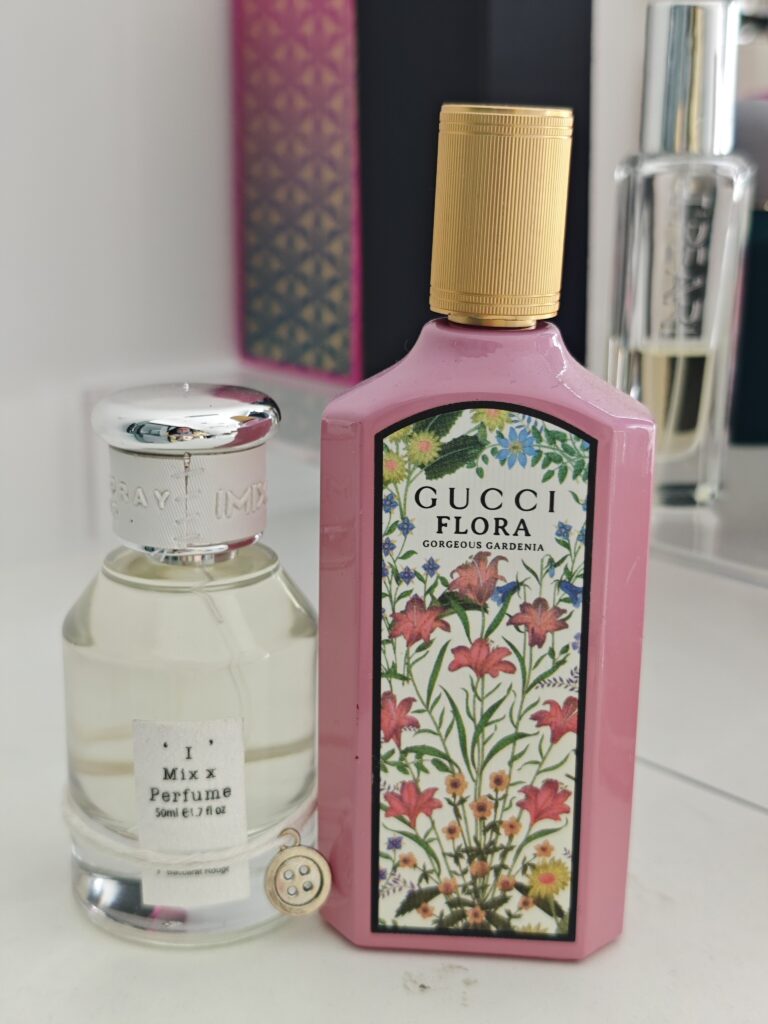
If you are searching the internet for a reliable Gucci Bloom dupe, you already understand the intoxicating, garden-fresh allure of this legendary white floral fragrance. Launched in 2017 under the creative direction of Alessandro Michele and crafted by master perfumer Alberto Morillas, the original scent was a beautiful rebellion. At a time when the USA market was flooded with sugary, edible “gourmand” perfumes, this fragrance brought us back to a thriving, slightly wild botanical garden.
The magic of the “White Floral” fragrance family lies in its duality. It manages to be delicate and romantic, yet incredibly powerful and long-lasting. When consumers look for a long-lasting jasmine scent or a creamy tuberose fragrance, they want a perfume that makes a statement at a spring wedding or a corporate office without being overly spicy. But with designer retail prices regularly exceeding $150 to $160 at major US department stores, many practical consumers are asking: Is there a smarter way to smell this good?
Deconstructing the Notes: What Are You Actually Smelling?
Before you can find a good alternative, you need to know what ingredients you are looking for. A high-quality alternative must capture the “Holy Trinity” of the original’s botanical composition. Let’s break down these ingredients in plain English, avoiding confusing industry jargon:
- Tuberose (The Creamy Star): Despite its name, tuberose has absolutely nothing to do with roses. It is a night-blooming flower that produces a buttery, creamy, and almost fleshy scent. In the fragrance industry, extracting pure tuberose absolute is incredibly expensive (it takes thousands of pounds of flowers to produce a few ounces of oil). A cheap, low-quality alternative will often use harsh synthetic substitutes that make the tuberose smell like overly sweet bubblegum. A good formulation balances its natural, luxurious richness.
- Jasmine Sambac (The Green Elegance): While some types of jasmine can smell very heavy or “animalic” (often referred to as ‘indolic’ in perfumery), Jasmine Sambac has a greener, fresher, and dewier profile. It provides that “just-cut flower stems” freshness that prevents the perfume from feeling suffocating or “old-fashioned.”
- Rangoon Creeper (The Unique Twist): Also known as Chinese honeysuckle, this is the unique wild card of the original composition. It’s a vine with flowers that famously change color from white to pink to red as they mature. In a perfume, it adds a gently powdery, slightly fruity nuance that ties the heavy tuberose and the fresh jasmine together seamlessly.
2. The Reality of the Fragrance Supply Chain: Why Designer Scents Cost So Much
As someone who works in fragrance supply chains, I frequently get asked by friends: “Is a $150 designer perfume really that much better in quality than a $40 alternative?”
To answer that honestly, we need to pull back the curtain on how the luxury perfume industry operates. When you purchase a designer bottle at a store like Sephora, Macy’s, or Nordstrom, you are paying for an entire ecosystem. You are paying for the brand’s heritage, the heavy custom glass bottle, the multi-million dollar celebrity commercial, and the massive profit margins demanded by the retail stores.
The actual fragrant liquid inside the bottle—known in the industry as the “juice”—represents a surprisingly small fraction of the total retail price. Independent perfumers and factory-direct brands operate on a completely different business model. By cutting out celebrity endorsements and department store margins, they can reallocate that budget directly into sourcing higher-quality raw materials.
Table 1: Estimated Cost Breakdown (Designer Retail vs. Direct-to-Consumer)
*Please Note: These are estimated industry averages intended to illustrate standard business models for educational purposes, based on general manufacturing data.
| Cost Component | Traditional Designer Brand Model | Factory-Direct / Indie Brand Model | Impact on You (The Consumer) |
|---|---|---|---|
| Raw Fragrance Oils & Solvents | ~5% – 8% | ~30% – 40% | Direct brands can afford higher concentrations (EDP vs EDT) for much better longevity on your skin. |
| Packaging (Custom Bottles, Caps) | ~15% – 20% | ~15% – 20% | Designer brands use bespoke, heavy glass which feels luxurious but increases shipping weight and overall cost. |
| Marketing & Celebrity Ads | ~30% – 40% | ~10% – 15% | With designer scents, you are heavily subsidizing global billboard and magazine campaigns. |
| Retailer Margin (Department Stores) | ~40% – 50% | ~0% (If sold online directly) | Physical retail stores take a massive cut just for providing shelf space and sales staff. |
3. The Science of a Good Alternative: It’s Like Baking a Cake
Creating a reliable, safe, and beautiful alternative fragrance is not about “stealing” a recipe; it is an exercise in reverse engineering and chemistry. Reputable fragrance houses use a piece of laboratory equipment called Gas Chromatography-Mass Spectrometry (GC-MS). You can think of this as a highly advanced scanner that looks at a perfume and identifies its molecular building blocks.
However, simply knowing the chemical ingredients is only half the battle. If I give you the exact ingredient list for a Michelin-star pastry, can you bake it perfectly on the first try? Probably not. The secret lies in the manufacturing process.
The Missing Step: Maceration (Why Some Dupes Smell Like Rubbing Alcohol)
Have you ever bought an inexpensive perfume, sprayed it, and immediately coughed because it smelled like pure rubbing alcohol for the first five minutes? That unpleasant experience happens when a manufacturing facility skips the “maceration” process to save time and push products out the door faster.
Maceration is simply the fragrance industry’s term for “resting.” After the fragrant essential oils are mixed with the perfumer’s alcohol, the mixture needs to sit in a cool, dark, temperature-controlled vat for several weeks. Think of it like letting a good red wine breathe, or letting a stew simmer so the flavors meld together. This resting period allows the alcohol molecules and the oil molecules to bind together smoothly.
When reviewing alternatives, brands that emphasize a proper maceration process (usually 4 to 6 weeks) offer a much smoother, higher-quality opening scent without that harsh, headache-inducing alcohol burn.
4. Our Standardized Testing Protocol: How We Evaluated The Market
To provide a fair and useful guide, we didn’t just smell the caps of these bottles. We utilized a standard internal testing protocol to evaluate the most popular white floral alternatives available to USA consumers. Here is how we tested them:
- The Blotter Test: Each fragrance was sprayed onto a neutral perfumer’s paper blotter in a climate-controlled room (72°F) to evaluate the “dry down” over 24 hours without the interference of human skin chemistry.
- The Skin Test: The fragrances were tested on a panel of three volunteers with varying skin types (dry, oily, and neutral-pH) to see how the tuberose and jasmine notes evolved when mixed with natural body heat.
- The Performance Metrics: We graded each option based on Longevity (how many hours it lasted), Sillage (how far the scent trail projected), Accuracy to the Scent Profile (how well it captured the true white floral essence), and Value per ml.
5. The Ultimate Comparison: 5 Alternatives Reviewed
Because this specific white floral profile is universally beloved, many brands across different price tiers have created their own interpretations. Let’s take an objective look at five popular options, discussing their pros, cons, and best use cases.
Option 1: The Factory-Direct Precision – imixx perfume No. 43
As mentioned in our disclosure, this is our in-house formulation. We engineered imixx perfume No. 43 specifically to address the most common complaint about white florals: poor longevity.
The Pros: Because we utilize a direct-to-consumer model, we formulate No. 43 as a high-concentration Eau de Parfum (EDP). In our skin tests, it consistently lasted 6 to 8 hours. We use a strict 4-week maceration process, meaning the opening is exceptionally smooth, allowing the rich tuberose and green jasmine to shine immediately without an alcohol blast. It is also highly affordable.
The Cons for Consumers: To keep costs low, our packaging is minimalist and utilitarian. You will not get a heavy, decorative porcelain bottle for your vanity. Additionally, as an online-first brand, you cannot walk into a local mall to smell it before purchasing, which requires a leap of faith for first-time buyers.
Option 2: The Fast-Fashion Find – Zara (Various Summer Florals)
Zara has gained a massive reputation for working with established perfumers to create trendy, accessible fragrances. While their exact lineup changes almost every season, they frequently release tuberose-dominant scents in their summer collections.
The Pros: Supreme accessibility. You can walk into almost any Zara store in the USA, spray a tester, and walk out with a bottle for under $30. The scent profiles are usually very modern, youthful, and crowd-pleasing.
The Cons for Consumers: Zara perfumes are notoriously light in concentration. They often behave more like an Eau de Toilette (EDT) or a body splash. In our tests, the scent trail faded significantly within 2 to 3 hours. You will need to carry the bottle with you and reapply frequently.
Option 3: The Drugstore Vegan Choice – Pacifica French Lilac & Tahitian Gardenia
Available at stores like Target and Ulta, Pacifica is a beloved USA-based brand known for vegan, cruelty-free formulations.
The Pros: Excellent price point and widely available. While not an exact 1-to-1 molecular match for Bloom, their Tahitian Gardenia layered with French Lilac provides a remarkably similar “lush, dewy garden” vibe. They are great for consumers who prefer 100% vegan ingredients and essential oil-based roll-ons.
The Cons for Consumers: Essential oil roll-ons sit very close to the skin. They have almost zero sillage (projection). Only someone hugging you will be able to smell it.
Option 4: The Body Care Approach – Bath & Body Works “One in a Million”
Though occasionally rotated out of their main line, this specific B&BW collection was heavily praised in forums for smelling like high-end white florals.
The Pros: It is fantastic for building a fragrance foundation. You can buy the matching body wash, the body lotion, and the mist. Layering these products is a highly effective way to smell good all day on a budget.
The Cons for Consumers: Fine fragrance mists have a very low oil concentration (usually around 1-3%). It is a sheer wash of scent that lacks the deep, complex woody or musky base notes that give a true EDP its sophisticated, expensive-smelling finish.
Option 5: The Luxury Niche Benchmark – Diptyque Do Son
We include Diptyque Do Son not as a budget alternative (it is actually often more expensive than designer brands), but as the ultimate benchmark for true tuberose lovers.
The Pros: It is a masterpiece of modern perfumery. If you love the white floral profile but want something that feels slightly more aquatic, green, and natural, Do Son is incredible. It uses incredibly high-quality absolutes.
The Cons for Consumers: The price is prohibitive for many everyday consumers (often exceeding $200+). It is an investment piece rather than a daily “spritz and go” fragrance.
Table 2: Standardized Comparison of White Floral Options
| Brand / Product | Concentration | Tested Longevity | Best Feature | Biggest Drawback |
|---|---|---|---|---|
| imixx No. 43 | Eau de Parfum (EDP) | 6 – 8 Hours | High accuracy, smooth maceration, great value. | Online only; basic packaging. |
| Zara Florals | EDT / Light EDP | 2 – 3 Hours | Incredibly cheap; easy to test in malls. | Fades very quickly; requires reapplication. |
| Pacifica | EDP / Perfume Oil | 4 – 5 Hours (close to skin) | 100% Vegan; accessible at drugstores. | Very weak projection (sillage). |
| Bath & Body Works | Body Mist | 1 – 2 Hours | Great for full-body layering routines. | Lacks depth; smells slightly more synthetic. |
| Diptyque Do Son | EDP / EDT | 8+ Hours | Incredible artistry and natural ingredient quality. | Very high luxury price tag. |
6. Mastering Longevity: How to Make Your White Floral Perfume Last All Day
Even the most expensive, highly concentrated Eau de Parfum can fade prematurely if applied incorrectly. White floral compounds, by their chemical nature, contain highly volatile top notes. Here are industry-standard tips for maximizing the performance of scents like imixx No. 43 or any other white floral in your collection.
1. Hydration is Key (The Lipid Barrier Concept)
Perfume oils need something physical to cling to. If your skin is dry, your pores will literally “drink” the fragrance oils, causing the scent to disappear in a matter of hours. The professional trick is to always apply an unscented ceramide body lotion, or a neutral body oil (like jojoba or sweet almond oil), immediately after your shower while your skin is still damp. Wait five minutes, and then spray your perfume directly onto this moisturized canvas. The oils will lock onto the lotion, doubling your fragrance’s lifespan.
2. The Art of Fragrance Layering
White florals are incredibly versatile for layering (the act of mixing two different perfumes on your skin to create a custom scent). Because they are bold and linear, they act as a fantastic mid-layer.
- The “Summer Morning” Mix: Layer your white floral over a simple Citrus or Bergamot scent. The sharp citrus cuts through the heavy sweetness of the tuberose, making it smell like a blooming garden immediately after a spring rain.
- The “Date Night” Mix: Layer your white floral over a pure Vanilla or warm Amber body oil. The amber warms up the jasmine, creating a creamy, almost dessert-like floral that is highly seductive.
- The “CEO Office” Mix: Layer it with a Sandalwood or Cedarwood base. The dry woods ground the high-pitched florals, making the overall profile smell incredibly expensive, authoritative, and professional.
3. The Golden Rule: Do Not Rub Your Wrists!
This is the most common mistake consumers make. When you spray your wrists and rub them together vigorously, the friction creates heat. This heat literally crushes and breaks down the delicate top notes of the perfume. You ruin the perfumer’s careful chemical balance. Instead, simply spray, let it air dry for 5 seconds, and leave it alone.
4. Proper Storage (Protecting Your Investment)
If you leave your beautiful perfume bottles displayed on your bathroom vanity, you are slowly destroying them. The constant temperature fluctuations from your hot showers, combined with bright vanity lights and sunlight, will degrade and oxidize the fragile floral oils rapidly. Keep your perfumes in their original cardboard boxes, or store them in a dark, cool drawer in your bedroom. Treated well, a high-quality perfume will last for years.
7. Safety First: Understanding Skin Chemistry and IFRA Standards
When consumers venture outside of major, recognizable designer brands, they rightfully ask about product safety. Are these affordable alternatives safe for sensitive skin?
The answer is yes, provided you buy from a transparent company. Reputable fragrance manufacturers worldwide formulate their products in strict accordance with the guidelines set by the International Fragrance Association (IFRA). For example, IFRA’s recent 51st Amendment sets rigorous, scientifically backed limits on the dermal use of naturally occurring allergens (like linalool found in lavender, or benzyl salicylate used in floral blends) to prevent skin sensitization and contact dermatitis. Brands like imixx ensure every batch complies with these global safety standards.
Furthermore, it is important to remember that skin chemistry is a real scientific phenomenon. The pH level of your acid mantle, your current diet, your hydration levels, and your natural body temperature will slightly alter how a perfume smells on you versus a piece of paper. A tuberose scent might pull very sweet and creamy on your best friend, but might smell sharper and greener on you. This is completely normal and is part of the fun of discovering your personal fragrance signature.
8. Frequently Asked Questions (FAQ)
What is the main difference between an expensive designer perfume and a high-quality alternative?
Assuming the alternative is formulated well, the primary differences lie in the branding, the packaging (custom heavy glass vs. standard bottles), and the marketing overhead. High-quality alternatives use advanced GC-MS analysis to recreate the same olfactory experience (utilizing similar notes like tuberose and jasmine) but forgo the massive advertising budgets, passing the financial savings directly to the consumer.
Are cheaper perfumes more likely to cause headaches?
Headaches are typically triggered by overly harsh top notes—specifically an imbalance of strong, poorly formulated synthetic alcohols, rather than the retail price tag itself. Choosing an alternative that emphasizes a smooth blending process and a proper 4-week maceration period (like imixx formulations) drastically reduces that sharp “alcohol blast” that often triggers sensitivities.
Can I wear white floral perfumes in the winter, or are they strictly for spring?
While white florals are culturally associated with spring gardens, they perform spectacularly in the winter! The cold, dry winter air actually tames the heavy, sometimes narcotic sweetness of tuberose. It makes the scent smell incredibly crisp, crystalline, and elegant when sprayed on a heavy wool scarf or cashmere sweater.
How do I know if a fragrance website is trustworthy before buying?
Look for supply chain transparency. Trustworthy fragrance brands will clearly list their scent notes, explain their oil concentration levels (EDT vs EDP), provide clear shipping and return policies for USA customers, and focus on educating you about the quality of the juice rather than just showing flashy stock photos. Reading independent reviews on specialized platforms like Fragrantica or Reddit’s fragrance communities can also help guide your choices safely.
9. Conclusion: Redefining the Value of Luxury Fragrance in 2026
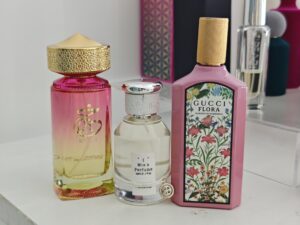
The fragrance industry is undergoing a massive paradigm shift in the USA. Consumers are becoming smarter, more educated, and much more demanding. We are reading ingredient lists, demanding supply chain transparency, and increasingly refusing to pay a 400% markup just to have a famous logo sitting on our bedroom dresser.
Finding a high-quality, affordable luxury perfume is no longer about compromising; it is about outsmarting the traditional retail model. By educating yourself on fragrance concentrations, the vital importance of the maceration process, and the realities of supply chain pricing, you can make incredibly savvy purchases.
Whether you choose to explore the fun, fast-fashion offerings for a quick summer spritz, invest in a niche masterpiece like Diptyque, or opt for a thoughtfully crafted, factory-direct Eau de Parfum like imixx perfume No. 43, the perfect blooming garden scent is entirely within your reach. Fragrance is deeply subjective, intimate, and meant to be enjoyed every single day. Find the scent profile that makes you feel confident, apply it properly to hydrated skin, and enjoy the beautiful trail you leave behind.
Ready to experience lab-direct quality without the retail markup?
