

Best Fragrance Lists
How to Find the Perfect Acqua di Parma Osmanthus Dupe: An Insider’s Supply Chain Guide to Affordable Luxury Perfumes in the USA
Jul
Executive Summary: What You Will Learn in This Guide
- The Scent Architecture: Why Acqua di Parma Osmanthus is celebrated for its masterful blend of bright green mandarin, rich apricot-leather floralcy, and grounding patchouli.
- The Economics of Scent: A transparent look at why luxury niche fragrances retail for over $250 in the USA, and how the actual liquid (the “juice”) represents a surprisingly small fraction of that cost.
- The Science of Alternative Perfumery: How modern laboratories use GC-MS technology and IFRA-compliant ingredients to create safe, high-fidelity fragrance clones without the retail markup.
- An Unbiased Market Review: A fair comparison of the top alternatives in the US market, exploring options from specialized dupe houses to factory-direct innovators.
- Consumer Education: Practical, easy-to-understand advice on how to test, layer, and properly macerate your perfumes at home for maximum longevity and projection.
Introduction: The Magic and the Reality of Luxury Perfumery
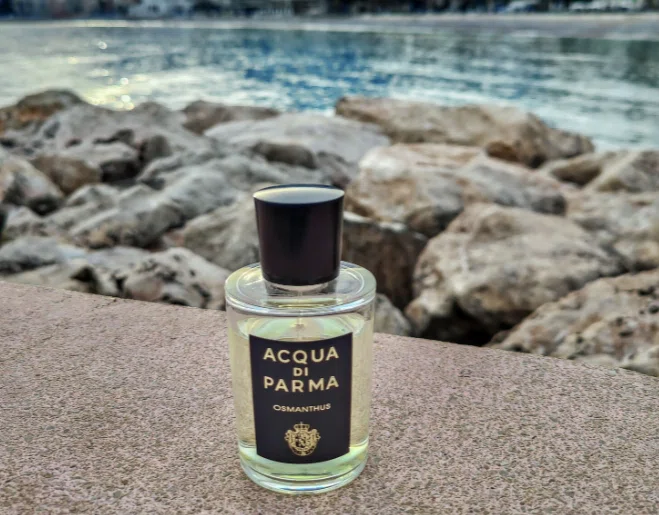
If you have spent any time exploring the fragrance counters of high-end department stores in the USA, you have likely encountered the sun-drenched, sophisticated aura of Acqua di Parma. Their “Signatures of the Sun” collection is a masterclass in Italian perfumery, and among this illustrious lineup, their Osmanthus interpretation stands out as a triumph of floral-citrus architecture. It captures the essence of a warm Mediterranean summer perfectly intertwined with the exotic, almost gourmand facets of Southeast Asian flora.
There is no denying the emotional power of a beautifully crafted scent. A single spray can transport you to a different time and place. However, for the average American consumer, the retail price—often exceeding $250 for a standard 100ml bottle—presents a significant barrier to entry. We are living in an era where the modern consumer is highly educated, pragmatic, and unwilling to pay for brand name prestige alone if the underlying value does not match the price tag.
You are no longer just looking for a cheap knock-off or a fleeting “Acqua di Parma Osmanthus dupe.” You are searching for affordable luxury perfume that does not compromise on safety, complexity, or performance. As an analyst who has spent years examining the supply chains of both heritage houses and disruptive startups, my goal is to pull back the curtain. The fragrance industry has traditionally relied on a massive wall of secrecy and information asymmetry. Consumers are led to believe that a high price inherently guarantees a magical, irreplicable elixir.
Today, we are going to dismantle that narrative gently and factually. In this comprehensive, easy-to-read guide, we will explore the fascinating chemistry of the Osmanthus flower, reveal the hidden costs embedded in luxury fragrance supply chains, and explain precisely how high-quality designer perfume alternatives are engineered. We will look at a variety of options available in the US market, equipping you with the knowledge to make a smart, satisfying purchase that respects both your skin and your wallet.
Part 1: Decoding the Masterpiece – What Makes Osmanthus So Special?
The Botanical and Cultural Journey of the Osmanthus Flower
Before we can even begin to discuss finding a niche fragrance clone, we must understand the original reference point. Osmanthus fragrans, commonly known as sweet olive or Chinese Osmanthus, is a botanical marvel. Native to eastern Asia, it holds profound cultural significance, often associated with autumn festivals, literature, and culinary delicacies like Osmanthus tea and wine.
In the realm of perfumery, Osmanthus is notoriously difficult and expensive to extract. Unlike rose or lavender, which yield essential oils relatively easily through traditional steam distillation, Osmanthus requires a delicate, multi-step solvent extraction process to produce an “absolute.” This absolute is thick, incredibly concentrated, and captures the true essence of the living flower.
From a sensory standpoint, the scent of Osmanthus is a beautiful paradox. If you have never smelled it in isolation, you might expect a standard “white floral” aroma similar to jasmine or tuberose. Instead, it is astonishingly fruity. It is rich in chemical compounds called lactones (specifically gamma-decalactone), which are the exact same molecules responsible for the juicy, fleshy scent of ripe peaches and dried apricots. Furthermore, it contains ionones, which provide a powdery, woody, and subtly leathery undertone. This dual nature—bright and mouth-watering, yet deeply animalic and sueded—makes it a highly prized, complex ingredient for master perfumers. For a deeper dive into the chemical profile of fragrance notes, resources like The Good Scents Company offer exhaustive databases used by industry professionals.
Breaking Down the Acqua di Parma Olfactory Pyramid
Acqua di Parma’s specific interpretation of this flower is a study in precise, harmonious layering. They do not just present a heavy, syrupy floral; they inject it with their signature Italian DNA. When evaluating this fragrance, we observe a distinct three-tier architecture, often referred to as the olfactory pyramid:
- The Top Notes (The Hook – 0 to 30 minutes): The fragrance opens with an effervescent, uplifting burst of Green Mandarin and Neroli (bitter orange blossom). These are highly volatile citrus oils. Their molecules are light and evaporate quickly, providing that signature barbershop freshness that wakes up the senses.
- The Heart Notes (The Core – 1 to 4 hours): As the citrus begins to recede, the core identity of the perfume reveals itself. Here, the heavy lifting is done by the Osmanthus, which is softened by the dewy, fresh floralcy of Peony. A touch of Pink Pepper (Schinus molle) is often added to give the floral bouquet a modern, slightly spicy edge, keeping it from becoming too sweet.
- The Base Notes (The Anchor – 4 to 8+ hours): The “dry down” is what lingers on your skin for the rest of the day. This composition relies on a very clean, refined fraction of Patchouli. In modern perfumery, patchouli is often “fractionated” to remove its damp, earthy, camphor-like qualities, leaving only a warm, smooth woodiness. This is paired with Ambrette (a botanical musk derived from seeds), ensuring the fragrance fades gracefully into a soft, skin-like aura.
Part 2: The Supply Chain Reality – Why Do Niche Fragrances Cost Over $250?
To understand how an excellent Acqua di Parma Osmanthus dupe can exist at a fraction of the cost, we must look at basic economics. The retail price of a luxury perfume is rarely a direct reflection of the liquid inside the bottle. Instead, it is a reflection of an antiquated, multi-tiered supply chain and a business model heavily reliant on perceived prestige.
Where Does Your Money Actually Go?
When you walk into a luxury boutique or a high-end department store in the USA and hand over $250 for a bottle of perfume, here is a general breakdown of how that revenue is distributed across the industry:
- The Raw Materials and Compounding (The Juice): This typically accounts for a surprisingly small percentage—often between 2% to 6% of the retail price. Even when using high-grade natural absolutes alongside safe synthetic aromachemicals, the actual chemical cost per 100ml is relatively low once scaled for mass production.
- Packaging and Presentation: Luxury houses invest heavily in bespoke heavy glass bottles, magnetic caps, finely milled atomizers, and elaborate presentation boxes. Sometimes, the physical bottle costs more to manufacture than the perfume inside it.
- Marketing and Brand Equity: This is a massive expense. Celebrity endorsements, global billboard campaigns, full-page magazine spreads, and extravagant launch parties consume a massive portion of the budget. You are paying for the idea of the brand.
- Distributor and Retailer Margins: These are the biggest culprits of price inflation. A brand sells its product to a regional distributor, who then sells it to a national wholesaler, who finally sells it to a retail giant. The retailer alone often demands a markup of 50% to 60% just for the privilege of placing the bottle on their shelf and paying their sales staff.
This is not to say that luxury brands are “scamming” anyone; they are simply operating within a traditional model that requires massive overhead. However, it highlights a crucial point: a lower price tag does not automatically mean lower quality juice. It often just means a leaner, more modern business model.
Table 1: Estimated Cost Structure (Traditional Retail vs. Direct-to-Consumer)
Note: These figures are industry estimates designed to illustrate the structural differences in supply chain models. They are not exact financial disclosures of any specific brand.
| Cost Component | Traditional Luxury Brand ($250 Retail) | Direct-to-Consumer (D2C) Alternative Brand |
|---|---|---|
| Fragrance Concentrate (The Juice) | $10.00 – $15.00 | $10.00 – $18.00 (Often higher concentration) |
| Packaging (Glass, Box, Cap) | $15.00 – $25.00 | $4.00 – $8.00 (Standardized, minimalist) |
| Marketing & Advertising | $40.00 – $60.00 | $5.00 – $10.00 (Social media, word-of-mouth) |
| Retail & Distributor Markups | $125.00 – $150.00 | $0.00 (Direct from factory to consumer) |
| Final Estimated Retail Price | $250.00+ | $35.00 – $60.00 |
Part 3: The Art and Science of Crafting a High-Quality Alternative
Creating a long-lasting osmanthus perfume that mirrors a beloved niche legend is not achieved by simply tossing random oils into a bucket. Modern alternative perfumery is a rigorous scientific process governed by chemistry, stringent safety regulations, and sensory evaluation.
1. The Role of GC-MS (Gas Chromatography-Mass Spectrometry)
The journey often begins in the laboratory with a machine known as a GC-MS. Think of this as a highly advanced barcode scanner for smells. Gas Chromatography separates the individual molecules of a fragrance sample, while Mass Spectrometry identifies the exact molecular weight and structure of those molecules. This technology provides a “chemical fingerprint,” allowing chemists to see precisely how much linalool, patchoulol, or gamma-decalactone is present in a target fragrance.
However, an important truth that many brands won’t tell you is that a machine cannot make a perfect perfume alone. GC-MS has limitations. It cannot easily identify the exact geographic origin of a natural material (e.g., whether the neroli came from Italy or Tunisia), nor can it perfectly decipher “captive molecules” (patented, proprietary aromachemicals owned by massive fragrance conglomerates like Givaudan or Firmenich). This is where the human element—the trained perfumer—steps in. They must use their highly trained nose to bridge the gaps, selecting commercially available, high-quality aromachemicals to recreate the exact vibe, texture, and emotional resonance of the original.
2. Safety First: IFRA Compliance
A major concern consumers have with more affordable clones—especially those found on unregulated marketplaces or pop-up shops—is safety. Are these fragrances going to cause a rash? Do they contain toxic chemicals?
Reputable alternative brands in the USA formulate in strict adherence to the standards set by the International Fragrance Association (IFRA). IFRA sets global guidelines on the safe usage levels of fragrance materials. For example, certain citrus essential oils can be phototoxic (causing skin burns when exposed to sunlight), and certain natural oakmoss extracts contain allergens. A legitimate dupe house mathematically balances its formulas to ensure they are 100% skin-safe, often replacing problematic natural allergens with safe, lab-created synthetic equivalents. Always look for brands that explicitly mention IFRA compliance.
3. The Waiting Game: Understanding Maceration
Have you ever bought an affordable fragrance and noticed it smells sharply of rubbing alcohol when you first spray it? That is a classic symptom of a skipped or rushed maceration process.
Maceration is essentially the “aging” process of perfume. Once the concentrated fragrance oils are blended with perfumer’s alcohol (denatured ethanol) and a tiny amount of distilled water, the mixture needs time to rest in temperature-controlled environments. Over several weeks, the sharp alcohol smell dissipates, chemical reactions occur, and the top, heart, and base notes bind together into a smooth, cohesive liquid. Premium alternative brands factor this time into their production cycle, ensuring the product is ready to wear the moment it arrives at your door.
Part 4: A Fair Comparison – Top Acqua di Parma Osmanthus Dupes in the USA
Because the market for designer perfume alternatives has exploded, US consumers have several fantastic options. Let’s take an objective look at some of the prominent players and avenues for finding this specific scent profile. A trustworthy recommendation must acknowledge that different brands excel in different areas.
1. The “1:1 Accuracy” Specialists (e.g., Alexandria Fragrances, Dua Brand)
Brands like Alexandria Fragrances and The Dua Brand have built massive followings in the US by focusing obsessively on recreating niche scents as “Extraits de Parfum” (highly concentrated). They often succeed in capturing the core DNA of the fragrance, though some users note their high oil concentration can make the opening notes feel slightly denser or heavier than the airy original. If your absolute top priority is “beast mode” longevity, these houses are worth exploring. (Note: Availability of specific Osmanthus clones varies by season for these houses.)
2. The Mainstream Minimalists (e.g., Dossier, Oakcha)
Dossier and Oakcha have mainstreamed the dupe concept with clean, uniform branding and highly accessible price points (usually around $30-$50). While Dossier excels at mainstream designer scents (like Baccarat Rouge or YSL Black Opium), they occasionally tackle more niche profiles. Their formulations are generally very safe, mass-appealing, and easy to wear, though they typically formulate at an Eau de Parfum (EDP) concentration, which means the longevity will be average rather than extraordinary.
3. The Factory-Direct Innovators: Imixx
For those seeking a balance between high-end raw material sourcing and absolute price transparency, Imixx offers a compelling model. By operating as a direct bridge from the manufacturing facility to the US consumer, they eliminate nearly all middlemen. What makes their approach to complex floral-citrus profiles (like Osmanthus) notable is their emphasis on maintaining the delicate, airy nature of the top notes while naturally extending the base through precise concentration adjustments. They focus heavily on supply chain efficiency to keep costs down without compromising the juice. You can explore their full range of alternative formulations at their dupe perfumes catalog.
Table 2: Comparing Perfume Concentrations and Expected Performance
Understanding concentration is key to managing your expectations when buying any fragrance, original or alternative.
| Perfume Classification | Aromatic Oil % | Average Longevity on Skin | Characteristics |
|---|---|---|---|
| Eau de Cologne (EDC) | 2% – 5% | 1 – 3 Hours | Very refreshing, highly volatile, requires frequent reapplication. |
| Eau de Toilette (EDT) | 5% – 15% | 3 – 5 Hours | Standard for daily wear, good projection for the first hour. |
| Eau de Parfum (EDP) | 15% – 20% | 5 – 8 Hours | The standard for luxury niche (like AdP). Excellent balance of sillage and duration. |
| Extrait de Parfum (Pure Perfume) | 20% – 40% | 8 – 12+ Hours | Sits closer to the skin but lasts incredibly long. Rich and dense. |
Part 5: How to Test and Wear Your Osmanthus Alternative Like a Pro
Purchasing the right bottle is only half the journey. How you test, wear, and store your fragrance dictates how well it performs in the real world.
The “At-Home” Blind Test
If you own a sample of the original Acqua di Parma and have just purchased an alternative, do not just spray one on each wrist immediately after opening the mail. Fragrances experience “mail shock”—extreme temperature variations during shipping can temporarily suppress certain notes. Let the new bottle rest at room temperature for 24 to 48 hours.
When ready, spray the original on a piece of thick paper (a coffee filter works great) and the dupe on another. Smell them immediately (the top notes), after 1 hour (the heart), and after 6 hours (the base). This removes the bias of the brand name and lets you evaluate the true chemical dry-down.
Maximizing Longevity on Your Skin
Citrus and floral fragrances are naturally lighter than heavy oud or vanilla scents. To make your Osmanthus dupe last through a long US summer day:
- Moisturize First: Perfume alcohol evaporates incredibly fast on dry skin. Apply an unscented lotion or a thin layer of Vaseline to your pulse points before spraying. The oils need a lipid base to cling to.
- Do Not Rub Your Wrists: Spray and let it dry. Rubbing creates friction and heat, which can prematurely “burn off” the delicate green mandarin top notes, rushing the fragrance straight to the base.
- Fabric Application: If your skin eats fragrance, apply one or two sprays to your clothing (always patch-test on white fabrics first). Fabric holds onto scent molecules significantly longer than human skin.
Part 6: Frequently Asked Questions (FAQ)
We’ve scoured forums, review sites, and US customer feedback to compile clear, objective answers to the most common questions surrounding this beloved scent profile.
1. What smells similar to Acqua di Parma Osmanthus?
In the luxury space, fragrances like Hermès Osmanthe Yunnan or By Kilian Good Girl Gone Bad feature prominent osmanthus notes. However, Hermès focuses more on the tea aspect, while Kilian is a heavier, sweeter white floral. To get the exact sparkling, citrus-heavy Italian opening combined with apricot, you are best served by a dedicated, reverse-engineered alternative designed specifically to mimic the AdP DNA.
2. How long does an inspired-by Osmanthus perfume actually last?
This entirely depends on the concentration the alternative brand uses. The original EDP usually yields about 5 to 6 hours. High-quality dupes formulated at a higher concentration (like Extrait) can often push this to 7 to 9 hours. However, remember that the nature of citrus/floral notes means they are not designed to be “24-hour room fillers.”
3. Is Osmanthus considered a fragrance for men or women?
Acqua di Parma markets the Signatures of the Sun line as strictly unisex, and the scent profile backs this up perfectly. The sharp, slightly bitter green mandarin opening leans towards traditional masculine colognes, while the fruity, soft heart is traditionally feminine. The result is a beautifully gender-neutral scent that adapts to the wearer’s attitude and style.
4. Are designer perfume alternatives safe to use?
Yes, provided you purchase from a transparent brand. Reputable companies source their aromachemicals from the same major fragrance houses (like Firmenich, IFF, or Symrise) that supply the luxury brands, and they strictly adhere to IFRA safety guidelines regarding allergens and skin sensitizers.
5. Why does my new dupe smell slightly different on day one?
Aside from “mail shock” (temperature fluctuations during US shipping), some factory-direct fragrances are made in fresh, smaller batches. If a bottle hasn’t had quite enough time to fully macerate in the warehouse, the alcohol might be slightly prominent at first. Spray it a few times to introduce oxygen into the bottle, and let it sit in a dark, cool closet for two weeks. You will often notice a significant smoothing of the notes.
6. Is this a good fragrance for the summer?
It is arguably one of the most elegant summer fragrances you can own. The effervescent citrus cuts right through high heat and humidity, while the apricot-leather nuances of the osmanthus prevent the fragrance from smelling like a basic, generic lemon splash. It is sophisticated enough for an evening outdoor wedding, yet fresh enough for a casual day at the beach.
Conclusion: Empowering Your Fragrance Journey
The era of gatekeeping in the luxury fragrance industry is slowly but surely coming to an end. Armed with a basic understanding of supply chain economics, olfactory pyramids, and how modern chemistry allows for stunningly accurate reconstructions, you are now empowered to make choices based on logic rather than pure marketing hype.
Finding the perfect Acqua di Parma Osmanthus dupe in the USA is no longer about settling for a subpar imitation. It is about identifying brands that respect the intricate balance of the original—the bright mandarin, the complex floral heart, and the grounding patchouli—while utilizing a transparent business model that strips away the retail bloat. Whether you choose to explore established clone houses like Alexandria, accessible options like Dossier, or factory-direct platforms like Imixx, the goal remains the same: experiencing beautiful, evocative olfactory art on your own terms.
Scent is deeply personal. It is an invisible accessory that speaks volumes before you even say a word. You deserve to smell incredible, to wear fragrances that make you feel confident and joyful, and you deserve to do so without feeling like you had to empty your wallet for a fancy glass bottle. Explore the market, test carefully, and enjoy the beautiful, sunlit aroma of Osmanthus.
