

Blog, Fragrance Science & Education, Scent Profiles & Ingredients
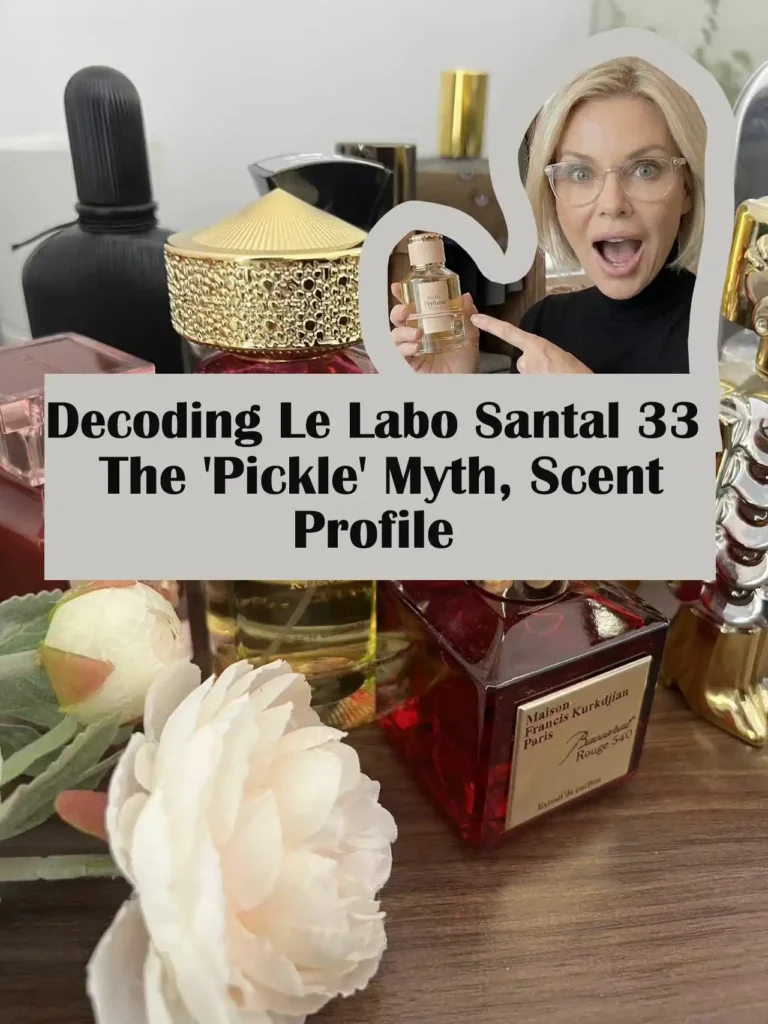
Decoding Le Labo Santal 33: The ‘Pickle’ Myth, Scent Profile, and the Ultimate Smart Alternative
Mar
The Cultural Phenomenon: How a Woody Niche Scent Conquered the USA
If you have walked through the lobby of an upscale boutique hotel in Los Angeles, strolled down the fashion-forward streets of SoHo in New York City, or grabbed an artisanal coffee in a trendy Austin cafe anytime in the last decade, you already know this scent. You might not know its name, but your olfactory memory has undoubtedly logged its distinct, room-filling signature.
It is, without a doubt, Le Labos Santal 33. This fragrance has become so pervasive in the modern American landscape that fashion editors at major publications have playfully dubbed it “the PSL (Pumpkin Spice Latte) of fragrances.” It started in the early 2010s as a niche, insider secret—a rugged, smoky ode to the American West, inspired by the old Marlboro Man advertisements—and exploded into a global status symbol worn by celebrities, executives, and creatives alike. When Estée Lauder acquired Le Labo in 2014, they scaled this once-niche Brooklyn brand into a global powerhouse, making Santal 33 one of the most recognizable scents in the world.
But as someone who spends their days in fragrance laboratories, compounding rooms, and manufacturing plants, I look at Le Labo Santal 33 through a highly analytical lens. I do not just smell the poetry of a campfire in the desert; I smell the precise balance of aromachemicals, the cost of raw botanical materials, and the sheer brilliance of modern luxury marketing.
Today, we are going to look far beyond the marketing hype. We will explore the actual chemistry of the scent profile, investigate the famous (and highly polarizing) “pickle” note with biological science, and break down the economics of the luxury perfume industry using standard supply chain metrics. Most importantly, we will look at how modern manufacturing science allows consumers to find incredible alternatives. We will explore the landscape fairly, looking at other heritage houses, so you can make an educated, confident choice for your own collection.
What Does Le Labo Santal 33 Smell Like? A Plain-English Chemical Breakdown
Fragrance marketing loves to use abstract, emotional concepts to sell a feeling. But to understand what you are actually spraying on your skin, we need to strip away the romance and look at the olfactory pyramid. Santal 33 is widely considered a masterclass in blending dry, arid woods with powdery florals and incredibly potent synthetic fixatives.
Here is exactly what happens on a chemical and sensory level from the moment you spray it to the moment it finally fades (which, as many know, takes a very long time):
The Opening (Top Notes): The Sharp Green Hook
The very first blast of Santal 33 is not warm or inviting in a traditional sense; it is sharp, spicy, and distinctly green. This is driven by Cardamom and a Violet Leaf accord. Cardamom (often enhanced with molecules like Linalool) provides a zesty, almost camphor-like cooling spice. The violet leaf is crucial here—in perfumery, violet leaf doesn’t smell like a sweet purple flower; it smells like a freshly snapped green stem or a wet leaf. It awakens your senses immediately with an aromatic, piercing quality.
The Heart (Middle Notes): The Powdery Bridge
As the initial sharpness of the top notes begins to settle (usually after 15 to 30 minutes on human skin), you get a powdery, elegant touch from Iris and Papyrus. However, this isn’t a vintage floral. It is dry, dusty, and instantly enveloped by a massive dose of synthetic musks and ambergris analogues, most notably Ambroxan. Ambroxan is a marvel of modern synthetic chemistry. It smells musky, woody, slightly sweet, and acts as a massive amplifier for everything else in the formula. It is what gives the fragrance its “radiance” in the air.
The Base (Bottom Notes): The Rugged Foundation
This is the true soul of the fragrance and what lingers on your clothes for days. The base is built on Australian Sandalwood, Virginia Cedarwood, and a robust Leather accord. Unlike traditional creamy Indian sandalwood, the woods here are stark and dry. Combined with the leather notes (often synthesized using molecules like Isobutyl Quinoline), it smells like a well-worn leather jacket sitting near a dying campfire, or the smell of fresh sawdust in a carpenter’s workshop.
To make this easier to digest for the everyday consumer, I have created a table that translates the poetic marketing notes into the actual materials and sensations we discuss on the factory floor.
Table 1: The Scent Translated for the Everyday Consumer
| What the Brand Says (Marketing) | What is Often Used in the Lab (Chemistry/Materials) | What You Actually Smell (Sensory Experience) |
|---|---|---|
| Spicy Cardamom | Natural cardamom CO2 extracts mixed with Linalool | A zesty, slightly minty and peppery kick right when you spray it. It feels cool and energetic. |
| Violet / Iris | Alpha-Isomethyl Ionone (synthetic floral molecules) and natural absolutes | A dry, powdery, and “green” sensation. It feels like smelling a crushed green leaf or dry earth. |
| Sandalwood / Cedar | Australian Sandalwood (Santalum spicatum) & Farnesol/Javanol | Dry wood. Not creamy or milky, but raw, like freshly cut lumber, cedar chips, or dry sawdust. |
| Leather / Musks | Isobutyl Quinoline & massive doses of Ambroxan / Cetalox | The scent of a new luxury leather bag mixed with a warm, skin-like musk that radiates heat and lasts all day. |
For an excellent third-party breakdown of how these notes are generally perceived by the global fragrance community, you can always check the extensive user reviews and voting panels on authoritative platforms like Fragrantica’s Santal 33 page, which serves as a massive database for consumer olfactive data.
The Elephant in the Room: Why Does Santal 33 Smell Like Pickles?
If you have ever researched this fragrance in the USA, you have undoubtedly seen the auto-fill search suggestions on Google: “Why does Santal 33 smell like pickles?” or “Santal 33 dill juice.”
Let me assure you as a supply chain and formulation expert, this is not an urban myth, a conspiracy, nor does it mean you accidentally bought a fake or spoiled bottle. It is a fascinating scientific reality based on human biology, genetics, and organic chemistry.
The Chemistry of the “Dill” Note
In the art of perfumery, creating a specific scent often requires combining molecules that, on their own, smell completely different. The infamous “pickle” scent in Santal 33 is the result of a chemical collision involving two main factors in the formulation:
- The Shift to Australian Sandalwood: Historically, classical French perfumers loved Indian Sandalwood (Santalum album from Mysore) because it is incredibly creamy, buttery, and smooth. However, due to severe over-harvesting, true Mysore sandalwood became an endangered, heavily restricted, and astronomically expensive material. The modern industry largely shifted to Australian Sandalwood (Santalum spicatum). This varietal is more sustainable, but its essential oil profile is naturally sharper, greener, and much more astringent.
- Violet Leaf Equivalents: The molecules used to create the violet and green top notes have a naturally piercing, vegetative quality. They are designed to cut through the heavy base woods to give the fragrance “lift” and projection.
When these green, astringent violet molecules interact with the dry, sharp profile of the Australian sandalwood, they create a volatile organic compound mixture that bears a striking resemblance to the smell of dill weed or cucumber brine. It is an unintended, yet undeniable, chemical byproduct of the blend.
The Biology of Smell: Why Only Some People Smell It
You might be wondering: if it smells like pickles, why is it a global bestseller? Why doesn’t everyone smell the dill? This comes down to your unique genetics.
Human olfactory receptors are incredibly subjective and varied. According to general scientific consensus on olfaction (the sense of smell), genetic variations mean our brains process ester combinations differently. Just as some people have a genetic variant that makes cilantro taste like dish soap, specific single-nucleotide polymorphisms can completely alter how an individual perceives a fragrance molecule. For instance, scientific studies hosted on NCBI (National Center for Biotechnology Information) have long documented how genetic variations in the OR7D4 receptor dictate whether someone smells a pleasant floral/musk or a foul, sweaty odor from certain compounds.
Roughly 30% of the population possesses olfactory receptors that are hyper-sensitive to this specific “dill/green” combination in Santal 33. For them, the pickle note is glaring and overwhelming. For the other 70%, their brains bypass that specific high-frequency green note, and they simply smell luxurious leather and warm, dry woods. It is the fragrance equivalent of the famous “blue and black dress vs. white and gold dress” optical illusion.
If you find that a fragrance smells sour or pickle-like on your skin but smells fine on a paper blotter in the store, it is likely a reaction to your specific skin chemistry. Your skin’s pH levels, your daily diet, your body temperature, and how hydrated your skin is can drastically alter how top notes project! Always test a complex woody fragrance on your actual skin and let it dry down for at least two hours before making a full-bottle commitment.
Performance Metrics: Understanding “Beast Mode” Sillage
In the USA fragrance community, whether on YouTube reviews, TikTok, or Reddit forums, you will often hear the term “beast mode.” This casual term refers to a perfume that lasts an incredibly long time on the skin (longevity) and leaves a massive, room-filling scent trail in the air behind you (sillage).
Santal 33 is practically the textbook definition of beast mode. But from a manufacturing standpoint, how is this achieved without making the perfume thick, oily, or sticky?
As a supply chain and formulation director, I can tell you it comes down to the mastery of fixatives and molecular weight. The formula utilizes heavy, large-chain synthetic molecules. Because these molecules are physically large and heavy on a microscopic level, they take a very long time to evaporate from the heat of your skin.
They act like heavy anchors, holding the lighter, more volatile scents (like the cardamom and florals) to your skin for 10 to 12 hours, and sometimes days on your clothing.
The Dangers of Olfactory Fatigue
Because these modern fixatives are so intensely strong, a biological phenomenon known as olfactory fatigue (or nose-blindness) frequently occurs with this fragrance. Your brain registers the strong scent, and after an hour of constant exposure, it actively blocks the smell out so your brain can process new, potentially dangerous scents in your environment. You might think the perfume has completely faded and spray more, but in reality, you are suffocating everyone around you.
The Economics of Luxury Perfume: Breaking Down the $300 Price Tag
Now we arrive at a critical topic, and the area where everyday consumers are often kept deliberately in the dark. The most common question I receive is: “Is a $300 perfume really ten times better quality than a $30 perfume?”
To answer this honestly, without marketing spin, we have to look at how the global luxury cosmetics supply chain operates. While exact figures for specific private brands are proprietary, financial analysts and market research firms have long documented the standard markup structures in the luxury beauty industry.
The shocking truth to most consumers is that the physical liquid inside the bottle (what we call the “juice” in the industry) represents a shockingly small fraction of the retail price. When you buy a luxury fragrance at a high-end department store like Nordstrom, Bloomingdale’s, or Neiman Marcus in the USA, you are funding a massive, multi-tiered economic machine.
Where Does Your Money Actually Go?
- The Juice (Raw Materials): Even when using high-quality synthetics and natural botanical absolutes, raw materials are relatively inexpensive when purchased in massive industrial drums by global conglomerates.
- Packaging and Hardware: Heavy Italian or French glass bottles, customized zinc-alloy caps, textured paper labels, and elaborate unboxing materials add significant cost to the Cost of Goods Sold (COGS).
- Marketing, Positioning, and Real Estate: This is the biggest expense. Building a “luxury aura” requires prime retail real estate (think flagship stores in Manhattan or Beverly Hills), massive global ad campaigns, PR agencies, and celebrity endorsements.
- The Retail Distributor Markup: This is the most painful part for the end consumer. Major retailers and distributors typically demand a 50% to 65% margin just for putting the bottle on their physical shelf. If a perfume costs $300, the department store keeps up to $180 of it.
Table 2: Estimated Industry Averages – Traditional Retail vs. Factory-Direct
To illustrate this economic reality, let’s look at a comparative breakdown. This table compares the standard margin structure of a traditional $300 luxury perfume against a modern, lean factory-direct model. Note: These are standard industry margin estimates used for educational illustration, not the proprietary financials of any specific brand.
| Cost Category | Traditional Luxury Retail Model ($300 Retail Price) | Modern Factory-Direct Model ($35-$50 Retail Price) |
|---|---|---|
| Raw Materials (Fragrance Oils & Perfumer’s Alcohol) | $4 – $12 | $5 – $15 (Using identical or superior IFRA-compliant grades, often at higher concentrations) |
| Bottle, Cap, Atomizer & Packaging | $10 – $25 | $3 – $8 (Using sleek, highly functional, standardized glass molds to reduce waste) |
| Manufacturing, Compounding & Labor | $3 – $7 | $2 – $5 (Optimized through direct in-house production lines) |
| Marketing, PR & Brand Aura | $70 – $110+ | $0 – $5 (Relies on word-of-mouth, organic search, and zero celebrity endorsement fees) |
| Retailer Markup & Physical Store Overheads | $140 – $180 | $0 (Shipped direct-to-consumer via website, cutting out the middleman entirely) |
As you can clearly see from the supply chain data, when you pay $300, you are primarily paying for the brand’s prestige, their marketing budget, and the department store’s profit margin. The actual scent experience costs roughly the same to produce in a high-end factory setting, provided the factory uses premium ingredients.
Navigating the Market: Objective Recommendations for Woody Fragrance Lovers
As an expert in the field, my job is not to aggressively push one single product, but to present you with fair, safe, and high-quality options based on your budget, your tastes, and your desires. If you love the dry, woody profile of Santal 33, you have several distinct paths you can take in the USA market today. Here is a curated list of the best options available.
1. The Purist Route: Buy the Original Le Labo
If you deeply value the brand experience, love having your name custom-printed on the label in the boutique by a technician, and want the exact iconic bottle sitting on your vanity, then purchasing the original Le Labo Santal 33 is absolutely your best bet. It is a masterpiece of modern perfumery that changed the industry, and there is an undeniable psychological joy in owning the genuine luxury article. You simply must be prepared to pay the premium for that retail experience.
2. Explore Other Original Heritage Masterpieces
Perhaps you tried Santal 33, but the sandalwood/pickle issue was too much for you, or you simply want to stand out from the crowd while keeping that rich, woody vibe. Here are several other authoritative, highly respected designer and niche fragrances you should sample:
- Tom Ford Oud Wood: If you want something darker, warmer, and significantly less “green.” It blends exotic rosewood and cardamom with a smooth, smoky oud. It is widely considered one of the greatest, most sophisticated woody scents ever created, perfect for evening wear or formal events.
- Byredo Super Cedar: If you love the dry wood aspect of Santal 33 but hate the leather and heavy spice, this is for you. It is a clean, minimalist, almost transparent explosion of Virginian cedarwood and rose. It feels like wearing a crisp, freshly ironed white linen shirt.
- Maison Margiela REPLICA Autumn Vibes: A fantastic alternative that leans heavily into cedarwood and moss. It captures the essence of walking through a dry forest in October. It is woody, slightly spicy, but entirely lacks the polarizing violet/sandalwood clash.
- Zara Energetically New York: For those on an extreme budget who want a fleeting hint of the vibe. Zara’s fragrance, created by Jo Malone CBE, offers a very light, simplified cardamom and sandalwood mix. It lacks the depth, longevity, and high-quality fixatives of the luxury brands, but it is a pleasant, accessible body spray alternative.
3. The Factory-Direct Smart Alternative (IMIXX No. 62)
If you care strictly about the scent itself, value supply chain transparency, and refuse to participate in the bloated economics of retail markups, modern factory-direct brands offer a compelling solution. At IMIXX, we use advanced GC-MS technology to analyze complex scent profiles. We then source premium raw materials to recreate that luxury experience for the consumer.
The Ultimate Smart Alternative: IMIXX No. 62
For the sandalwood lover, our laboratory meticulously developed IMIXX No. 62. Here is why it stands out from a manufacturing perspective:
- Refined Scent Profile: We captured the exact dry, smoky woods, but we purposefully adjusted the violet leaf and cardamom ratio. This scientific adjustment significantly reduces the polarizing “pickle” note, making it much more universally wearable and smooth from the very first spray.
- Extrait-Level Concentration: While many luxury originals are Eau de Parfum (typically 15-20% oil concentration), we formulate No. 62 with a much higher Extrait de Parfum concentration (over 30%). This guarantees the “beast mode” longevity you expect.
- Proper Factory Maceration: Our fragrances are aged for 4 to 6 weeks in our facility to ensure a smooth, rounded scent. This allows the alcohol to bind with the oils, resulting in zero harsh chemical blast upon application.
- Direct Value: By skipping the middlemen, department stores, and fancy packaging, we deliver the premium liquid directly to your door in the US.
A Critical Note on Safety: IFRA and Consumer Protection
Whether you buy a $300 luxury bottle at a high-end department store or a factory-direct alternative online, you must always ensure the brand follows the safety guidelines set by the International Fragrance Association (IFRA). IFRA is the global representative body of the fragrance industry. They set the strict global scientific standards for the safe use of fragrance chemicals.
They dictate exactly how much of a certain botanical extract or synthetic molecule can be used safely on human skin without causing severe allergic reactions, sensitization, or phototoxicity. As a supply chain director, I cannot stress this enough: never buy cheap, unbranded perfume oils from street vendors or unregulated third-party online marketplaces. You have no idea what industrial solvents are in those bottles. At IMIXX, every single drop of our formulation is strictly IFRA-compliant, ensuring that you get a beautiful scent that is also rigorously dermatologically safe.
Extensive FAQ: Answering the Internet’s Top Questions
Based on the most common long-tail search queries from fragrance lovers across the United States, here are the definitive, expert answers to your questions regarding this iconic scent profile.
It is a brilliant, true unisex fragrance. The robust leather, cedar, and dry sandalwood lean traditionally masculine, while the powdery iris and violet accord add a floral softness that appeals heavily to women. In modern high-end perfumery, gendered scents are largely an outdated marketing construct; you should wear whatever resonates with your skin chemistry and personal style.
Apply an unscented body lotion, moisturizer, or a thin layer of petroleum jelly to your pulse points before spraying. Fragrance oils evaporate very quickly on dry, dehydrated skin, but they bind effectively to hydrated, moisturized skin. Additionally, do not rub your wrists together after spraying; the friction creates heat that literally burns off the delicate top notes prematurely, ruining the perfumer’s intended opening.
It is highly versatile, but it truly shines in the cooler months of Autumn and Winter, or in climate-controlled environments. The dry heat of the cedarwood and leather projects beautifully in crisp, cold air. In the high heat and humidity of a deep US summer (like in Florida or Texas), the heavy leather and musk notes can become cloying and overwhelming to those around you, so it is best reserved for cool evenings during those warmer months.
In Le Labo’s specific naming convention, the word signifies the most prominent olfactory note in the formula (Santal = Sandalwood in French), and the number denotes the exact total number of ingredients (both natural botanical extracts and synthetic aromachemicals) used by the perfumer in the creation of that specific fragrance.
Absolutely not. Fragrance is incredibly subjective and highly dependent on individual skin chemistry. On some people, it develops into a warm, creamy, luxurious wood; on others, the violet leaf reacts with their skin pH to heavily amplify the polarizing astringent, pickle-like scent. This is why you must always test a fragrance on your skin for several hours, rather than just smelling a paper blotter strip in a store.
The difference lies strictly in the concentration of pure fragrance oil versus perfumer’s alcohol. An Eau de Parfum typically contains between 15% and 20% fragrance oil. An Extrait de Parfum (like IMIXX No. 62) contains a much higher concentration, usually between 25% and 40%. Extraits generally sit closer to the skin but last significantly longer throughout the day and require fewer sprays.
This is often due to maceration. When you finish a bottle that you have owned for two years, that liquid has been oxidizing and macerating, becoming darker and richer. A brand-new bottle from a fresh batch is “younger” and may seem sharper or weaker. Give it a few weeks of use to introduce some oxygen into the bottle, and store it in a cool, dark place.
Conclusion: Taking Control of Your Olfactory Choices
Le Labo Santal 33 is undeniably a masterpiece that shifted the entire paradigm of modern niche perfumery. It brought the dry, woody, unisex profile out of the underground and planted it firmly into the mainstream consciousness of the USA fragrance market. It proved that American consumers were hungry for something other than sweet fruity florals or generic aquatic colognes.
However, as consumers become more educated about supply chain economics, GC-MS laboratory processes, and the actual cost of raw materials, the veil of luxury marketing is lifting. You no longer have to choose between exorbitant luxury prices and low-quality, unregulated knockoffs that smell like rubbing alcohol.
By understanding the chemistry behind the scent, acknowledging the biological reality of the “pickle” note, and exploring all your options—whether that means investing in the original brand experience, exploring other luxury heritage houses like Tom Ford and Byredo, or choosing a scientifically optimized, IFRA-compliant, factory-direct solution like IMIXX No. 62—you are now fully equipped to make a truly informed decision.
I encourage you to upgrade your fragrance wardrobe intelligently. Trust your own nose, demand transparency and safety compliance from the brands you buy from, and never overpay for marketing when what you truly desire is an unforgettable scent.
